
The Most Popular Spring Fragrance Notes Explained
Why Some Notes Instantly Smell Like Spring
Picture the first warm afternoon after months of cold weather. Trees begin turning green, flowers start blooming, and fresh air replaces the heaviness of winter. Surprisingly, many spring perfumes recreate this exact feeling—not through marketing, but through carefully selected fragrance notes.
Certain ingredients have become strongly associated with spring because they reflect what people naturally experience during the season: blooming flowers, fresh-cut leaves, citrus fruits, gentle breezes, and clean outdoor air.
Understanding these notes helps explain why some fragrances instantly feel seasonal while others feel out of place. It also makes it easier to choose a spring fragrance that matches your personal style.
If you’re new to seasonal fragrances, our guide to Spring Perfumes Explained: Notes, Vibes, and When to Wear Them explores the bigger picture behind spring scents and how they fit into everyday fragrance wardrobes.
What are the most popular spring fragrance notes?
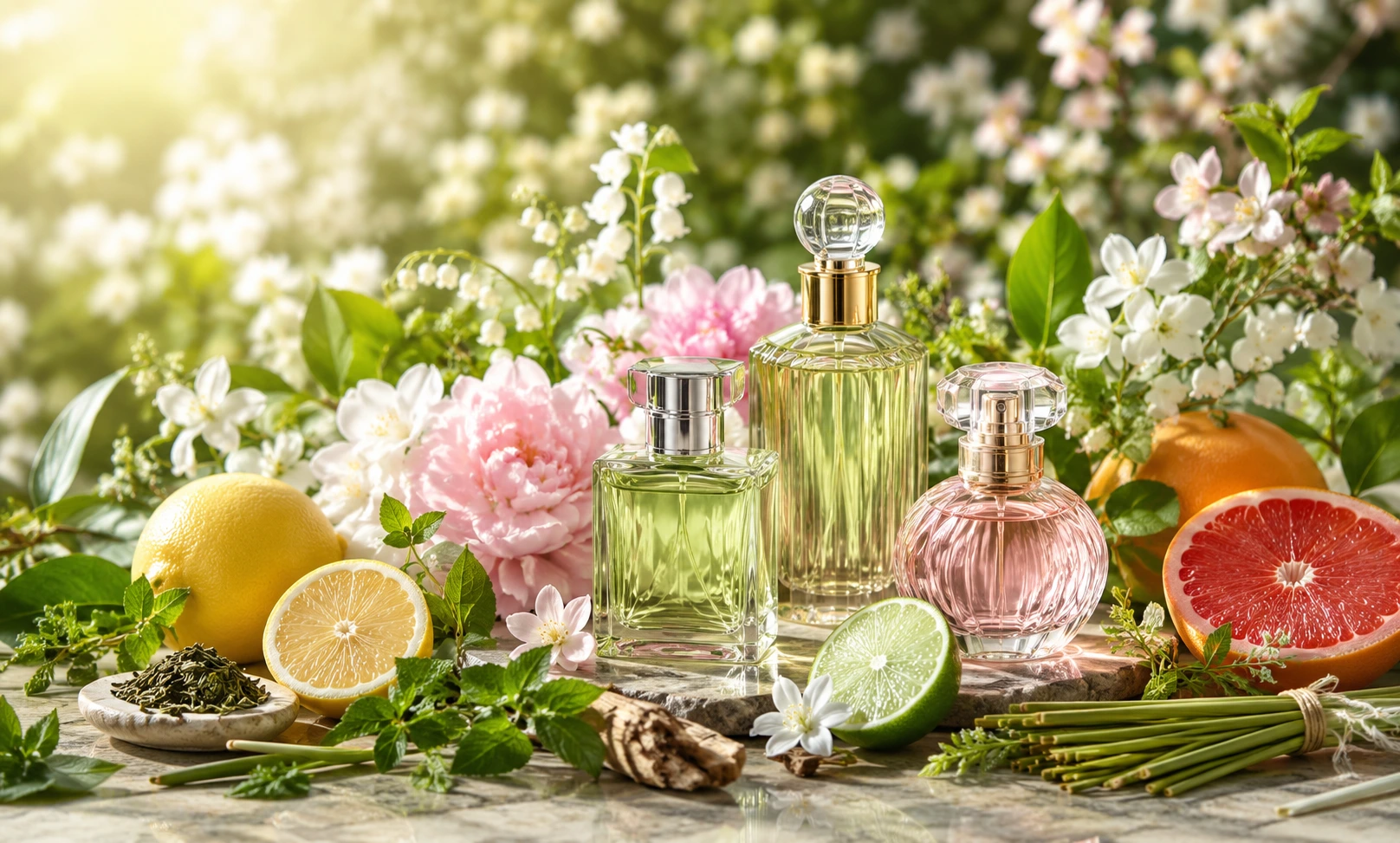
The most popular spring fragrance notes include floral notes such as jasmine, rose, peony, lily of the valley, and orange blossom; citrus notes such as bergamot, lemon, grapefruit, and mandarin; and green notes like fresh leaves, grass, tea, and herbs. These ingredients create the fresh, clean, airy feeling most people associate with spring fragrances.
Why Fragrance Notes Matter More Than Perfume Names
Many shoppers focus on fragrance brands, bottles, or marketing descriptions. However, the notes inside the fragrance often determine whether it feels appropriate for spring.
A perfume called “Ocean Breeze” might actually contain heavy vanilla and amber, making it feel better suited for cooler weather.
Meanwhile, a fragrance with bergamot, neroli, green tea, and jasmine will often feel naturally spring-like regardless of its name.
This is one reason why understanding notes is more useful than relying solely on fragrance marketing.
To understand the bigger question behind seasonal scent identity, it’s worth exploring What Makes a Perfume Feel Like Spring?, where the relationship between fragrance structure and seasonal perception is explained in greater detail.
The Three Main Families of Spring Fragrance Notes
Most spring fragrances are built around three major note categories:
🌸 Floral Notes
Inspired by blooming flowers.
🍋 Citrus Notes
Inspired by fresh fruits and bright acidity.
🌿 Green Notes
Inspired by leaves, grass, herbs, and nature.
These three families create the foundation of most successful spring fragrances.
For a deeper look at why these categories dominate spring perfumery, see Why Floral, Citrus, and Green Notes Define Spring Fragrances.
🌸 Floral Notes: The Heart of Spring Perfumery
Flowers are perhaps the most recognizable symbol of spring.
Perfumers have used floral ingredients for centuries because they naturally reflect the season’s atmosphere of renewal and growth.
Popular spring floral notes include:
- Jasmine
- Rose
- Peony
- Lily of the Valley
- Orange Blossom
- Magnolia
- Freesia
- Violet
Each floral note creates a different impression.
Jasmine
Jasmine feels bright, slightly sweet, and elegant.
It often adds a clean sophistication that works well during daytime spring weather.
Peony
Peony smells soft, airy, and modern.
Many contemporary women’s spring fragrances use peony because it feels lighter than traditional rose-based compositions.
Lily of the Valley
This note creates one of the freshest floral effects in perfumery.
It often smells crisp, green, and slightly dewy.
Orange Blossom
Orange blossom combines floral softness with subtle citrus brightness, making it especially popular in spring fragrances.
🍋 Citrus Notes: The Instant Freshness Effect
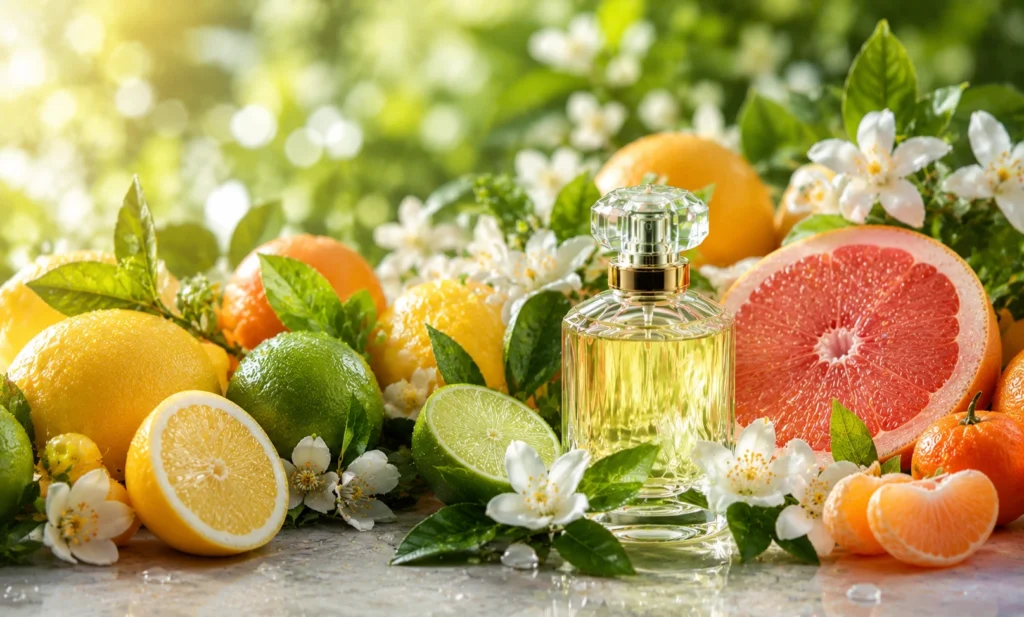
If floral notes represent blooming gardens, citrus notes represent sunshine.
Few fragrance ingredients create an immediate feeling of freshness as effectively as citrus.
Common spring citrus notes include:
- Bergamot
- Lemon
- Grapefruit
- Mandarin
- Orange
- Yuzu
These ingredients are often used in the opening of spring fragrances.
Bergamot
Bergamot is arguably the king of spring citrus notes.
It smells fresher and more refined than ordinary lemon.
Many luxury spring fragrances begin with bergamot because it creates brightness without becoming overly sharp.
Grapefruit
Grapefruit introduces a crisp, energetic feeling.
It is particularly popular in men’s spring fragrances.
Mandarin
Mandarin offers a softer sweetness compared to lemon or grapefruit.
This makes it ideal for casual everyday spring scents.
Why are citrus notes popular in spring perfumes?
Citrus notes are popular in spring perfumes because they create an immediate feeling of freshness, cleanliness, and energy. Ingredients like bergamot, lemon, grapefruit, and mandarin reflect the brighter weather and outdoor atmosphere associated with spring while remaining light enough for mild temperatures.
🌿 Green Notes: The Secret Ingredient Behind the Spring Feeling
Many people assume floral notes alone create a spring fragrance.
In reality, green notes are often what make a perfume feel truly seasonal.
Green notes can include:
- Fresh leaves
- Green tea
- Herbs
- Grass accords
- Fig leaf
- Violet leaf
- Bamboo
- Mate tea
These ingredients mimic the smell of nature waking up after winter.
Green Tea
Green tea creates one of the most versatile spring effects.
It smells fresh, calming, and slightly airy.
Fig Leaf
Fig leaf adds a green, creamy character that feels natural without becoming heavy.
Violet Leaf
Violet leaf often introduces a crisp, watery freshness that blends beautifully with citrus and floral ingredients.
Comparison Table: Most Popular Spring Fragrance Notes
| Note | Family | Typical Feeling | Best Spring Use |
|---|---|---|---|
| Jasmine | Floral | Elegant, bright | Daytime wear |
| Peony | Floral | Soft, airy | Casual outings |
| Orange Blossom | Floral/Citrus | Fresh and uplifting | Everyday wear |
| Bergamot | Citrus | Clean and energetic | Office and daytime |
| Grapefruit | Citrus | Crisp and vibrant | Warm afternoons |
| Mandarin | Citrus | Smooth and cheerful | Daily use |
| Green Tea | Green | Calm and refreshing | Work environments |
| Fig Leaf | Green | Natural and modern | Outdoor activities |
| Violet Leaf | Green | Crisp and watery | Mild spring days |
How Individual Notes Shape the Spring Feeling
Not all spring fragrances feel the same.
Different notes create different interpretations of spring.
Floral-Dominant Spring Fragrances
Feel romantic and elegant.
Citrus-Dominant Spring Fragrances
Feel energetic and vibrant.
Green-Dominant Spring Fragrances
Feel natural and relaxing.
This variety explains why two fragrances can both feel perfectly suited for spring while smelling completely different.
The emotional and psychological side of these ingredients is explored in The Psychology of Spring Fragrances: Why Fresh Scents Feel Different, which explains why fresh scents often influence mood and perception so strongly.
Why People Naturally Prefer Certain Spring Notes
Fragrance preferences are influenced by both biology and experience.
Many people associate floral and green aromas with positive seasonal memories:
- Outdoor activities
- Longer daylight hours
- Vacations
- Blooming gardens
- Pleasant weather
As a result, spring notes often feel emotionally uplifting.
This psychological connection is one reason fresh fragrances continue to dominate spring fragrance sales year after year.
American consumers in particular often gravitate toward fragrances that feel clean, optimistic, and versatile during seasonal transitions, which helps explain the enduring popularity of floral-citrus compositions every spring.
How Spring Weather Changes Fragrance Performance
Spring temperatures sit between winter cold and summer heat.
Because of this, many fragrance notes perform exceptionally well.
Notes That Thrive in Spring
✔️ Bergamot
✔️ Jasmine
✔️ Green Tea
✔️ Orange Blossom
✔️ Peony
✔️ Grapefruit
These notes project enough to be noticeable without becoming overwhelming.
If you’re wondering when spring fragrances typically start performing at their best, When to Start Wearing Spring Perfumes and Where They Work Best offers practical guidance based on weather conditions and daily activities.
Spring Notes vs Summer Notes
Many people confuse spring and summer fragrances.
While both can feel fresh, they are not identical.
| Spring Fragrances | Summer Fragrances |
|---|---|
| Floral-focused | Aquatic-focused |
| Green accords | Marine accords |
| Soft citrus | Sharp citrus |
| Airy freshness | Cooling freshness |
| Mild projection | Often brighter projection |
For a complete seasonal comparison, see Spring vs Summer Perfumes: What’s the Difference?
Popular Real-World Spring Fragrance Examples
Several fragrances have become famous for their use of classic spring notes:
- Versace Pour Homme — Bergamot, lemon, neroli.
- Acqua di Gio — Citrus and fresh aromatic notes.
- Chanel Chance Eau Tendre — Grapefruit and floral accords.
- Marc Jacobs Daisy — Violet leaf and soft florals.
These fragrances demonstrate how different note combinations can still create a distinctly spring-like feeling.
Conclusion
The most popular spring fragrance notes are popular for a reason. Floral notes capture blooming nature, citrus notes provide brightness and energy, and green notes recreate the freshness of new growth.
Together, they create the uplifting seasonal character that people instinctively associate with spring.
Understanding these ingredients makes it easier to recognize why a fragrance feels seasonal, compare different spring scents, and build a fragrance wardrobe that matches changing weather throughout the year.
Readers who want a complete understanding of how all spring fragrance concepts fit together can continue with Spring Perfumes Explained: Notes, Vibes, and When to Wear Them, which serves as the central guide for this entire spring fragrance cluster.
Frequently Asked Questions
What is the most common note in spring perfumes?
Bergamot is one of the most common spring fragrance notes because it adds freshness, brightness, and versatility.
Are floral notes required for a spring fragrance?
No. Many spring fragrances rely heavily on citrus and green notes while using minimal floral ingredients.
Why do green notes smell so fresh?
Green notes mimic leaves, grass, herbs, and natural vegetation, creating associations with outdoor environments and new growth.
Can spring fragrances be worn year-round?
Yes. Many fresh floral, citrus, and green fragrances work well throughout the year, especially in warm climates.
Which spring note is best for men?
Bergamot, grapefruit, green tea, and violet leaf are among the most popular spring notes in men’s fragrances.
Question for Readers
Which spring fragrance note do you enjoy most—floral, citrus, or green—and why does it remind you of spring?
Discover more from Perfume Cultures
Subscribe to get the latest posts sent to your email.






8 Comments