
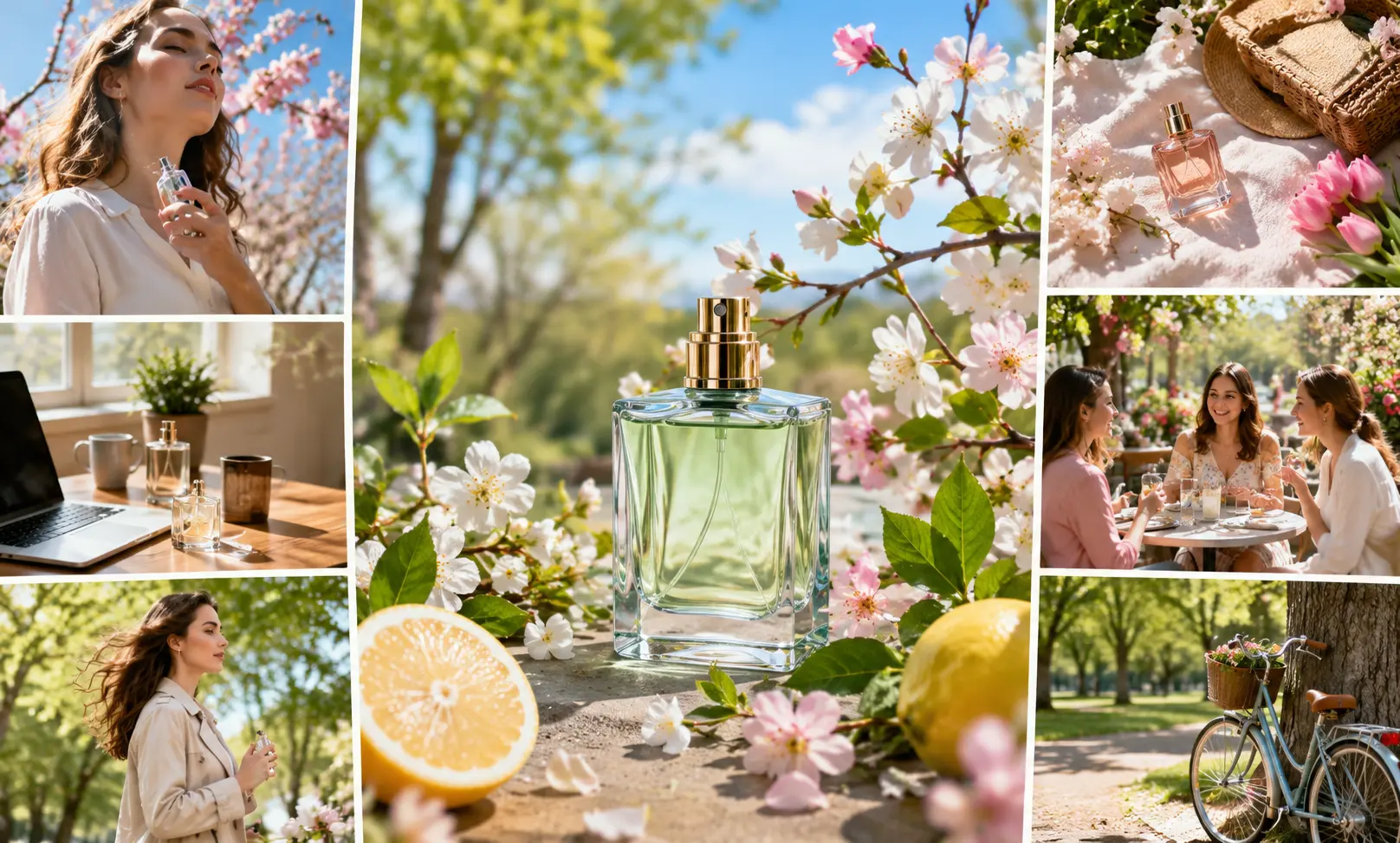
When to Start Wearing Spring Perfumes and Where They Work Best
The First Warm Day Changes Everything
Have you ever sprayed your favorite winter fragrance on the first warm spring afternoon and suddenly felt that something was off?
The scent itself hasn’t changed. Your nose hasn’t changed. But the environment around you has.
As temperatures rise, humidity shifts, and people spend more time outdoors, fragrances behave differently. Heavy amber, dense vanilla, and powerful woody compositions that felt comforting during winter can suddenly feel overwhelming. At the same time, lighter citrus, floral, and green fragrances begin to shine.
This seasonal transition raises an important question:
When exactly should you start wearing spring perfumes, and where do they perform best?
The answer isn’t tied to a calendar date. It’s connected to weather patterns, temperature changes, social behavior, and the way fragrance interacts with the environment.
Let’s explore the ideal timing, situations, and places where spring fragrances truly excel.
When should you start wearing spring perfumes?
Most people can start wearing spring perfumes when daytime temperatures consistently reach about 60–75°F (15–24°C). This is usually when lighter citrus, floral, green, and fresh fragrances begin performing better than heavier winter scents. The ideal transition depends more on weather conditions than on a specific month.
Why Spring Fragrance Season Starts Earlier Than Most People Think
Many consumers wait until late spring before switching fragrances.
In reality, spring fragrance season often begins during the first stable warming period after winter.
The reason is simple:
Perfume performance changes with temperature.
As the air becomes warmer:
✔️ Citrus notes feel brighter
✔️ Floral accords become more expressive
✔️ Green notes smell more natural
✔️ Fresh fragrances project more comfortably
Meanwhile, many cold-weather fragrances begin projecting more aggressively.
This is why fragrance enthusiasts often start rotating spring scents weeks before summer officially arrives.
If you’re curious about the characteristics that create this seasonal feeling in the first place, our guide on What Makes a Perfume Feel Like Spring? explores the fragrance elements that instantly create a spring-like impression.
Understanding the Spring Transition Zone
One mistake many people make is treating fragrance seasons as strict categories.
Real life doesn’t work that way.
Instead, there is usually a transition period where both winter and spring fragrances can work.
| Temperature Range | Fragrance Style That Usually Works Best |
|---|---|
| Below 50°F (10°C) | Winter fragrances |
| 50–60°F (10–15°C) | Transitional fragrances |
| 60–75°F (15–24°C) | Spring fragrances |
| Above 75°F (24°C) | Spring and summer fragrances |
This transitional phase allows you to gradually introduce lighter scents without completely abandoning richer fragrances.
Many modern fragrances are designed specifically for these changing conditions.
Why Spring Perfumes Thrive in Mild Weather
Spring fragrances are built around balance.
They are usually:
- Lighter than winter fragrances
- Softer than many summer fragrances
- Easier to wear indoors and outdoors
- Designed for moderate temperatures
This versatility explains why many fragrance lovers consider spring the easiest perfume season.
Unlike winter, fragrances don’t need to fight through cold air.
Unlike summer, fragrances don’t need to survive intense heat.
The environment naturally supports fresh and balanced compositions.
To understand why these fragrances smell the way they do, you can explore Why Floral, Citrus, and Green Notes Define Spring Fragrances, which explains the scent families most associated with the season.
The Notes That Perform Best During Spring
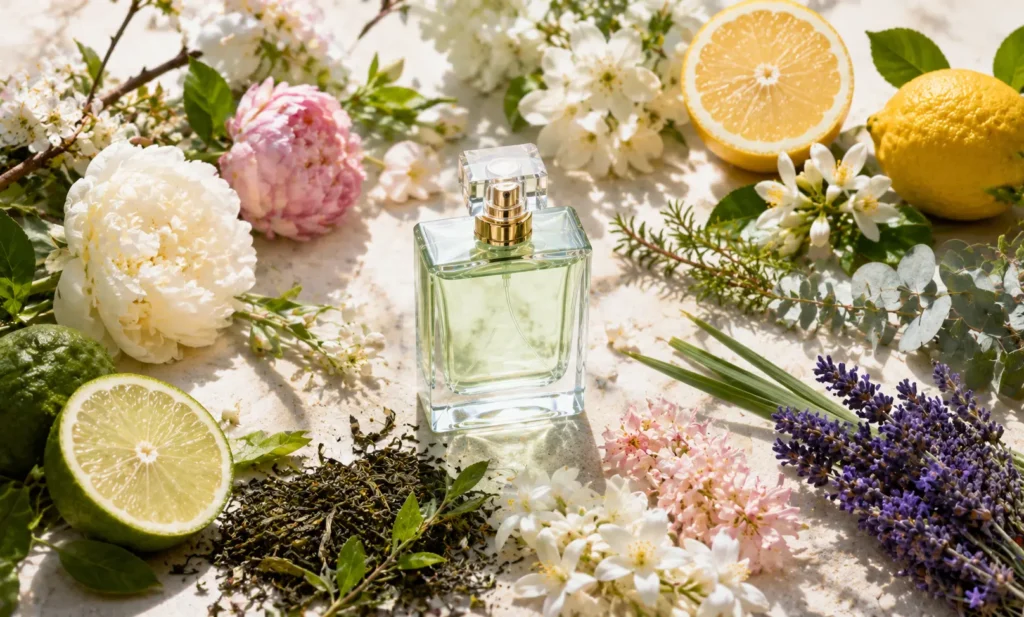
Certain fragrance families consistently excel during spring weather.
These include:
🍋 Citrus Notes
Bergamot, lemon, grapefruit, and mandarin provide brightness and freshness.
🌿 Green Notes
Grass, leaves, tea accords, and herbal notes reflect the season’s natural environment.
🌸 Floral Notes
Jasmine, peony, rose, orange blossom, and lily-of-the-valley become more expressive in mild temperatures.
🌊 Fresh Aquatic Notes
Clean and airy accords feel particularly comfortable during changing weather conditions.
For a deeper breakdown of these ingredients, see The Most Popular Spring Fragrance Notes Explained, where each major spring note family is explored in detail.
Where do spring perfumes work best?
Spring perfumes work best in offices, outdoor gatherings, daytime events, casual social settings, brunches, shopping trips, parks, and everyday wear. Their moderate projection and fresh scent profiles make them highly versatile in environments where strong fragrances may feel overwhelming.
Best Places to Wear Spring Perfumes
One reason spring fragrances remain so popular is their versatility.
They fit into more situations than almost any other fragrance category.
🏢 The Office
Spring fragrances are often ideal workplace scents.
Most have:
- Controlled projection
- Fresh openings
- Pleasant scent trails
- Low risk of overwhelming coworkers
Because many workplaces involve close proximity, spring fragrances often outperform heavy winter scents.
☕ Casual Daytime Activities
Coffee runs.
Shopping trips.
Weekend errands.
Lunch dates.
Spring fragrances naturally complement these relaxed situations because they feel clean and approachable.
🌳 Parks and Outdoor Walks
Spring fragrances often interact beautifully with nature.
Fresh air helps lighter compositions breathe and develop naturally.
Green, citrus, and floral notes tend to feel especially realistic outdoors.
🍽️ Brunches and Daytime Social Events
Many spring fragrances project just enough to be noticed without dominating a social environment.
This creates a comfortable balance between presence and subtlety.
✈️ Travel and Weekend Getaways
Spring fragrances are often among the safest travel choices.
Their versatility allows them to adapt to changing weather and different social situations.
Why Spring Perfumes Feel So Easy to Wear
There is a psychological reason many people enjoy spring fragrances.
Fresh scents are often associated with:
- New beginnings
- Cleanliness
- Energy
- Optimism
- Outdoor experiences
These associations become stronger during seasonal transitions.
After months of cold weather, many people naturally seek sensory experiences that signal renewal and change.
This explains why fresh fragrances often feel emotionally satisfying during spring.
For a deeper look at these psychological effects, read The Psychology of Spring Fragrances: Why Fresh Scents Feel Different.
How Americans Typically Transition Into Spring Fragrances
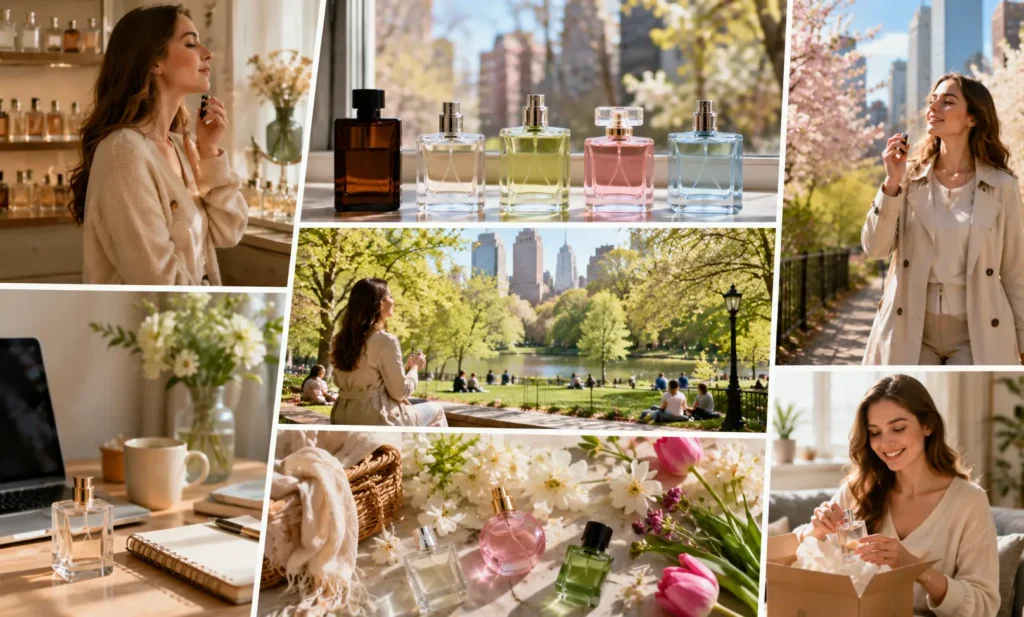
In the United States, spring often represents the beginning of fragrance discovery season.
Consumers become more willing to:
- Test new releases
- Explore fresh scent profiles
- Update fragrance wardrobes
- Shop for seasonal scents
Many major fragrance launches occur during spring because brands know shoppers are actively looking for something lighter and fresher after winter.
This seasonal buying behavior has become a recurring pattern across the American fragrance market.
Spring vs Summer: Knowing When to Make the Next Transition
Not every fresh fragrance is automatically a spring fragrance.
Many people confuse spring and summer scents.
The difference usually comes down to intensity and purpose.
| Spring Perfumes | Summer Perfumes |
|---|---|
| Balanced freshness | Maximum freshness |
| Moderate projection | Strong heat resistance |
| Floral and green focus | Citrus and aquatic focus |
| Mild weather performance | Hot weather performance |
| Indoor and outdoor versatility | Primarily hot outdoor conditions |
As temperatures rise beyond typical spring levels, summer fragrances often become the better choice.
Our detailed guide Spring vs Summer Perfumes: What’s the Difference? explains these distinctions more thoroughly.
How to Know It’s Time to Switch
You don’t need a calendar.
Your fragrance will usually tell you.
Signs it’s time to start wearing spring perfumes include:
✔️ Winter fragrances feel heavier than usual
✔️ Outdoor temperatures consistently increase
✔️ You spend more time outside
✔️ Fresh fragrances suddenly smell more appealing
✔️ Floral and citrus scents begin feeling natural again
These signals often arrive before the official start of spring.
Why Spring Fragrances Remain the Most Flexible Seasonal Category
Winter fragrances can feel too heavy.
Summer fragrances can feel too sharp.
Fall fragrances can feel too warm.
Spring fragrances often sit perfectly in the middle.
This balance makes them some of the easiest fragrances to wear across a wide range of temperatures, environments, and social situations.
It’s also why many fragrance enthusiasts consider spring the longest practical fragrance season of the year.
Conclusion
The best time to start wearing spring perfumes isn’t determined by the calendar—it’s determined by the weather around you. As temperatures begin rising and winter scents start feeling too heavy, fresh citrus, floral, green, and airy fragrances naturally become more enjoyable.
Their versatility is what makes them special. Whether you’re heading to the office, spending time outdoors, meeting friends for brunch, or simply enjoying the first warm days of the year, spring fragrances offer a balance that few other seasonal categories can match.
If you’re still building your understanding of seasonal fragrances, the best place to start is Spring Perfumes Explained: Notes, Vibes, and When to Wear Them, the pillar guide that connects every major topic in this spring fragrance cluster.
FAQ
Do I need to stop wearing winter fragrances when spring begins?
No. Many people use transitional fragrances and gradually rotate their collection as temperatures rise.
Are spring fragrances only for daytime wear?
Not at all. While many spring fragrances excel during the day, some floral, woody, and musky spring scents work very well during evening occasions.
Can I wear spring perfumes indoors and outdoors?
Yes. Their balanced projection makes them suitable for both environments.
What temperature is best for spring fragrances?
Most spring fragrances perform best between 60–75°F (15–24°C).
Why do fresh fragrances smell better in spring?
Warmer temperatures help fresh, floral, and citrus notes develop naturally while maintaining comfort and balance.
🌸 What’s the first fragrance you usually reach for when spring arrives—a fresh citrus scent, a floral fragrance, a green aromatic perfume, or something completely different? Share your favorite spring scent in the comments!
Discover more from Perfume Cultures
Subscribe to get the latest posts sent to your email.





One Comment