How Hormones Affect Perfume Smell (And Why Your Fragrance Changes on Different Days)
Sometimes your favorite fragrance smells incredible.
Other times, the same perfume suddenly feels weaker, sharper, sweeter, or strangely different — even though nothing about the bottle changed.
Most people blame the perfume itself.
But in reality, your body may be the reason.
Hormones quietly influence:
- skin chemistry
- body temperature
- oil production
- sweat composition
- scent sensitivity
- emotional scent perception
That means your fragrance experience is not always stable.
Your body is constantly changing how perfume behaves on your skin and how your nose interprets it.
And once you understand this, many “mysteries” about perfume suddenly make sense.
Can Hormones Change the Way Perfume Smells?
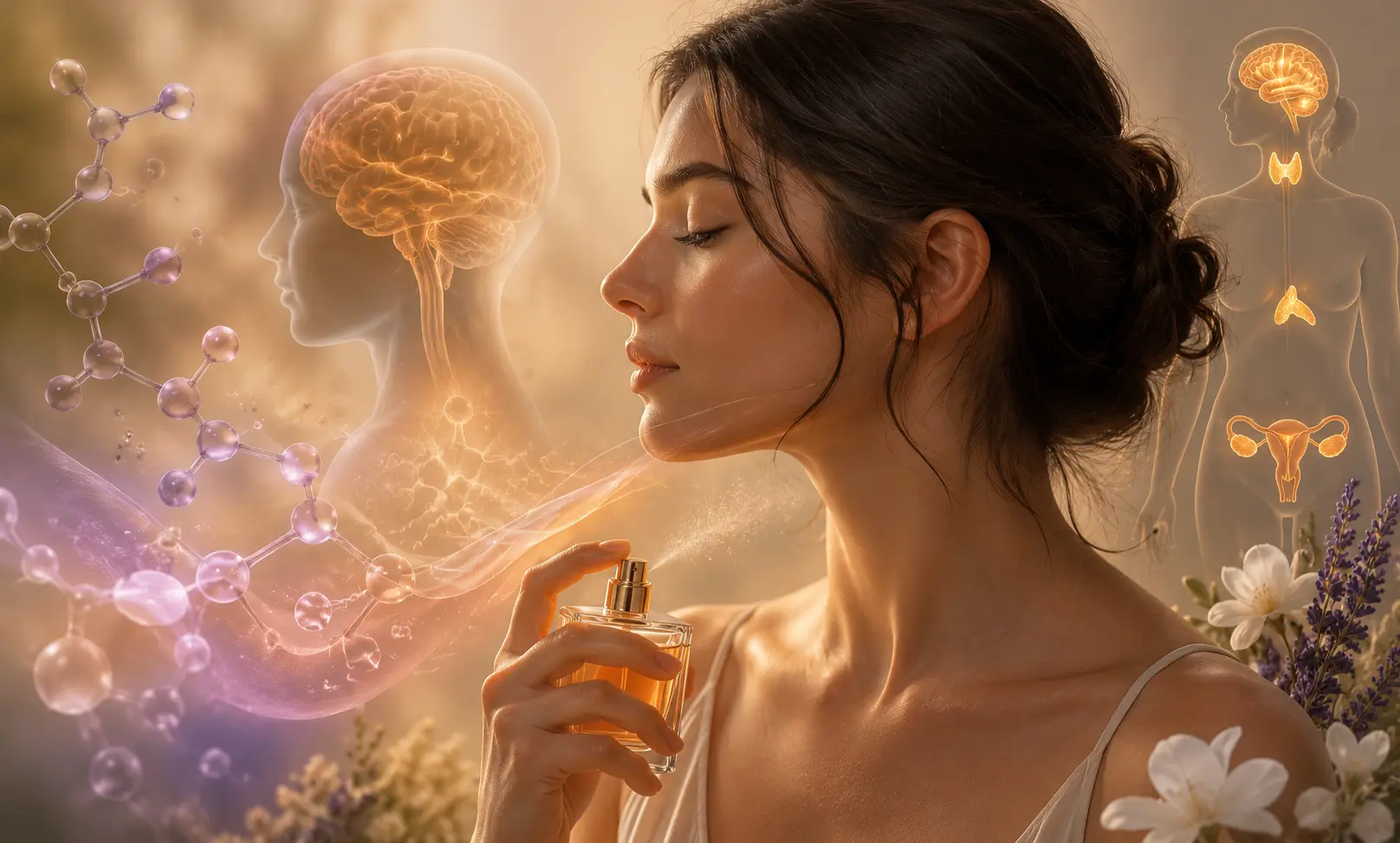
Yes. Hormones can affect how perfume smells by changing skin oil production, body temperature, sweat composition, and scent sensitivity. These biological changes may make the same fragrance smell stronger, weaker, sweeter, sharper, or disappear faster on different days.
🧠 Why Hormones Influence Fragrance Performance
Perfume does not exist in isolation.
It mixes with:
- your skin oils
- natural bacteria
- sweat
- body heat
- moisture levels
Hormones directly affect all of these factors.
This is why two people wearing the same fragrance can smell completely different.
It is also why your own perfume may smell different on you from week to week.
🔥 Body Heat Changes Projection
Hormonal fluctuations can slightly increase body temperature.
When your skin becomes warmer:
- fragrance molecules evaporate faster
- projection becomes stronger
- top notes become louder
- perfumes may feel more aggressive
This is one reason some people suddenly feel like their fragrance is “filling the room” more than usual.
If you have ever wondered whether your scent is projecting too strongly in certain situations, you may enjoy reading How Do You Know If Your Perfume Is Filling the Room? because body chemistry can dramatically change projection without you realizing it.
💧 Oil Production Can Completely Change a Perfume
Hormones strongly affect sebum (skin oil) production.
Oily skin usually:
- holds perfume longer
- amplifies sweet notes
- increases richness
Dry skin usually:
- evaporates fragrance faster
- weakens projection
- emphasizes sharper notes
This explains why a fragrance may smell creamy and smooth one week, then dry and harsh another week.
🚿 Why Perfume Sometimes Smells Different After Showering
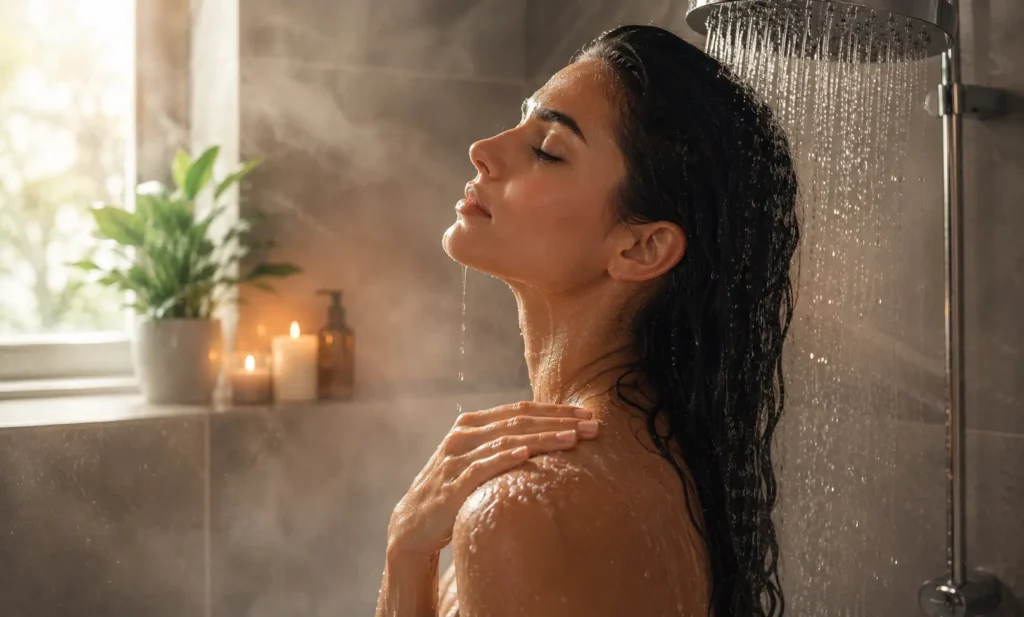
After a shower:
- skin temperature rises
- pores open slightly
- moisture increases
- natural oils temporarily shift
Combined with hormonal changes, this can noticeably alter fragrance behavior.
This is why some perfumes smell cleaner, brighter, or more intense immediately after bathing. If this topic interests you, Why Does Perfume Smell Different After You Shower? explains how heat, moisture, and skin chemistry reshape fragrance performance.
👃 Hormones Can Affect Your Sense of Smell Too
This is one of the most overlooked parts of fragrance perception.
Hormones may influence:
- scent sensitivity
- nose fatigue
- emotional response to smells
- detection strength
Sometimes your perfume did not become weaker.
Your nose simply interprets it differently.
On certain days:
- you may barely smell your fragrance
- while everyone around you still can
This can become dangerous because people often respond by overspraying.
That is one reason many fragrance wearers unintentionally become “too noticeable” without realizing it. How Do You Tell If Your Perfume Is Too Noticeable? explores the subtle signs that your scent may be stronger than you think.
Why Does Perfume Smell Different on Different Days?
Perfume can smell different on different days because hormones affect body heat, skin oils, sweat, and scent perception. Stress, sleep, hydration, hormonal cycles, and physical activity may all change how fragrance develops and projects.
⚖️ Comparison Table — How Hormonal Changes Can Affect Perfume
| Hormonal Effect | What Happens to Perfume | Common Result |
|---|---|---|
| Increased body heat | Faster evaporation | Stronger projection |
| Higher oil production | More fragrance retention | Sweeter/richer scent |
| Dry skin changes | Faster fading | Sharper or weaker smell |
| Increased sweating | Alters fragrance balance | Less stable scent |
| Smell sensitivity shifts | Nose perceives scent differently | Perfume feels weaker or stronger |
| Stress hormone spikes | Changes perception and body chemistry | Fragrance may feel “off” |
😬 Why Other People May React Differently to Your Perfume
Hormonal changes do not only affect you.
They may indirectly affect how others experience your scent too.
If your fragrance suddenly becomes:
- louder
- warmer
- more diffusive
- sweeter
- heavier
People around you may notice before you do.
This helps explain why some people react negatively to perfume without directly saying anything. Body chemistry can quietly transform a normally pleasant fragrance into something overwhelming in enclosed spaces or social situations. Why Do Some People React Negatively to Your Perfume Without Saying Anything? explores these silent social reactions in detail.
🤧 Hormones, Sensitivity, and Fragrance Irritation
Certain hormonal periods can increase scent sensitivity for some individuals.
This may cause:
- headaches
- nausea
- scent intolerance
- irritation from strong projection
That is why soft, clean fragrances are often safer in shared environments.
If you regularly spend time around sensitive individuals, What Perfume Should You Wear Around People With Allergies? offers practical guidance on choosing fragrances that feel lighter and more comfortable around others.
🌡️ Stress Hormones Can Change Your Fragrance Experience
Stress affects more than mood.
Stress hormones may influence:
- skin temperature
- sweating
- oil production
- scent perception
- emotional interpretation of smells
This is why a fragrance may suddenly feel:
- harsher
- metallic
- too sweet
- overwhelming
- unusually weak
Even lack of sleep can subtly change how perfume performs on your skin.
🧴 Some Fragrance Types React More Dramatically Than Others
Hormonal changes tend to affect:
- musky fragrances
- sweet gourmands
- heavy ambers
- animalic scents
- strong white florals
These styles interact intensely with skin warmth and oils.
Meanwhile:
- citrus
- fresh aquatic scents
- light green fragrances
often remain more stable and predictable.
🧠 Perfume Is More Biological Than Most People Realize
Many people think fragrance is purely about:
- ingredients
- concentration
- quality
But your body is part of the formula too.
Perfume performance is constantly shaped by:
- hormones
- stress
- temperature
- hydration
- skin condition
- emotional state
The fragrance did not necessarily change.
Sometimes, you changed.
❓FAQ — How Hormones Affect Perfume Smell
Can hormones make perfume smell stronger?
Yes. Hormonal changes can increase body heat and oil production, causing perfume to project more strongly and last longer.
Why does my perfume smell different every day?
Your skin chemistry changes daily due to hormones, hydration, stress, sleep, diet, and temperature.
Can stress affect perfume smell?
Yes. Stress hormones may alter sweating, skin warmth, and scent perception, which can change how fragrance smells on your skin.
Why can’t I smell my perfume sometimes?
Hormonal changes and olfactory fatigue may reduce your sensitivity to certain scent molecules even when others still smell them clearly.
Do hormones affect perfume longevity?
Yes. Hormones can influence skin moisture and oil levels, which directly affect fragrance longevity and projection.
🧭 Final Thoughts
Perfume is not static.
It reacts to your body constantly.
That means the same fragrance can feel completely different depending on:
- your hormones
- stress level
- body temperature
- skin condition
- scent sensitivity
Understanding this changes the way you evaluate fragrance entirely.
Sometimes the perfume is not the problem at all.
Your biology is simply rewriting the experience.
Discover more from Perfume Cultures
Subscribe to get the latest posts sent to your email.





2 Comments