
Spring vs Summer Perfumes: What’s the Difference?
Ever Wonder Why Some Fresh Perfumes Feel Perfect in April but Too Soft in July?
You spray a fragrance in spring and it feels bright, airy, and perfectly balanced. A few months later, the same fragrance suddenly feels weak, disappears faster, or simply doesn’t match the atmosphere around you.
This is one of the biggest reasons fragrance lovers often rotate their collections throughout the year.
While spring and summer perfumes are both considered “fresh” fragrance categories, they are not actually the same. They are built around different weather conditions, different emotional expectations, different scent structures, and even different consumer behaviors.
Understanding these differences can help you choose fragrances that feel more natural, perform better in changing temperatures, and match the mood of each season.
What is the difference between spring and summer perfumes?
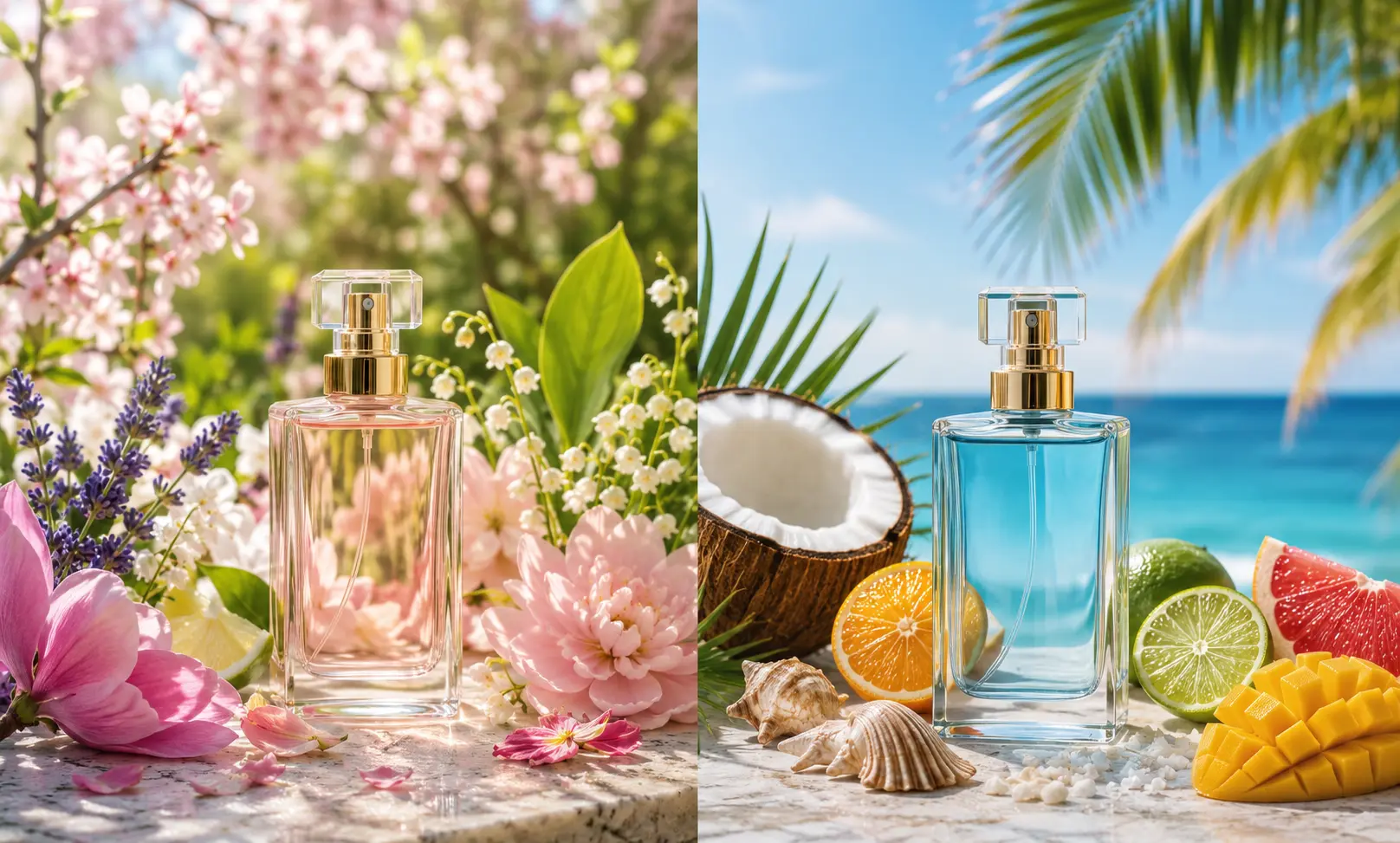
Spring perfumes usually focus on floral, green, citrus, and soft fresh notes that reflect renewal, blooming nature, and mild temperatures. Summer perfumes are often brighter, lighter, and more energetic, emphasizing aquatic, tropical, salty, fruity, and high-refreshment accords designed for hot weather.
Are spring perfumes and summer perfumes interchangeable?
Some fragrances work well in both seasons, but spring fragrances generally emphasize softness and balance, while summer fragrances prioritize freshness, heat resistance, and energetic projection. The hotter the weather becomes, the more noticeable these differences become.
🌸 Why Spring and Summer Fragrances Feel Similar Yet Different
Many people group spring and summer fragrances together because both avoid the heavy sweetness and dense richness commonly found in winter scents.
However, the inspiration behind each season is completely different.
Spring is about transition.
Summer is about intensity.
Spring fragrances reflect blooming flowers, fresh grass, new growth, and comfortable temperatures.
Summer fragrances reflect sunshine, beaches, vacations, ocean air, tropical fruits, and outdoor activity.
This distinction becomes clear when you compare the emotional atmosphere each fragrance tries to create.
If you’re new to seasonal fragrances, understanding the foundations discussed in Spring Perfumes Explained: Notes, Vibes, and When to Wear Them makes these differences much easier to recognize.
🌿 Spring Fragrances Focus on Nature Awakening
Spring fragrances are often built around notes that suggest life returning after winter.
Common spring notes include:
- Green leaves
- Fresh-cut grass
- Lily of the valley
- Jasmine
- Peony
- Light citrus
- Neroli
- Tea notes
- Soft woods
These notes create a feeling of freshness without becoming overly energetic.
Many of the scent materials commonly found in spring fragrances were explored in The Most Popular Spring Fragrance Notes Explained, where floral and green ingredients play a central role.
Spring scents often feel:
✔️ Elegant
✔️ Clean
✔️ Airy
✔️ Balanced
✔️ Relaxed
They are designed to complement moderate temperatures rather than extreme heat.
☀️ Summer Fragrances Focus on Refreshment and Energy
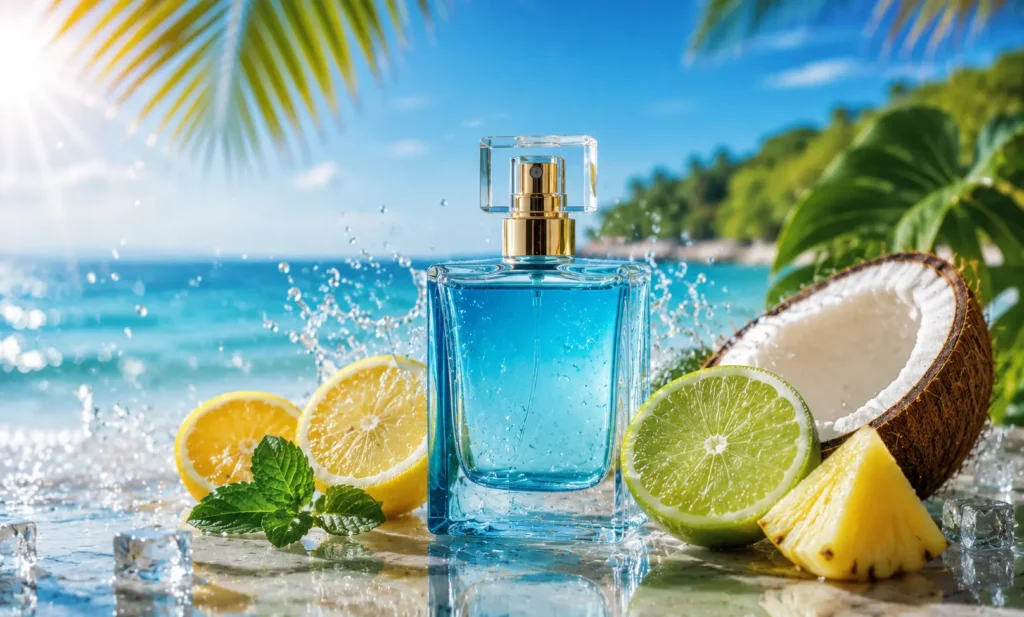
Summer fragrances face a different challenge.
High temperatures amplify perfume molecules.
A fragrance that smells balanced at 65°F (18°C) may become overwhelming at 95°F (35°C).
Because of this, summer fragrances often use:
- Marine accords
- Ocean notes
- Coconut
- Tropical fruits
- Grapefruit
- Bergamot
- Mint
- Salt accords
- Water notes
The goal is simple:
Create a scent that still feels refreshing even under intense heat.
Summer fragrances are typically brighter, sharper, and more energetic than spring fragrances.
📊 Spring vs Summer Perfumes Comparison Table
| Feature | Spring Perfumes | Summer Perfumes |
|---|---|---|
| Main Mood | Renewal & Blooming | Energy & Refreshment |
| Temperature Range | Mild Weather | Hot Weather |
| Floral Presence | High | Moderate |
| Green Notes | Common | Less Common |
| Aquatic Notes | Moderate | Very Common |
| Tropical Notes | Rare | Common |
| Sweetness Level | Light | Very Light |
| Performance Goal | Balanced Wear | Heat Resistance |
| Typical Occasions | Work, Daily Wear, Outdoors | Vacations, Beaches, Casual Activities |
| Emotional Feel | Calm & Optimistic | Vibrant & Energetic |
🌡️ How Weather Changes Fragrance Performance
One of the biggest differences between spring and summer fragrances is how they behave in different temperatures.
As heat increases:
- Evaporation speeds up
- Top notes disappear faster
- Projection increases
- Sweet notes become stronger
- Heavy ingredients feel denser
Spring fragrances don’t need to compensate for extreme heat.
Summer fragrances do.
That is why many summer scents emphasize sparkling citrus and watery freshness.
They are designed specifically to remain comfortable during hot conditions.
This seasonal timing is one reason many fragrance enthusiasts gradually transition their collection, a topic explored further in When to Start Wearing Spring Perfumes and Where They Work Best.
🧠 The Psychological Difference Between Spring and Summer Scents
Fragrance isn’t only about smell.
It’s also about emotional expectations.
Spring scents often communicate:
- New beginnings
- Fresh opportunities
- Growth
- Cleanliness
- Optimism
Summer scents often communicate:
- Freedom
- Adventure
- Travel
- Excitement
- Social energy
This psychological contrast explains why a fragrance can technically smell “fresh” yet still feel wrong for a particular season.
Many of these emotional associations are connected to the ideas discussed in The Psychology of Spring Fragrances: Why Fresh Scents Feel Different.
People often perceive spring freshness as calming.
They often perceive summer freshness as energizing.
🌿 Citrus, Floral, and Green vs Aquatic and Tropical Notes
The easiest way to identify whether a fragrance leans toward spring or summer is by examining its dominant notes.
Common Spring Notes
- Green leaves
- Neroli
- Jasmine
- Rose
- Peony
- Tea
- Light citrus
Common Summer Notes
- Coconut
- Marine accords
- Water notes
- Pineapple
- Mango
- Grapefruit
- Salt accords
While citrus appears in both seasons, it plays different roles.
In spring, citrus often supports florals and green notes.
In summer, citrus becomes a primary freshness driver.
This relationship helps explain Why Floral, Citrus, and Green Notes Define Spring Fragrances while also showing how summer fragrances move toward aquatic and tropical directions.
Readers who want to understand why certain scents immediately feel seasonal may also enjoy What Makes a Perfume Feel Like Spring?, which explores the scent characteristics our brains naturally associate with springtime.
🇺🇸 Why Americans Buy Different Fragrances for Spring and Summer
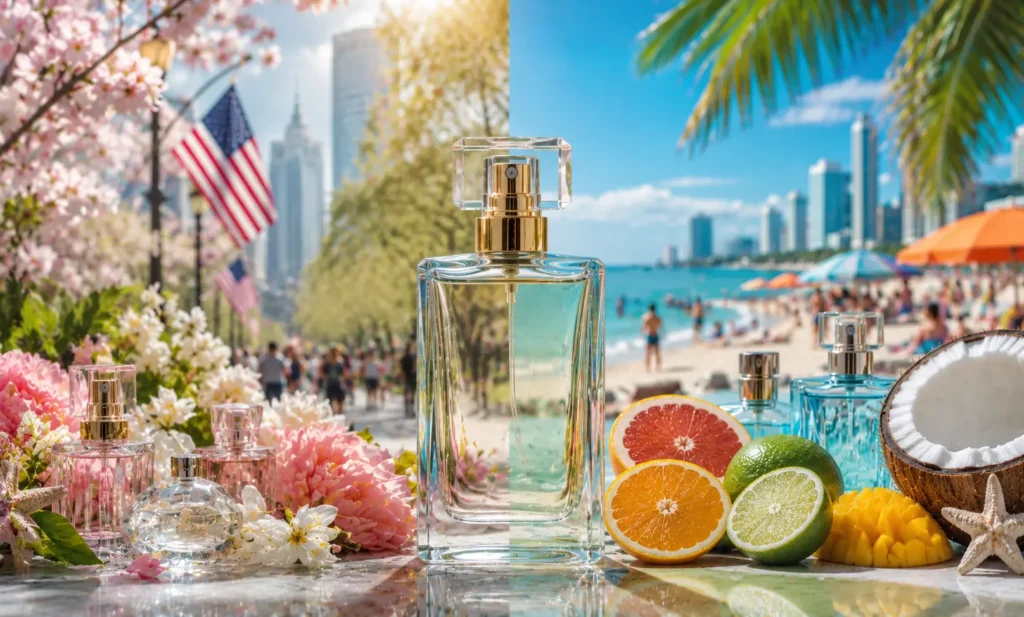
Consumer behavior also changes between seasons.
During spring, many American shoppers look for fragrances that feel versatile enough for:
- Office environments
- Daily wear
- Social gatherings
- Weekend activities
During summer, priorities often shift toward:
- Vacations
- Travel
- Outdoor events
- Beach trips
- High-temperature comfort
This shift explains why fragrance brands often launch lighter aquatic releases before summer arrives.
Consumers are not simply buying a different smell.
They are buying a fragrance that matches a different lifestyle period.
🌸 Can One Perfume Work in Both Spring and Summer?
Absolutely.
Many modern fragrances are designed to bridge both seasons.
These fragrances often combine:
- Citrus freshness
- Moderate florals
- Soft aquatic elements
- Light woods
Such scents remain versatile from early spring through late summer.
However, fragrances at the extreme ends of either category usually perform best during their intended season.
Final Thoughts
Spring and summer fragrances may both belong to the fresh fragrance family, but they serve different purposes.
Spring perfumes celebrate blooming nature, balance, softness, and renewal.
Summer perfumes prioritize refreshment, energy, heat resistance, and outdoor comfort.
Understanding these differences helps you build a collection that feels appropriate throughout the year rather than relying on a single fragrance for every season.
The more you learn to recognize how notes, weather, psychology, and seasonal lifestyles interact, the easier it becomes to choose the right scent at exactly the right time.
Frequently Asked Questions (FAQ)
Can I wear spring perfumes during summer?
Yes, many spring fragrances can be worn during summer, especially those built around citrus, green, and light floral notes. However, some spring perfumes may feel softer or disappear faster in very hot weather compared to fragrances specifically designed for summer conditions.
Are summer perfumes stronger than spring perfumes?
Not necessarily. Summer fragrances are often formulated to feel lighter and fresher, but they may project more noticeably in hot temperatures because heat amplifies fragrance molecules. Spring fragrances usually focus more on balance and subtle elegance.
What notes are most common in spring perfumes?
Spring fragrances commonly feature:
- Green notes
- Neroli
- Jasmine
- Peony
- Lily of the valley
- Tea accords
- Light citrus notes
These ingredients help create a fresh, blooming, and natural feeling associated with spring.
What notes are most common in summer perfumes?
Summer fragrances often emphasize:
- Marine accords
- Aquatic notes
- Grapefruit
- Bergamot
- Coconut
- Tropical fruits
- Salt accords
- Mint
These notes are chosen because they feel refreshing and energetic in hot weather.
Why do some perfumes smell different in summer?
Heat accelerates evaporation and increases projection. As temperatures rise, top notes become more noticeable, sweet notes can feel stronger, and heavy ingredients may become overwhelming. This is why a fragrance that smells perfect in spring may behave differently during summer.
Which season is better for floral fragrances?
Spring is generally considered the best season for floral fragrances because blooming flowers naturally align with the atmosphere of the season. While some light florals also work in summer, spring remains the traditional peak season for floral scents.
Can one fragrance work for both spring and summer?
Yes. Many versatile fragrances combine citrus freshness, soft florals, light woods, and subtle aquatic notes, making them suitable for both seasons. These fragrances often perform well from early spring through late summer.
Should I switch perfumes when summer begins?
You don’t have to, but many fragrance enthusiasts gradually transition toward lighter, brighter, and more refreshing scents as temperatures rise. Seasonal rotation often improves both comfort and fragrance performance.
Why do summer fragrances often contain aquatic notes?
Aquatic notes create a cooling, clean, and refreshing sensation that people naturally associate with water, beaches, and warm-weather activities. This makes them particularly popular in summer fragrances.
Is citrus a spring note or a summer note?
Both. Citrus plays an important role in spring and summer fragrances, but its purpose often changes. In spring, citrus usually supports floral and green notes. In summer, citrus frequently becomes the main source of freshness and energy within the fragrance composition.
❓ Interactive Question
When you compare your favorite spring fragrance with your favorite summer fragrance, what is the biggest difference you notice first: the notes, the performance, or the overall mood?
Discover more from Perfume Cultures
Subscribe to get the latest posts sent to your email.






3 Comments