
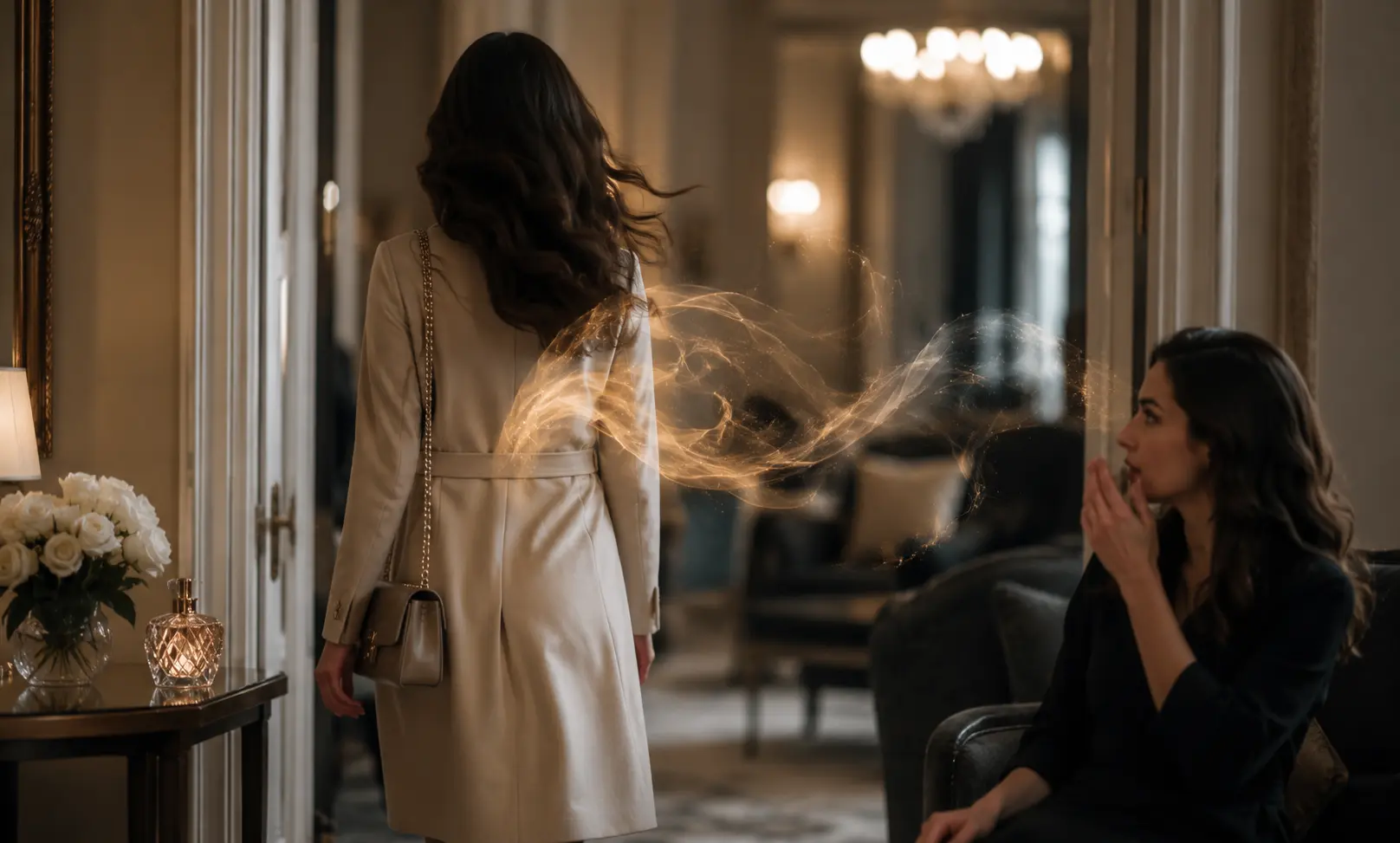
Why Do Some People Notice Your Perfume Only After You Leave? The Psychology of Scent Trails
Perfume is strange.
Sometimes people notice it the second you walk into a room.
Other times… nobody reacts at all — until after you leave.
Then suddenly someone says:
“Wait… what was that smell?”
This delayed fragrance effect is more common than most people realize. In fact, some perfumes are designed to create a lingering atmospheric trail instead of an instant impact.
And psychologically, this can make a fragrance feel even more memorable.
The reason has nothing to do with “weak” perfume.
It has to do with:
- air movement,
- scent trails,
- sensory overload,
- skin chemistry,
- delayed perception,
- and how the human brain processes smell socially.
Why do people notice your perfume after you leave?
People often notice perfume after someone leaves because the fragrance remains suspended in the air as a scent trail (sillage). Without visual and social distractions, the brain processes the smell more clearly, making the fragrance suddenly stand out.
🧠 The Brain Processes Smell Differently Than You Think
Humans do not experience scent the same way they experience sound or light.
Smell is slower.
Your brain constantly filters background odors while focusing on conversations, movement, facial expressions, and environmental noise. But once the person leaves…
the scent becomes isolated.
Suddenly the brain notices:
- warmth,
- sweetness,
- woods,
- musk,
- clean skin notes,
- or lingering amber molecules in the air.
This is why some fragrances feel “invisible” during interaction but become unforgettable afterward.
And interestingly, this connects strongly to the psychology discussed in Does a Soft Perfume Create a Stronger Impression Than a Loud One? because softer fragrances often create delayed emotional recognition instead of instant overload.
🌫️ What Is a “Scent Trail” (Sillage)?
Some perfumes are built to move behind you rather than explode around you.
This is called sillage — the scented air trail left as you move.
Unlike aggressive projection, sillage works through:
- body heat,
- motion,
- airflow,
- evaporation,
- and lingering aroma molecules.
This explains why someone walking behind you may smell your fragrance more clearly than someone standing directly next to you.
It also relates closely to the ideas explored in How Do You Know If Your Perfume Is Filling The Room? because room-filling fragrances often continue diffusing even after the wearer exits the space.
Can perfume stay in a room after you leave?
Yes. Many perfumes continue floating in the air after the wearer leaves, especially fragrances with strong sillage, warm base notes, or diffusive aroma molecules like musk, amber, and woods.
🚶 Why Movement Changes Everything
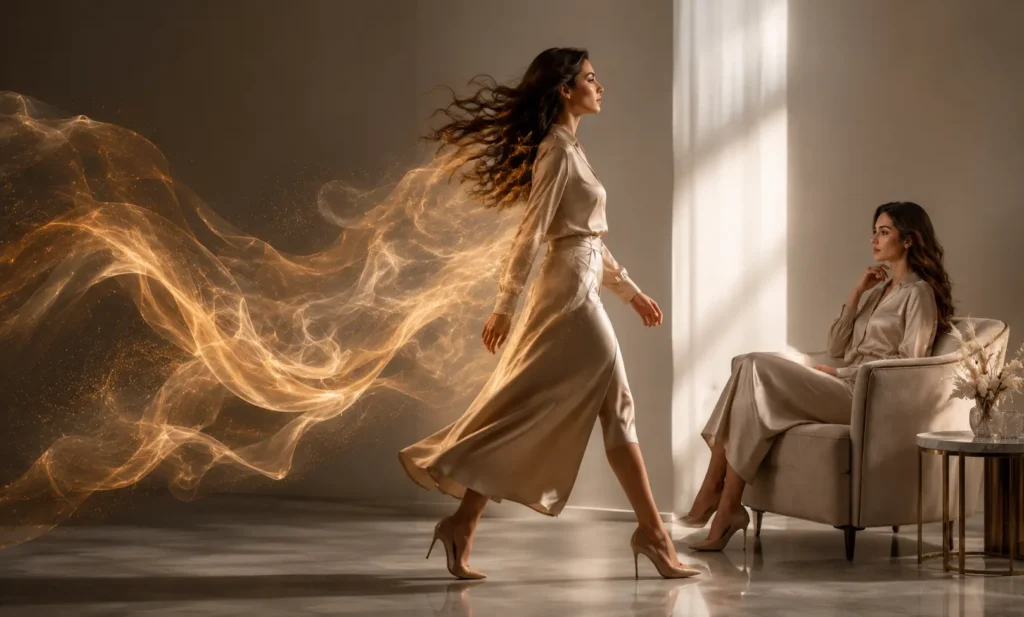
Perfume behaves differently when the body is moving.
When you walk:
- air circulation increases,
- warm skin pushes molecules outward,
- fabric shifts,
- and scent particles spread dynamically.
But when you sit still, perfume may remain closer to the skin.
This is one reason fragrance can suddenly become noticeable after you pass by someone instead of while sitting beside them.
This effect becomes even clearer in the scent mechanics discussed in Why Does Perfume Smell Different When You Sit vs Move?
⚖️ Loud Perfume vs Lingering Perfume
These are not the same thing.
Some fragrances are:
- instantly powerful,
- dense,
- aggressive,
- and room-dominating.
Others are:
- airy,
- diffusive,
- atmospheric,
- and psychologically lingering.
Here’s the important difference:
| Type of Perfume | Immediate Reaction | After-Leave Effect | Social Perception |
|---|---|---|---|
| Loud / Heavy Projection | Strong instantly | Often overwhelming | Can feel intrusive |
| Soft Diffusive Perfume | Subtle at first | Often memorable later | Usually elegant |
| Skin Scent Fragrances | Hard to notice nearby | Detected during movement | Intimate and personal |
| Sweet Dense Fragrances | Fill enclosed spaces quickly | Can become “stuffy” afterward | Polarizing |
This is also why some people unintentionally wear fragrances that become too dominant in enclosed spaces — something explored more deeply in How Do You Tell If a Perfume Is Too Noticeable?
🧪 Skin Chemistry Changes the Timing of Perfume
Perfume is not static.
Your skin continuously changes how fragrance evaporates.
Things that influence this include:
- sweat,
- skin oil,
- hormones,
- hydration,
- temperature,
- and even stress levels.
Sometimes fragrance molecules activate more strongly after body heat rises from movement.
Other times sweat creates a delayed amplification effect where the fragrance becomes stronger 10–20 minutes later.
This strange transformation is closely connected to the chemistry explained in Does Sweat Change Perfume Smell? The Surprising Chemistry Happening on Your Skin
🌡️ Why Some Days Your Perfume “Appears Late”
Have you ever noticed this?
One day your fragrance feels invisible.
Another day the same perfume leaves a huge trail behind you.
That happens because environmental conditions constantly change:
- humidity,
- cold air,
- heat,
- wind,
- dry skin,
- indoor AC,
- and airflow patterns.
In some conditions, perfume diffuses slowly and becomes noticeable only after lingering in the environment for a few seconds.
This effect overlaps with the environmental behavior discussed in Why Does Perfume Disappear Faster On Some Days Than Others?
🧠 Sometimes People Smell Your Perfume Better After You’re Gone
This part is deeply psychological.
When you are physically present, people process:
- your voice,
- your face,
- your movement,
- eye contact,
- conversation,
- social tension.
Once you leave?
Only the scent remains.
And smell is strongly tied to:
- memory,
- emotion,
- comfort,
- attraction,
- and subconscious association.
This creates a strange phenomenon where a perfume becomes emotionally stronger after the interaction ends.
Sometimes the scent becomes a memory before the person even realizes they liked it.
❓FAQ
Why does my perfume smell stronger after I walk away?
Movement increases airflow and pushes fragrance molecules outward, creating a scent trail that becomes easier to notice after you pass by.
Is it good if people notice my perfume after I leave?
Usually yes. A lingering scent trail often feels smoother and more elegant than overpowering projection, especially in social environments.
What perfume notes linger the longest in the air?
Musk, amber, vanilla, woods, patchouli, and some synthetic aroma molecules tend to remain suspended longer in the air.
Why can’t I smell my own perfume anymore?
Your nose adapts to familiar smells quickly. This is called olfactory fatigue, and it often happens long before other people stop smelling your fragrance.
Do soft perfumes create better scent trails?
Sometimes yes. Soft diffusive perfumes can create subtle atmospheric trails that feel cleaner and more intriguing than loud fragrances.
Final Thoughts
The most memorable perfumes are not always the loudest ones.
Sometimes the strongest impression happens in the quiet moment after you leave the room — when the air still carries part of your presence.
That lingering scent trail can feel:
- mysterious,
- comforting,
- elegant,
- or emotionally familiar.
And that is exactly why some fragrances are remembered long after the conversation ends.
✨ Interactive Question
Have you ever noticed someone’s perfume more strongly after they walked away rather than while talking to them?
Discover more from Perfume Cultures
Subscribe to get the latest posts sent to your email.



One Comment