
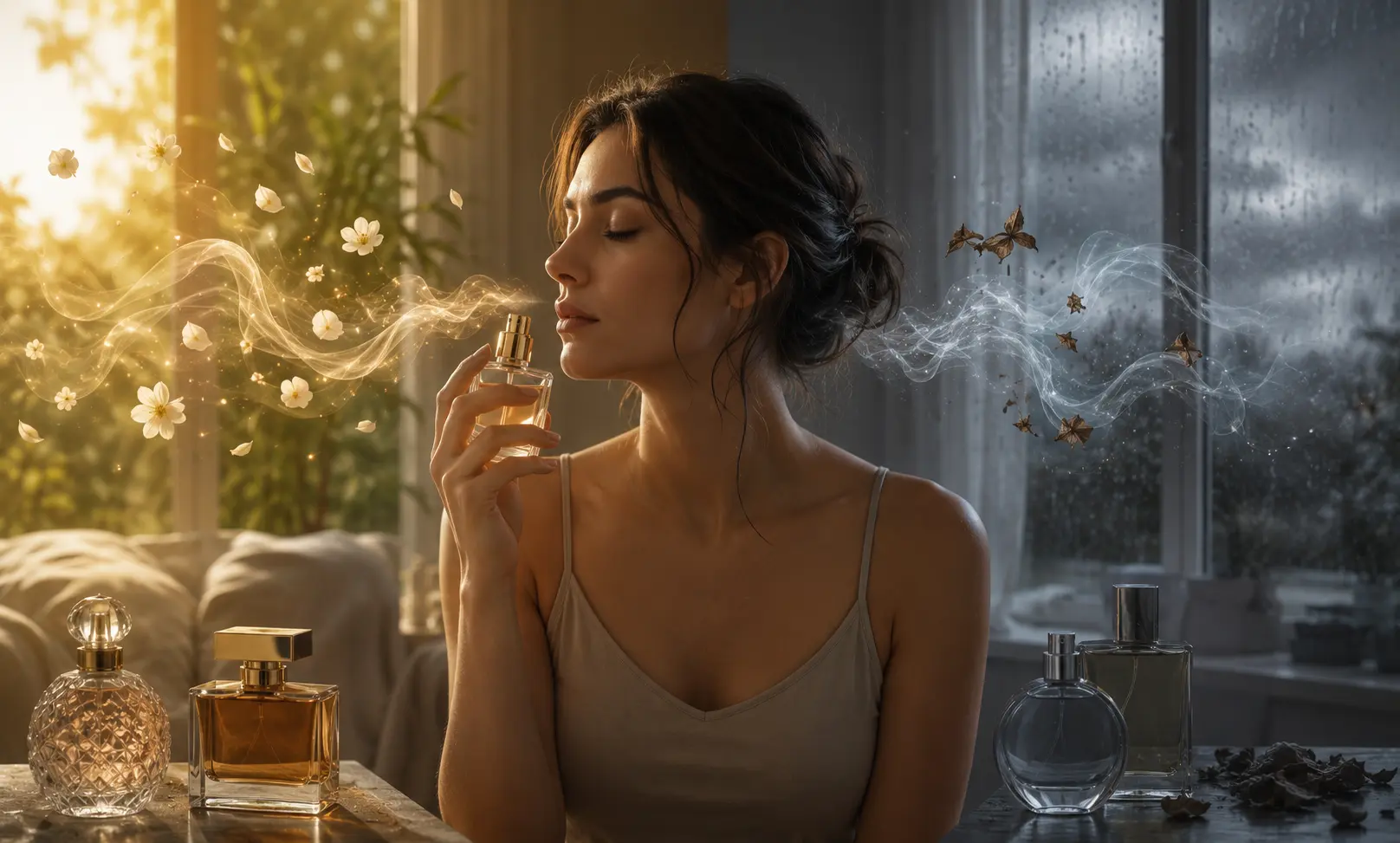
Why Does Perfume Disappear Faster On Some Days Than Others?
🧠 Introduction
Have you ever sprayed your favorite fragrance in the morning, only to feel like it vanished by midday—while on other days, the same scent lasts for hours? This inconsistency isn’t random. It’s the result of multiple interacting factors, including environment, skin chemistry, perception, and even your internal biology.
Understanding why perfume disappears faster on some days than others helps you control performance, improve longevity, and choose the right conditions for your fragrance to shine.
Why does perfume disappear faster on some days?
Perfume may fade faster due to higher temperatures, dry skin, hormonal fluctuations, increased sweating, or olfactory fatigue. These factors accelerate evaporation or reduce your ability to detect the scent.
🌡️ 1. Temperature Speeds Up Evaporation
Heat is one of the most powerful variables affecting fragrance longevity.
When temperatures rise:
- Fragrance molecules evaporate faster
- Top notes burn off quickly
- The scent may feel “gone” within hours
This is why a perfume that performs well indoors may disappear quickly outdoors in hot weather. For a deeper explanation of how heat impacts fragrance structure and performance, see How Temperature Affects Perfume: Can Heat Ruin Your Fragrance?
🧬 2. Your Skin Chemistry Changes Daily
Perfume doesn’t behave the same way on every person—or even on the same person every day.
Factors that influence this include:
- Skin oil levels
- Hydration
- pH balance
On days when your skin is dry, perfume tends to:
- Evaporate faster
- Project less
- Lose depth quickly
On well-hydrated or slightly oily skin:
- Fragrance molecules bind better
- Longevity increases significantly
This explains why the same scent can feel weaker or disappear faster depending on your skin condition. For more insight, explore Why Does Perfume Smell Different on Skin?
👃 3. Your Nose May Be “Turning Off” (Olfactory Fatigue)
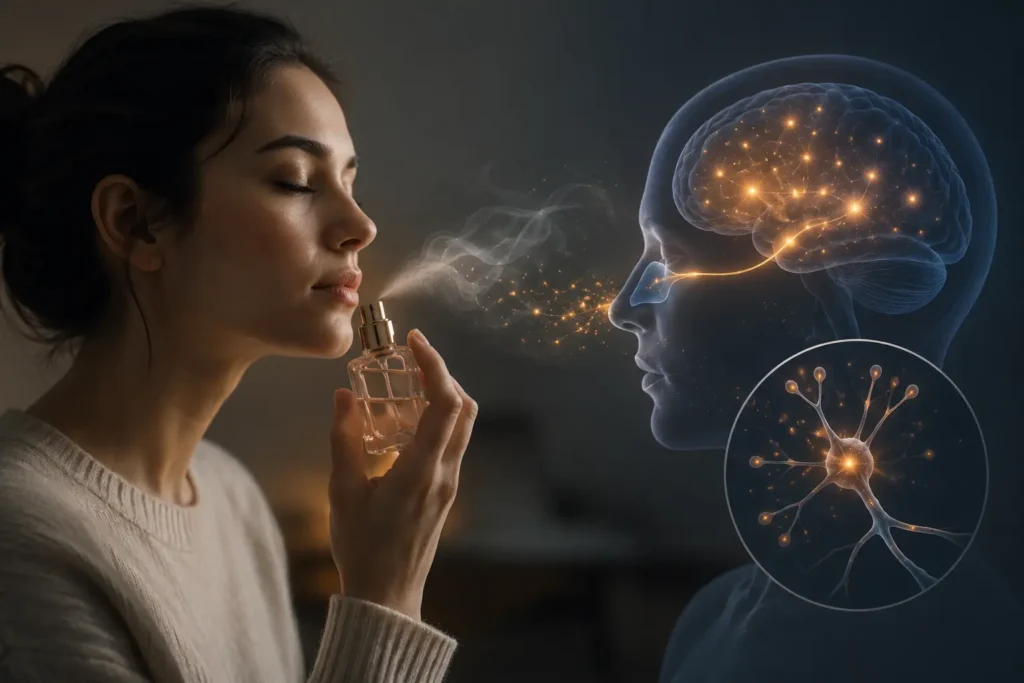
Sometimes, the perfume hasn’t disappeared—you’ve just stopped noticing it.
This phenomenon is called olfactory fatigue, where:
- Your brain filters out constant smells
- You become “blind” to your own fragrance
- Others can still smell it clearly
This is especially common with:
- Musky scents
- Woody bases
- Clean skin-like fragrances
If you suspect this is happening, step away from the scent for a few minutes and return—you may detect it again. Learn more in Olfactory Fatigue Explained Simply.
📉 4. Some Days Your Perfume Simply Feels Weaker
There are days when everything feels off—even your fragrance.
Possible reasons include:
- Air circulation (wind or AC)
- Humidity changes
- Clothing absorption
- Your overall physical state
These subtle environmental shifts can make your perfume feel weaker, even if its actual performance hasn’t changed drastically. A deeper breakdown of this phenomenon is covered in Why Does My Perfume Smell Weaker Some Days?
🧪 5. Hormones Influence How Your Skin Holds Scent
Your body chemistry isn’t static—it changes constantly.
Hormonal fluctuations can affect:
- Skin temperature
- Oil production
- Sweat composition
This means:
- On some days, perfume lasts longer
- On others, it fades unusually fast
For example:
- Increased oil → better longevity
- Increased sweat → faster breakdown
These biological changes are often subtle but impactful. To understand this deeper, see How Hormones Affect Perfume Smell.
📊 Comparison Table: Why Perfume Disappears Faster
| Factor | Effect on Perfume | Result |
|---|---|---|
| High Temperature | Faster evaporation | Shorter longevity |
| Dry Skin | Poor molecule retention | Weak projection |
| Oily/Hydrated Skin | Better binding | Longer-lasting scent |
| Olfactory Fatigue | Reduced scent perception | Perfume feels “gone” |
| Hormonal Changes | Alters skin chemistry | Inconsistent performance |
| Airflow & Humidity | Disperses scent molecules | Reduced intensity |
Does perfume really disappear, or do you just stop smelling it?
In many cases, perfume doesn’t fully disappear. Instead, your brain adapts to the scent through olfactory fatigue, making it seem like it’s gone even though others can still detect it.
🧠 Key Takeaways
- Perfume longevity is not fixed—it changes daily
- External factors (heat, air, humidity) affect evaporation
- Internal factors (skin, hormones) affect retention
- Perception (your nose) can mislead you
Understanding these layers helps you interpret your fragrance experience more accurately instead of assuming poor quality.
❓ FAQ Section
Why does my perfume last all day sometimes but not others?
Because environmental conditions, skin hydration, and body chemistry vary daily, affecting how the fragrance performs.
Does sweating make perfume disappear faster?
Yes. Sweat can dilute and break down fragrance molecules, reducing longevity.
Can dry skin cause perfume to fade quickly?
Absolutely. Dry skin lacks oils that help hold scent molecules, leading to faster evaporation.
How can I tell if my perfume is really gone?
Ask someone else nearby or revisit the scent after a break. If you smell it again, it was likely olfactory fatigue.
Do hormones really affect perfume performance?
Yes. Hormonal changes influence skin oil and temperature, which directly impact how long a scent lasts.
So next time your perfume seems to disappear, ask yourself: is it really gone—or is your body and environment quietly changing the way you experience it?
Discover more from Perfume Cultures
Subscribe to get the latest posts sent to your email.



One Comment