Are Viral Perfumes Ruining Fragrance Individuality?
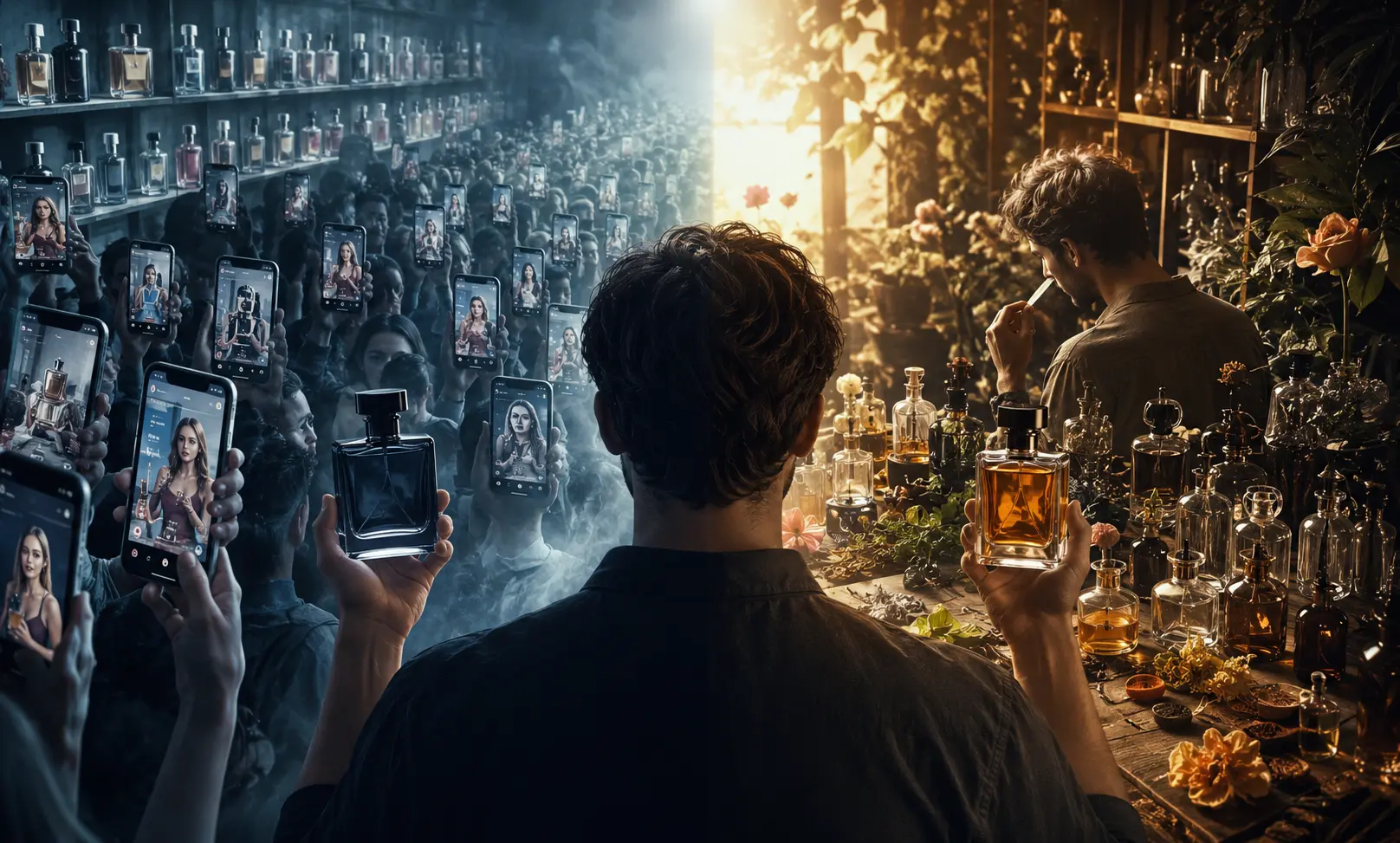
Ten years ago, wearing a fragrance often felt personal. People searched for a scent that matched their identity, personality, memories, or lifestyle. Today, however, many perfumes become famous overnight because of TikTok clips, influencer reactions, viral “top 10” lists, and algorithm-driven hype.
The modern fragrance world is no longer controlled only by perfume houses. It is increasingly shaped by short videos, emotional marketing, online validation, and social media repetition.
And this raises an uncomfortable question:
Are viral perfumes quietly destroying fragrance individuality?
For many younger American consumers, the answer may already be yes.
Why do viral perfumes reduce fragrance individuality?
Viral perfumes can reduce fragrance individuality because social media algorithms push millions of people toward the same trending scents. Instead of choosing fragrances based on personal identity or emotional connection, many consumers now buy perfumes based on popularity, influencer validation, and fear of missing out.
🧠 The Modern Fragrance Industry Is Becoming Emotionally Algorithmic
Perfume buying used to involve exploration, curiosity, and slow emotional attachment.
Today, algorithms often decide which fragrances people discover first.
A perfume becomes viral not necessarily because it is unique — but because it performs well emotionally on platforms like TikTok, Instagram Reels, and YouTube Shorts.
This directly connects to the growing social-media-driven fragrance culture discussed in Why Short Video Content Sells More Perfumes Today, where emotional speed now matters more than slow brand storytelling.
Modern consumers are constantly exposed to:
- “Best Compliment Pulling Fragrances”
- “Top 5 Panty Droppers”
- “Perfumes Everyone Will Notice”
- “Most Addictive Scents Right Now”
Over time, this creates emotional repetition.
People begin chasing the same scents for the same emotional outcomes.
And individuality slowly weakens.
🔥 Viral Perfumes Create Shared Emotional Identity
One reason viral fragrances spread so aggressively is because they create social belonging.
Wearing a trending perfume can feel like participating in an online cultural movement.
This emotional mechanism strongly overlaps with ideas explored in The Emotional Science Behind Viral Perfumes, where fragrances become emotionally symbolic products instead of simply personal scents.
Consumers often buy viral perfumes because they want:
- social validation
- emotional relevance
- trend participation
- online recognition
- “safe” attractiveness
The fragrance becomes less about self-expression — and more about emotional conformity.
Ironically, many people buy “unique” viral perfumes at exactly the same time as everyone else.
📱 Algorithms Quietly Reward Sameness
Social media platforms are designed to maximize engagement.
And similarity performs extremely well online.
When one fragrance starts trending:
- more creators review it
- more consumers search for it
- more brands imitate it
- more recommendation systems push it
This creates a feedback loop.
The result?
A handful of fragrances dominate public attention while thousands of lesser-known artistic fragrances disappear from mainstream discovery.
This connects naturally to The Psychology Behind Perfume Influencer Culture, where creators unintentionally shape collective fragrance behavior through emotional influence and repetitive recommendations.
The algorithm does not necessarily reward originality.
It rewards emotional familiarity.
🇺🇸 Younger American Consumers Are Moving Away From Signature Scent Culture
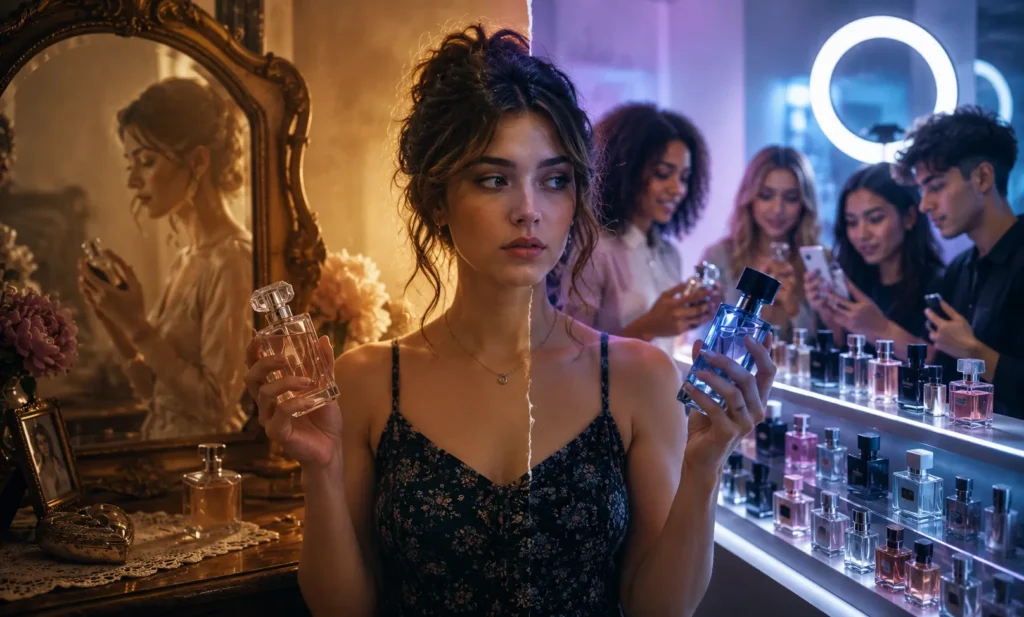
For decades, many people wanted a “signature scent” — a fragrance strongly connected to their identity.
Today, younger consumers often rotate fragrances constantly.
Why?
Because online culture rewards novelty more than consistency.
This trend strongly reflects the behavioral shift discussed in Why Younger Americans No Longer Want A Signature Scent, where fragrance identity becomes fluid, temporary, and socially adaptive.
Modern consumers increasingly ask:
- “What’s trending?”
- “What gets compliments?”
- “What’s viral right now?”
Instead of:
- “What truly represents me?”
The emotional center of fragrance culture is shifting from identity → stimulation.
Why are younger consumers abandoning signature scents?
Many younger consumers abandon signature scents because social media encourages constant novelty, trend participation, and emotional variety. Viral fragrance culture rewards trying new perfumes frequently instead of building long-term scent identity around one fragrance.
🎭 Emotional Conformity Is Stronger Than Most People Realize
Many consumers believe they are making independent fragrance decisions.
But psychologically, humans naturally copy emotional behavior from groups.
Especially online.
When millions of views, comments, compliments, and reactions surround a perfume, consumers subconsciously perceive it as:
- safer
- more attractive
- socially approved
- emotionally trustworthy
This partially explains why many people now trust community reactions more than traditional advertising — a behavior explored in Why Fragrance Reviews Feel More Trustworthy Than Ads.
Consumers increasingly trust:
- TikTok reactions
- Reddit discussions
- influencer compliments
- “real people” experiences
more than polished luxury campaigns.
This creates powerful social copying behavior inside fragrance culture.
🛍️ Too Many Choices Also Push Consumers Toward Viral Trends
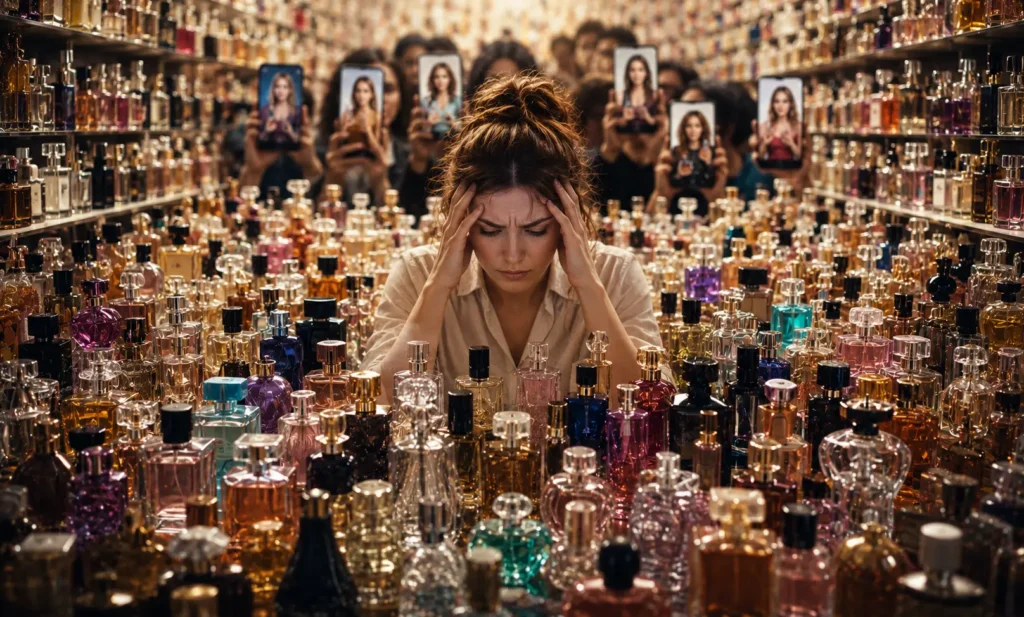
Ironically, massive fragrance choice overload can make individuality weaker — not stronger.
When consumers face thousands of perfume options, many experience:
- decision fatigue
- emotional uncertainty
- fear of wasting money
- anxiety about choosing incorrectly
This naturally pushes them toward “safe viral options.”
This connects perfectly with Why Too Many Fragrance Choices Confuse Customers, where consumers often use popularity as a psychological shortcut when overwhelmed.
Viral perfumes simplify decision-making.
People think:
“If millions like it, it must be good.”
But this also centralizes fragrance culture around the same repetitive scent DNA profiles.
📊 Comparison Table: Individual Fragrance Identity vs Viral Perfume Culture
| Factor | Traditional Signature Scent Culture | Viral Perfume Culture |
|---|---|---|
| Main Goal | Personal identity | Social relevance |
| Buying Motivation | Emotional self-expression | Online validation |
| Discovery Method | Personal exploration | Algorithms & influencers |
| Fragrance Rotation | Low | Very high |
| Emotional Driver | Identity connection | Fear of missing out |
| Consumer Behavior | Long-term attachment | Trend chasing |
| Social Influence | Limited | Extremely high |
| Scent Originality | Often unique | Often repetitive |
🧠 Are Viral Perfumes Completely Bad?
Not necessarily.
Viral culture also has benefits:
- introduces younger audiences to fragrance
- helps smaller brands gain visibility
- increases fragrance experimentation
- creates fragrance communities online
- makes perfume culture more accessible
The real issue is balance.
When trends completely replace personal exploration, individuality suffers.
The healthiest fragrance relationship may be:
- enjoying trends
- while still building personal scent identity
Because the most memorable fragrances are often the ones that emotionally feel like you — not simply the ones the algorithm showed first.
Conclusion
Viral perfumes are not destroying fragrance culture.
But they are transforming it.
The fragrance world is becoming faster, emotionally algorithmic, and socially interconnected.
For modern American consumers, perfume increasingly functions as:
- identity signaling
- emotional participation
- online social behavior
- digital self-expression
The danger appears when consumers stop asking:
“Do I truly love this scent?”
and start asking only:
“Is everyone else wearing it?”
Because once fragrances become purely trend-driven, individuality quietly fades into the background.
And in a world where millions smell the same…
true uniqueness becomes rare luxury.
❓FAQ
Are viral perfumes always low quality?
No. Many viral perfumes are excellent fragrances. The issue is not quality — it is the growing social pressure that pushes large groups of consumers toward the same scents.
Why do people buy perfumes influencers recommend?
Influencers create emotional trust, social familiarity, and perceived authenticity. Consumers often feel influencer recommendations are more relatable than traditional luxury advertising.
Can signature scents still exist today?
Yes. Many consumers still prefer having a personal signature fragrance, but younger audiences increasingly rotate scents based on mood, season, trends, and social environments.
Do algorithms influence fragrance buying behavior?
Absolutely. Social media algorithms heavily affect which perfumes consumers repeatedly see, discuss, and emotionally associate with popularity or attractiveness.
Why are niche fragrances becoming more attractive now?
As mainstream fragrances become increasingly viral and repetitive, some consumers search for niche perfumes to regain individuality and uniqueness.
💬 Interactive Question
Do you think viral perfumes help people discover new scents — or are they slowly making everyone smell the same? Share your opinion in the comments below.
Discover more from Perfume Cultures
Subscribe to get the latest posts sent to your email.