
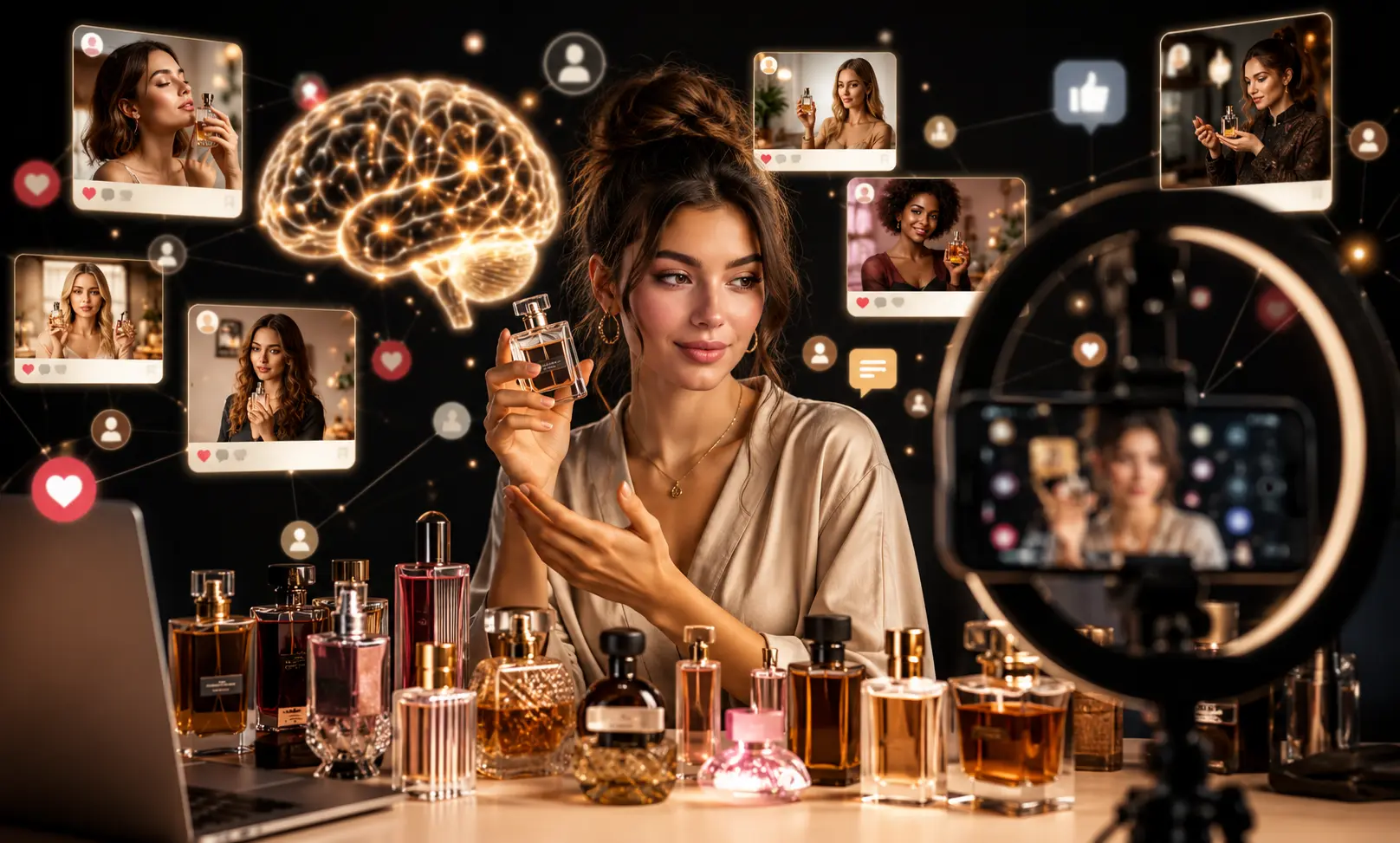
The Psychology Behind Perfume Influencer Culture
Perfume marketing has changed dramatically over the last few years. In the past, fragrance brands depended heavily on celebrities, department stores, and glossy magazine campaigns. Today, however, millions of Americans discover new perfumes through TikTok creators, Instagram reels, YouTube reviewers, and short-form content that feels far more personal than traditional advertising.
What makes this shift so powerful is not just the perfume itself — it is the psychology behind influence, identity, trust, and emotional belonging.
Modern consumers no longer buy fragrances only because a luxury brand tells them to. They increasingly buy perfumes because they see people online using scent as part of a lifestyle, personality, or emotional identity. This is exactly why perfume influencer culture has become one of the strongest psychological forces in today’s fragrance industry.
Interestingly, this behavior strongly connects with how digital platforms now shape fragrance perception in articles like How Perfume Ads on Social Media Are Changing the Game and Algorithm Culture Quietly Influences Fragrance Identity, where online visibility itself quietly changes what consumers consider desirable.
Why are perfume influencers so effective?
Perfume influencers are effective because they create emotional trust, visual identity, and social relatability. Modern consumers often trust real-life lifestyle presentation more than traditional luxury advertising, especially on platforms like TikTok and Instagram.
📱 Why Social Media Changed Perfume Psychology
Fragrance has always been emotional. However, social media transformed perfume into something even more powerful: a public identity signal.
People no longer simply wear perfume.
They now:
- film it,
- recommend it,
- rank it,
- compare it,
- layer it,
- and emotionally associate it with personality archetypes.
A fragrance is no longer just “a smell.”
It becomes:
- “the clean guy scent,”
- “old money energy,”
- “main character fragrance,”
- or “luxury confidence in a bottle.”
This psychological framing matters because younger American consumers increasingly build identity through digital aesthetics.
A person scrolling TikTok may not consciously search for a perfume — but repeated emotional exposure creates subconscious familiarity and desire.
That is one reason why algorithm-driven exposure has become so influential in fragrance culture today.
🇺🇸 American Consumers Now Trust Relatable Personalities More Than Traditional Ads
Modern American consumers grew up surrounded by advertising. As a result, many now instinctively distrust overly polished luxury campaigns.
Influencers succeed because they appear:
- more authentic,
- more relatable,
- more emotionally accessible,
- and more similar to the average consumer.
This creates something psychologists call parasocial trust — a one-sided emotional relationship where followers feel connected to online personalities they have never met.
When an influencer repeatedly recommends a fragrance:
- viewers begin associating that scent with credibility,
- familiarity increases,
- and psychological resistance decreases.
This effect becomes even stronger when creators share:
- “daily routine” content,
- “date night” scenarios,
- emotional stories,
- or confidence transformations linked to fragrance use.
🔥 Viral Fragrance Trends Are Built on Emotional Speed
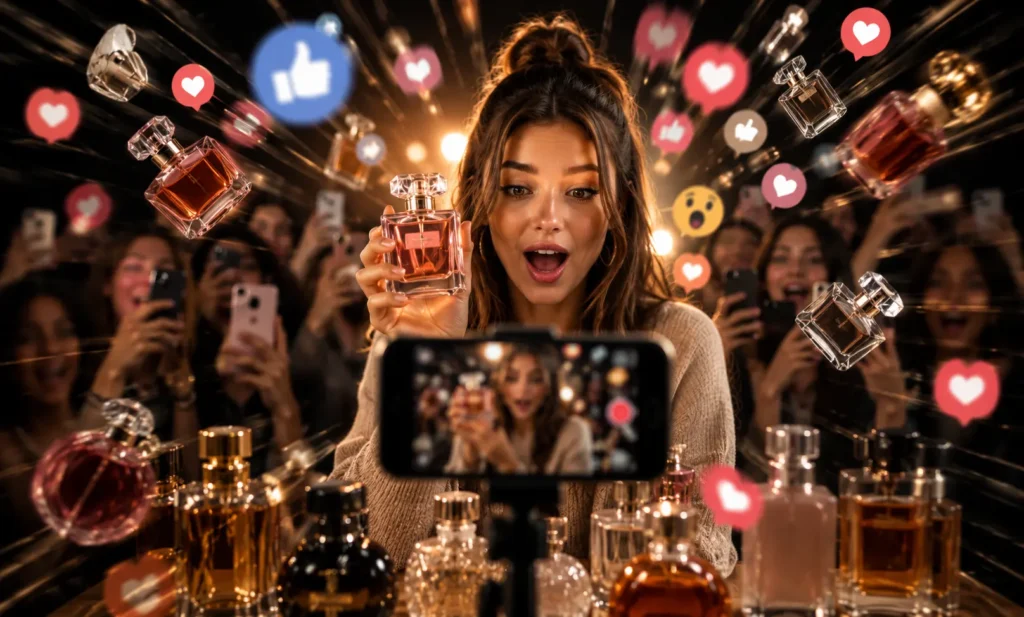
Many viral perfumes explode online not because they are objectively better — but because they spread emotionally faster.
TikTok especially rewards:
- emotional reactions,
- fast opinions,
- dramatic compliments,
- and visual storytelling.
This creates rapid “social proof loops.”
For example:
- one viral review creates curiosity,
- curiosity creates mass sampling,
- mass sampling creates discussion,
- discussion creates algorithmic visibility,
- visibility creates more purchases.
Over time, consumers begin perceiving popularity itself as evidence of quality.
This psychological cycle partially explains why some fragrances suddenly become “must-have” scents almost overnight.
How does influencer culture affect perfume buying behavior?
Influencer culture affects perfume buying behavior by increasing emotional trust, social validation, and fear of missing out (FOMO). Consumers often associate popular online fragrances with identity, status, and belonging.
🛍️ The Hidden Role of FOMO in Fragrance Culture
One of the strongest psychological drivers in perfume influencer culture is FOMO — fear of missing out.
Consumers constantly see:
- “Top 5 compliments perfumes”
- “Everyone is buying this fragrance”
- “The scent TikTok cannot stop talking about”
- “This perfume sold out again”
These phrases create urgency.
Even when consumers do not initially need a fragrance, repeated exposure creates emotional pressure to participate socially.
This is especially powerful among younger audiences because online trends now function similarly to digital social groups.
People do not always buy the fragrance itself.
Sometimes they buy:
- participation,
- relevance,
- identity,
- or emotional inclusion.
✨ Why Influencers Make Certain Perfumes Feel More Luxurious
Luxury perception is deeply psychological.
Interestingly, influencer culture often increases luxury perception even for affordable fragrances.
How?
Because consumers subconsciously associate:
- beautiful visuals,
- confident presentation,
- aesthetic environments,
- and social attention
with premium quality.
This psychological effect connects strongly with ideas explored in Why Curated Perfume Collections Feel More Luxurious, where presentation and emotional framing quietly influence perceived value more than consumers realize.
Modern fragrance marketing increasingly proves that emotional storytelling can sometimes matter more than raw product pricing.
📊 Comparison Table: Traditional Perfume Advertising vs Influencer Culture
| Factor | Traditional Perfume Ads | Influencer Perfume Culture |
|---|---|---|
| Trust Style | Brand authority | Personal relatability |
| Consumer Reaction | Passive viewing | Emotional interaction |
| Buying Motivation | Luxury aspiration | Social identity |
| Speed of Influence | Slow | Extremely fast |
| Emotional Connection | Low to medium | Very high |
| Platform | TV, magazines, stores | TikTok, Instagram, YouTube |
| Psychological Trigger | Prestige | Belonging & social proof |
| Product Discovery | Controlled campaigns | Viral algorithm exposure |
🧠 Decision Fatigue Also Explains Influencer Popularity
Modern consumers face overwhelming fragrance choices.
Thousands of perfumes compete simultaneously online.
This creates psychological exhaustion.
Ironically, influencers reduce this pressure by simplifying decisions:
- “Best office scent”
- “Top beginner fragrances”
- “Best compliment getter”
- “Top 3 safe blind buys”
This explains why consumers increasingly depend on creator recommendations instead of exploring independently.
This behavior strongly connects with themes explored in Why Too Many Fragrance Choices Confuse Customers and The Psychology of Decision Fatigue in Fragrance Shopping, where excessive choice can reduce buying confidence rather than improve it.
🚪 Why Some Consumers Leave Stores But Buy Later Online
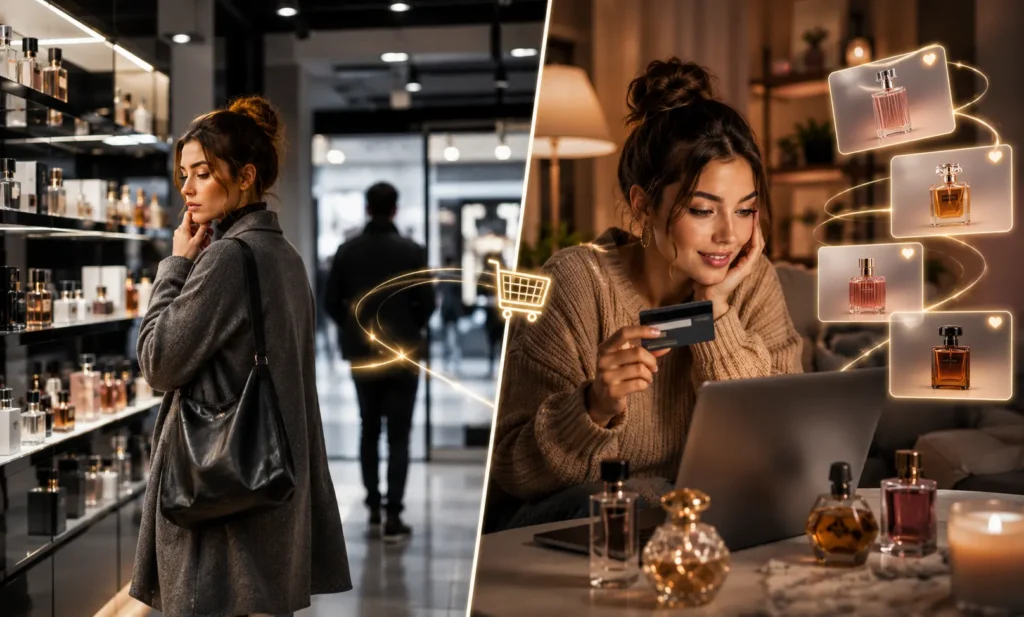
Another major shift is where fragrance decisions actually happen.
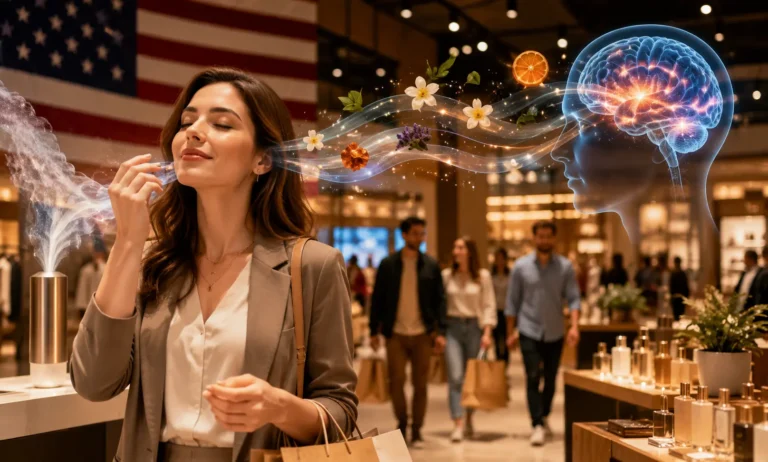
Many consumers now test perfumes physically in stores — but emotionally finalize decisions later online through influencer validation.
This means:
- stores create exposure,
- but social media creates confidence.
Consumers often leave stores uncertain because too many options create mental overload.
Later, however, seeing influencers repeatedly discuss the same fragrance reduces uncertainty and increases emotional reassurance.
This behavior closely relates to patterns discussed in Why Customers Leave Perfume Stores Without Buying Anything, where confusion and overstimulation can interrupt purchase decisions.
📱 Algorithms Quietly Shape Fragrance Identity
One of the most fascinating aspects of influencer culture is that algorithms now partially shape personal fragrance identity itself.
If someone repeatedly watches:
- “clean fragrances,”
- “luxury masculine scents,”
- “vanilla girl perfumes,”
- or “dark mysterious fragrances,”
platform algorithms continuously reinforce those themes.
Over time, consumers begin building scent identity around repeated digital exposure.
This means fragrance preference is no longer influenced only by:
- personality,
- culture,
- memories,
- or environment.
It is increasingly shaped by algorithmic repetition and online identity ecosystems.
🔎 Why This Topic Matters for the Future of the Perfume Industry
Perfume influencer culture is not just a temporary social media trend.
It represents a major transformation in:
- trust psychology,
- identity signaling,
- consumer behavior,
- and emotional branding.
The fragrance industry is gradually shifting from:
“brands telling consumers what luxury means”
to:
“digital communities emotionally deciding what feels desirable.”
This shift will likely continue influencing:
- fragrance launches,
- bottle design,
- marketing strategies,
- luxury perception,
- and even scent trends themselves.
❓FAQ
Why do people trust perfume influencers more than brands?
Because influencers often appear more relatable, authentic, and emotionally honest than traditional advertisements.
Does TikTok really influence perfume sales?
Yes. Viral TikTok content has significantly increased visibility and sales for many fragrances through social proof and emotional exposure.
Why do viral perfumes sell so quickly?
Viral perfumes benefit from emotional momentum, FOMO, algorithm exposure, and repeated social validation.
Are influencer-recommended perfumes always better?
Not necessarily. Many become popular because of emotional storytelling and online visibility rather than objective fragrance quality.
Why are younger consumers heavily influenced by fragrance creators?
Younger consumers increasingly use social media for identity formation, lifestyle inspiration, and purchase validation.
Conclusion
Perfume influencer culture reveals something much deeper than marketing trends.
It shows how modern consumers increasingly connect fragrance with:
- identity,
- belonging,
- emotion,
- social validation,
- and digital culture.
Today, perfumes are no longer sold only through scent.
They are sold through stories, personalities, aesthetics, and emotional experiences.
And in the modern social media era, influence itself has quietly become part of the fragrance.
💬 Interactive Question
Have you ever bought a perfume because of a TikTok, Instagram, or YouTube influencer — and did the fragrance actually live up to the hype once you tried it yourself?
Discover more from Perfume Cultures
Subscribe to get the latest posts sent to your email.

4 Comments