
Why Every Store Smells the Same (and You Don’t Notice)
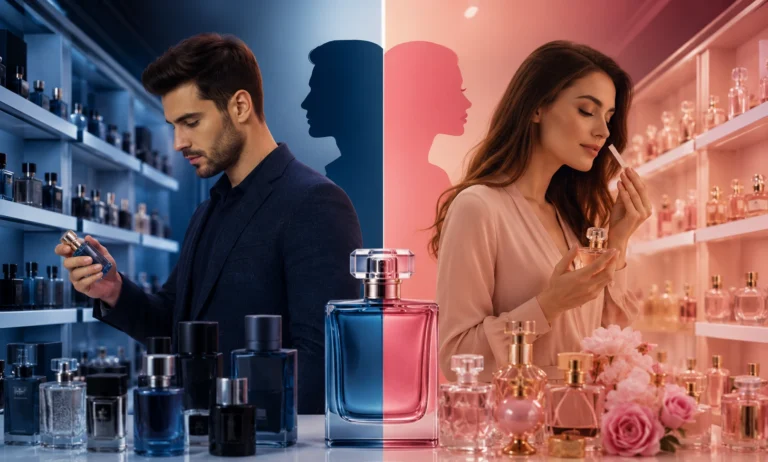
Walk into a clothing store, a hotel lobby, or even a supermarket, and something subtle happens before you notice the lighting, the music, or the products: you smell the space.
Yet strangely, most people don’t consciously register it. Even more curious—many stores seem to share a similar kind of scent profile: clean, soft, slightly sweet, and universally “pleasant.”
So why do so many stores smell the same… and why don’t you notice it?
🧠 The Invisible Layer of Retail Design
Modern retail environments are carefully engineered experiences. Lighting, layout, music, and even temperature are optimized to influence behavior. Scent is part of that system—but it’s the most invisible one.
Unlike visuals or sound, scent operates in the background. You don’t actively “look” for it. Instead, your brain processes it automatically, often without conscious awareness.
This is why scent becomes one of the most powerful—but overlooked—tools in shaping how you feel inside a store.
🌫️ Why Stores Use Similar Smells
If you pay close attention, you’ll notice a pattern: many stores use scents that feel familiar and safe rather than bold or distinctive.
This isn’t a coincidence.
✔️ 1. Universal Appeal
Retailers avoid polarizing fragrances. Instead of strong oud, heavy spices, or niche compositions, they choose:
- Clean musk
- Light citrus
- Soft florals
- Subtle woody notes
These scents are designed to be liked by the widest possible audience.
✔️ 2. Psychological Neutrality
The goal isn’t to distract you—it’s to create a comfortable emotional baseline.
A strong or unique scent might:
- Overwhelm customers
- Trigger negative associations
- Shorten time spent in-store
A neutral scent does the opposite: it relaxes you without demanding attention.
✔️ 3. Consistency Across Locations
Brands want you to feel the same emotional response whether you’re in New York, London, or Dubai.
Using a standardized scent creates a consistent brand identity that goes beyond logos and visuals.
This concept is explored more deeply in
👉 How Scent Branding Influences Customers (And Why Brands Use It to Boost Sales)
🔬 The Science: How Your Brain Processes Store Scents
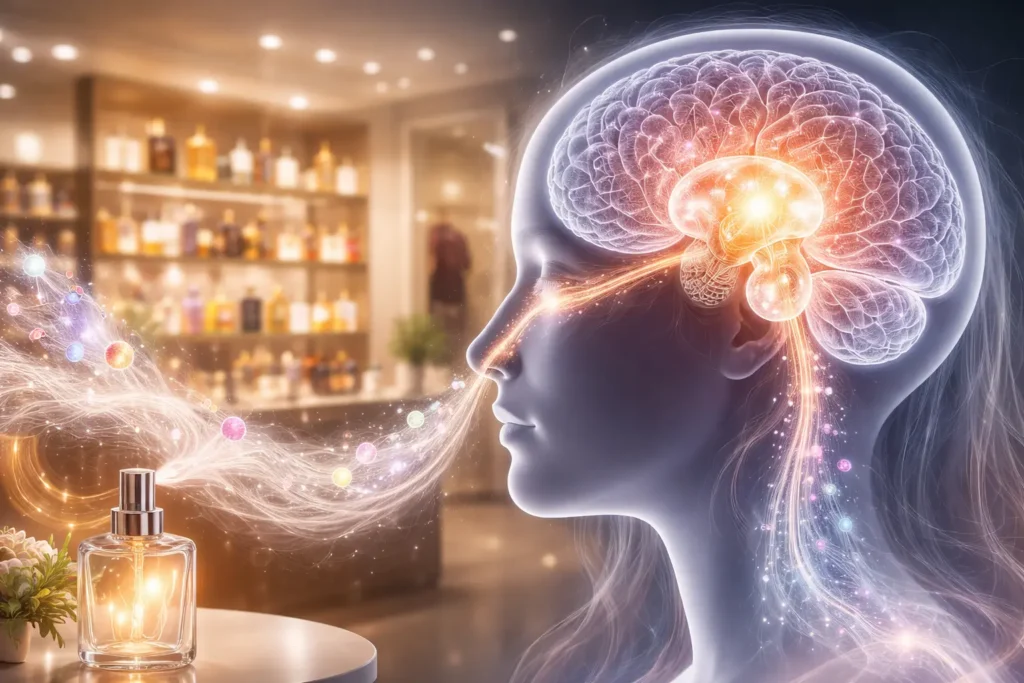
To understand why you don’t notice these smells, we need to look at how scent works on a biological level.
When fragrance molecules enter your nose, they bind to receptors and send signals directly to the brain—specifically areas linked to memory and emotion.
This process happens almost instantly and largely outside conscious control.
If you want a deeper breakdown of this mechanism, see:
👉 How Perfume Works: The Science Behind Fragrance, Molecules, and Human Smell
🧠 Nose Blindness: Why You Stop Smelling It
Here’s the key reason you don’t notice store scents:
Your brain filters them out.
This phenomenon is called olfactory adaptation, commonly known as nose blindness. After a short time, your brain decides the scent is “non-threatening” and stops paying attention to it.
That’s why:
- You smell the store when you first enter
- But after a few minutes, it seems to disappear
Even though the scent is still there—and still affecting you.
For a full explanation, read:
👉 Nose Blindness Perfume Explained: Why You Can’t Smell Your Own Fragrance
❤️ Scent and Emotion: The Hidden Influence
Even when you don’t consciously detect a scent, your brain continues to respond to it emotionally.
Scent is directly connected to the limbic system—the part of the brain responsible for emotions. This means a store’s fragrance can subtly influence:
- Your mood
- Your comfort level
- How long you stay
- How you perceive the brand
This is why scent is often described as the most emotional human sense, as explored in:
👉 Why Smell Is the Most Emotional Human Sense
🧩 Why All Stores Start to Feel the Same
When multiple stores use:
- Similar scent profiles
- Similar intensity levels
- Similar emotional goals
Your brain begins to group them together.
Over time, this creates a kind of “retail scent template” in your mind.
So even if each store technically uses a different formula, they feel the same—because they trigger the same emotional response.
🧠 Memory and Familiarity: Why It Feels Normal
Scent is also deeply tied to memory. Repeated exposure to similar smells creates a sense of familiarity.
Eventually, your brain starts to interpret that scent as:
“This is what a store smells like.”
This conditioning effect is closely related to how scents trigger memories, which you can explore here:
👉 Why Scents Trigger Memories
🧭 The Real Goal: Influence Without Awareness
The most effective store scent is not the one you notice—it’s the one you don’t.
Why?
Because once you become aware of it, it stops being subtle. And subtlety is exactly what makes scent so powerful.
Retailers aren’t trying to impress you with fragrance.
They’re trying to shape your experience quietly.
❓ FAQ: Understanding Store Scents
Why do all stores smell similar?
Because brands use universally appealing scent profiles (like clean musk and light citrus) to create a comfortable environment for most customers without risking negative reactions.
Why don’t I notice the smell after a few minutes?
Your brain adapts to the scent through a process called nose blindness, filtering it out once it determines it’s not important.
Do store scents actually affect my behavior?
Yes. Even if you’re not aware of them, scents can influence your mood, how long you stay, and even your purchasing decisions.
Are store scents the same everywhere?
Not exactly, but many follow similar scent strategies, which makes them feel alike due to shared emotional effects.
Can scent make me remember a store?
Absolutely. Scent is strongly linked to memory, which is why certain stores can feel familiar even if you’ve only visited them a few times.
🧭 Final Thought
The next time you walk into a store and feel instantly comfortable—but can’t explain why—pay attention.
You might not consciously smell anything.
But your brain does.
And it’s already shaping your experience before you even realize it.
So now that you know this… have you ever walked into a store and suddenly noticed its scent for the first time—and did it change how you felt or behaved?
Discover more from Perfume Cultures
Subscribe to get the latest posts sent to your email.