
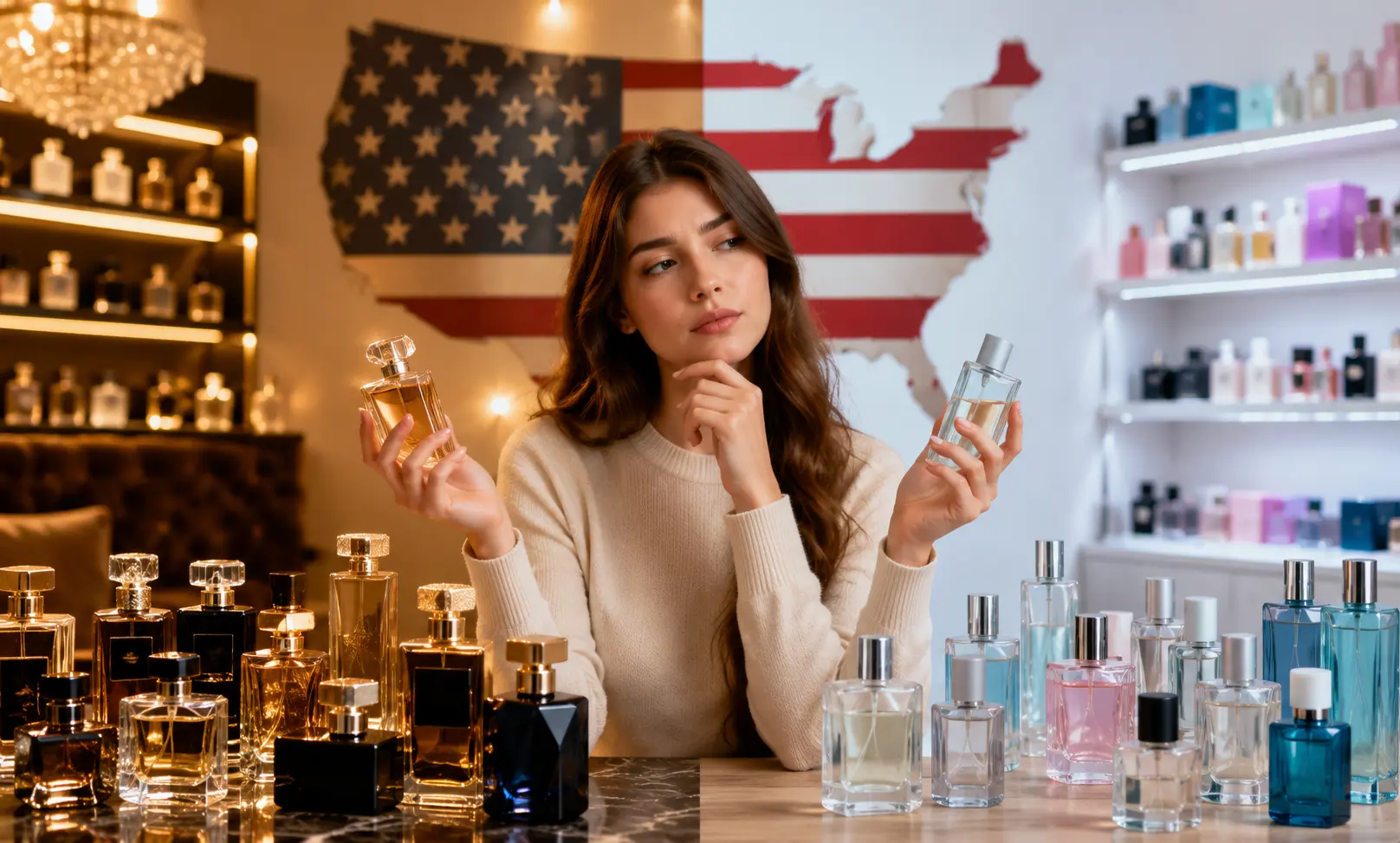
How American Consumers Balance Luxury and Affordability in Perfume Buying
Walk into any American department store, Sephora aisle, or TikTok fragrance discussion, and you’ll notice something fascinating: many consumers dream about luxury perfumes… but still actively search for affordable alternatives at the same time.
A person might own one expensive fragrance for special occasions while wearing budget-friendly scents daily. Another might buy a luxury bottle once a year but spend the rest of the time hunting for “smells-like” alternatives online.
This balance between emotional luxury and financial practicality has become one of the biggest forces shaping the modern American fragrance market.
Today’s perfume buyer is no longer choosing between “cheap” or “luxury.”
Instead, they are trying to answer a more emotional question:
“How can I smell expensive without feeling financially irresponsible?”
That question explains why designer fragrances, dupes, niche perfumes, discount retailers, clone brands, and discovery sets are all growing at the same time in the United States.
Why do American consumers buy both luxury and affordable perfumes?
American consumers often balance luxury and affordability in perfume buying by mixing emotional desire with financial practicality. Many people purchase luxury fragrances for identity, confidence, and special occasions while using affordable alternatives or dupes for everyday wear. Social media, discount retailers, and modern fragrance culture have made this behavior increasingly common.
🧠 Perfume Buying Is More Emotional Than Rational
Perfume purchasing in America is rarely based on smell alone.
Consumers often associate fragrances with:
- Personal identity
- Social status
- Attractiveness
- Professional image
- Nostalgia
- Comfort
- Lifestyle aspirations
This is why a fragrance can feel “worth it” emotionally even when it is objectively expensive.
Many shoppers are not buying liquid inside a bottle.
They are buying:
- a feeling,
- a memory,
- a social image,
- or even a future version of themselves.
This emotional layer strongly connects to the psychology discussed in The Role of Nostalgia in American Perfume Preferences, where scent becomes tied to memories, comfort, and emotional familiarity rather than simple product utility.
At the same time, consumers are becoming financially smarter.
They want emotional satisfaction without overspending unnecessarily.
That tension creates modern fragrance-buying behavior in the US.
🇺🇸 The American Consumer Wants “Smart Luxury”
Unlike older luxury culture, modern American fragrance culture often rewards smart spending instead of pure status spending.
Consumers increasingly admire people who can:
- find hidden gems,
- discover affordable alternatives,
- shop strategically,
- and smell luxurious without paying full retail prices.
This is especially visible among younger buyers in their 20s and early 30s.
For many Americans:
- Paying $350 for a fragrance can feel exciting…
- but finding a $45 fragrance that smells surprisingly premium can feel even more satisfying psychologically.
That emotional “victory feeling” matters more than many brands realize.
This spending mindset also connects naturally with The True Cost of Fragrance: What Americans Really Spend on Perfume, where consumers constantly evaluate whether fragrances truly justify their prices emotionally and financially.
💰 Luxury Does Not Always Mean Daily Use
One interesting pattern in the American market is that consumers often separate fragrances into categories:
| Usage Type | Typical Consumer Behavior |
|---|---|
| Daily Wear | Affordable, versatile fragrances |
| Office Use | Smooth, clean, non-offensive scents |
| Special Occasions | Luxury or niche fragrances |
| Social Events | Attention-grabbing designer scents |
| Emotional Comfort | Nostalgic or familiar scents |
This explains why many Americans own both:
- a luxury fragrance collection,
- and several affordable “easy reach” fragrances.
Consumers are not necessarily replacing luxury perfumes.
They are strategically reducing how often they use them.
🛍️ Why Dupes and Affordable Alternatives Became Socially Accepted
A major shift happened in the American fragrance industry during the last few years:
Affordable alternatives stopped being embarrassing.
In fact, social media made them trendy.
Platforms like TikTok and YouTube normalized phrases such as:
- “Smells like a $300 fragrance”
- “Luxury scent on a budget”
- “Best clone fragrances”
- “Designer smell without designer prices”
Consumers began viewing affordable alternatives as financially intelligent instead of socially inferior.
This is partly why brands like:
- Lattafa
- Armaf
- Zara
became extremely popular among American fragrance communities.
Meanwhile, luxury brands still maintain emotional prestige because consumers often associate them with craftsmanship, exclusivity, presentation, and social identity.
The result is not replacement.
It is coexistence.
Do Americans prefer luxury perfumes or affordable perfumes?
Most American consumers do not exclusively choose luxury or affordable perfumes. Instead, many combine both depending on occasion, budget, emotional attachment, and social context. Luxury fragrances are often reserved for identity and special experiences, while affordable fragrances provide practical daily versatility.
🧠 Scent Marketing Also Influences Spending Decisions
Retail environments heavily influence how consumers justify fragrance spending.
Lighting, music, packaging, branding, bottle design, and scent diffusion all affect perceived value.
This psychological effect connects closely with Why Scent Marketing Works On American Shoppers: The Science Behind It, because consumers often perceive fragrances differently depending on emotional atmosphere.
A perfume tested inside a luxury environment can feel:
- smoother,
- richer,
- more sophisticated,
- and emotionally “worth more.”
This emotional perception can push consumers toward higher price acceptance.
Ironically, once consumers leave the emotional retail environment, many begin searching online for cheaper alternatives that recreate the same feeling.
🌎 Cultural Diversity Also Shapes Buying Behavior
America’s cultural diversity strongly affects how consumers approach luxury and affordability.
Different cultural groups may prioritize:
- projection,
- freshness,
- sweetness,
- oud,
- clean musks,
- or subtle skin scents differently.
Some consumers are willing to pay luxury prices for fragrances that reflect cultural familiarity or personal identity.
Others prioritize versatility and value because they wear fragrance daily.
This naturally overlaps with ideas explored in Exploring the Influence of Ethnic Diversity on Perfume Choices in the US, where fragrance preferences are shaped by background, environment, family influence, and cultural scent memory.
🧴 Why Smooth Fragrances Often Feel More Expensive
Interestingly, many American consumers psychologically associate “smoothness” with luxury.
Fragrances that feel:
- balanced,
- soft,
- airy,
- controlled,
- and non-aggressive
are often perceived as more premium than extremely loud fragrances.
This helps explain why office-friendly and socially comfortable fragrances remain popular even when they are less powerful.
The same psychological behavior appears in Why Smooth Perfumes Usually Get Better Reactions Than Loud Ones and Perfumes That Attract Attention Without Causing Discomfort, where consumers often value social comfort more than raw projection.
Many people no longer want fragrances that dominate a room.
They want fragrances that create:
- subtle compliments,
- curiosity,
- and positive emotional reactions.
That social subtlety increasingly feels “luxurious” in modern American culture.
💸 Discount Shopping Has Become Part of the Hobby
Another major factor is the rise of fragrance discounters.
Many American consumers intentionally wait for:
- holiday sales,
- discount websites,
- outlet pricing,
- coupon events,
- or gray-market retailers.
Buying fragrances at full retail price is becoming less common among experienced fragrance enthusiasts.
For many shoppers, “getting a deal” becomes emotionally rewarding itself.
The shopping experience turns into part of the entertainment.
🛍️ Real-World Examples of Balanced Buying Behavior
Here’s how many American consumers actually balance luxury and affordability today:
| Consumer Type | Buying Pattern |
|---|---|
| Young Professional | One luxury scent + affordable daily scents |
| College Student | Mostly affordable fragrances + occasional decants |
| Fragrance Enthusiast | Mix of niche, designer, and clone fragrances |
| Minimalist Buyer | One versatile premium fragrance only |
| Social Media Influenced Buyer | Constantly testing trending affordable alternatives |
This hybrid behavior is becoming the new normal.
🔎 The Rise of “Affordable Luxury” Fragrance Psychology
Modern fragrance buyers increasingly chase something very specific:
A fragrance that feels expensive emotionally without creating financial guilt.
That is why terms like:
- “luxury-inspired,”
- “premium quality,”
- “high-end smell,”
- and “designer alternative”
perform so well online.
Consumers are not rejecting luxury.
They are redefining what luxury means.
For many Americans today, luxury is no longer about spending the most money.
It is about:
- emotional satisfaction,
- confidence,
- smart decision-making,
- and social comfort.
If you enjoyed exploring how psychology and lifestyle influence fragrance spending habits, you may also like reading The True Cost of Fragrance: What Americans Really Spend on Perfume, especially if you want to understand how emotions, social pressure, and modern consumer culture shape perfume budgets in the United States.
You might also find Why Scent Marketing Works On American Shoppers: The Science Behind It interesting because it explains how retail environments and emotional branding can quietly influence perfume purchasing decisions without consumers even realizing it.
And if you’re curious about the emotional side of fragrance preferences, The Role of Nostalgia in American Perfume Preferences connects beautifully with the idea that people often buy perfumes based on memories and emotional comfort rather than logic alone.
❓FAQ
Why do people buy expensive perfumes if affordable ones exist?
Many consumers buy expensive perfumes because luxury fragrances often provide emotional satisfaction, brand prestige, presentation quality, and personal identity value beyond the scent itself.
Are affordable fragrances becoming more popular in America?
Yes. Affordable fragrances and dupes have become increasingly popular due to social media influence, online fragrance communities, and changing attitudes toward smart spending.
Do luxury perfumes always smell better?
Not necessarily. Many consumers prefer affordable fragrances that suit their lifestyle, personality, or comfort preferences better than expensive luxury fragrances.
Why do smooth fragrances often feel more luxurious?
Smooth fragrances are often perceived as refined, balanced, and socially comfortable, which psychologically creates a more premium impression.
Are younger Americans more budget-conscious with fragrances?
In many cases, yes. Younger consumers often balance emotional desire for luxury with practical financial decisions by mixing designer fragrances with affordable alternatives.
🧠 Final Thoughts
The modern American fragrance consumer is no longer choosing between luxury and affordability.
They are trying to balance:
- identity,
- emotion,
- comfort,
- financial responsibility,
- and social perception all at once.
That balance is reshaping the entire fragrance industry.
Today, smelling expensive matters.
But feeling financially smart matters too.
And increasingly, the most successful fragrances are the ones that deliver both.
💬 Interactive Question
Do you personally prefer owning a few luxury fragrances, or would you rather build a larger collection using affordable perfumes and smart alternatives?
Discover more from Perfume Cultures
Subscribe to get the latest posts sent to your email.




3 Comments