🧴 How Long Does Perfume Last? Understanding Longevity, Skin Chemistry, and Fragrance Strength
Perfume is more than just a pleasant scent—it’s a personal signature. Yet one of the most common questions people ask before buying a fragrance is simple:
How long does perfume last?
The answer is not the same for every fragrance. Some perfumes disappear after just a few hours, while others linger on the skin well into the next day. The longevity of a perfume depends on several factors, including fragrance concentration, skin chemistry, ingredients, and even how the perfume is applied.
In this guide, we’ll explore how long perfume typically lasts, what influences its staying power, and how you can make your favorite fragrance last longer throughout the day.
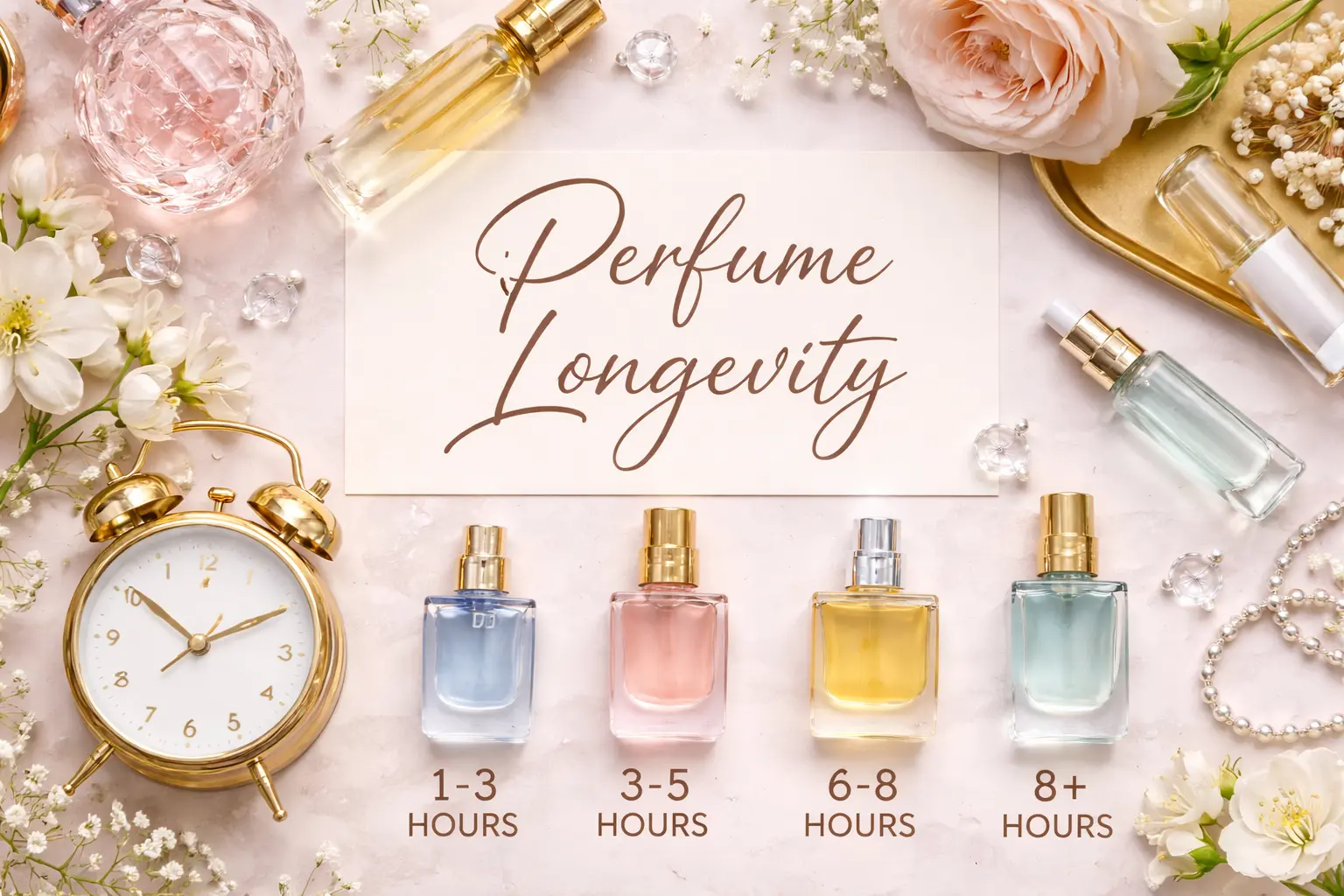
⏳ Average Longevity of Different Perfume Types
One of the biggest factors affecting how long a fragrance lasts is its concentration of aromatic oils. Higher concentrations generally result in stronger and longer-lasting scents.
Here’s a quick comparison of common fragrance types:
| Fragrance Type | Oil Concentration | Average Longevity |
|---|---|---|
| Eau de Cologne (EDC) | 2–5% | 1–3 hours |
| Eau de Toilette (EDT) | 5–12% | 3–5 hours |
| Eau de Parfum (EDP) | 12–20% | 6–8 hours |
| Parfum / Extrait | 20–30% | 8–12+ hours |
This explains why luxury niche perfumes and extrait fragrances often last significantly longer than lighter colognes.
Higher concentrations generally result in stronger and longer-lasting scents.
👉 However, the way you apply your fragrance can make a huge difference too — this guide on How to Apply Perfume Properly: The Right Way to Make Your Fragrance Last All Day shows you how to maximize performance no matter the concentration.
🌿 Why Some Perfumes Last Longer Than Others
Even two perfumes with the same concentration may behave very differently on the skin.
Several hidden factors influence perfume longevity.
1️⃣ Fragrance Ingredients
Certain scent notes naturally last longer than others.
Long-lasting notes include:
- Oud
- Amber
- Musk
- Patchouli
- Vanilla
- Sandalwood
These ingredients form the base notes of a fragrance and can remain detectable for many hours.
On the other hand, lighter notes such as:
- Citrus
- Green notes
- Light florals
tend to evaporate much faster.
2️⃣ Skin Chemistry
Your skin type plays a major role in how perfume develops and lasts.
For example:
| Skin Type | Effect on Perfume |
|---|---|
| Oily skin | Holds fragrance longer |
| Dry skin | Perfume fades faster |
| Neutral skin | Balanced longevity |
This is why the same perfume may last 8 hours on one person but only 4 hours on another.
3️⃣ Climate and Temperature
Environmental conditions also influence how perfume behaves.
- Hot weather increases evaporation.
- Cold weather slows fragrance evaporation.
This is why many people prefer lighter fragrances in summer and stronger perfumes in winter.
💨 How Long Does Perfume Last on Skin vs Clothes?
Perfume behaves differently depending on where it is applied.
| Application Area | Typical Longevity |
|---|---|
| Skin | 4–8 hours |
| Hair | 6–10 hours |
| Clothing | 12–24 hours |
Fabric tends to hold fragrance molecules longer than skin, which is why you might still smell perfume on a jacket the next day.
However, always test perfume on fabric first to avoid stains.
👉 Ever wondered why some fragrances last all day while others fade in just a few hours? Discover the science behind it in Why Do Some Perfumes Last All Day? The Science Behind Long-Lasting Fragrance — and learn what really makes a scent last.
💡 Simple Tricks to Make Perfume Last Longer
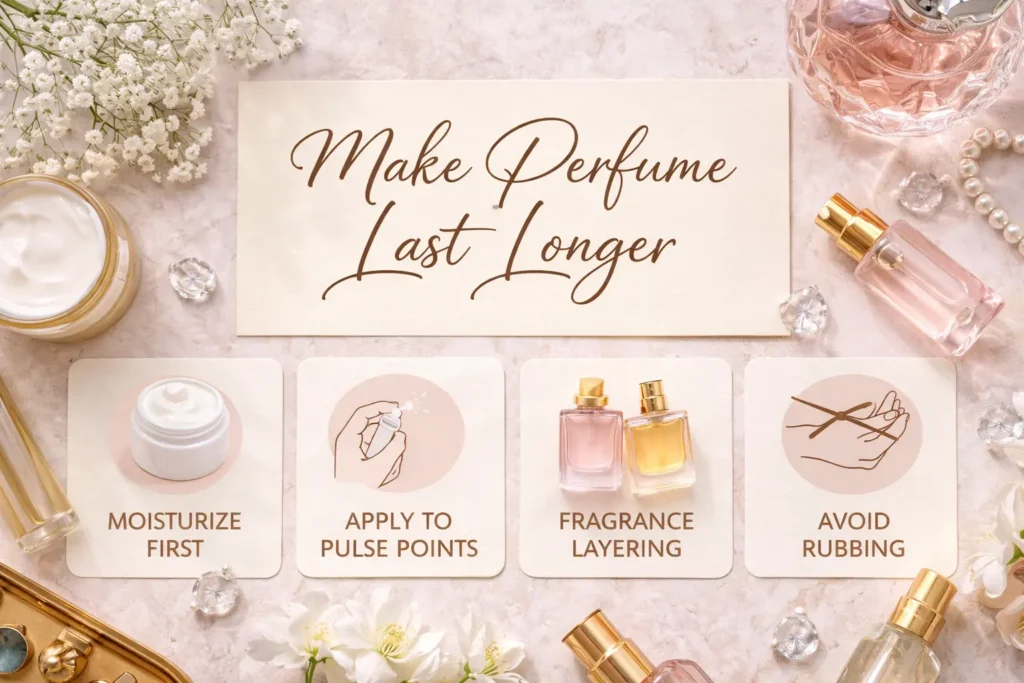
If your fragrance seems to fade quickly, a few small adjustments can significantly improve longevity.
✔️ Apply on Pulse Points
Pulse points generate heat, helping the fragrance diffuse slowly.
Best areas include:
- Wrists
- Neck
- Behind the ears
- Inner elbows
✔️ Moisturize Your Skin First
Perfume adheres better to hydrated skin.
Using an unscented moisturizer before applying perfume can help the scent last longer.
✔️ Avoid Rubbing Your Wrists
Many people rub their wrists together after spraying perfume.
This actually breaks down fragrance molecules and shortens the lifespan of the scent.
✔️ Layer Your Fragrance
Using matching body lotion or shower gel from the same fragrance line can increase longevity.
🧪 Testing Perfume Before Buying a Full Bottle
Because fragrance performance varies so much from person to person, many perfume lovers recommend testing scents before committing to a full bottle.
This is where fragrance samples and decants become useful.
If you’re curious about how fragrance decants work and why they’re popular among perfume collectors, you may enjoy reading this guide:
👉 🧴 What Is a Perfume Decant? A Beginner’s Guide to Sampling Luxury Fragrances
It explains how decants allow you to test expensive perfumes over several days before investing in a full bottle.
🌟 Does Expensive Perfume Always Last Longer?
Not necessarily.
While niche and luxury fragrances often use higher-quality ingredients, price alone does not guarantee stronger longevity.
A well-formulated Eau de Parfum may easily outperform a poorly designed extrait fragrance.
Instead of focusing only on price, consider:
- Ingredient composition
- Concentration level
- Personal skin chemistry
👉 If your fragrance doesn’t last as long as you’d like, check out Why Does My Perfume Fade So Fast? Common Reasons Your Fragrance Doesn’t Last for a deeper explanation.
❓ Frequently Asked Questions About Perfume Longevity
How long does perfume usually last on the skin?
Most perfumes last between 4 and 8 hours on the skin, depending on concentration, ingredients, and skin chemistry.
Why does perfume fade quickly on my skin?
Perfume may fade faster if you have dry skin, apply fewer sprays, or use lighter fragrances like citrus-based scents.
Does perfume last longer on clothes?
Yes. Fragrance molecules often stay on clothing 12 to 24 hours or longer, depending on the fabric.
Which type of perfume lasts the longest?
Extrait de parfum or pure parfum typically lasts the longest because it contains the highest concentration of fragrance oils.
How many sprays of perfume should you use?
Most fragrances perform well with 2 to 4 sprays, depending on their strength and projection.
✨ Final Thoughts
So, how long does perfume last?
For most fragrances:
- Light colognes: 1–3 hours
- Eau de toilette: 3–5 hours
- Eau de parfum: 6–8 hours
- Extrait perfumes: 8–12 hours or more
However, longevity ultimately depends on ingredients, skin chemistry, climate, and application technique.
Understanding these factors can help you choose fragrances that not only smell amazing but also stay with you throughout the day.
However, even if your perfume lasts for hours, you might still feel like it disappears much faster than it actually does. This is often caused by nose blindness, where your brain stops detecting a scent after continuous exposure.
💬 Now we’d love to hear from you:
What is the longest-lasting perfume you have ever tried? Share your experience in the comments!
Discover more from Perfume Cultures
Subscribe to get the latest posts sent to your email.

20 Comments