🧠 How to Tell If a Perfume Suits You Before Buying
Buying a perfume without testing it properly is one of the most common mistakes people make. A fragrance might smell incredible on paper, online reviews may praise it endlessly—but once it’s on your skin, the experience can be completely different.
So how can you accurately predict whether a perfume will suit you before committing to a full bottle?
This guide breaks down the science, psychology, and practical techniques behind choosing the right fragrance—so you can make smarter decisions and avoid costly mistakes.
🧬 Why “Suitability” Is More Than Just Smelling Good
A perfume doesn’t “suit” you simply because it smells nice. Suitability is a combination of:
- ✔️ How it reacts with your skin chemistry
- ✔️ How it evolves over time
- ✔️ Whether it matches your personal taste
- ✔️ How long it lasts in your environment
- ✔️ How your brain emotionally responds to it
Understanding these factors is the key to predicting compatibility before buying.
🧪 1. Test on Skin — Not Just Paper
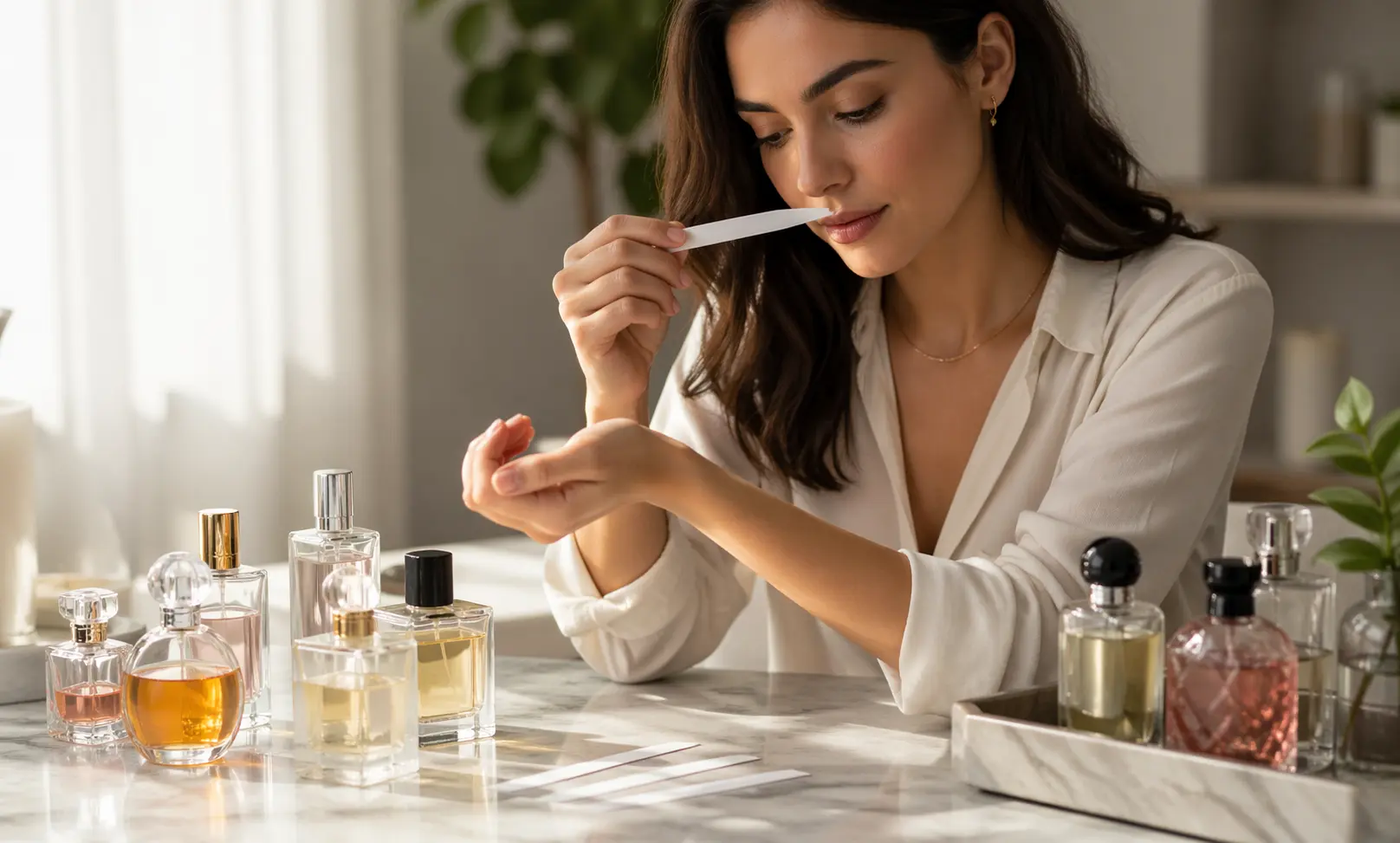
Fragrance blotters are useful, but they don’t tell the full story.
Your skin’s natural oils, temperature, and pH level can significantly alter how a perfume smells. What feels fresh and bright on paper may turn heavy, sweet, or even sharp on your skin.
To understand this deeper, it helps to explore why fragrances behave differently on each person in
👉 Why Does Perfume Smell Different on Skin?
✔️ Pro Tip:
Apply the perfume to your wrist and wait at least 15–30 minutes before judging it.
⏳ 2. Don’t Trust Your First Impression
One of the biggest traps in perfume shopping is judging a scent too quickly.
The opening (top notes) is designed to grab your attention—but it’s not what you’ll smell for most of the day. Many fragrances change dramatically as they settle.
This is why understanding scent evolution is critical, as explained in
👉 Why Your First Impression Of a Perfume Is Often Wrong
✔️ What to Do Instead:
- Smell it at 3 stages:
- First spray (top notes)
- After 20–30 minutes (heart notes)
- After 2–4 hours (base notes)
🧠 3. Identify Your Personal Preference Type
Not all “good” perfumes will suit your taste.
Some people naturally prefer:
- Simple, clean scents (fresh, linear)
- Complex, evolving fragrances (layered, rich)
Knowing where you fall helps you instantly filter what suits you.
If you’re unsure, this breakdown will help:
👉 What Makes a Perfume Smell Complex vs Simple
✔️ Quick Self-Test:
- Do you like clarity and freshness? → Go simple
- Do you enjoy depth and transformation? → Go complex
⏱️ 4. Evaluate Longevity on Your Skin
A perfume may smell amazing—but if it disappears quickly on your skin, it may not suit your lifestyle.
Longevity varies depending on:
- Skin type (dry vs oily)
- Climate
- Fragrance composition
Understanding this factor is essential before buying, as explained here:
👉 How Long Does Perfume Last? Understanding Longevity
✔️ What to Check:
- Does it last at least 4–6 hours?
- Does it stay pleasant as it fades?
🧠 5. Trust Your Emotional Response (Even If You Can’t Explain It)
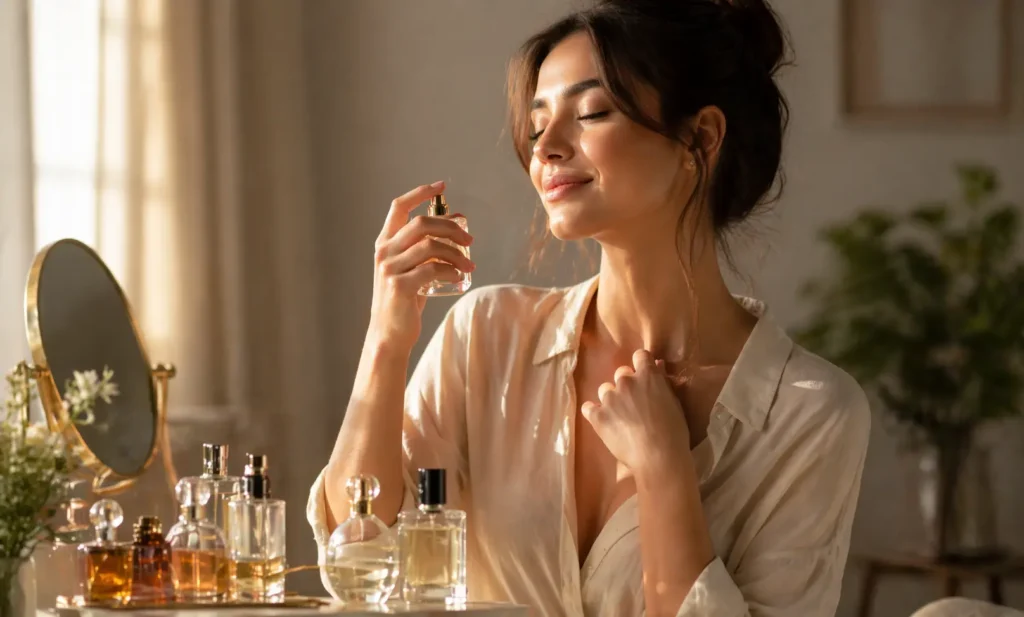
Sometimes, the best indicator isn’t logical—it’s emotional.
You might smell a fragrance and instantly feel:
- Comfortable
- Confident
- Nostalgic
- Intrigued
Even if you can’t describe why.
This phenomenon is explored in
👉 Why You Like Scents You Can’t Describe
✔️ Key Insight:
If a fragrance feels right, there’s often a deeper neurological reason behind it.
🧳 6. Test in Real-Life Conditions
A perfume doesn’t exist in isolation—it interacts with your daily environment.
Before deciding:
- Wear it outside
- Move around
- Let it mix with your natural scent
✔️ Ask Yourself:
- Does it feel too strong in heat?
- Does it fade too fast outdoors?
- Does it project too much in close spaces?
Suitability is context-dependent.
🧪 7. Avoid Over-Testing Multiple Fragrances
Testing too many perfumes at once can overwhelm your sense of smell.
✔️ Ideal Approach:
- Test 2–3 fragrances max per session
- Take breaks between each
- Revisit your favorites later
Your nose needs clarity to make accurate decisions.
❓ FAQ — Common Questions
❓ How many times should I test a perfume before buying?
Ideally, test it 2–3 times on different days. Your perception can change depending on mood, weather, and skin condition.
❓ Can a perfume smell good on someone else but bad on me?
Yes. Skin chemistry differences can completely change how a fragrance develops.
❓ How long should I wait before deciding if I like a perfume?
At least 2–4 hours to experience the full dry-down phase.
❓ Should I rely on online reviews?
Reviews are helpful for general insights, but they cannot predict how a fragrance will behave on your skin.
❓ Is it normal to like a perfume but not feel comfortable wearing it?
Yes. Liking a scent and feeling it suits your identity are two different things.
🧭 Final Thought
Choosing the right perfume isn’t about finding what smells good—it’s about finding what works with you.
When you test properly, understand your preferences, and pay attention to how a fragrance evolves and feels, you move from guessing… to choosing with confidence.
❓ Interactive Question
Have you ever loved a perfume at first spray, then completely changed your mind after wearing it for a few hours?
Discover more from Perfume Cultures
Subscribe to get the latest posts sent to your email.