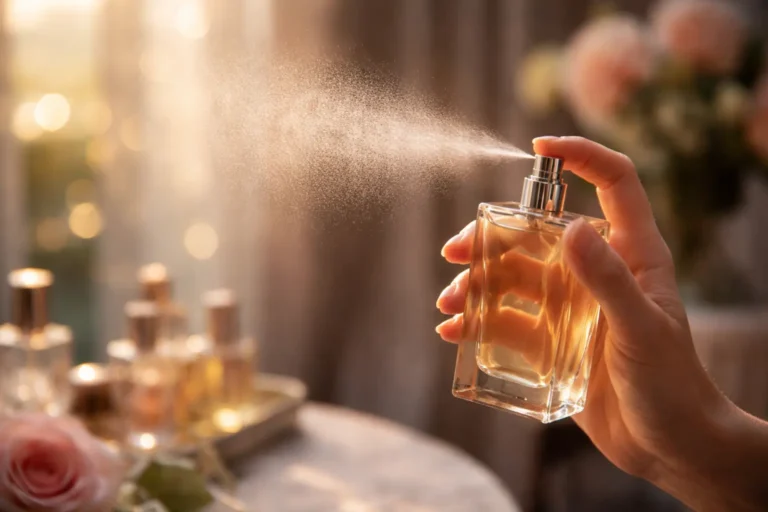

🌫️ Why Can’t I Smell My Own Perfume? The Science Behind Nose Blindness
Have you ever sprayed your favorite perfume in the morning only to feel like it disappears within minutes?
Meanwhile, someone else walks by and immediately says, “You smell amazing!”
This common experience leads many people to wonder:
Why can’t I smell my own perfume?
The answer usually has nothing to do with your fragrance being weak. Instead, it’s often caused by a fascinating phenomenon called olfactory adaptation, also known as nose blindness.
Let’s explore the science behind why your brain sometimes stops noticing the scent you’re wearing.
🧠 What Is Nose Blindness?
Nose blindness happens when your brain becomes accustomed to a smell and stops actively processing it.
When you first apply perfume, your nose clearly detects the fragrance molecules in the air. But after a short period of continuous exposure, your brain begins to filter the smell out.
This process helps your brain focus on new and potentially important odors in your environment.
In other words, your brain decides:
“This smell is already familiar — no need to keep reporting it.”
🔬 How the Brain Adapts to Fragrance
When you spray perfume, thousands of fragrance molecules evaporate and travel into your nose.
These molecules stimulate receptors in the olfactory epithelium, which send signals to the brain.
However, if the same scent continues stimulating those receptors for too long, the brain reduces its response.
This biological process is called olfactory adaptation.
It’s the same reason you stop noticing:
- The smell of your home
- The scent of laundry detergent on your clothes
- Or the aroma of a candle after sitting near it for a while
Your perfume simply becomes part of your “background scent environment.”
🌡️ Why Others Can Smell Your Perfume But You Can’t
Even when you stop noticing your fragrance, the scent is still there.
Other people can smell it because they encounter the fragrance for the first time, so their noses react strongly to it.
Think of perfume like music playing in a room:
- If you stay in the room long enough, you stop noticing the music.
- Someone who just walks in immediately hears it.
The same thing happens with scent perception.
📊 Signs You’re Experiencing Nose Blindness
Here are some common signs that you’re experiencing perfume nose blindness rather than your fragrance fading.
| Situation | What It Usually Means |
|---|---|
| You can’t smell your perfume after 10 minutes | Your brain adapted to the scent |
| Others compliment your fragrance hours later | The perfume is still projecting |
| You smell it again when moving your wrist | Fresh air resets your perception |
| Strong perfumes disappear quickly for you | Olfactory fatigue may be occurring |
If these situations sound familiar, your perfume is probably working perfectly.
🌬️ Why Some Perfumes Cause Nose Blindness Faster
Certain fragrance ingredients are more likely to trigger olfactory fatigue.
These include powerful aroma molecules often used in modern perfumery.
Examples include:
- Ambroxan
- Iso E Super
- Musks
- Woody synthetic molecules
These materials are designed to create long-lasting projection, but they can also overwhelm the nose and cause faster sensory adaptation.
💡 How to Avoid Nose Blindness When Wearing Perfume

Although nose blindness is natural, there are a few tricks that can help you stay aware of your fragrance longer.
1️⃣ Apply perfume away from your nose
Avoid spraying perfume directly on the neck under your nose. Instead apply it to:
- Wrists
- Behind the ears
- Back of the neck
This reduces constant exposure.
2️⃣ Use fewer sprays
Ironically, using too much perfume can make it harder to smell.
A lighter application often keeps your nose from becoming overwhelmed.
3️⃣ Take scent breaks
If you want to smell your fragrance again, step outside for fresh air.
When you return, your nose will often detect the scent again.
4️⃣ Rotate your fragrances
Wearing the same perfume every day can increase scent adaptation.
Switching fragrances occasionally keeps your nose more sensitive to them.
🧴 Does Nose Blindness Mean Your Perfume Is Weak?
Not at all.
Many long-lasting fragrances actually cause more nose blindness, not less.
This is why some people believe their perfume disappears quickly, when in reality it continues projecting for hours.
A good way to test this is simple:
Ask a friend if they can smell your perfume.
Most of the time, they will.
🧪 Want to Understand the Science of Perfume Even More?
If you’re curious about how fragrance molecules travel through the air and interact with the human nose, you might enjoy exploring our detailed guide:
👉 🧪 How Perfume Works: The Science Behind Fragrance, Molecules, and Human Smell
That article explains the fascinating chemistry and biology that make perfumes detectable to the human brain.
❓ Frequently Asked Questions
Why does my perfume disappear after a few minutes?
Your brain likely adapted to the scent through olfactory fatigue, which reduces your ability to notice smells you’re constantly exposed to.
How long does nose blindness last?
Nose blindness can last anywhere from a few minutes to several hours depending on the strength of the fragrance and your exposure.
Can others smell my perfume even if I can’t?
Yes. Other people who encounter your fragrance for the first time usually smell it clearly.
Does spraying more perfume help?
Usually not. Over-applying perfume can make nose blindness happen even faster.
🌸 Final Thoughts
If you can’t smell your own perfume, don’t worry — it’s actually a sign that your brain is functioning normally.
Your olfactory system is simply doing what it evolved to do: filtering out familiar scents so it can detect new ones.
And chances are, your fragrance is still leaving a beautiful impression on everyone around you.
Now we’d love to hear from you:
💬 Have you ever thought your perfume disappeared, only to have someone compliment it later?
Share your experience in the comments!
Discover more from Perfume Cultures
Subscribe to get the latest posts sent to your email.