Why Does Perfume Smell Good at First, Then Bad? The Science Explained
Perfume can feel almost magical in the first few seconds—fresh, beautiful, even addictive. But then, something changes. Minutes later, the same fragrance may turn sharp, sour, or simply unpleasant.
This isn’t random. It’s a combination of chemistry, evaporation, skin interaction, and perception. Understanding why this happens not only improves how you choose fragrances—it fundamentally changes how you evaluate them.
🧪 The Hidden Mechanism: Perfume Is Designed to Change
Perfume is not a static scent. It is a structured composition of volatile molecules that evaporate at different speeds.
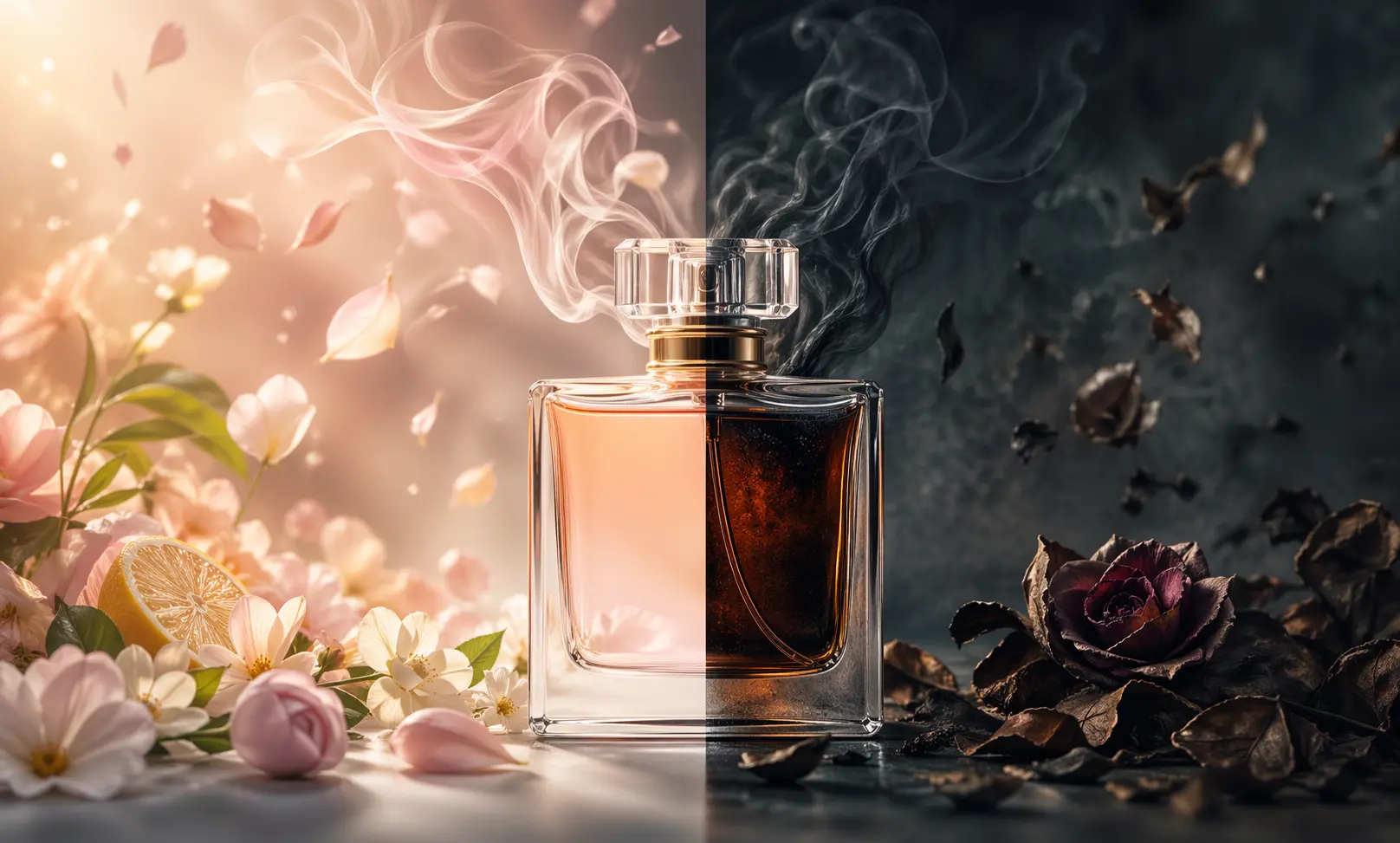
At first spray, you only smell the top notes—the lightest and most volatile compounds. These are designed to create a strong, immediate impression. But they disappear quickly, revealing deeper layers underneath.
If you want a deeper understanding of how this transformation works at a molecular level, it connects directly to the principles explained in How Perfume Works: The Science Behind Fragrance, Molecules, and Human Smell.
👉 In short:
You’re not smelling one perfume—you’re smelling multiple stages over time.
⏳ Why the First Smell Can Be Misleading
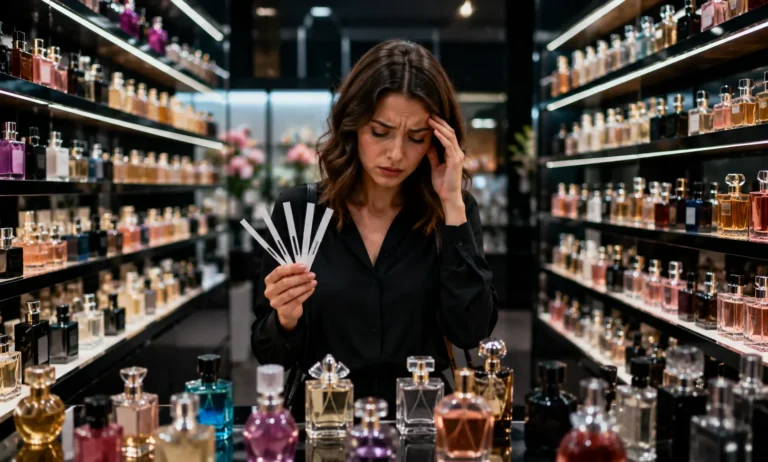
The initial impression of a fragrance is often the least reliable.
Top notes are intentionally crafted to be:
- Bright
- Appealing
- Attention-grabbing
But they don’t represent the true identity of the perfume. What comes after—the heart and base—defines whether the fragrance will remain enjoyable or turn unpleasant.
This is exactly why early judgments can fail, as explored in Why Your First Impression Of a Perfume Is Often Wrong.
👉 A perfume that smells amazing at first can:
- Become overly sweet
- Turn synthetic
- Develop harsh or bitter edges
🧬 Skin Chemistry: The Silent Game-Changer
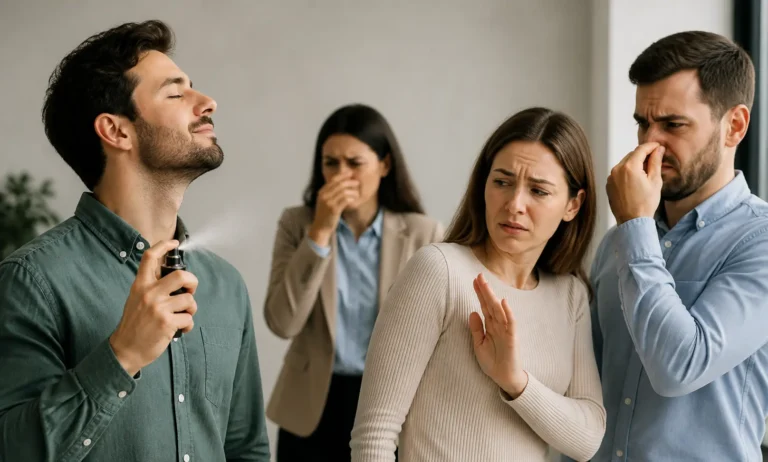
One of the biggest reasons a perfume turns “bad” is not the perfume itself—it’s your skin.
Your skin interacts with fragrance molecules through:
- pH levels
- Oil production
- Temperature
- Microbiome
This interaction can amplify certain notes while suppressing others.
For example:
- A warm, oily skin may intensify heavy base notes → making them feel overwhelming
- Dry skin may evaporate top notes too quickly → exposing harsher elements
This explains why the same perfume can smell completely different from person to person, a concept explored in Why Does Perfume Smell Different on Skin?.
👉 What smells smooth on someone else might turn sharp on you.
🧠 Your Brain Is Part of the Problem
Smell is not just chemical—it’s psychological.
Your brain constantly interprets scent based on:
- Memory
- Emotion
- Expectations
At first, novelty and freshness create a positive reaction. But as the scent evolves, your brain may reassess it—sometimes negatively.
This is especially true when a scent becomes:
- Too familiar
- Too intense
- Associated with an unpleasant memory
This deeper perceptual layer is closely tied to how we experience abstract scents, as discussed in Why You Like Scents You Can’t Describe.
👉 In many cases, the scent didn’t “go bad”—your perception changed.
⚖️ Complexity vs Simplicity: Why Some Perfumes Improve (And Others Don’t)
Not all perfumes evolve the same way.
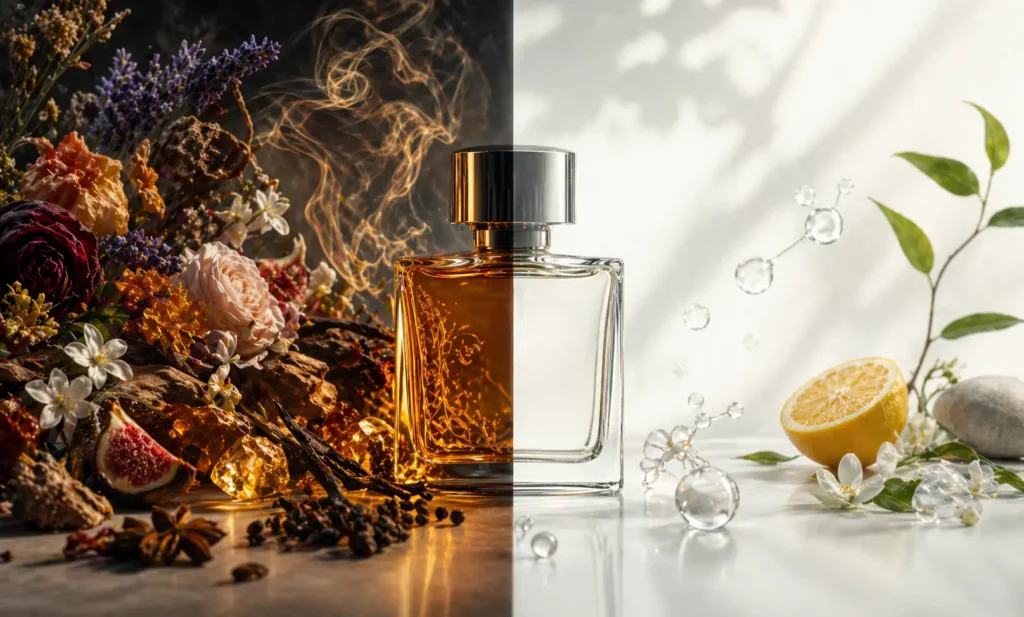
✔️ Complex fragrances:
- Have multiple layers
- Transition smoothly over time
- Reveal new facets gradually
❌ Simple fragrances:
- Have fewer ingredients
- Lack depth
- May feel flat or become unpleasant after top notes fade
When a perfume turns “bad,” it often means:
👉 The underlying structure lacks balance.
This contrast is explained in depth in What Makes a Perfume Smell Complex vs Simple.
🔬 Common Reasons Perfume Turns Unpleasant
Here’s a clear breakdown:
| Cause | What Happens |
|---|---|
| Fast evaporation | Top notes disappear too quickly |
| Strong base notes | Heavy ingredients dominate |
| Skin chemistry | Alters scent balance |
| Poor composition | Lacks smooth transitions |
| Psychological shift | Brain reinterprets the scent |
🧠 The Key Insight
When a perfume smells good, then bad, it’s not a flaw—it’s a reveal.
👉 The first smell = marketing
👉 The later smell = reality
Understanding this helps you judge perfumes properly:
- Never decide in the first 10 seconds
- Always wait at least 30–60 minutes
- Test on skin, not paper
❓ FAQ Section
Why does my perfume smell different after a few minutes?
Because the top notes evaporate quickly, revealing the heart and base notes, which may smell very different.
Is it normal for perfume to smell bad later?
Yes. This often reflects the deeper structure of the fragrance and how it interacts with your skin chemistry.
Why does a perfume smell good on someone else but bad on me?
Your skin’s pH, oils, and temperature affect how the fragrance develops, causing different results.
Can a “bad dry-down” mean low quality?
Not always. It can also mean the fragrance doesn’t suit your skin or preferences.
How long should I wait before judging a perfume?
At least 30–60 minutes, ideally a few hours, to experience the full evolution.
🧭 Final Thought
Perfume is not a single moment—it’s a timeline.
What you smell at first is only the beginning. What comes after is what truly defines the fragrance.
💬 Interactive Question:
Have you ever loved a perfume at first spray… then completely changed your mind later? What do you think caused it?
Discover more from Perfume Cultures
Subscribe to get the latest posts sent to your email.