The Psychology of Decision Fatigue in Fragrance Shopping
Why Choosing a Perfume Sometimes Feels Mentally Exhausting
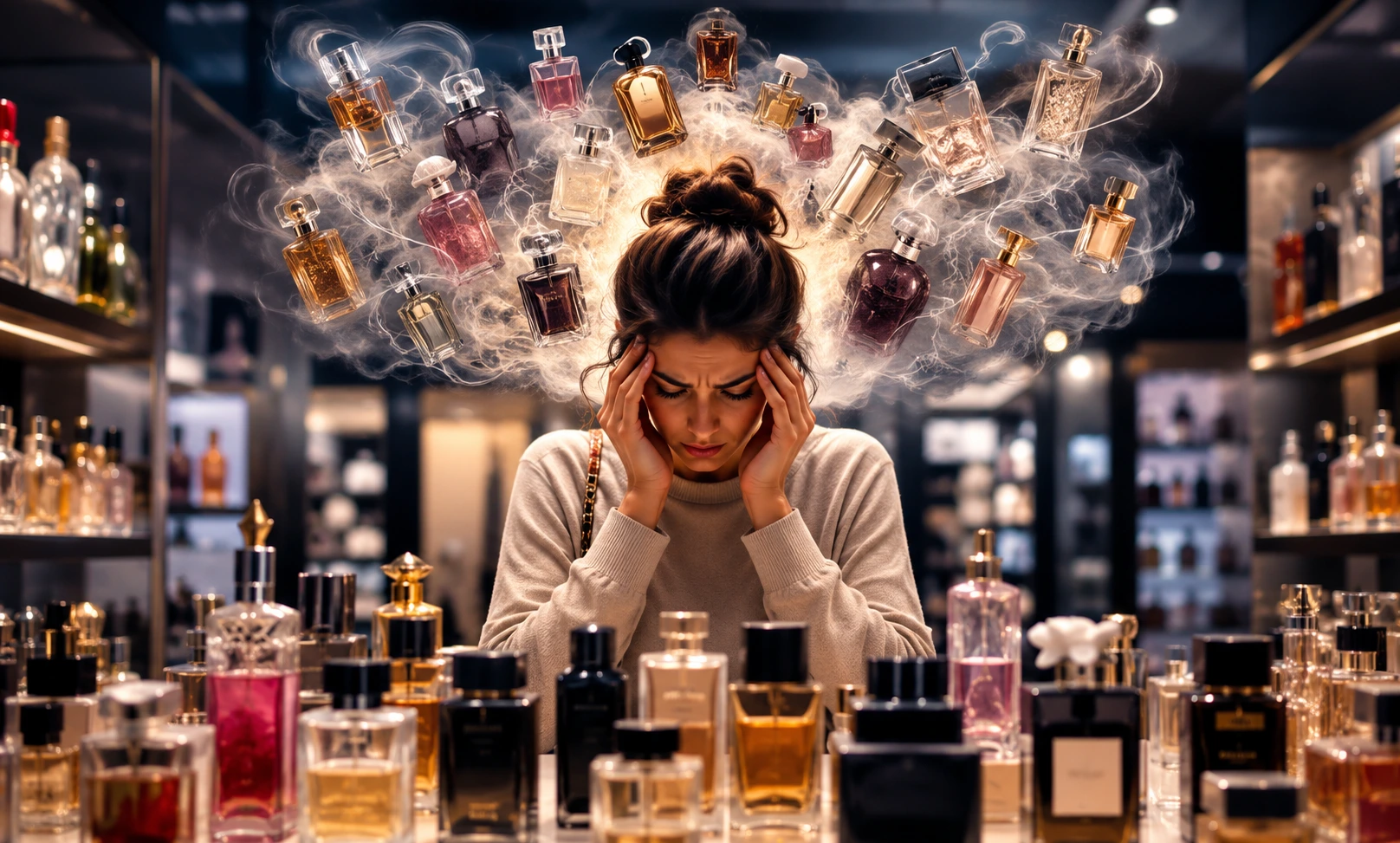
You walk into a perfume store planning to buy one fragrance.
Twenty minutes later, your nose feels confused, every bottle starts smelling similar, and suddenly buying nothing feels easier than making the “wrong” choice.
This happens to millions of American consumers every year — and it has very little to do with perfume quality.
Modern fragrance shopping has quietly become a psychological challenge.
Between endless scent options, luxury pressure, emotional expectations, influencer recommendations, pricing confusion, and aggressive sensory stimulation, many shoppers experience what psychologists call decision fatigue.
And in the fragrance industry, decision fatigue is becoming one of the biggest hidden reasons people leave stores without purchasing anything.
Interestingly, this psychological overload strongly connects to why customers sometimes abandon purchases entirely, as explored in Why Customers Leave Perfume Stores Without Buying Anything. But decision fatigue goes even deeper — it changes how people think, compare, smell, and emotionally react to perfumes.
🧠 What Is Decision Fatigue in Fragrance Shopping?
Decision fatigue happens when the brain becomes mentally exhausted after making too many choices in a short period of time.
Perfume shopping creates the perfect environment for this problem because fragrance decisions involve:
- Emotional interpretation
- Memory association
- Social identity
- Luxury perception
- Budget calculations
- Sensory evaluation
- Risk avoidance
Unlike buying simple products, fragrance shopping forces consumers to continuously compare invisible sensory experiences.
After testing multiple perfumes, the brain gradually loses confidence in its own judgment.
This is one reason many retailers now rethink store layouts and product quantity strategies — especially after seeing how offering too many perfumes can overwhelm customers psychologically in Can Offering Too Many Perfumes Harm Your Store Sales?
Why do people get overwhelmed when shopping for perfume?
People become overwhelmed when shopping for perfume because fragrances require emotional, sensory, financial, and social decision-making at the same time. After smelling too many scents, the brain experiences cognitive overload, making it harder to confidently choose a fragrance.
🛍️ Perfume Shopping Is a High-Stimulation Environment
Modern fragrance stores are intentionally designed to stimulate emotions.
Customers encounter:
- Strong scent diffusion
- Bright luxury visuals
- Promotional messaging
- Music and lighting
- Brand storytelling
- Social pressure
- Sales interactions
- Premium pricing displays
All of these elements compete for mental attention simultaneously.
Ironically, some stores accidentally increase customer stress instead of excitement.
This psychological effect partially explains why minimalist perfume stores often feel more premium and relaxing. As discussed in Why Minimalist Perfume Stores Often Feel Premium, minimalist retail environments reduce cognitive noise, helping customers focus emotionally on fewer scents rather than fighting mental overload.
🇺🇸 American Consumers Now Experience More Choice Pressure Than Ever
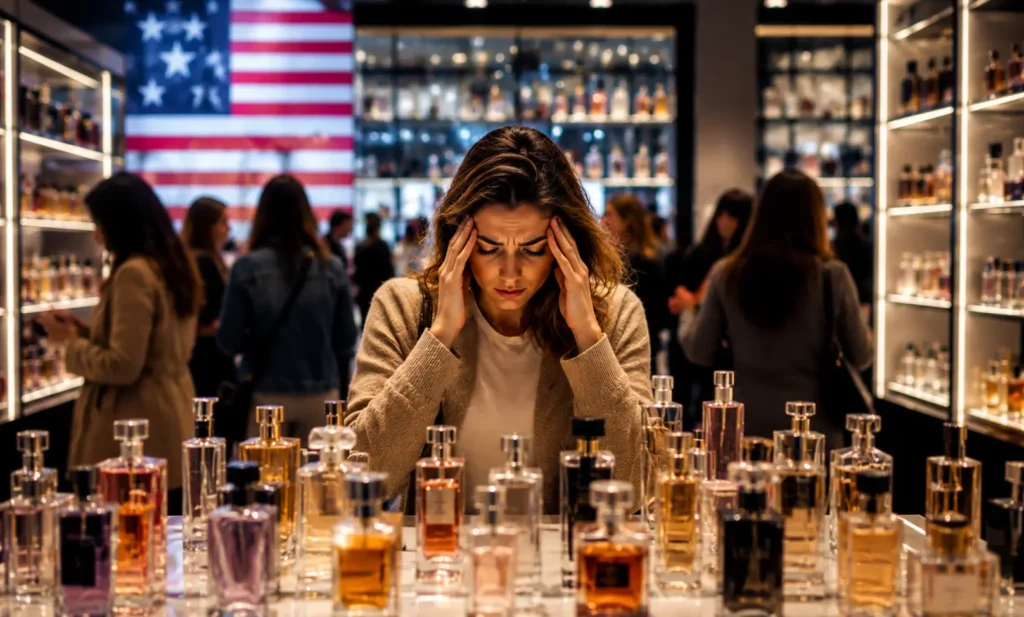
Modern American shopping culture encourages exploration instead of commitment.
Consumers today constantly see:
- TikTok fragrance trends
- YouTube “Top 10” lists
- Influencer recommendations
- Seasonal fragrance rotations
- Layering combinations
- Niche perfume discoveries
- Luxury comparisons
- Clone alternatives
As a result, many shoppers no longer search for “a perfume.”
They search for:
- the perfect compliment fragrance
- the best office scent
- the safest luxury buy
- the most versatile scent
- the most masculine projection
- the most unique signature scent
This creates psychological pressure before shoppers even enter the store.
📈 Why More Options Often Reduce Sales
Many people assume larger perfume collections automatically improve customer satisfaction.
Psychology often shows the opposite.
When consumers face excessive choices:
- comparison becomes exhausting
- fear of regret increases
- confidence decreases
- purchase delay becomes more likely
This phenomenon is called choice paralysis.
In fragrance retail, too many similar scents can blur together mentally.
That is why some curated perfume stores outperform larger retailers in customer conversion rates despite offering fewer products.
How does decision fatigue affect perfume buying?
Decision fatigue reduces a shopper’s confidence after evaluating too many fragrance options. As mental exhaustion increases, consumers become more likely to postpone purchases, buy nothing, or choose safer and more familiar scents.
🧪 Fragrance Sampling Can Either Help — Or Hurt
Sampling is psychologically complicated.
On one hand, testing perfumes helps consumers feel safer before purchasing.
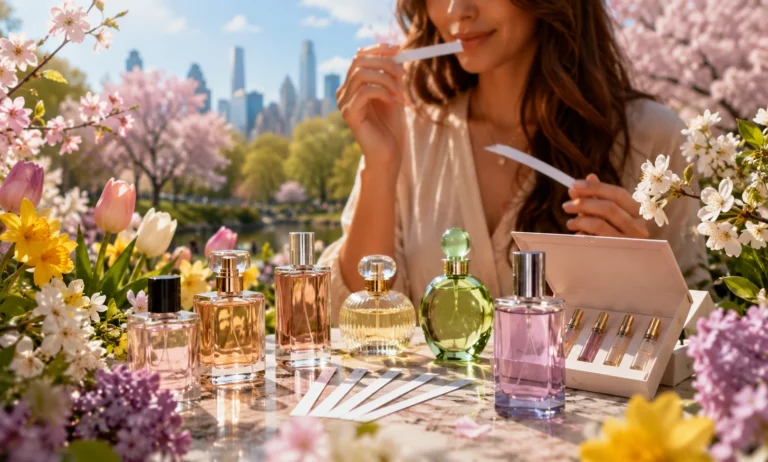
On the other hand, excessive sampling creates sensory confusion.
After several fragrances, the nose and brain begin struggling to separate scent details clearly.
This creates:
- uncertainty
- hesitation
- emotional detachment
- impulse avoidance
That is why strategic sampling matters more than unlimited testing.
In fact, How Fragrance Sampling Changes Buying Decisions explains how consumers emotionally attach themselves to scents during testing. But once the number of sampled perfumes becomes too large, confidence often collapses instead of improving.
📊 Comparison Table — Low vs High Decision Fatigue in Perfume Stores
| Shopping Environment | Psychological Effect | Consumer Behavior |
|---|---|---|
| Curated minimalist store | Calm cognitive processing | Faster decisions |
| Too many perfume displays | Cognitive overload | Hesitation |
| Guided scent recommendations | Higher confidence | Increased purchases |
| Aggressive luxury pressure | Anxiety and self-doubt | Decision avoidance |
| Organized scent categories | Mental clarity | Easier comparison |
| Endless fragrance testing | Sensory confusion | Emotional fatigue |
✨ Luxury Anxiety Quietly Influences Fragrance Decisions
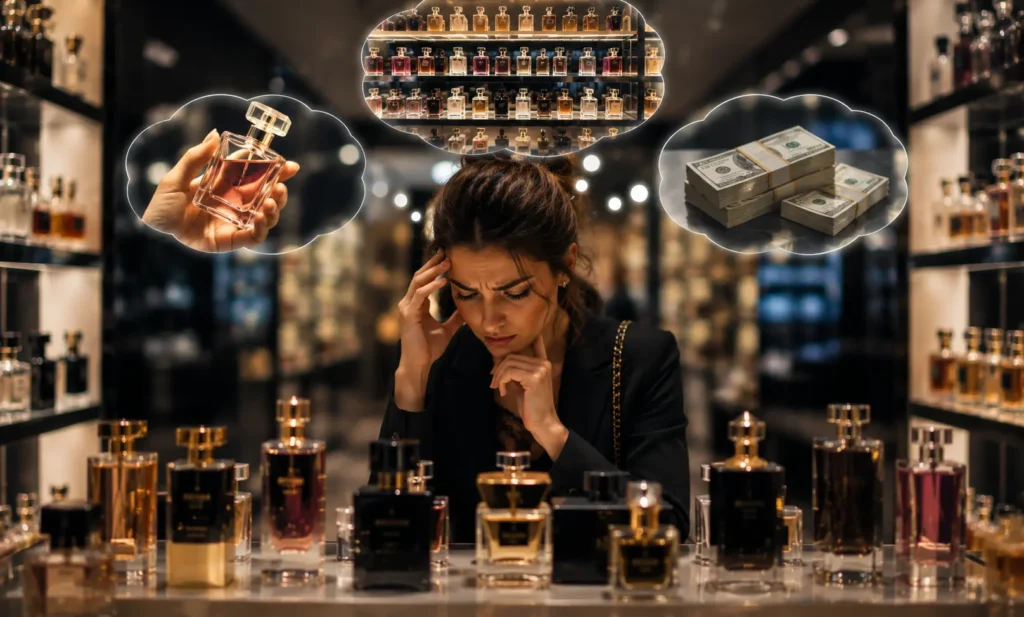
Perfume buying is deeply emotional because fragrance often feels connected to identity and social perception.
Many consumers silently ask themselves:
- “Will people like this scent on me?”
- “Does this smell expensive enough?”
- “Am I wasting money?”
- “What if I regret this purchase?”
- “What if another perfume smells better?”
Luxury pricing amplifies this anxiety.
The more expensive the fragrance becomes, the more psychologically “dangerous” the decision feels.
This connects closely to How American Consumers Balance Luxury and Affordability in Perfume Buying, where emotional desire for luxury often clashes with fear of financial regret.
🧠 Scent Marketing Also Influences Mental Energy
Retail scent marketing is designed to shape emotional behavior.
Certain stores intentionally use:
- warm ambient scents
- relaxing aroma profiles
- calming lighting
- slower music pacing
These elements reduce psychological resistance and increase browsing comfort.
However, highly aggressive scent environments can create sensory exhaustion faster.
This is one reason why scent marketing works so powerfully on American shoppers, as explored in Why Scent Marketing Works On American Shoppers: The Science Behind It. Smell directly affects emotional processing before conscious logic fully activates.
🔎 Why Consumers Often Buy “Safe” Fragrances
After experiencing decision fatigue, many shoppers stop searching for the “best” scent.
Instead, they search for the “least risky” option.
This explains why mass-appeal fragrances often dominate sales:
- fresh scents
- clean fragrances
- versatile perfumes
- office-friendly scents
- crowd-pleasing profiles
Psychologically, safe fragrances reduce fear of social rejection.
When the brain becomes exhausted, familiarity feels emotionally comforting.
🛍️ The Future of Perfume Retail May Become More Curated
The future of fragrance retail may involve:
- smaller curated collections
- AI-guided recommendations
- personalized scent profiles
- calmer store layouts
- simplified shopping experiences
- emotion-based fragrance discovery
Brands increasingly realize that reducing mental stress can actually improve customer satisfaction and conversion rates.
Consumers do not always want more choices.
Sometimes they simply want clarity.
Final Thoughts
Decision fatigue has quietly become one of the biggest hidden forces shaping modern fragrance shopping behavior.
The problem is no longer just about perfume quality.
It is about:
- mental overload
- emotional pressure
- fear of regret
- sensory exhaustion
- social identity anxiety
In today’s American fragrance market, consumers are surrounded by endless options, endless recommendations, and endless comparisons.
And sometimes, the hardest part of buying perfume is not finding a scent you like.
It is trusting yourself enough to choose one.
Frequently Asked Questions
Why do perfume stores feel overwhelming?
Perfume stores often feel overwhelming because they combine strong scents, visual stimulation, luxury pressure, and too many product choices in one environment, which increases cognitive overload.
How many perfumes should someone test at once?
Most consumers can evaluate only a limited number of fragrances before sensory fatigue begins. Testing fewer scents usually improves decision confidence.
Why do people leave perfume stores without buying?
Many consumers leave without buying because they become mentally exhausted, emotionally uncertain, or afraid of making the wrong purchase decision.
Does minimalist store design improve perfume sales?
Minimalist perfume stores can improve customer comfort and focus by reducing sensory overload and simplifying the shopping experience.
Why do shoppers buy safe fragrances after testing many perfumes?
After decision fatigue increases, consumers psychologically prefer familiar and socially safe fragrances because they reduce emotional risk and uncertainty.
💬 Have you ever entered a perfume store planning to buy one fragrance — only to leave more confused than when you walked in?
Discover more from Perfume Cultures
Subscribe to get the latest posts sent to your email.




3 Comments