
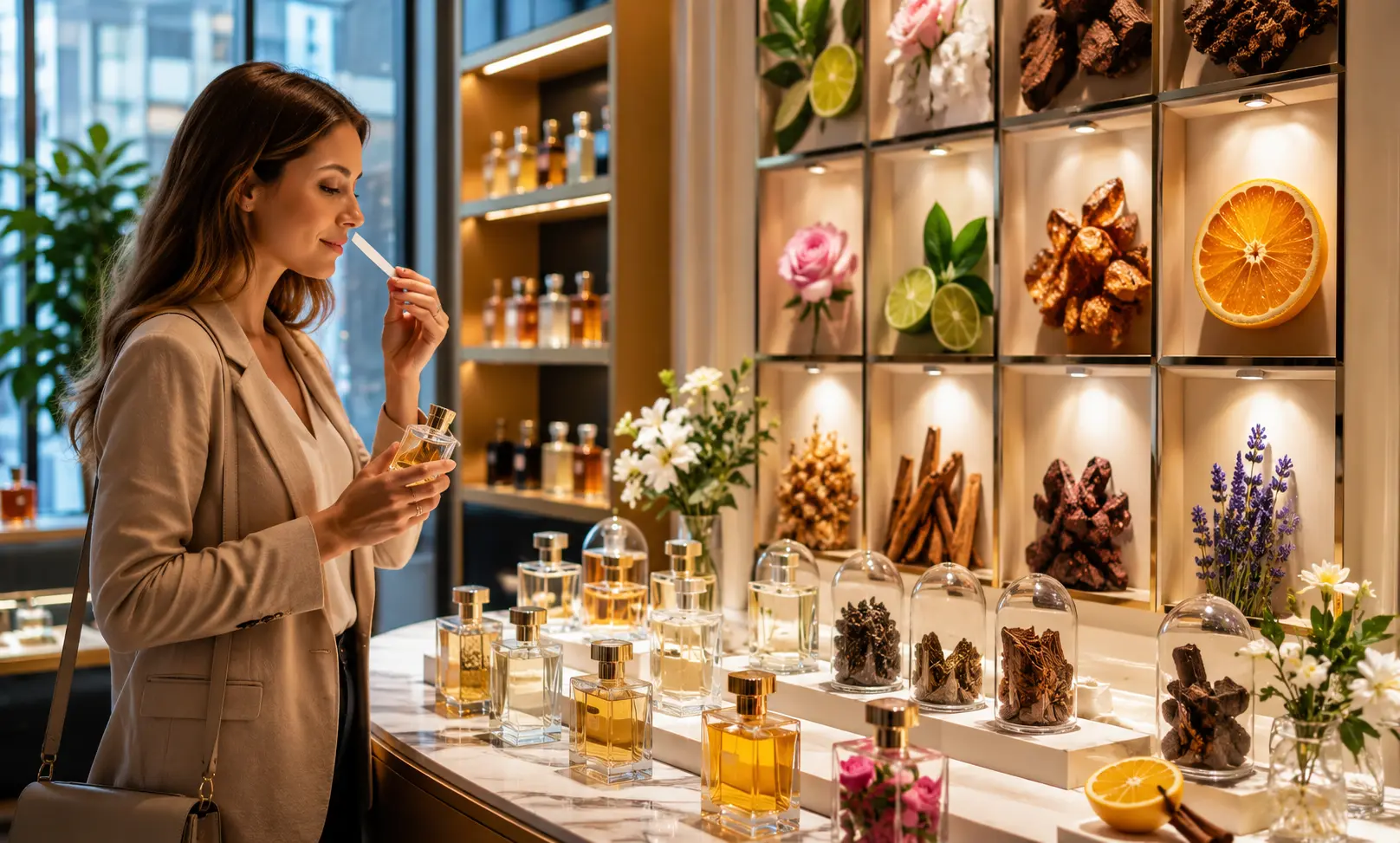
Why Displaying Perfume Ingredients in Stores Enhances Shopping Experience
A surprising number of American fragrance shoppers no longer buy perfumes based only on brand names or celebrity marketing.
Today, many customers walk into a perfume store asking questions like:
- “Does this contain vanilla?”
- “Is there oud in this fragrance?”
- “Why does this smell creamy?”
- “Does it contain white musk or amber?”
Modern fragrance shopping has quietly evolved from blind emotional buying into a more informed sensory experience.
And interestingly, stores that openly display perfume ingredients often create:
- longer browsing sessions,
- stronger emotional engagement,
- higher trust,
- and better customer satisfaction.
In the modern American fragrance market, ingredient transparency is no longer just educational.
It has become part of the shopping experience itself.
Why does displaying perfume ingredients improve shopping experience?
Displaying perfume ingredients helps customers understand scents faster, compare fragrances more confidently, and feel emotionally connected to products. Ingredient transparency also increases trust, encourages exploration, and improves the overall in-store shopping experience.
🇺🇸 American Shoppers Now Want More Than “Just a Good Smell”
A major shift is happening in the US fragrance market.
Years ago, many perfume buyers simply chose:
- a famous brand,
- a luxury bottle,
- or a popular commercial fragrance.
But modern shoppers increasingly want:
- ingredient awareness,
- scent understanding,
- personalization,
- and emotional storytelling.
This behavioral change strongly connects with the rise of:
- ingredient-conscious beauty shopping,
- niche fragrance culture,
- TikTok fragrance discussions,
- and sensory education.
That is one reason modern perfume stores are starting to resemble:
- coffee tasting bars,
- skincare consultation spaces,
- or wine discovery experiences.
Customers no longer want to feel like passive buyers.
They want to feel involved in the scent journey.
🧠 Ingredient Transparency Creates Psychological Comfort
One of the strongest hidden effects of ingredient displays is psychological reassurance.
When shoppers see notes like:
- bergamot,
- sandalwood,
- vanilla,
- iris,
- saffron,
- oud,
- or amber,
the fragrance suddenly feels:
- easier to understand,
- less risky,
- and more memorable.
This reduces “blind-buy anxiety.”
Many American consumers now hesitate to purchase fragrances they cannot mentally visualize.
But ingredient displays help the brain create expectations before purchase.
That emotional predictability increases confidence.
This consumer behavior also relates closely to how scent psychology influences purchasing decisions, something explored in Why Scent Marketing Works On American Shoppers: The Science Behind It.
🏪 Stores Become More Interactive When Ingredients Are Visible
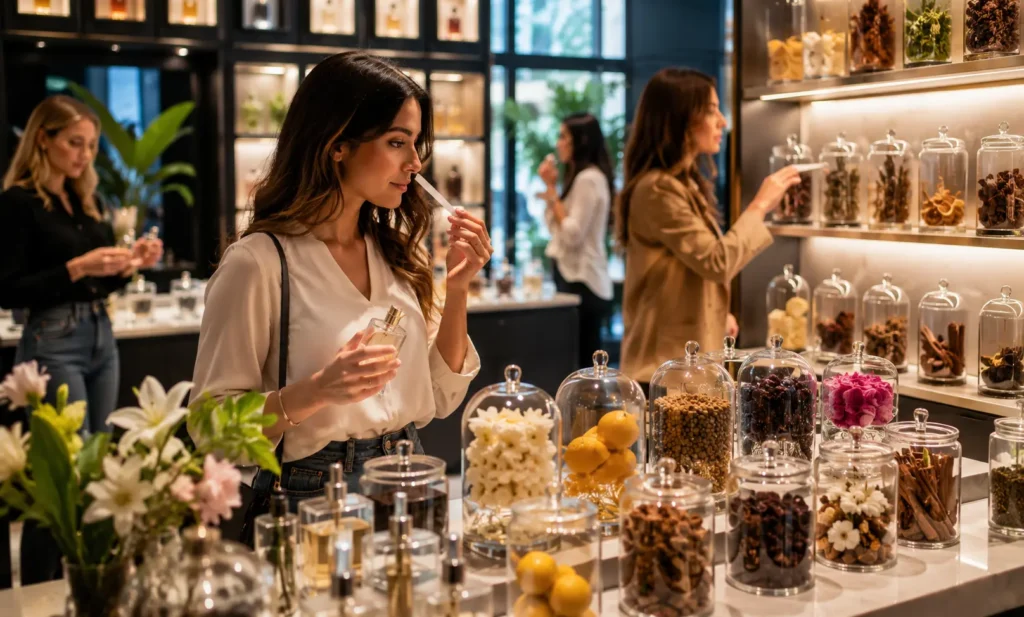
Modern retail success increasingly depends on engagement.
Stores that display ingredients effectively often create:
- slower customer movement,
- longer browsing time,
- and deeper curiosity.
Instead of spraying random bottles, shoppers begin exploring categories like:
- woody fragrances,
- creamy gourmands,
- citrus scents,
- clean musks,
- smoky oud fragrances,
- or green aromatic blends.
This transforms perfume shopping into an exploratory experience rather than a quick transaction.
And psychologically, exploration increases emotional attachment.
The more time customers spend interacting with fragrance information, the more likely they are to remember the store positively.
📊 Comparison Table: Traditional Perfume Shopping vs Ingredient-Focused Shopping
| Shopping Style | Traditional Store Experience | Ingredient-Focused Store Experience |
|---|---|---|
| Customer Behavior | Random testing | Intentional exploration |
| Emotional Response | Overwhelmed quickly | More confident and curious |
| Time Spent Browsing | Shorter | Longer |
| Product Understanding | Low | Higher |
| Brand Trust | Based on reputation | Based on transparency |
| Purchase Motivation | Impulse | Emotional connection + knowledge |
| Discovery Experience | Limited | Highly interactive |
🌎 Ingredient Discovery Reflects America’s Growing Cultural Curiosity
Modern American fragrance culture has become deeply connected to global scent traditions.
Today’s shoppers are increasingly curious about:
- Middle Eastern oud,
- Indian sandalwood,
- Japanese yuzu,
- French iris,
- African resins,
- and Mediterranean citrus oils.
When stores display these ingredients clearly, perfumes suddenly feel culturally alive.
This is especially important because American fragrance preferences are becoming more diverse and globally influenced, as discussed in Exploring the Influence of Ethnic Diversity on Perfume Choices in the US.
Ingredient visibility helps customers emotionally connect with unfamiliar scent traditions.
And curiosity often drives purchases.
What perfume ingredients attract customer attention most in stores?
Ingredients that commonly attract attention in perfume stores include vanilla, oud, sandalwood, amber, musk, saffron, rose, and citrus notes because customers already associate them with specific emotional or sensory experiences.
🏪 Ingredient Displays Help New Brands Compete Better
For emerging perfume brands, ingredient transparency can become a major competitive advantage.
Why?
Because small brands often lack:
- celebrity recognition,
- luxury reputation,
- or historical prestige.
But clear ingredient storytelling helps compensate for that.
Instead of competing only through branding, smaller fragrance companies can compete through:
- authenticity,
- education,
- and sensory identity.
This aligns closely with the modern retail strategies discussed in How New Perfume Brands Can Succeed in a Competitive Market.
In many cases, shoppers remember ingredient experiences more than logos.
🇺🇸 Younger Americans Prefer Exploration Over Loyalty
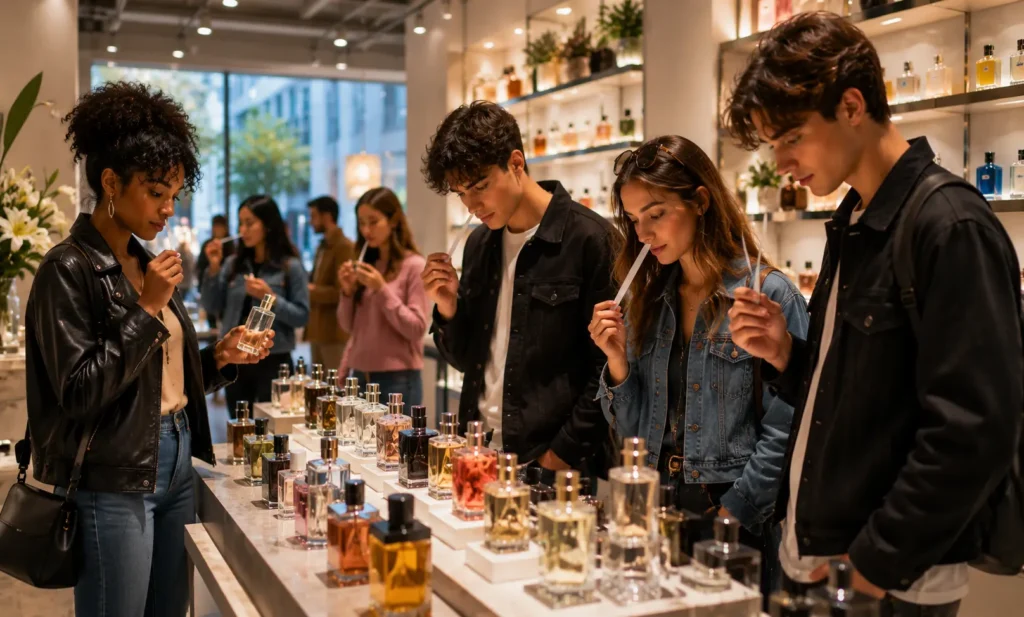
One fascinating trend in the US fragrance market is that younger consumers increasingly avoid committing to a single “signature scent.”
Instead, they prefer:
- rotating fragrances,
- seasonal moods,
- occasion-based scents,
- and ingredient experimentation.
That behavioral shift explains why ingredient displays now matter more than ever.
Customers are no longer shopping for:
“their one lifelong fragrance.”
They are shopping for:
- experiences,
- moods,
- identities,
- and temporary emotional atmospheres.
This evolving behavior strongly connects with the cultural shift explored in Why Younger Americans No Longer Want A Signature Scent.
📦 Subscription Culture Also Changed Ingredient Awareness
Fragrance subscription services unexpectedly trained consumers to pay closer attention to ingredients.
Why?
Because subscription users constantly compare:
- scent notes,
- accords,
- ingredient combinations,
- and fragrance families.
Over time, many consumers learned how to recognize ingredients emotionally.
This means modern shoppers often enter stores already familiar with terms like:
- tonka bean,
- vetiver,
- neroli,
- patchouli,
- or ambroxan.
This trend became much stronger after the growth of fragrance sampling culture discussed in How Fragrance Subscription Boxes Are Changing Perfume Consumption In the US.
🏪 Smart Ingredient Displays Improve Physical Store Identity
Ingredient displays do more than educate customers.
They also shape brand atmosphere.
For example:
- minimalist ingredient cards create a luxury niche feeling,
- scientific ingredient breakdowns create trust,
- artistic ingredient storytelling creates emotional immersion,
- and cultural ingredient narratives create memorability.
In other words:
the way ingredients are displayed can completely change how shoppers perceive a store.
This becomes especially valuable for entrepreneurs building modern fragrance retail concepts, similar to the strategies explored in How to Start a Successful Perfume Store in the US.
📈 Practical Retail Strategies That Actually Work
Successful modern perfume stores often use ingredient displays in creative ways:
✔️ Ingredient Walls
Large visual ingredient sections showing:
- raw materials,
- scent origins,
- and fragrance families.
✔️ Interactive Testing Zones
Customers smell individual ingredients separately before trying perfumes.
✔️ “If You Like This, Try This” Ingredient Pairing
Example:
- vanilla lovers → gourmand section,
- oud lovers → smoky woody section.
✔️ Ingredient-Based Shelf Organization
Instead of organizing by brand only, stores organize fragrances by:
- woody,
- fresh,
- spicy,
- sweet,
- or resinous profiles.
These systems make shopping easier and emotionally richer.
If you enjoy exploring how psychology, culture, and retail behavior are reshaping the American fragrance industry, you may also enjoy reading:
- Why Scent Marketing Works On American Shoppers: The Science Behind It
- How New Perfume Brands Can Succeed in a Competitive Market
- Why Younger Americans No Longer Want A Signature Scent
Together, these articles reveal how modern perfume shopping is becoming more emotional, personalized, and experience-driven than ever before.
❓FAQ
Do perfume ingredients influence buying decisions?
Yes. Many customers feel more confident purchasing fragrances when they understand the ingredients and scent structure.
Why are younger shoppers interested in fragrance ingredients?
Younger consumers often enjoy personalization, experimentation, and discovering new scent identities instead of staying loyal to one fragrance.
Can ingredient displays increase perfume sales?
In many cases, yes. Ingredient transparency can increase trust, browsing time, emotional engagement, and purchase confidence.
Which perfume ingredients attract the most curiosity?
Oud, vanilla, amber, sandalwood, musk, saffron, and exotic floral ingredients often attract strong customer curiosity.
Why do niche perfume stores display ingredients more often?
Niche stores frequently focus on storytelling, craftsmanship, and sensory exploration rather than mass-market branding alone.
🧠 Final Thoughts
Modern perfume shopping is no longer only about smelling good.
It is increasingly about:
- understanding scent,
- exploring identity,
- discovering cultures,
- and creating emotional experiences.
Displaying perfume ingredients helps transform stores from simple retail spaces into sensory environments that feel more interactive, memorable, and psychologically engaging.
And in today’s American fragrance market, that experience often matters just as much as the perfume itself.
💬 Interactive Question
When you shop for fragrances, do you pay attention to perfume ingredients — or do you choose mainly based on the overall smell and brand image?
Discover more from Perfume Cultures
Subscribe to get the latest posts sent to your email.






2 Comments