
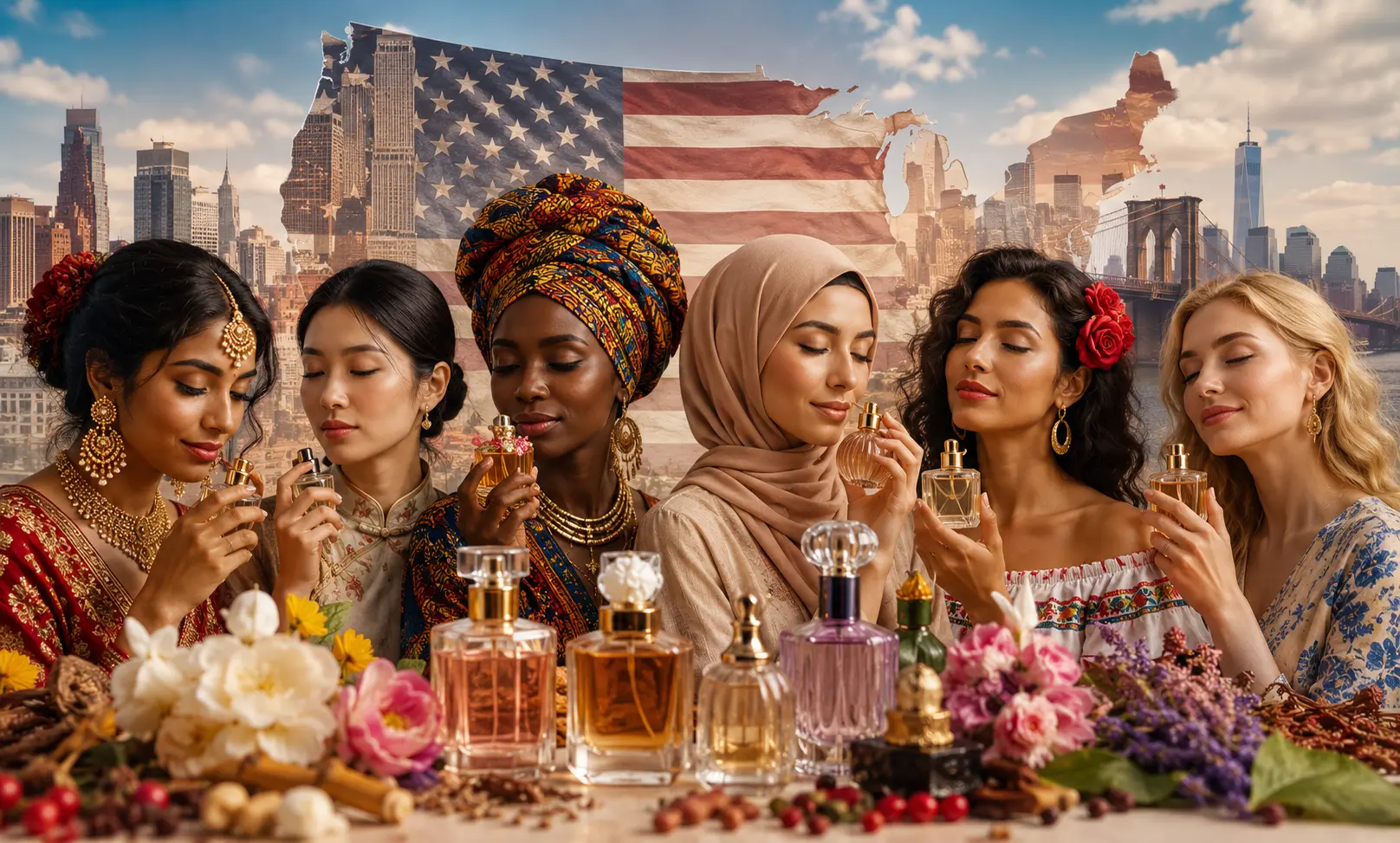
Exploring the Influence of Ethnic Diversity on Perfume Choices in the US
Walk through any major American city today — New York, Houston, Los Angeles, Chicago, Miami — and you’ll notice something fascinating: people no longer smell the same.
One person wears a clean aquatic fragrance inspired by minimal Scandinavian trends. Another prefers rich Middle Eastern oud oils. Someone else gravitates toward sweet vanilla scents connected to childhood memories, while another chooses smoky woody perfumes that feel elegant in professional environments.
America’s fragrance culture is no longer shaped by a single “mainstream” preference.
It’s being shaped by diversity.
As different cultures, traditions, climates, cuisines, and lifestyles continue blending across the United States, perfume preferences are becoming more emotionally complex, socially adaptive, and culturally expressive than ever before.
And surprisingly, many of the fragrances Americans love today are influenced by scent traditions that originally came from entirely different parts of the world.
How does ethnic diversity influence perfume choices in the US?
Ethnic diversity influences American perfume choices by introducing different scent traditions, ingredients, cultural preferences, and emotional associations into the fragrance market. This creates greater demand for perfumes featuring oud, spices, vanilla, florals, incense, musk, fresh citrus, and culturally nostalgic scent profiles that appeal to diverse American communities and lifestyles.
🧠 Why America Became One of the Most Diverse Fragrance Markets in the World
The United States is unique because fragrance preferences constantly evolve through cultural interaction.
Unlike countries with a more unified fragrance tradition, America combines influences from:
- Middle Eastern perfume culture
- Latin American scent preferences
- African heritage ingredients
- Asian minimalist fragrance aesthetics
- European luxury perfumery
- American clean and casual lifestyle trends
This creates a market where extremely different fragrance styles can succeed at the same time.
For example:
| Cultural Influence | Common Fragrance Preferences | Emotional Effect |
|---|---|---|
| Middle Eastern | Oud, amber, saffron, rose | Luxury, depth, projection |
| Latin American | Sweet gourmands, warm florals | Passion, warmth, energy |
| East Asian | Soft musk, tea, skin scents | Cleanliness, calmness |
| European | Woody aromatics, refined florals | Sophistication |
| American mainstream | Fresh aquatic and versatile scents | Comfort and accessibility |
This diversity is one reason American fragrance discussions online feel so varied compared to other countries.
🇺🇸 Why Younger Americans Are Mixing Cultural Fragrance Styles
One major shift happening in the US fragrance market is cultural blending.
Younger Americans no longer feel restricted to fragrances associated with their own background.
Instead, they explore globally.
Someone may:
- wear an oud fragrance at night,
- a Japanese-inspired skin scent during work,
- and a sweet vanilla gourmand on weekends.
This explains why fragrance communities in the US have become obsessed with layering, niche perfumes, and scent experimentation.
It also connects closely to how emotional memory shapes perfume behavior, which is why articles like The Role of Nostalgia in American Perfume Preferences naturally connect to this topic. Many Americans choose fragrances not only because they smell good — but because they remind them of family traditions, cultural food, celebrations, or childhood environments.
🧠 Consumer Psychology: Why Cultural Familiarity Changes Perfume Perception
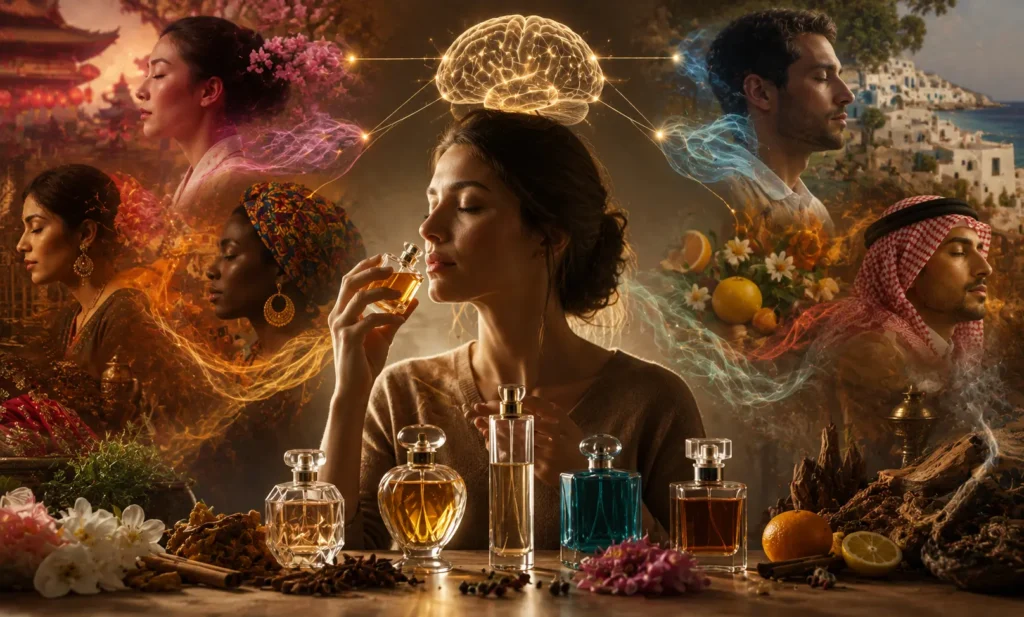
People often trust scents that subconsciously feel “familiar.”
Even when someone cannot explain why they love a fragrance, the answer is sometimes psychological rather than olfactory.
For example:
- spicy notes may remind someone of family cooking,
- incense may feel spiritually comforting,
- citrus may feel culturally “clean,”
- rose may feel luxurious or romantic depending on upbringing.
This emotional familiarity heavily affects purchasing behavior in the US fragrance market.
That’s also why certain perfumes receive better public reactions than others. Smooth, balanced fragrances often feel socially safer across diverse environments, which relates naturally to Why Smooth Perfumes Usually Get Better Reactions Than Loud Ones.
Strong fragrances can sometimes create cultural mismatch in shared environments, while smoother compositions adapt more easily to America’s socially mixed spaces.
What fragrance notes are becoming more popular in diverse American communities?
Oud, saffron, musk, vanilla, incense, tea notes, warm amber, tropical fruits, and soft skin scents are becoming increasingly popular in diverse American communities because consumers are exploring global fragrance traditions and emotionally meaningful scent profiles.
🌆 The Influence of American Cities on Fragrance Diversity
Large US cities dramatically accelerate perfume trend crossover.
Cities like:
- New York City
- Los Angeles
- Houston
- Miami
have become fragrance melting pots where people constantly encounter new scent styles.
This changes consumer expectations.
Instead of asking:
“What smells masculine or feminine?”
many younger Americans now ask:
“What smells unique, comforting, smooth, attractive, or memorable?”
That shift explains the rise of fragrances that attract attention subtly rather than aggressively, which aligns naturally with Perfumes That Attract Attention Without Causing Discomfort.
In socially diverse environments, versatility often becomes more valuable than raw projection.
🔎 Why “Socially Comfortable” Fragrances Perform Better in the US
In highly mixed social spaces:
- offices,
- gyms,
- universities,
- restaurants,
- public transportation,
- crowded nightlife,
people encounter many different scent sensitivities.
This is one reason fragrances with controlled projection increasingly outperform extremely loud perfumes in everyday American settings.
Many consumers now prefer scents that:
- feel clean,
- evolve smoothly,
- create soft scent trails,
- avoid overwhelming strangers.
This connects directly with Which Perfume Gets More Compliments Without Overpowering People? because modern American fragrance compliments often come from wearability rather than intensity.
The psychology is simple:
People usually remember fragrances that feel pleasant and effortless more than fragrances that dominate the room.
🧴 Why Motion and Airflow Change Cultural Fragrance Perception
Interestingly, some fragrance styles perform differently depending on movement and environment.
Warm spicy fragrances may feel intense up close but elegant in motion.
Fresh musks may feel subtle indoors but attractive outdoors.
This is why Why Some Fragrances Smell Better in Motion Than Up Close connects naturally to ethnic fragrance diversity discussions.
Certain culturally inspired fragrance structures were historically designed for:
- outdoor climates,
- warm weather,
- social gatherings,
- layered clothing,
- or oil-based diffusion.
When these styles enter American environments, perception changes depending on airflow, climate control, humidity, and social distance.
💰 Diversity Is Also Changing Fragrance Spending Habits
As Americans become exposed to more global fragrance styles, many consumers are becoming more willing to:
- buy niche fragrances,
- purchase discovery sets,
- experiment with samples,
- own multiple scent categories,
- collect perfumes for mood and identity rather than necessity.
This behavior strongly overlaps with The True Cost of Fragrance: What Americans Really Spend on Perfume.
For many Americans today, fragrance is no longer just grooming.
It has become:
- emotional identity,
- cultural exploration,
- social signaling,
- self-expression,
- and even lifestyle curation.
That psychological shift is significantly increasing fragrance experimentation in the US market.
🛍️ Fragrance Examples That Reflect America’s Diverse Preferences
Some fragrance categories that currently perform well in the US include:
| Fragrance Style | Why Americans Like It |
|---|---|
| Soft skin scents | Feel clean, modern, socially safe |
| Oud-inspired fragrances | Feel luxurious and distinctive |
| Vanilla gourmands | Create emotional warmth and comfort |
| Fresh aquatic scents | Easy daily wear |
| Tea and musk fragrances | Minimalist and calming |
| Amber-spice blends | Rich but versatile |
Popular examples often include fragrances inspired by:
- Arabian perfumery,
- French niche houses,
- Korean minimalist aesthetics,
- and modern American casual fragrance culture.
If you enjoyed exploring how culture shapes modern fragrance preferences, you may also enjoy reading The Role of Nostalgia in American Perfume Preferences, where emotional memory and childhood associations influence scent choices in surprisingly powerful ways.
You can also explore The True Cost of Fragrance: What Americans Really Spend on Perfume to understand why many Americans are now investing more money into fragrance collections, discovery sets, and niche perfumes than ever before.
And if you’re curious about the social side of fragrance perception, articles like Why Smooth Perfumes Usually Get Better Reactions Than Loud Ones and Which Perfume Gets More Compliments Without Overpowering People? reveal why softer fragrances often perform better in diverse American social environments.
❓FAQ
Why are oud fragrances becoming more popular in America?
Oud fragrances are becoming popular because many Americans now seek unique, luxurious, and globally inspired scents that stand out from traditional fresh designer fragrances.
Do cultural backgrounds affect perfume preferences?
Yes. Cultural background can influence emotional scent associations, ingredient familiarity, comfort levels with projection, and perceptions of cleanliness or luxury.
Why do younger Americans experiment with more fragrance styles?
Social media, globalization, niche fragrance culture, and cultural openness have made younger Americans more comfortable exploring perfumes from different traditions.
Are softer perfumes better for diverse social environments?
In many cases, yes. Softer fragrances tend to feel more versatile and socially comfortable in mixed public settings like offices, schools, and crowded spaces.
🧠 Conclusion
America’s fragrance market is becoming more emotionally layered, culturally blended, and psychologically sophisticated every year.
People are no longer choosing perfumes based only on gender or trends.
They’re choosing scents based on:
- identity,
- memory,
- comfort,
- social behavior,
- cultural curiosity,
- and emotional connection.
And as ethnic diversity continues shaping American lifestyle culture, fragrance preferences will likely become even more global, personal, and expressive in the years ahead.
💬 Interactive Question
Have you ever been attracted to a fragrance because it reminded you of a culture, place, food, memory, or experience from your life?
Discover more from Perfume Cultures
Subscribe to get the latest posts sent to your email.


One Comment