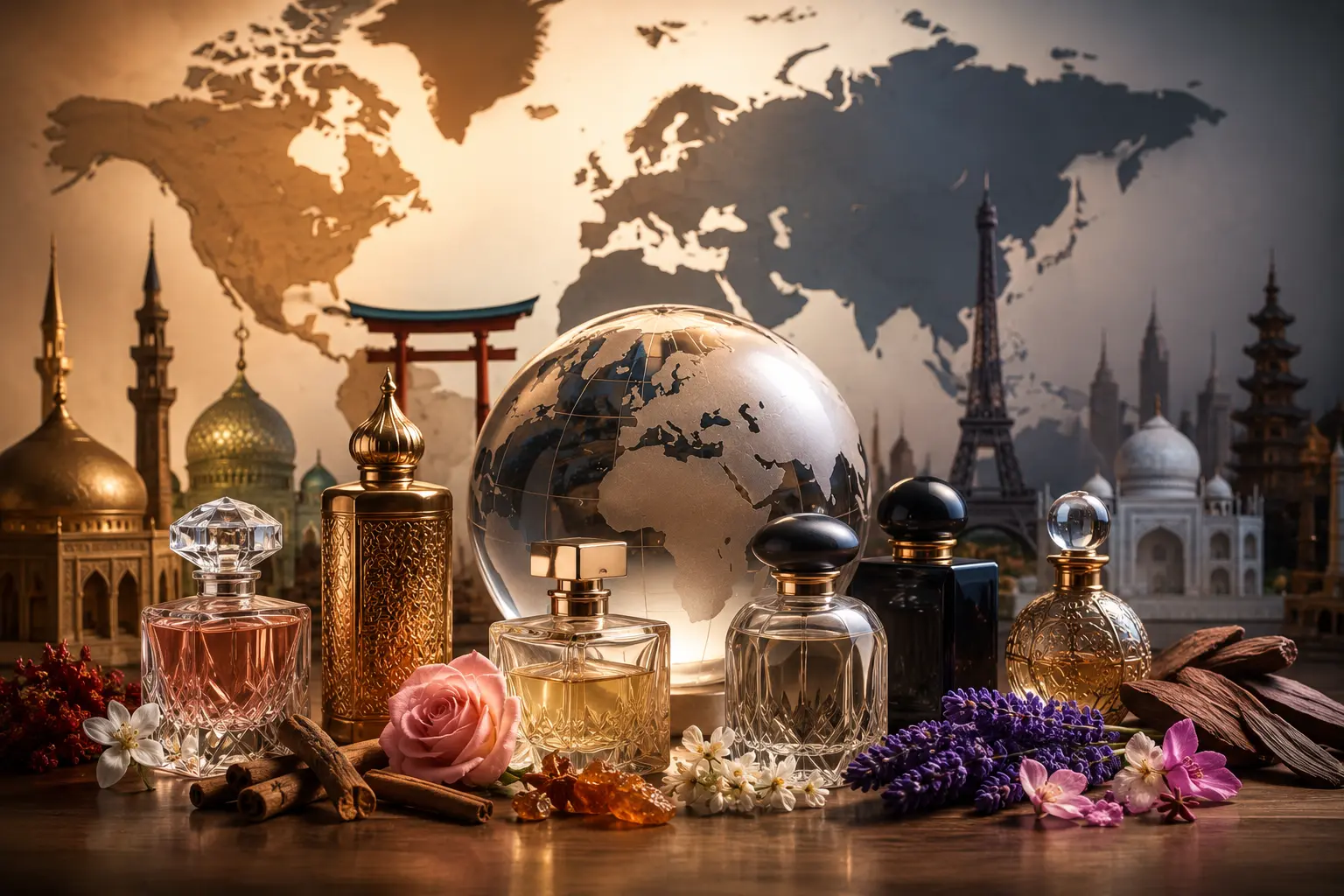
The World Of Perfume Cultures: How Fragrance Tastes Change Across Countries
Perfume is not just about smelling good.
In many parts of the world, fragrance is tied to identity, respect, social behavior, climate, religion, attraction, and even emotional comfort. A scent considered “clean and classy” in one country may feel weak, strange, or even unpleasant in another.
That’s why fragrance culture changes dramatically across the globe.
Some countries love soft skin scents that stay close to the body. Others celebrate powerful projection that fills an entire room. Some cultures see perfume as a private luxury, while others treat it as a daily social ritual.
And once you start noticing these differences, you realize something important:
People are not only wearing perfume differently — they are emotionally interpreting scent differently too.
Why do perfume preferences change across countries?
Perfume preferences change across countries because of climate, culture, social norms, history, religion, lifestyle, and emotional associations with scent. Hot regions often favor stronger fragrances, while countries with scent-sensitive public spaces usually prefer softer perfumes.
🌍 Fragrance Is Deeply Connected to Environment
One of the biggest reasons perfume tastes differ globally is simple:
Climate changes how fragrance behaves.
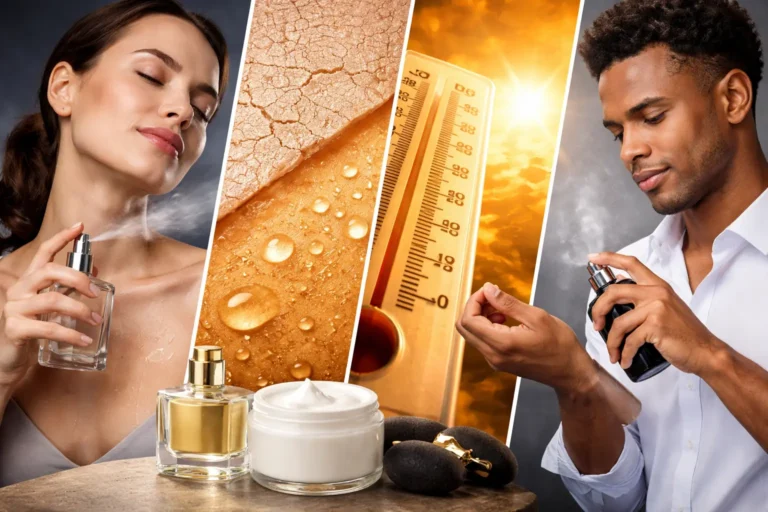
Warm weather amplifies projection, sweetness, spices, resins, and body heat. Cold weather softens diffusion and often makes people prefer cozy, smooth, or powdery scents.
That’s one reason Middle Eastern fragrance culture developed such a strong appreciation for oud, amber, musk, incense, and rich oils. In hotter climates, lighter fragrances may disappear quickly or feel too weak.
This also connects closely to how fragrance performance changes from day to day. If you’ve ever noticed your scent fading unusually fast during heat or humidity, you may enjoy reading Why Does Perfume Disappear Faster On Some Days Than Others? because environmental conditions dramatically shape how perfume performs on skin.
🕌 Middle Eastern Perfume Culture: Presence, Luxury, and Longevity
In many Gulf countries, perfume is not subtle.
It’s expressive.
Fragrance is often associated with:
- hospitality
- elegance
- generosity
- personal pride
- cleanliness
- social status
Strong projection is usually not viewed negatively in the same way it may be in some Western countries.
Layering is also extremely common:
- oud oils
- bakhoor
- musk
- perfume sprays
- scented clothing
In some social environments, smelling “too soft” can actually feel incomplete or forgettable.
This is one reason many Middle Eastern fragrance lovers prefer perfumes with:
- massive longevity
- thick scent trails
- room presence
- warm spicy accords
🇯🇵 Japanese Fragrance Culture: Softness and Social Awareness
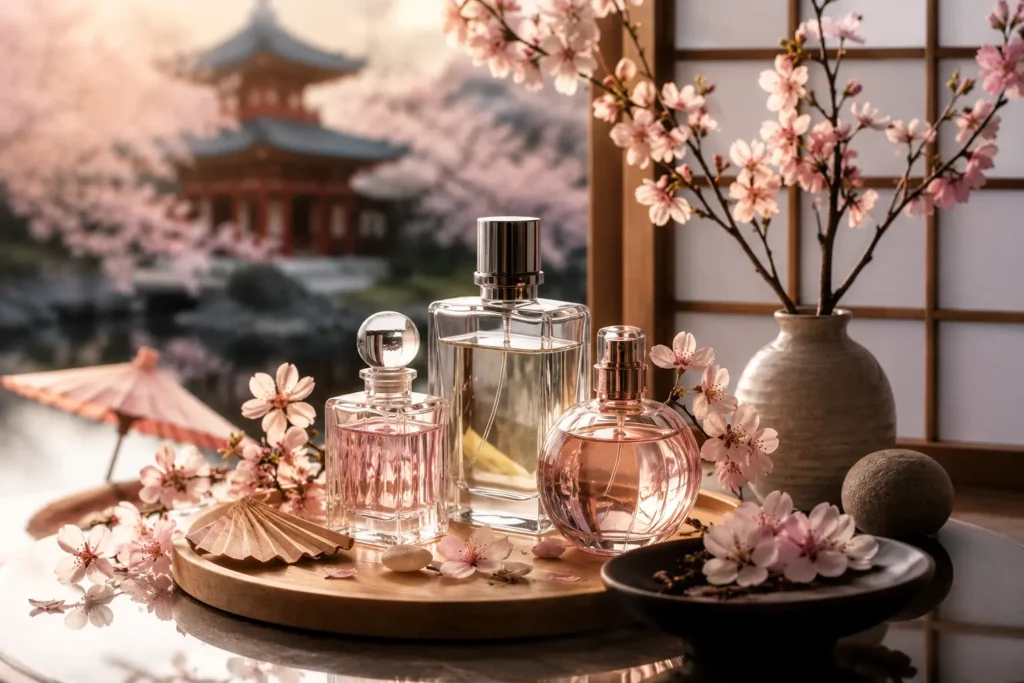
Japan represents almost the opposite philosophy.
In Japanese culture, strong personal scents in public spaces can sometimes be viewed as inconsiderate. Cleanliness and subtlety are highly valued socially.
That’s why:
- light florals
- soft musk
- clean laundry scents
- skin scents
- airy citrus fragrances
are often preferred over loud projection monsters.
The goal is usually not:
“Make everyone notice me.”
Instead, it’s:
“Smell pleasant without disturbing others.”
This is deeply connected to social harmony.
Interestingly, this aligns perfectly with the psychology explored in Can a Subtle Perfume Make You More Likeable? The Psychology Behind Soft Fragrances where softer scents often create a calmer and more approachable impression.
🇺🇸 American Fragrance Culture: Compliments and Versatility
American fragrance culture is heavily influenced by:
- compliments
- attractiveness
- versatility
- casual lifestyle
- seasonal flexibility
In the U.S., many people want fragrances that:
- smell fresh
- work at work
- get compliments
- feel modern
- fit multiple situations
That’s why “blue fragrances,” clean ambroxan scents, shower-fresh perfumes, and versatile designer fragrances became extremely popular.
American consumers also tend to categorize fragrances by:
- dating
- office
- gym
- seasons
- nightlife
- compliments
rather than cultural tradition.
🇫🇷 French Perfume Culture: Elegance Over Loudness
France has one of the most influential perfume histories in the world.
But contrary to what many people expect, traditional French perfume culture often values:
- sophistication
- balance
- artistry
- refinement
over sheer strength.
In many French fragrance circles, a perfume that feels overly aggressive may be seen as lacking elegance.
The fragrance should feel like part of the person — not an announcement.
Which countries prefer strong perfumes?
Countries in the Middle East generally prefer stronger perfumes with high projection and longevity, while countries like Japan often favor softer, cleaner fragrances that stay closer to the skin and avoid overwhelming others in public spaces.
🌡️ Why Hot Countries Often Prefer Stronger Fragrances
This is not just cultural.
It’s physical.
Heat changes fragrance evaporation speed.
Sweat, humidity, skin temperature, and movement all affect how perfume develops and projects.
That’s why fragrance choices in hot climates often lean toward:
- stronger concentrations
- richer bases
- heavier woods
- oils and resins
Body chemistry also becomes more noticeable in warm environments. If you’ve ever wondered why sweat can completely transform how a fragrance smells, Does Sweat Change Perfume Smell? explores the surprising chemistry happening directly on skin.
🚇 Public Spaces Change Fragrance Etiquette
Perfume culture is also shaped by how people share public space.
In countries with:
- crowded trains
- small restaurants
- compact offices
- heavy public transportation
people may become more sensitive to overpowering scents.
This is one reason fragrance etiquette matters differently around the world.
For example, in scent-sensitive environments, wearing an extremely loud fragrance near people with allergies or scent sensitivity may create discomfort rather than admiration. That social side of fragrance is explored further in What Perfume Should You Wear Around People With Allergies?
🧠 Movement, Lifestyle, and Daily Rhythm Affect Scent Culture
Lifestyle patterns also shape fragrance preferences.
Countries with:
- fast-paced urban movement
- outdoor social culture
- hotter climates
- physically active routines
often experience fragrance differently than colder or quieter environments.
Even simple body movement changes scent diffusion.
Walking through a busy city, sweating slightly, entering air conditioning, or sitting indoors can completely change how a fragrance behaves in real life. This explains why some perfumes smell dramatically different depending on activity level, which is discussed in Why Does Perfume Smell Different When You Sit vs Move?
⚠️ The Meaning of “Too Strong” Changes by Culture
One of the most fascinating things about global fragrance culture is this:
There is no universal definition of “too much perfume.”
In one country:
- powerful projection = confidence
In another:
- powerful projection = lack of social awareness
This cultural contrast becomes especially obvious when multiple strong fragrances mix together in enclosed environments. That social collision is explored further in When Two People Wear Strong Perfume in the Same Room?
The same scent trail that feels luxurious in Dubai may feel overwhelming in Tokyo.
And neither perspective is objectively “wrong.”
They simply come from different scent cultures.
📊 Comparison Table: How Perfume Preferences Change Globally
| Region | Common Fragrance Style | Social Preference | Projection Level |
|---|---|---|---|
| Middle East | Oud, amber, musk, incense | Luxury & presence | Very strong |
| Japan | Soft musk, clean florals | Social harmony | Very soft |
| United States | Fresh, versatile scents | Compliments & versatility | Moderate |
| France | Elegant balanced perfumes | Sophistication | Controlled |
| India | Spices, florals, attars | Rich tradition | Strong |
| Scandinavia | Minimal clean scents | Simplicity | Soft |
🌏 Perfume Is a Reflection of Human Culture
Fragrance is invisible.
But culturally, it says a lot.
It reflects:
- climate
- history
- identity
- religion
- public behavior
- beauty standards
- social comfort zones
The world does not smell the same everywhere.
And honestly, that’s what makes perfume fascinating.
A fragrance isn’t just worn on skin.
It’s worn inside a culture.
❓FAQ
Why are perfumes stronger in the Middle East?
Hot climates, cultural traditions, oud heritage, and social preferences for luxurious projection all contribute to stronger fragrance styles in many Middle Eastern countries.
Why do some countries prefer subtle perfumes?
Countries with strong social etiquette around shared public spaces often prefer softer fragrances that avoid overwhelming others nearby.
Does climate really affect perfume preferences?
Yes. Heat, humidity, sweat, and cold temperatures all change how perfume performs, which influences the kinds of fragrances people enjoy in different regions.
Are loud perfumes considered rude in some countries?
Yes. In some cultures, especially those focused on subtlety and social harmony, very strong fragrances may be viewed as distracting or inconsiderate.
Why do fragrances smell different in different countries?
Climate, air quality, humidity, diet, skin chemistry, and cultural scent expectations all influence how fragrances are experienced.
Final Thought
The same fragrance can feel elegant, overwhelming, comforting, luxurious, or invisible depending on where you are in the world.
And maybe that’s the real beauty of perfume culture:
A scent never exists alone.
It always exists inside people, places, and social meaning.
So here’s a fascinating question:
🌍 If you could choose one country whose perfume culture matches your personality perfectly… which country would it be?
Discover more from Perfume Cultures
Subscribe to get the latest posts sent to your email.