
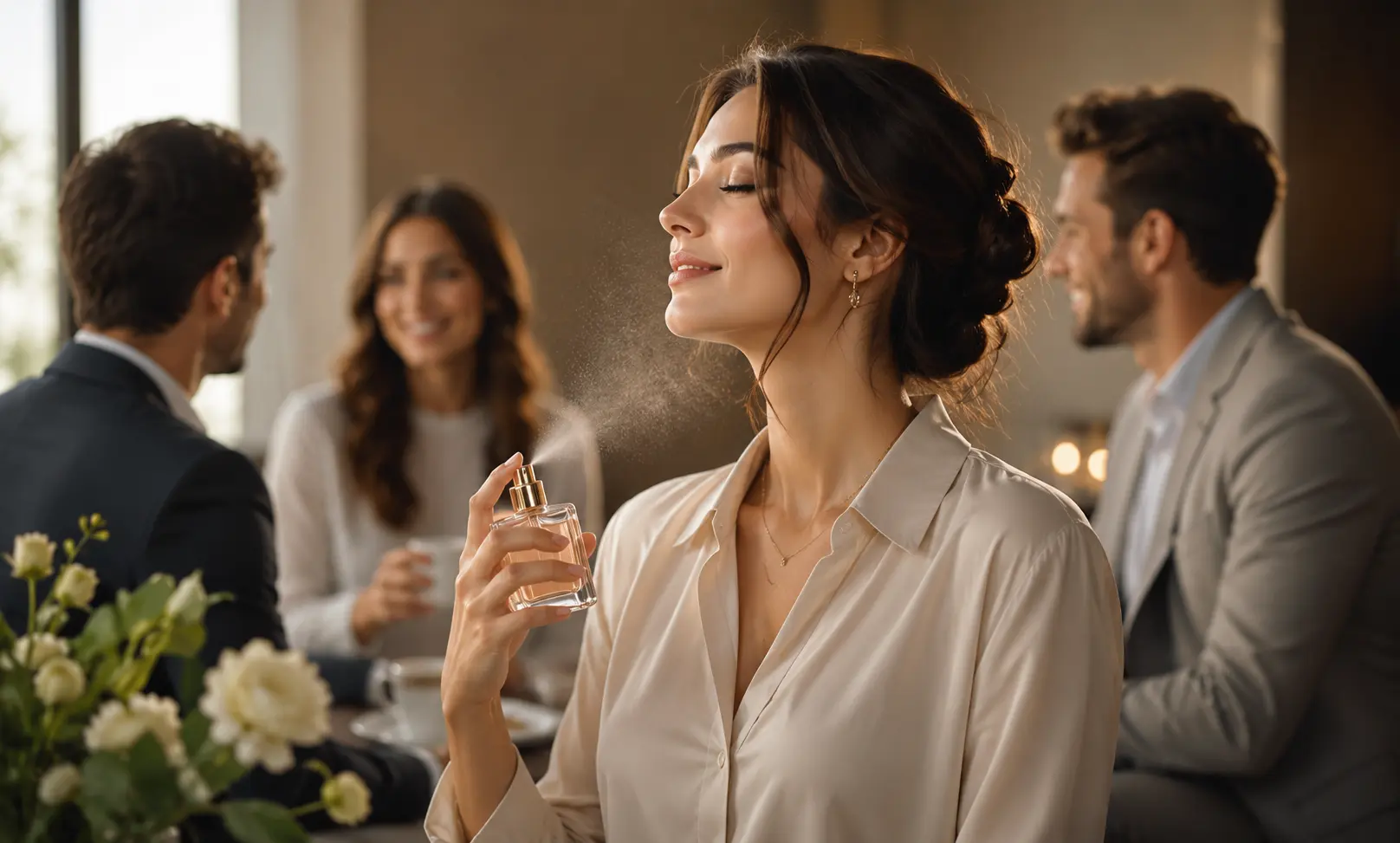
Can a Subtle Perfume Make You More Likeable? The Psychology Behind Soft Fragrances
Some perfumes enter a room before you do.
Others stay close to the skin — quiet, soft, almost invisible.
Surprisingly, the second type often creates the stronger social effect.
People tend to assume that powerful fragrances create confidence, attraction, and memorability. But in real social environments, subtle perfumes often make people feel more relaxed, emotionally safe, and naturally drawn toward you without fully understanding why.
That is because likeability is rarely created through intensity.
It is usually created through comfort.
A subtle fragrance does not dominate attention.
It blends into personal space gently, allowing people to associate your presence with ease rather than pressure. In psychology, this matters more than most people realize.
Can a subtle perfume make you more likeable?
Yes. Subtle perfumes can increase likeability because they create comfort instead of sensory pressure. Soft fragrances are often perceived as cleaner, calmer, safer, and more socially intelligent than overly strong scents, especially in close environments like offices, flights, conversations, and indoor spaces.
🧠 Why Soft Fragrances Feel More Human
Human beings constantly scan their environment for emotional safety.
Most people do this unconsciously.
A very loud fragrance can sometimes trigger:
- sensory fatigue
- social tension
- perceived arrogance
- overstimulation
But a soft fragrance usually creates the opposite reaction:
- warmth
- familiarity
- cleanliness
- emotional comfort
This is one reason why subtle scents often feel more approachable.
The brain does not always reward the scent it notices the most.
Sometimes it rewards the scent that feels easiest to exist around.
✔️ Subtle Fragrances Reduce “Social Pressure”
Strong projection changes the atmosphere around a person.
In some situations this works well:
- nightlife
- outdoor events
- crowded parties
But in normal daily interaction, softer fragrances usually perform better socially.
A subtle scent allows people to:
- lean closer naturally
- feel curious instead of overwhelmed
- associate the smell with you rather than with “perfume”
This distinction is important.
Sometimes people dislike a fragrance not because it smells bad — but because it feels socially aggressive.
This is closely related to the psychology discussed in How Do You Tell If Your Perfume Is Too Noticeable?, where excessive projection can unintentionally create discomfort even when the fragrance itself is high quality.
🌿 The “Comfort Effect” in Fragrance Psychology
Certain scent profiles naturally create emotional softness:
- clean musk
- soft woods
- creamy vanilla
- airy iris
- light tea notes
- smooth skin scents
These scents rarely attack the senses.
Instead, they blend into the emotional background of an interaction.
That is why many people subconsciously describe subtle perfumes as:
- trustworthy
- calming
- mature
- elegant
- emotionally warm
This connects strongly to the emotional behavior explained in 🧠 Why Certain Scents Feel Comforting, where the brain associates soft scent structures with familiarity and psychological ease.
Why do subtle perfumes often feel more attractive?
Subtle perfumes often feel more attractive because they stay within personal space instead of dominating it. This creates emotional comfort, curiosity, and a more natural scent experience, especially during close social interaction.
✈️ Why Quiet Fragrances Work Better in Shared Spaces
Subtle fragrances become even more important in environments where people cannot escape the scent easily.
Examples include:
- airplanes
- elevators
- offices
- classrooms
- cars
- waiting rooms
In these spaces, overpowering projection creates psychological tension faster than many fragrance wearers realize.
This is exactly why softer fragrances are usually more successful in situations discussed in ✈️ Perfume for Long Flights (Non Annoying): How to Smell Good Without Disturbing Others.
People may not compliment the fragrance loudly — but they often feel more comfortable around the person wearing it.
And comfort is deeply connected to likeability.
🌡️ The Office Effect: Why “Clean” Beats “Loud”
Hot indoor environments amplify projection dramatically.
A fragrance that feels balanced outdoors can become overwhelming inside a warm office.
This is why subtle perfumes often outperform heavy fragrances in professional settings.
In environments like those discussed in 🌡️ Best Perfume for Hot Office Environment, softer scents tend to signal:
- self-awareness
- cleanliness
- emotional control
- professionalism
Meanwhile, extremely strong perfumes can unintentionally communicate:
- attention-seeking behavior
- poor spatial awareness
- social insensitivity
The social perception changes completely.
📊 Subtle Perfume vs Loud Perfume
| Factor | Subtle Perfume | Loud Perfume |
|---|---|---|
| First Impression | Smooth and approachable | Intense and noticeable |
| Emotional Effect | Comforting | Stimulating |
| Office Suitability | Excellent | Risky |
| Shared Spaces | Safer socially | Can overwhelm others |
| Long Conversations | Pleasant over time | May cause fatigue |
| Psychological Association | Clean, calm, refined | Bold, dominant, attention-grabbing |
| Likeability Potential | Often higher | Depends heavily on context |
🧪 Why Expensive Perfumes Often Feel “Softer”
One interesting detail many people notice:
some expensive fragrances do not smell stronger — they smell smoother.
That smoothness matters psychologically.
Luxury fragrances often use:
- softer transitions
- blended edges
- airy diffusion
- refined musk structures
As explained in Why Expensive Perfumes Smell Smoother, the brain often interprets this smoothness as sophistication rather than intensity.
This can quietly increase perceived elegance and social comfort.
In other words:
people may enjoy being around the scent longer because it does not feel sharp or exhausting.
✔️ The Most Likeable Fragrance Is Not Always the Most Noticeable
Many fragrance enthusiasts chase projection.
But in real life, people usually remember:
- how you made them feel
not - how many feet your fragrance projected
A soft fragrance can become emotionally associated with:
- a calm conversation
- a safe interaction
- an attractive personality
- a relaxed atmosphere
That emotional memory often lasts longer than raw intensity.
Sometimes the most powerful social effect comes from a fragrance that never tries too hard.
❓FAQ
Do people prefer subtle perfumes?
In many everyday environments, yes. Most people prefer fragrances that feel clean, smooth, and non-invasive rather than extremely loud or overpowering.
Can a strong perfume reduce likeability?
Sometimes. If a fragrance becomes overwhelming in close environments, it can create sensory fatigue or social discomfort even if the scent itself smells good.
Why do subtle perfumes feel more elegant?
Subtle perfumes often feel more elegant because they create refinement without demanding attention. Many people associate softness with confidence and emotional control.
Are subtle perfumes less attractive?
Not necessarily. In many social situations, subtle perfumes feel more intimate and approachable than loud fragrances.
What types of notes feel most comforting?
Soft musk, clean woods, creamy vanilla, tea notes, powdery iris, and skin-like fragrances are often perceived as calming and emotionally pleasant.
🧭 Final Thoughts
Fragrance is not only about smell.
It is also about emotional atmosphere.
Some perfumes dominate a room.
Others quietly improve it.
And in many real-world situations, people are naturally drawn toward scents that make them feel relaxed, safe, and comfortable rather than overwhelmed.
A subtle perfume may not always get the loudest compliments.
But it often creates something deeper:
ease around your presence.
That feeling is one of the hidden foundations of likeability.
These articles explore how fragrance affects emotional perception, comfort, projection, and human interaction in everyday life.
💬 Interactive Question
Do you think people remember strong perfumes more — or do they secretly prefer the fragrances that stay softer and closer to the skin?
Discover more from Perfume Cultures
Subscribe to get the latest posts sent to your email.






6 Comments