What Does Luxury Smell Like? A Cultural Reflection
Luxury is one of the most powerful yet elusive ideas in perfumery. You can’t hold it, measure it, or define it with a single note—yet the moment you smell it, you recognize it.
But here’s the deeper question:
Does luxury actually have a smell… or is it something we’ve learned to perceive?
This article explores luxury not as a price tag, but as a cultural, emotional, and sensory experience shaped by science, identity, and perception.
🧬 The Science Behind “Expensive Smelling” Scents
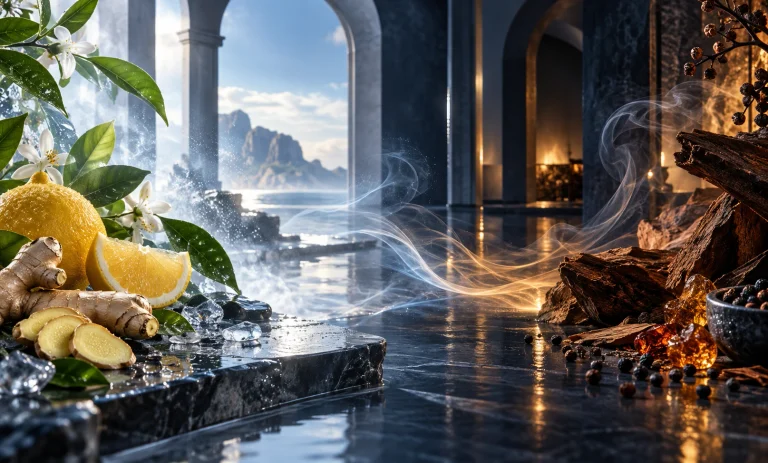
At a molecular level, there is no ingredient labeled “luxury.” Instead, what we interpret as luxurious often comes from complexity, balance, and evolution over time.
High-end fragrances tend to:
- Use layered compositions (top, heart, base working in harmony)
- Feature long-lasting base notes like woods, resins, and musks
- Create a smooth transition between phases (no harsh edges)
These characteristics give the impression of refinement and depth. If you want to understand how molecules interact with your nose and brain to create this perception, it’s worth exploring How Perfume Works: The Science Behind Fragrance, Molecules, and Human Smell.
👉 In short: luxury doesn’t come from one ingredient—it comes from how everything is constructed.
❤️ Luxury Is a Feeling Before It’s a Scent
Luxury is not just smelled—it’s felt.
A fragrance might remind you of:
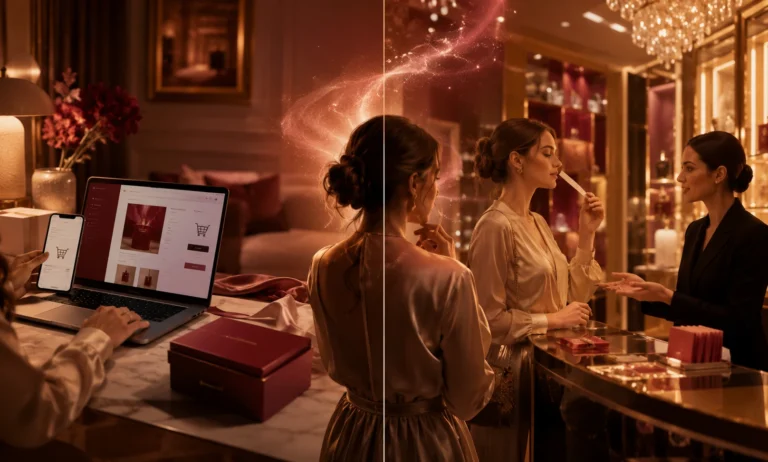
- A high-end hotel lobby
- A quiet, elegant evening
- A moment of personal success
These emotional associations are not random. Our sense of smell is directly linked to the brain’s emotional and memory centers, which is why certain scents instantly feel “premium” even before we analyze them.
This connection is explored in Why Smell Is the Most Emotional Human Sense, where scent is shown to bypass logic and speak directly to emotion.
👉 That’s why luxury often feels immediate—your brain reacts before you can explain it.
🌍 Cultural Interpretations of Luxury
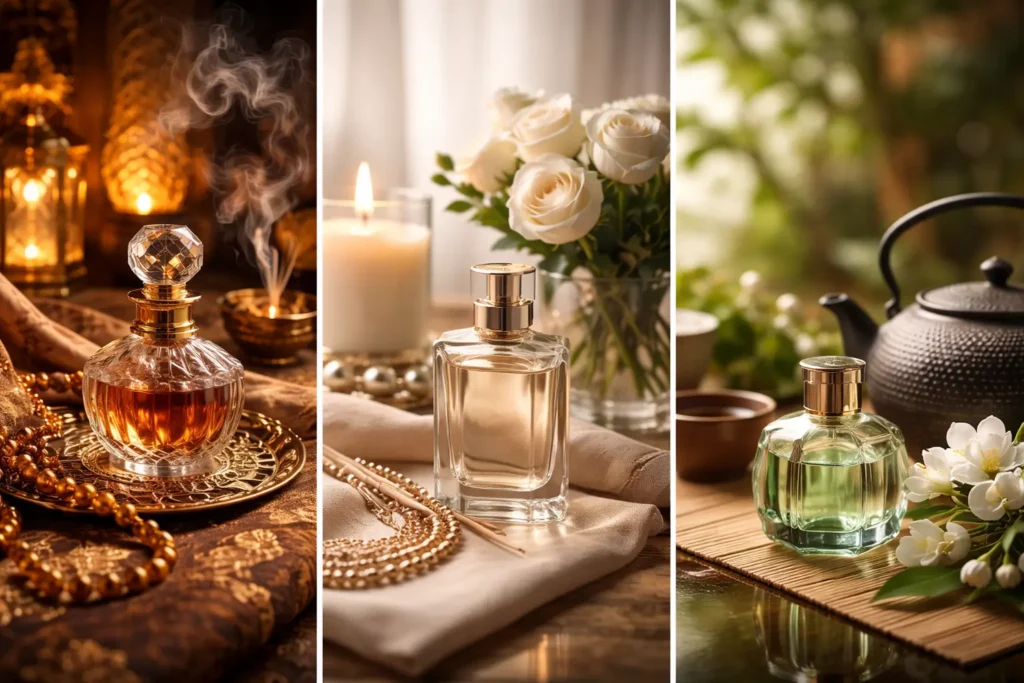
What smells luxurious in one culture may feel completely different in another.
Western Perspective:
- Clean musks
- Soft florals
- Subtle woods
👉 Associated with minimalism and quiet sophistication
Middle Eastern Perspective:
- Oud
- Amber
- Incense
👉 Associated with richness, warmth, and intensity
Asian Perspective:
- Tea notes
- Light citrus
- Transparent florals
👉 Associated with purity and harmony
Luxury, then, is not universal—it’s culturally constructed.
🧍♂️ Luxury as an Extension of Identity
Luxury fragrances are often less about impressing others and more about expressing who you are.
A bold, smoky scent may signal confidence and individuality.
A clean, understated fragrance may reflect precision and control.
In this sense, luxury becomes personal. It aligns with your self-image and how you want to be perceived.
This idea is explored further in Perfume and Identity: The Invisible Expression, where scent is described as an extension of personality rather than just an accessory.
👉 True luxury isn’t worn—it’s embodied.
🧠 Why Luxury Is Hard to Describe
Try to explain what “luxury” smells like, and you’ll quickly run into a problem: words fall short.
We might say:
- “Rich”
- “Smooth”
- “Deep”
- “Elegant”
But these are interpretations—not precise descriptions.
This limitation connects to a broader idea discussed in The Philosophy of Scent: Why Smell Is the Most Overlooked Sense: smell operates in a space where language struggles to keep up.
👉 Luxury exists in that gap—between sensation and explanation.
👥 Social Signals: How We Recognize Luxury on Others
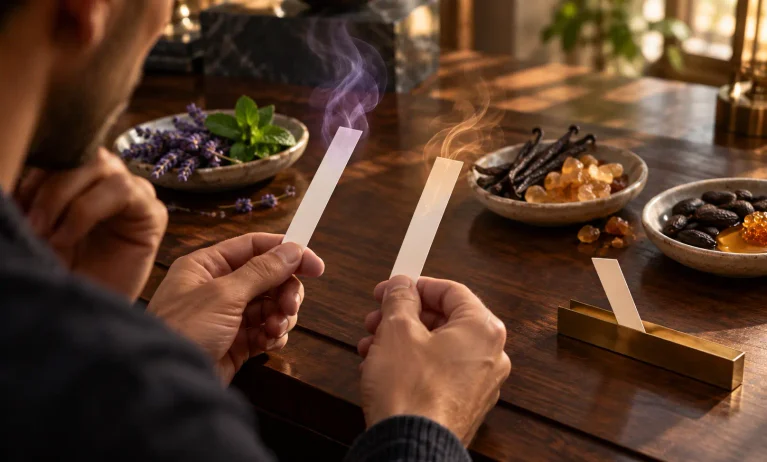
Even without knowing the fragrance, people often recognize when someone “smells expensive.”
This perception comes from:
- Smooth scent transitions (no sharpness)
- Balanced projection (noticeable but not overwhelming)
- Familiar yet refined scent profiles
Interestingly, fragrances that receive the most compliments often share these traits. They are not necessarily the most complex—but they are the most socially readable.
You can explore this idea further in Top Compliment-Getting Fragrances, where mass appeal and perceived quality often overlap.
👉 In social contexts, luxury is not just personal—it’s collectively understood.
🧩 The Illusion—and Reality—of Luxury
So, what does luxury actually smell like?
Not one note. Not one formula.
Luxury is:
- Structure (how a scent is built)
- Emotion (how it makes you feel)
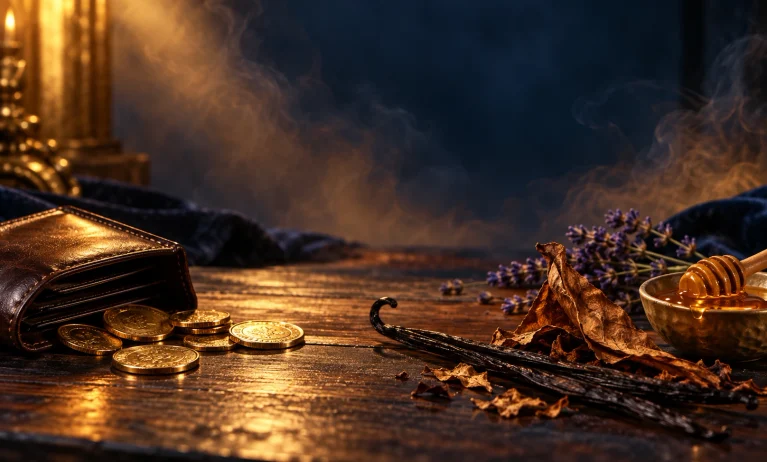
- Culture (what you’ve learned to associate with value)
- Identity (how it reflects you)
It’s both real and constructed at the same time.
👉 Luxury doesn’t exist in the bottle alone—it exists in your perception of it.
❓ FAQ: Understanding the Scent of Luxury
1. Is there a specific ingredient that smells luxurious?
No. Luxury is not tied to a single ingredient but to how a fragrance is composed, blended, and experienced over time.
2. Why do some cheap perfumes smell “expensive”?
Because they mimic the structure and balance of high-end fragrances, creating a similar sensory experience even at a lower cost.
3. Does luxury smell the same to everyone?
Not at all. Cultural background, personal memories, and individual taste all influence how luxury is perceived.
4. Why do some fragrances feel luxurious instantly?
Because scent is processed in the emotional part of the brain, triggering immediate associations with comfort, status, or memory.
5. Are compliment-getting fragrances always luxurious?
Not necessarily—but they often share qualities like smoothness and balance that people subconsciously associate with quality.
💬 Final Thought
If luxury is shaped by culture, memory, and identity…
What scent, to you, feels undeniably luxurious—and why?
If luxury is shaped by your experiences… what scent instantly makes you feel rich, confident, or unforgettable?
Discover more from Perfume Cultures
Subscribe to get the latest posts sent to your email.