
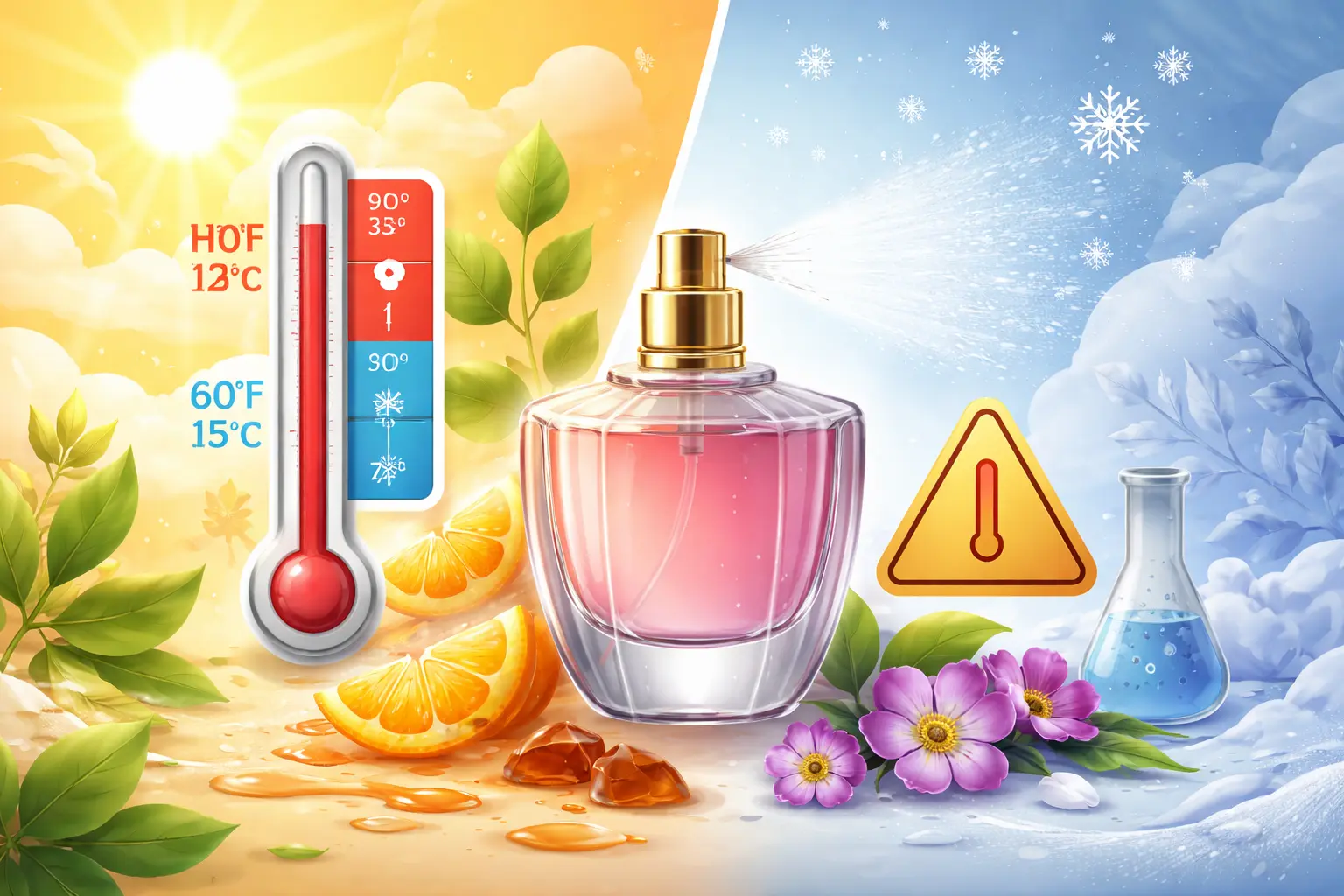
🌡️ How Temperature Affects Perfume: Can Heat Ruin Your Fragrance?
Perfume lovers often focus on choosing the perfect scent, but far fewer think about how temperature affects perfume after the bottle leaves the store.
If you have ever noticed that a fragrance smells different after sitting in a hot car or near a sunny window, you have already experienced the impact of heat on perfume chemistry.
Temperature can quietly alter the structure of fragrance oils, affect how notes evaporate, and even shorten the lifespan of your favorite bottle. In some cases, heat can permanently damage a fragrance.
Understanding how heat interacts with perfume helps protect your collection and ensures that every spray smells exactly as the perfumer intended.
🧪 Why Perfume Is Sensitive to Temperature
Perfumes are complex mixtures of volatile aromatic molecules dissolved in alcohol. These molecules are designed to evaporate slowly from the skin, releasing different scent layers over time.
However, heat speeds up many chemical processes, including:
- Evaporation
- Oxidation
- Molecular breakdown
When perfume is exposed to high temperatures for long periods, these reactions can disrupt the delicate balance of ingredients.
As a result, the fragrance may start to smell:
- Sharper
- Sour or metallic
- Weaker than before
- Different from the original scent profile
This is why perfume storage conditions play a critical role in preserving fragrance quality.
☀️ What Happens When Perfume Gets Too Hot?
Heat doesn’t just warm the liquid—it can slowly change the chemistry of the fragrance itself.
Here are the most common effects of excessive heat exposure.
1️⃣ Faster Evaporation of Top Notes
Top notes are the lightest molecules in a fragrance. They are also the most fragile.
High temperatures can cause these notes to evaporate or degrade faster, which means the perfume may lose its fresh opening and jump straight to the heart notes.
For example, citrus-heavy perfumes are particularly vulnerable to heat damage.
2️⃣ Oxidation of Fragrance Ingredients
When perfume warms up, oxygen reacts more easily with aromatic compounds.
This process—called oxidation—can alter the scent in subtle or dramatic ways.
Over time, oxidized perfumes may develop:
- A dull smell
- Harsh alcohol tones
- A slightly rancid character
This is one reason why some fragrances darken in color as they age.
3️⃣ Alcohol Expansion and Pressure Changes
Perfumes are mostly alcohol, and alcohol expands when heated.
If a bottle is stored in very hot environments—such as a car during summer—the expanding liquid and vapor pressure can stress the bottle or atomizer.
Although rare, extreme heat can even cause leakage or evaporation through the sprayer.
🌡️ Ideal Temperature for Storing Perfume
Most fragrance experts agree that perfumes should be stored in cool, stable environments.
The ideal storage temperature typically falls between:
15°C – 20°C (59°F – 68°F)
Large temperature fluctuations can also damage perfume over time.
For example, moving a bottle repeatedly between hot and cold environments may accelerate ingredient breakdown.
📊 How Temperature Conditions Affect Perfume
| Storage Condition | Temperature Level | Effect on Perfume |
|---|---|---|
| Cool dark room | 15–20°C | Ideal preservation |
| Bedroom drawer | Stable moderate temperature | Safe for long-term storage |
| Bathroom shelf | Warm + humid | Gradual scent degradation |
| Near windows | Heat + sunlight | Faster oxidation |
| Car interior | Extreme heat | Possible permanent damage |
This table illustrates why proper perfume storage is essential for maintaining fragrance quality.
🚗 Can Heat Permanently Ruin a Perfume?
Yes, in some situations heat can permanently alter a fragrance.
Short exposure to warmth—like carrying perfume during travel—is usually harmless.
But prolonged exposure to high temperatures (especially above 30°C / 86°F) can cause irreversible changes such as:
- Loss of freshness
- Altered scent balance
- Shorter longevity on skin
- Darker liquid color
Once these chemical changes occur, the original scent cannot be fully restored.
🧴 Signs That Heat Has Damaged Your Perfume
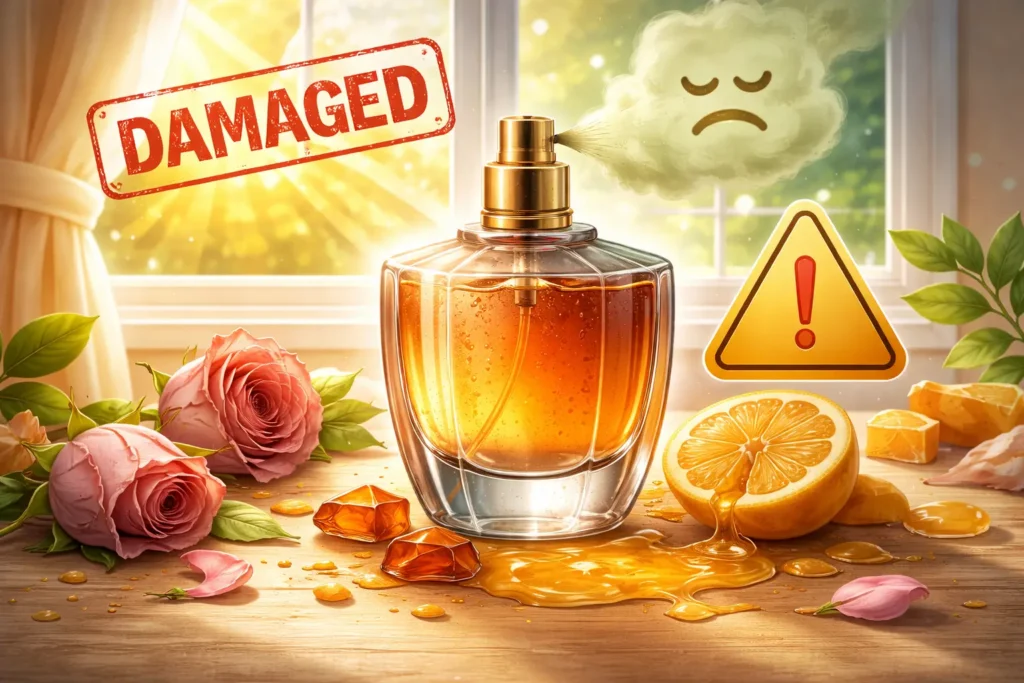
If your fragrance has been exposed to heat, you may notice several warning signs.
Look for:
- A darker liquid color
- A sour or sharp smell
- Weak projection
- A scent that fades unusually fast
Not every perfume reacts the same way to heat. Some heavier fragrances with resins or woods are slightly more stable than light citrus compositions.
🏠 Best Ways to Protect Perfume from Heat
Fortunately, preventing heat damage is simple.
Follow these practical tips:
✔ Store perfume in a drawer or cabinet
✔ Keep bottles away from direct sunlight
✔ Avoid storing fragrance in cars or bathrooms
✔ Maintain stable room temperatures
✔ Keep the cap tightly closed
Even expensive niche fragrances can degrade if stored improperly.
🔗 Where Should You Actually Store Perfume?
Temperature is only one part of proper fragrance storage.
Light, humidity, and air exposure can also affect how a perfume ages.
If you want to learn exactly where perfumes should and should not be stored inside your home, you may also enjoy this guide:
👉 🧴 Where Should You Store Perfume? The Best and Worst Places at Home
It explains the safest places in your house to keep fragrances and how small storage habits can extend the life of your perfume collection.
❓ Frequently Asked Questions About Heat and Perfume
Can heat make perfume smell different?
Yes. Heat can accelerate oxidation and break down delicate aromatic molecules, causing the scent to change.
Is it bad to leave perfume in a hot car?
Yes. Car interiors can exceed 60°C (140°F) in summer, which may permanently damage a fragrance.
Does heat make perfume evaporate faster?
Yes. Higher temperatures increase evaporation rates, which can weaken the fragrance over time.
Are some perfumes more heat-resistant?
Heavier fragrances with woody, resinous, or oriental notes are generally more stable than light citrus perfumes.
✨ Final Thoughts
Perfume is more delicate than many people realize. Temperature, light, and air all influence how long a fragrance lasts and how it smells over time.
Even the finest perfumes can degrade when exposed to excessive heat. By storing fragrances in cool, stable environments, you protect their original scent and ensure they perform as intended.
Taking a few simple storage precautions can keep your favorite perfume smelling beautiful for years.
💬 Interactive Question for Readers
Have you ever noticed a perfume smelling different after being left in a hot place—like a car or near a window? Share your experience in the comments!
Discover more from Perfume Cultures
Subscribe to get the latest posts sent to your email.



12 Comments