
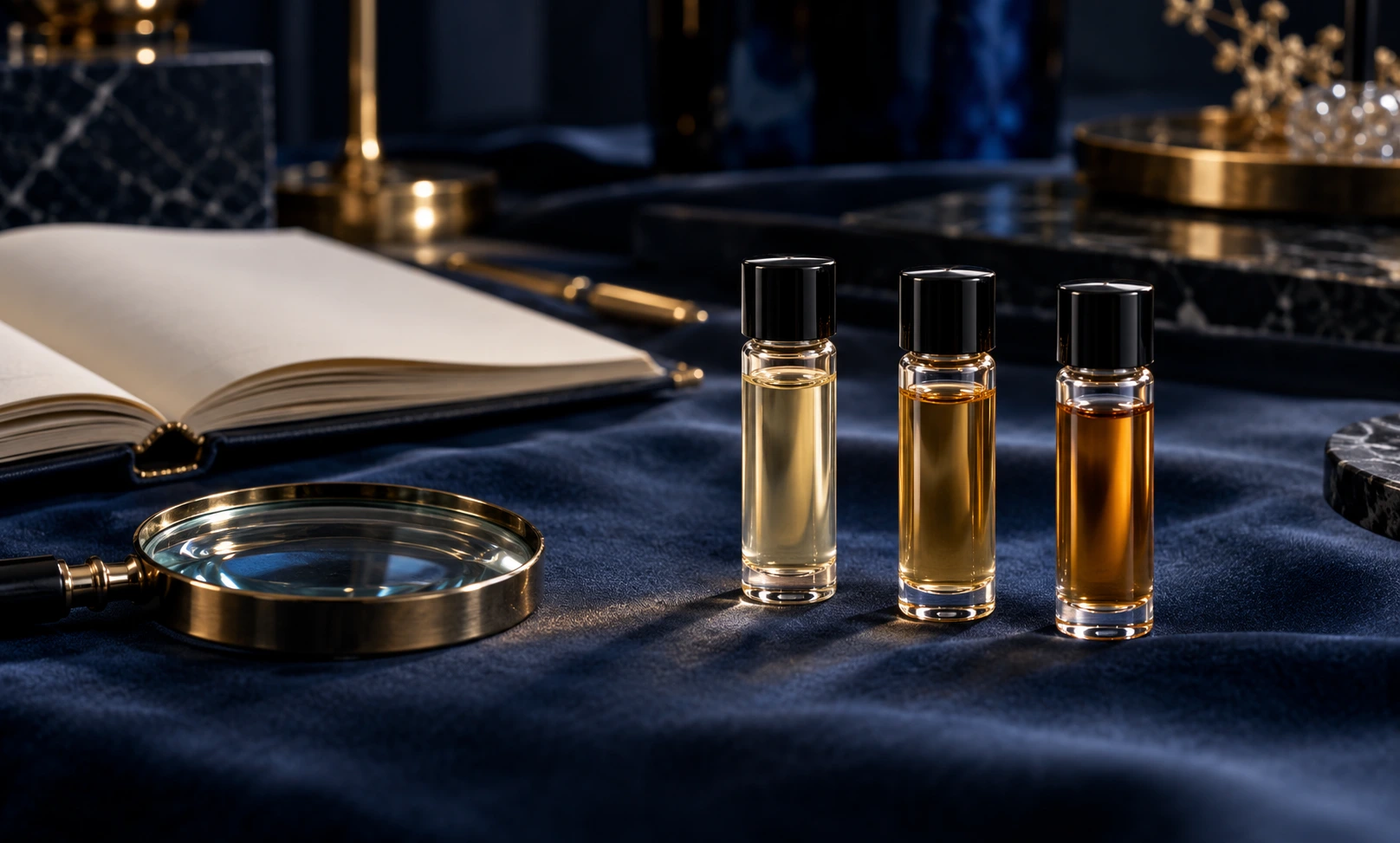
Why Is My Bleu de Chanel Liquid a Different Color?
You open a Bleu de Chanel bottle, compare it with an old sample, a decant, or a photo online—and suddenly the liquid looks lighter, darker, more yellow, or less clear than expected. It is understandable to worry, especially with a luxury fragrance.
The reassuring answer is that a small difference in liquid color is often normal. Fragrance oils can change subtly with age, storage, concentration, and exposure to air. Color alone is not a reliable way to judge whether Bleu de Chanel is fake, expired, or damaged.
Is it normal for Bleu de Chanel liquid to be a different color?
Yes. Bleu de Chanel liquid can look slightly different between bottles, samples, and batches because of age, storage conditions, light exposure, and natural variation in fragrance materials. A mild color difference is usually not a problem unless it is paired with cloudiness, particles, a major scent change, or other authenticity concerns.
✨ The Quick Answer: When Should You Worry?
A slightly pale-yellow, warmer, or darker-looking liquid is not automatically a bad sign. The more important question is whether the fragrance still smells balanced, sprays normally, and has been stored well.
You should investigate further if the liquid is suddenly very dark, cloudy, contains visible particles, or smells sharply sour, burnt, metallic, or dramatically weaker than before.
| What you notice | Most likely explanation | Should you worry? |
|---|---|---|
| Slightly warmer or yellower tone | Normal aging or batch variation | Usually no |
| Older bottle looks darker than a new sample | Oxidation after air exposure | Usually no, if scent remains good |
| Liquid looks different in a decant | Different lighting or atomizer material | Usually no |
| Cloudiness or floating particles | Storage issue or contamination | Yes—inspect further |
| Major color change plus strange scent | Possible oxidation, heat damage, or authenticity issue | Yes |
🧴 Why the Liquid May Look Different
Different Bleu de Chanel versions can naturally look different
Bleu de Chanel is not one identical formula in every format. Eau de Toilette, Eau de Parfum, Parfum, and L’Exclusif have different concentrations and scent structures. Their liquid may therefore appear slightly different, especially when viewed in a sample vial rather than inside the dark blue bottle.
Lighting makes the difference seem larger too. Warm indoor light can make a clear or pale liquid look golden, while daylight can make it look cooler and lighter. Before assuming there is a problem, compare both fragrances under the same neutral light.
Age and oxygen can deepen the color
Once a fragrance is opened, a small amount of air enters the bottle over time. This gradual exposure can cause oxidation, which may make some fragrance materials look a little warmer or darker. It does not automatically mean the perfume has gone bad.
A bottle that has been used for two years may look different from a newly opened sample, particularly if the older bottle has more air space inside. The real test is the scent: if it still opens cleanly, develops normally, and performs close to expectations, a mild color change is rarely a reason to discard it.
Storage conditions matter more than most people think
Heat, direct sunlight, and humidity can speed up visible changes in fragrance liquid. A bottle kept in a hot bathroom, near a sunny window, or in a car can age faster than one kept in a cool, dark drawer.
For a full guide on protecting the scent and appearance of your bottle, read How to Store Bleu de Chanel Properly. Good storage is the simplest way to keep a luxury fragrance smelling as intended for longer.
Does a darker Bleu de Chanel liquid mean it is fake?
No. A darker liquid does not prove Bleu de Chanel is fake. Normal aging, storage, air exposure, and formula variation can affect color. Check the bottle, packaging, batch code, scent quality, and seller together before making an authenticity judgment.
🔍 Color Difference vs. a Fake Bottle
Color is only one small clue—and it is a weak one when used alone. Counterfeit sellers can copy a pale or yellow-tinted liquid, while an authentic older bottle can naturally look darker than a fresh one.
Instead of judging from the liquid alone, assess the full picture: bottle quality, cap, sprayer, label printing, box details, batch code, scent development, and where the fragrance was purchased. Use this detailed checklist if you are concerned: How to Tell if Bleu de Chanel Is Real or Fake.
A genuine bottle should not be declared fake simply because it looks slightly different from a TikTok video, store tester, or decant. Those comparisons are often affected by lighting, bottle age, and camera editing.
🏷️ Check the Batch Code Before Assuming the Worst
If your bottle appears darker than another one, the batch code can help put the difference into context. A bottle made years earlier has had more time to experience normal chemical aging than a newer bottle, even if both were authentic.
The batch code is useful for estimating production timing, but it is not a stand-alone authenticity certificate. Learn how to interpret it correctly in Bleu de Chanel Batch Code Explained.
A sensible order of checks is simple:
- Compare under the same lighting.
- Consider the bottle’s age and storage history.
- Inspect the scent and spray performance.
- Check the batch code and packaging.
- Review the seller if several warning signs appear together.
📦 Could Different Packaging Explain the Concern?
Sometimes the concern starts with more than the liquid. The box may look slightly different, the typography may appear changed, or the cap and base label may not match an older bottle. Chanel packaging can vary by market, production period, and design update, so one difference is not enough to make a verdict.
If you noticed both packaging and liquid differences, compare the details calmly using Why Does My Bleu de Chanel Packaging Look Different?. The goal is to identify a consistent pattern—not to panic over one minor variation.
| Sign | Often normal | Worth investigating |
|---|---|---|
| Slight shift in liquid warmth | Yes | Only if extreme |
| Older bottle is darker | Yes | If smell is badly altered |
| Small packaging layout update | Yes | If print quality is poor or inconsistent |
| Clear, smooth liquid | Yes | — |
| Hazy liquid or sediment | No | Yes |
| Scent develops naturally from fresh to woody | Yes | — |
| Harsh chemical smell with poor performance | No | Yes |
👃 Does a Color Change Mean the Scent Will Be Different?
Not necessarily. Two authentic bottles can smell a little different in the opening because of their age, storage, skin chemistry, and the way your nose perceives the fragrance that day. A slight color difference does not guarantee that the scent has changed in a meaningful way.
What matters is whether the fragrance still follows its expected character: a fresh opening, an elegant woody-aromatic body, and a smooth dry-down. If you want to understand why authentic bottles may not smell perfectly identical, see Do All Bleu de Chanel Bottles Smell the Same?.
A bottle that is mildly darker but still smells refined and performs normally is usually far less concerning than a perfectly pale liquid that smells flat, harsh, or obviously wrong.
⏳ Can Bleu de Chanel Expire or Go Bad?
Fragrance does not suddenly “expire” on a fixed date, but it can degrade over time—especially after poor storage. In most cases, the first changes are subtle: the opening may lose brightness, the scent may feel less smooth, or the liquid may become warmer in tone.
More serious deterioration can include cloudiness, separation, visible sediment, or a noticeably unpleasant smell. Those signs deserve attention because they go beyond ordinary aging.
For the complete explanation of shelf life, warning signs, and how long an opened bottle can last, read Does Bleu de Chanel Expire?.
✅ What to Do If Your Bleu de Chanel Looks Different
Do not rush to throw it away or assume it is counterfeit. Start with a practical inspection:
- Spray it on clean skin or paper and let it develop for 20–30 minutes.
- Compare it with your memory of the scent, not only the opening.
- Check whether it is clear and free from particles.
- Think about where it has been stored.
- Compare packaging and batch details only after checking the scent itself.
- If you bought from an uncertain seller and several red flags appear together, avoid using the bottle as your reference for future purchases.
When replacing a questionable bottle, buying from an established retailer or an authorized Chanel source is worth more than chasing the lowest possible price. The small saving is rarely worth the uncertainty.
❓ Frequently Asked Questions
Is Bleu de Chanel supposed to be clear?
Bleu de Chanel can appear clear to lightly tinted depending on the version, lighting, bottle age, and whether you are viewing it through a sample vial. A slight yellow or golden tone is not automatically abnormal.
Why is my Bleu de Chanel darker than my sample?
Your full bottle may be older, may have had more air exposure, or may have been stored differently. Samples and decants also look different because of their smaller glass containers and lighting.
Is cloudy Bleu de Chanel normal?
No. Mild color variation can be normal, but cloudiness, sediment, or visible separation is more concerning and may indicate degradation or contamination.
Can sunlight change the color of Bleu de Chanel?
Yes. Repeated exposure to heat and direct sunlight can speed up oxidation and alter both the appearance and smell of a fragrance.
Should I stop using it if the color changed?
Not necessarily. Continue using it if the liquid remains clear, the fragrance smells normal, and there are no other warning signs. Investigate only when the color change is dramatic or accompanied by unusual scent or bottle-quality issues.
Final Verdict
A different Bleu de Chanel liquid color is usually an observation—not a verdict. Slight differences can happen naturally through bottle age, air exposure, storage, version differences, and lighting. The strongest approach is to assess the entire fragrance experience rather than relying on color alone.
If the liquid is clear, the scent remains balanced, and the bottle checks out, there is usually no reason for concern.
Discover more from Perfume Cultures
Subscribe to get the latest posts sent to your email.

2 Comments