
Why Is Baccarat Rouge 540 Called 540? The Meaning Behind 540
🔥The Number 540 Is Not a Random Luxury Code
Most perfume names are designed to create an image, a mood, or a feeling. Baccarat Rouge 540 hides something more specific inside its name: the story of how the fragrance came to exist.
The “540” is not an arbitrary product number, concentration level, batch reference, or mysterious code added to make the perfume sound more exclusive.
It points directly to the transformation that inspired Baccarat Rouge 540.
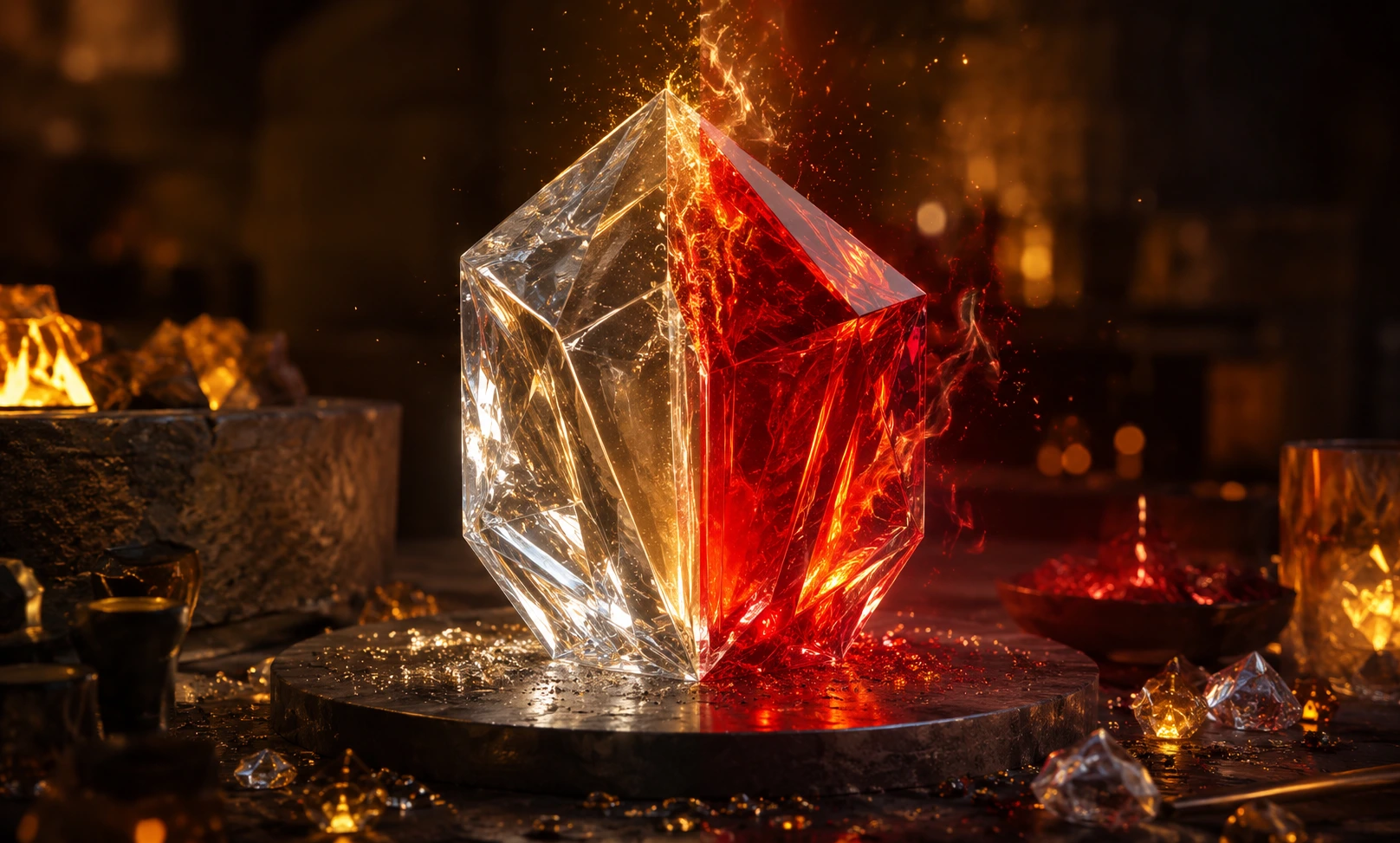
According to Maison Francis Kurkdjian, Baccarat’s clear crystal can acquire its famous red color through a process involving 24-karat gold powder and heat at 540°C. That transformation—from transparent crystal into glowing red crystal—became one of the central ideas behind the fragrance.
And suddenly, the entire name makes sense.
Baccarat represents the legendary French crystal house.
Rouge represents its distinctive red crystal.
540 represents the temperature associated with that transformation.
But this is more than an interesting piece of perfume trivia. The story of crystal, gold, fire, transparency, and transformation also helps explain why Baccarat Rouge 540 smells and feels so unusual.
Its name is not simply branding.
It is a condensed version of the fragrance’s entire creative concept.
⚡Why Is Baccarat Rouge 540 Called 540?
Baccarat Rouge 540 is called “540” because the number refers to 540°C, the temperature associated with the process that transforms clear Baccarat crystal mixed with 24-karat gold powder into the house’s distinctive red crystal. The fragrance was inspired by that transformation, so “Baccarat,” “Rouge,” and “540” each represent part of the perfume’s origin story.
💎 What Does the Name Baccarat Rouge 540 Actually Mean?
The easiest way to understand the name is to stop treating it as one mysterious phrase and separate it into three parts.
| Part of the Name | What It Represents | Why It Matters |
|---|---|---|
| Baccarat | The historic French crystal house | Establishes the fragrance’s connection to crystal craftsmanship and luxury |
| Rouge | The signature red crystal | Represents the visual transformation that inspired the perfume |
| 540 | 540°C | Refers to the temperature associated with creating Baccarat’s red crystal effect |
| Baccarat Rouge 540 | Crystal, color, heat, and transformation combined | Turns the manufacturing story into the identity of the fragrance |
This is what makes the name unusually effective.
Without the story, Baccarat Rouge 540 sounds cryptic.
With the story, almost every part of it becomes intentional.
The number is not separate from the word “Rouge.” The two are connected: the temperature helps explain the red.
And “Baccarat” is not simply a luxury name placed in front of a perfume. It identifies the craft tradition that inspired the entire concept.
For the full chronology behind how that collaboration developed into a fragrance phenomenon, read The History of Baccarat Rouge 540.
🔥 Why 540°C Matters More Than the Number Alone
It is easy to reduce the story to a trivia answer:
“540 means 540 degrees Celsius.”
Technically, that answers the question.
But it misses what makes the name powerful.
The important idea is transformation.
The inspiration is a material that begins transparent and, through craftsmanship, heat, and the use of gold, becomes something visually extraordinary.
That provides a remarkably strong concept for a perfume.
Perfumery works through transformation too.
Alcohol, aroma materials, woods, floral effects, sweet molecules, and mineral impressions are individually invisible once sprayed into the air. Yet together they produce something that can feel warm, luminous, dense, transparent, metallic, sweet, and almost tangible.
Baccarat Rouge 540 therefore does not simply borrow a number from crystal production.
It attempts to translate the idea behind that number into scent.
That distinction is what turns an interesting name into a complete creative concept.
🧪 Is 540 the Melting Point of Baccarat Crystal?
This is where the story is sometimes oversimplified online.
The safest interpretation is not that 540°C is simply “the melting point of crystal” in a general scientific sense.
Maison Francis Kurkdjian specifically connects the number to the transformation of Baccarat crystal when it is fused with 24-karat gold powder to achieve its distinctive red appearance.
That is an important distinction.
The number belongs to the Baccarat Rouge story, not to a universal rule that every piece of crystal becomes red at exactly 540°C.
So when someone asks what 540 means, the better answer is:
It refers to the temperature associated with Baccarat’s red-crystal transformation that inspired the perfume.
That is more precise than simply saying, “Crystal melts at 540 degrees.”
❤️ Why Is the Word “Rouge” in Baccarat Rouge 540?
“Rouge” means red in French.
But again, it is not there merely because red looks luxurious.
The red refers to Baccarat’s famous rouge à l’or, or red created through the use of gold in the crystal-making process—the visual transformation that became the perfume’s central inspiration. Maison Francis Kurkdjian describes the fragrance as being born from the encounter between its perfume house and Baccarat, with that red-crystal transformation at the center of the story.
This makes the name almost sequential:
Baccarat → Rouge → 540
The maker.
The transformation.
The temperature associated with that transformation.
Few luxury perfume names explain their own origin so compactly.
🏛️ Why Did Baccarat Need a Perfume in the First Place?
Baccarat is famous primarily for crystal, not perfume.
That is precisely why the origin of Baccarat Rouge 540 matters.
The fragrance emerged from the meeting of Baccarat and Maison Francis Kurkdjian, originally connected with Baccarat’s 250th anniversary. Baccarat itself describes the Eau de Parfum as being born from that encounter to celebrate the crystal manufacturer’s 250th birthday.
The creative challenge was therefore more interesting than simply making a pleasant fragrance.
How do you make a perfume that feels like Baccarat?
You cannot literally make crystal smell.
Crystal does not give the perfumer an obvious starting point in the way that rose, vanilla, cedar, tobacco, or orange blossom would.
The solution was conceptual.
Instead of trying to reproduce the smell of an object, Francis Kurkdjian could translate the qualities associated with Baccarat crystal:
- Transparency
- Density
- Heat
- Radiance
- Mineral clarity
- Precision
- Light
- Transformation
- Luxury craftsmanship
That creative problem is one reason the fragrance feels so different from a conventional perfume built around one recognizable ingredient.
🎨 The Name Came Before the Smell Became an Icon
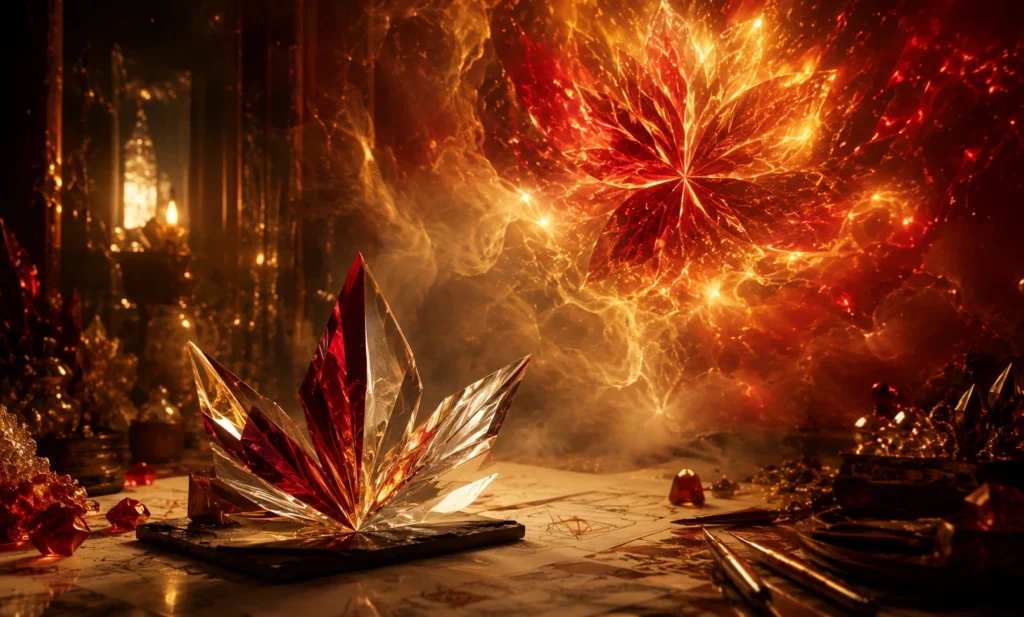
The concept that came before the iconThe power of Baccarat Rouge 540 is partly that its story and its scent are unusually well aligned.
Francis Kurkdjian has explained that the creative idea involved expressing Baccarat without simply making a traditional heritage fragrance. In discussing the creation, he described beginning with the name and building an olfactory idea around crystal, red color, fire, transparency, and contradiction.
That matters because the name does not feel like something attached after the perfume was finished.
It functions more like a design brief.
If the perfume is going to be called Baccarat Rouge 540, it should somehow suggest what the name represents.
And that leads directly to the unusual smell.
✨ How Does Baccarat Rouge 540 Translate Crystal Into Scent?
Obviously, Baccarat Rouge 540 does not literally smell like a piece of red crystal.
Instead, it creates impressions that can make the crystal metaphor feel surprisingly believable.
The fragrance combines floral brightness, saffron-like warmth, amber-mineral radiance, dry woods, and an unusual sweetness that can appear almost suspended in the air.
The result can feel simultaneously:
transparent and powerful
sweet and dry
warm and mineral
dense and airy
Those contradictions are central to its identity.
If you want the sensory experience itself broken down from first spray to dry down, What Does Baccarat Rouge 540 Smell Like? explores the fragrance from the wearer’s perspective rather than the historical one.
🔬 From Crystal-Making to Perfume: How the Concept Translates
| Crystal-Inspired Idea | How It Is Suggested in the Fragrance | Overall Impression |
|---|---|---|
| Transparency | Airy jasmine-like radiance and spacious diffusion | Light, luminous, almost weightless |
| Fire | Saffron warmth and caramelized sweetness | Heat, glowing sugar, warmth |
| Minerality | Ambergris-style and amber-woody effects | Dry, polished, mineral character |
| Structure | Cedar-like woods | Shape, dryness, definition |
| Red-gold transformation | Warmth combined with sweetness and radiance | A glowing rather than literal “red” sensation |
| Crystal density | Persistent woody-amber structure | Power without conventional heaviness |
| Craftsmanship | Controlled contrast between the different effects | Polished, deliberate luxury |
This is why Baccarat Rouge 540 is better understood as abstract perfumery than as a literal note-driven fragrance.
A rose perfume can smell recognizably like rose.
A citrus perfume can smell recognizably like citrus.
Baccarat Rouge 540 is trying to make ideas such as heat, air, crystal, mineral light, sweetness, and transformation feel olfactory.
For a closer look at the materials and effects responsible for that structure, see Baccarat Rouge 540 Notes Explained.
🌡️ Does Baccarat Rouge 540 Actually Smell “Hot”?
Not in the literal sense.
But many people perceive sensations that fit the heat metaphor surprisingly well.
The sweetness can resemble heated or caramelized sugar.
The saffron-like effect can feel warm, dry, leathery, or slightly metallic.
The mineral side can remind some noses of hot stone, polished metal, or something glowing and dry.
Yet the fragrance is simultaneously airy.
That contrast is crucial.
If Baccarat Rouge 540 were simply thick, sweet, and hot, the crystal metaphor would be much weaker.
Crystal suggests transparency.
Fire suggests intensity.
The fragrance attempts to give you both.
That tension—something powerful that still seems transparent—is arguably one of the smartest connections between the name and the smell.
⚡What Does the 540 in Baccarat Rouge 540 Mean?
The 540 in Baccarat Rouge 540 refers to 540°C, the temperature associated with the process used to create Baccarat’s signature red crystal with 24-karat gold powder. Francis Kurkdjian used that transformation as inspiration for the fragrance, translating ideas of heat, red crystal, transparency, minerality, and radiance into its scent identity.
🧠 Is 540 a Concentration, Formula Number, or Batch Code?
No.
Several interpretations sound plausible when you first see the name, but they are incorrect.
540 is not:
- The perfume’s concentration
- The number of ingredients in the formula
- The fragrance’s batch code
- The year Baccarat was founded
- The number of bottles normally produced
- A reference to 540 milliliters
- An internal Maison Francis Kurkdjian model number
It refers to the temperature in the red-crystal story.
That clarification matters because numerical perfume names often encourage speculation.
In this case, however, the number has a specific narrative function.
And knowing that story changes the way the name feels.
“Baccarat Rouge 540” stops sounding like a mysterious luxury code and starts sounding almost like a formula for transformation.
💰 Why the Meaning Behind 540 Makes the Fragrance Feel More Luxurious
This is where the story becomes commercially important.
Luxury is rarely created by ingredients or price alone.
Context creates value.
Imagine two perfumes that smell equally attractive.
One has no meaningful story beyond its packaging.
The other connects its name, creative concept, visual identity, materials, brand heritage, and scent architecture around one coherent idea.
The second product can feel more considered—even before you decide whether it smells better.
Baccarat Rouge 540 benefits enormously from this coherence.
The red color is not random.
The number is not random.
The Baccarat collaboration is not random.
The crystal imagery is not random.
Even the fragrance’s tension between density and transparency reflects the conceptual language surrounding the crystal inspiration.
That does not mean the story automatically makes the perfume worth its price.
It means you are evaluating more than liquid in a bottle.
You are evaluating an intentionally constructed luxury object with a recognizable creative identity.
🌍 How Did Such a Strange Name Become So Recognizable?
“Baccarat Rouge 540” is not an easy name in the conventional marketing sense.
It is long.
It includes a French word.
It contains a seemingly unexplained number.
And someone encountering it for the first time may have no idea what it means.
Yet those apparent disadvantages eventually became strengths.
The mystery encourages a question:
Why 540?
That question creates a story.
The story creates memorability.
And the unusual scent reinforces it.
Once a consumer smells a fragrance that is already attached to an unusual name and an unusual origin story, the entire experience becomes easier to remember.
That alone does not explain its enormous success, of course. Its distinctive scent trail, luxury positioning, strong recognition, social visibility, and unusual wear experience all contributed to its rise.
The complete transition from niche curiosity to global fragrance phenomenon is explored in Why Did Baccarat Rouge 540 Become So Popular?.
🧬 Why the Name Became Bigger Than the Original Story
At some point, “Baccarat Rouge 540” stopped being merely the name of one perfume.
It became a reference point.
People began describing other fragrances as:
“BR540-like.”
“Baccarat-style.”
“Similar to Baccarat Rouge.”
That is a major cultural shift.
It means a fragrance has become recognizable enough that its name can describe an entire olfactory territory.
Sweetness floating over dry amber woods.
Saffron-like warmth.
Mineral sharpness.
Large diffusion.
Transparent but persistent projection.
A scent trail that can seem stronger in the air than on the wearer.
You do not need every element to be identical for the association to appear.
Once a fragrance becomes a reference rather than simply a product, its influence can extend far beyond the people who own the original bottle.
That wider effect is examined in How Baccarat Rouge 540 Influenced Modern Perfumery.
🧪 Why Did Baccarat Rouge 540 Inspire So Many Dupes?
Success creates imitation, but Baccarat Rouge 540 was especially easy to turn into a commercial reference point because its identity is so recognizable.
A fragrance brand does not need to reproduce every detail perfectly to trigger the association.
If a perfume combines enough of the following—
- Radiant sweetness
- Amber woods
- Saffron-like warmth
- Large diffusion
- Mineral dryness
- Cotton-candy or caramelized effects
- Clean musk
- A transparent but powerful scent trail
—many consumers will immediately think of Baccarat Rouge 540.
That created an enormous market opportunity.
Some shoppers wanted the general experience without paying luxury pricing.
Others wanted something sweeter, louder, darker, more masculine, more feminine, or longer-lasting.
And some simply wanted to understand how close an affordable fragrance could get.
That entire imitation ecosystem is explored in Why Are There So Many Baccarat Rouge 540 Dupes?.
Ironically, the number of imitations may have weakened the scent profile’s exclusivity while strengthening the original perfume’s status as the reference.
Copies can make an idea common.
But they can also reveal just how influential the original idea became.
🏆 Why “540” Is One of the Smartest Details in the Entire Brand Story
Remove the number and imagine the fragrance were called simply Baccarat Rouge.
It would still sound luxurious.
It might even sound easier to remember.
But something would be missing.
“Rouge” tells you about color.
“Baccarat” tells you about heritage.
540 tells you there is a story.
It creates specificity.
Specificity makes the name believable.
And curiosity makes people investigate.
The number transforms the name from a generic luxury phrase into something proprietary.
There may be countless “Rouge” fragrances.
There may be countless perfumes built around red packaging.
But Baccarat Rouge 540 immediately feels like one specific object.
That is exceptional branding because the distinctive element is not invented decoration—it comes directly from the creative inspiration behind the fragrance.
💡 Does Knowing the Meaning of 540 Change the Way the Perfume Smells?

Chemically, of course not.
Learning the story does not alter the formula.
Psychologically, however, it can change how you interpret what you smell.
Once you know the concept, sensations that might initially seem disconnected can become easier to understand:
The mineral dryness can suggest crystal.
The radiance can suggest light.
The saffron warmth can suggest fire.
The caramelized sweetness can suggest heat.
The airy diffusion can suggest transparency.
The woody structure can suggest solidity and density.
That does not mean every wearer will perceive the fragrance this way.
Some people will still smell cotton candy.
Some will smell cedar.
Some will experience a medical or metallic association.
Others will simply smell a luxurious sweet amber-woody perfume.
But the story provides a creative framework through which those contradictory sensations can be interpreted.
🛍️ Does the Story Mean Baccarat Rouge 540 Is Worth Buying?
Not automatically.
A brilliant story does not guarantee that you will enjoy wearing the fragrance.
And Baccarat Rouge 540 is too expensive and too polarizing to purchase solely because its heritage sounds impressive.
The better order is:
Understand the story.
Smell the fragrance.
Test it on your own skin.
Experience the scent trail.
Then decide whether the original deserves a place in your collection.
Someone who dislikes the medicinal edge, burnt-sugar effect, strong diffusion, or recognizable DNA should not buy it merely because the meaning behind 540 is fascinating.
But if you already love the scent, understanding where the name comes from can make the fragrance feel more complete.
For everything from the EDP and Extrait to scent, performance, dupes, alternatives, and buying decisions, use Baccarat Rouge 540: The Complete Guide as the central starting point.
❓ Frequently Asked Questions
Why is Baccarat Rouge 540 called 540?
The number refers to 540°C, the temperature associated with Baccarat’s process of creating its distinctive red crystal using 24-karat gold powder. That transformation inspired the fragrance and its name.
What does “Baccarat” mean in Baccarat Rouge 540?
Baccarat is the historic French crystal manufacturer whose craftsmanship and signature red crystal inspired the perfume.
What does “Rouge” mean?
“Rouge” means red in French and refers to Baccarat’s iconic red crystal.
Does 540 refer to the perfume concentration?
No. It does not refer to fragrance concentration, percentage, strength, or formula concentration.
Is 540 the number of ingredients in Baccarat Rouge 540?
No. The number does not indicate how many ingredients are in the fragrance.
Is 540 a batch number?
No. The 540 in the perfume’s name is unrelated to individual production batch codes.
Does Baccarat Rouge 540 contain gold?
The name is inspired by Baccarat’s red-crystal process involving gold; that does not mean the perfume itself should be understood as containing 24-karat gold as a fragrance note.
Was Baccarat Rouge 540 created for Baccarat?
The fragrance originated from the collaboration between Baccarat and Maison Francis Kurkdjian connected with Baccarat’s 250th anniversary. Baccarat describes the fragrance as being born from that encounter.
Why does the fragrance smell sweet if the inspiration is crystal?
The perfume does not attempt to reproduce a literal crystal smell. Instead, it translates abstract qualities such as heat, radiance, transparency, minerality, and density into fragrance.
Why is Baccarat Rouge 540’s name so famous?
The name became memorable because the fragrance itself became globally recognizable. Its unusual scent, distinctive luxury positioning, mysterious number, cultural visibility, and enormous influence reinforced one another.
🏁 Final Verdict: 540 Is the Key That Unlocks the Entire Baccarat Rouge Story
So, why is Baccarat Rouge 540 called 540?
Because 540 is not decoration—it is the temperature at the heart of the transformation that inspired the fragrance.
Baccarat represents the crystal house.
Rouge represents its distinctive red.
540 represents the heat associated with creating that red crystal effect.
Together, they tell a story of clear crystal, gold, fire, color, craftsmanship, and transformation.
And that is what makes the name so effective.
Baccarat Rouge 540 could have been given a conventional luxury perfume name.
Instead, Francis Kurkdjian and Baccarat gave it something far more powerful:
a name that makes people ask a question.
Once you discover the answer, you realize that the number on the bottle is not separate from the fragrance.
It is the clue to understanding why the fragrance exists at all.
Now that you know the story behind 540, does Baccarat Rouge 540 feel more special to you—or does the scent itself matter more than the history behind its name?
Discover more from Perfume Cultures
Subscribe to get the latest posts sent to your email.




One Comment