
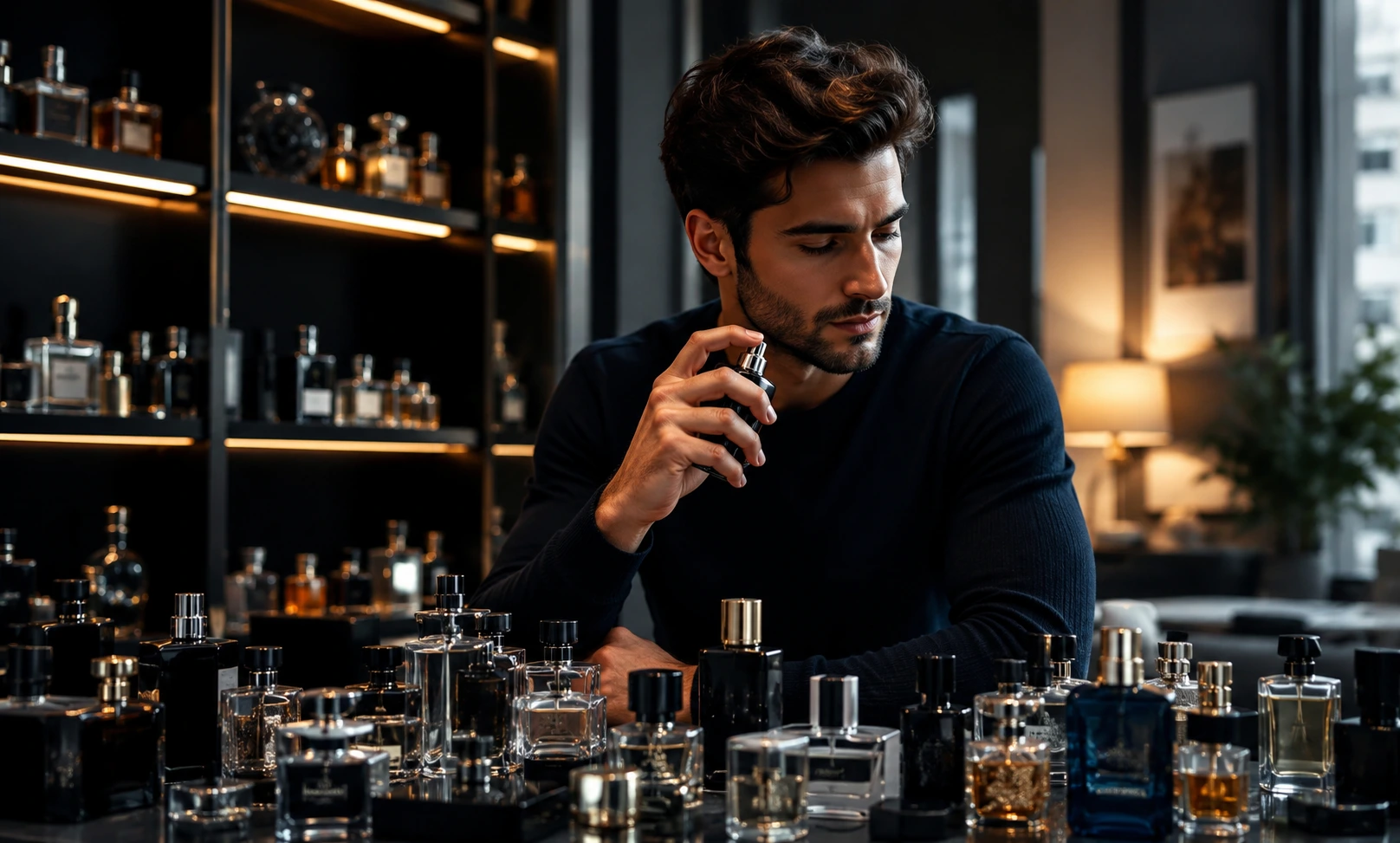
Are Men Becoming More Interested in Fragrances?
Are men becoming more interested in fragrances?
Yes. Men today are more engaged with fragrances than ever before. Social media, fragrance influencers, online communities, and increased product accessibility have transformed perfume from a niche hobby into a mainstream lifestyle interest for many men. While women still dominate fragrance ownership overall, male participation in fragrance culture continues to grow rapidly.
Why are more men buying perfumes now?
More men are buying perfumes because fragrances have become easier to discover, compare, and purchase online. Platforms like TikTok, YouTube, and Instagram expose consumers to fragrance content daily, making scent education more accessible and encouraging experimentation among younger male buyers.
👃 Fragrance Is No Longer Just a Women’s Category
Twenty years ago, many people viewed perfume as a category primarily associated with women. Men certainly wore fragrances, but for many consumers, owning one bottle was often enough.
Today, that reality looks very different.
Walk through fragrance communities, browse social media, or visit online retailers, and you’ll quickly notice a major shift. Men are discussing notes, comparing performance, debating seasonal choices, and building collections in ways that were once far less common.
The fragrance industry has witnessed a significant cultural transformation. Perfume is increasingly becoming part of male self-expression, personal branding, grooming, and lifestyle identity.
The question is no longer whether men wear fragrances.
The real question is:
Are men becoming genuinely interested in fragrances as a hobby and passion rather than simply a grooming product?
The evidence suggests the answer is yes.
🧠 Why Male Interest in Fragrances Is Growing
The growth is not happening randomly.
Several consumer behavior trends are driving this shift.
Fragrance Is Becoming Part of Personal Identity
Modern consumers increasingly use products to express who they are.
Just as people choose specific clothing styles, watches, sneakers, or hairstyles, fragrances now function as another layer of identity.
Many men no longer view perfume simply as something that helps them smell pleasant.
Instead, they see fragrance as:
- A confidence tool
- A social signal
- A personal signature
- An extension of style
This evolution has helped transform perfume from a utility product into a lifestyle category.
The Stigma Around Male Grooming Has Decreased
Younger generations generally feel more comfortable discussing grooming, skincare, fashion, and self-care.
As these attitudes changed, fragrance naturally benefited.
Men who might once have purchased a bottle quietly now openly discuss scent preferences, collections, and favorite brands.
This cultural shift has expanded the fragrance market considerably.
Luxury Has Become More Accessible
In the past, many premium fragrances felt difficult to access.
Today consumers can:
- Order samples online
- Watch reviews instantly
- Compare hundreds of fragrances
- Join fragrance communities
This accessibility encourages curiosity.
The easier a category becomes to explore, the more enthusiasts it tends to create.
📱 Social Media Changed Everything
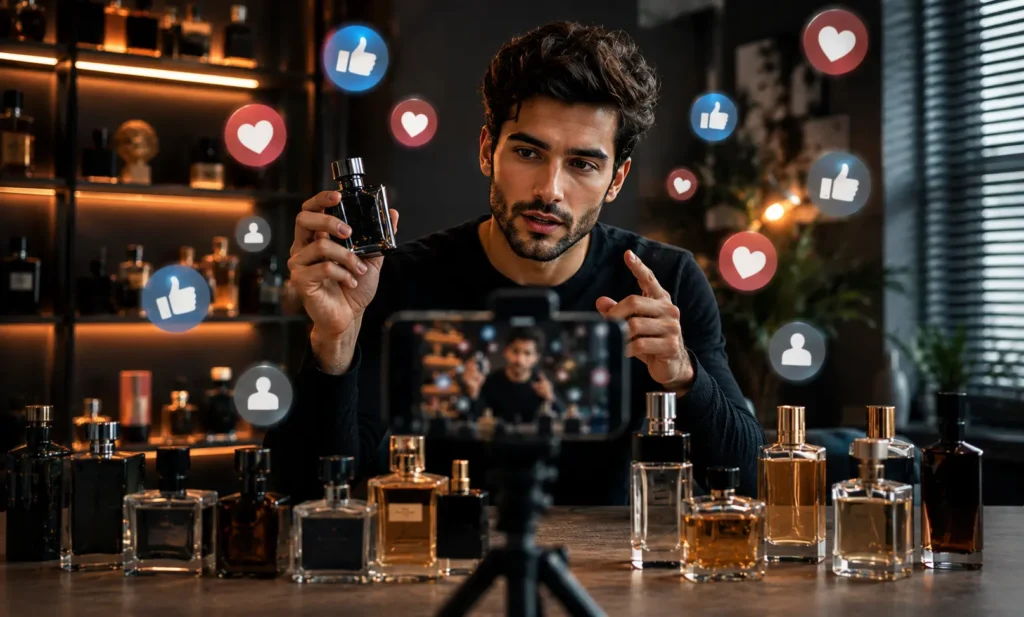
Perhaps the biggest driver of male fragrance interest is social media.
A generation ago, discovering perfumes often depended on department store visits.
Today discovery happens constantly through digital platforms.
TikTok and Short-Form Content
Short-form video content transformed fragrance marketing.
A 30-second video can introduce thousands of consumers to a new scent overnight.
Many young men encounter fragrances for the first time through:
- TikTok recommendations
- YouTube Shorts
- Instagram Reels
- Influencer rankings
Instead of waiting to encounter a fragrance in a store, products now actively appear in consumers’ feeds.
This dramatically increases awareness.
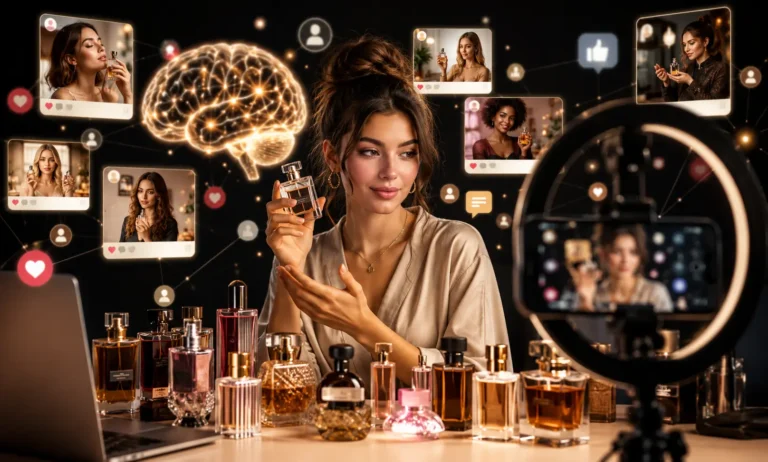
Fragrance Influencers Created a New Hobby Culture
Influencers have done more than promote products.
They’ve helped create fragrance culture.
Viewers learn about:
- Notes
- Performance
- Seasons
- Compliment factors
- Occasion-based wearing
As knowledge becomes more accessible, interest naturally grows.
Many male consumers begin by watching reviews and eventually become fragrance enthusiasts themselves.
Online Communities Encourage Participation
Fragrance forums, Reddit discussions, Facebook groups, and YouTube comment sections create communities where people share experiences.
These communities make fragrance collecting feel social.
A hobby becomes more attractive when people can discuss it with others.
This network effect has played a major role in expanding male engagement.
👨 How Male Fragrance Habits Are Evolving
Growing interest doesn’t necessarily mean men behave exactly like women when buying fragrances.
Instead, male fragrance habits are evolving in unique ways.
More Men Own Multiple Bottles
Historically, many men owned a single signature fragrance.
Today, seasonal rotation is becoming increasingly common.
Many consumers now own separate fragrances for:
- Work
- Dates
- Summer
- Winter
- Special occasions
This shift represents one of the clearest signs of increased engagement.
Interestingly, while men are buying more fragrances than before, women still tend to maintain larger collections overall, which explains trends discussed in Why Women Own More Fragrances Than Men.
Men Are Becoming More Knowledgeable
Modern fragrance consumers often know terminology that was once limited to enthusiasts.
It’s increasingly common to hear discussions about:
- Amber notes
- Projection
- Longevity
- Dry down
- Niche fragrances
Knowledge drives deeper involvement.
The more consumers learn, the more interested they become.
Signature Scents Still Matter
Despite growing collections, many men continue to value consistency.
This helps explain why signature scent culture remains stronger among male consumers than female consumers.
Rather than abandoning loyalty entirely, many men are expanding around a core favorite scent.
This trend connects closely with the behavioral patterns explored in Do Men Prefer Signature Scents More Than Women?
📊 How Men’s Fragrance Behavior Compares to Women’s
| Behavior | Men Today | Women Today |
|---|---|---|
| Collection Size | Growing steadily | Usually larger |
| Seasonal Rotation | Increasing rapidly | Very common |
| Signature Scent Loyalty | Higher | Lower |
| Review Consumption | Rising strongly | Already established |
| Social Media Discovery | Growing fast | Very strong |
| Fragrance Experimentation | Increasing | Generally higher |
| Niche Fragrance Interest | Expanding rapidly | Strong |
The table reveals something important:
The gap is shrinking.
Women still lead in many categories, but male participation continues to increase.
🛍️ Are Men Spending More Money on Fragrances?
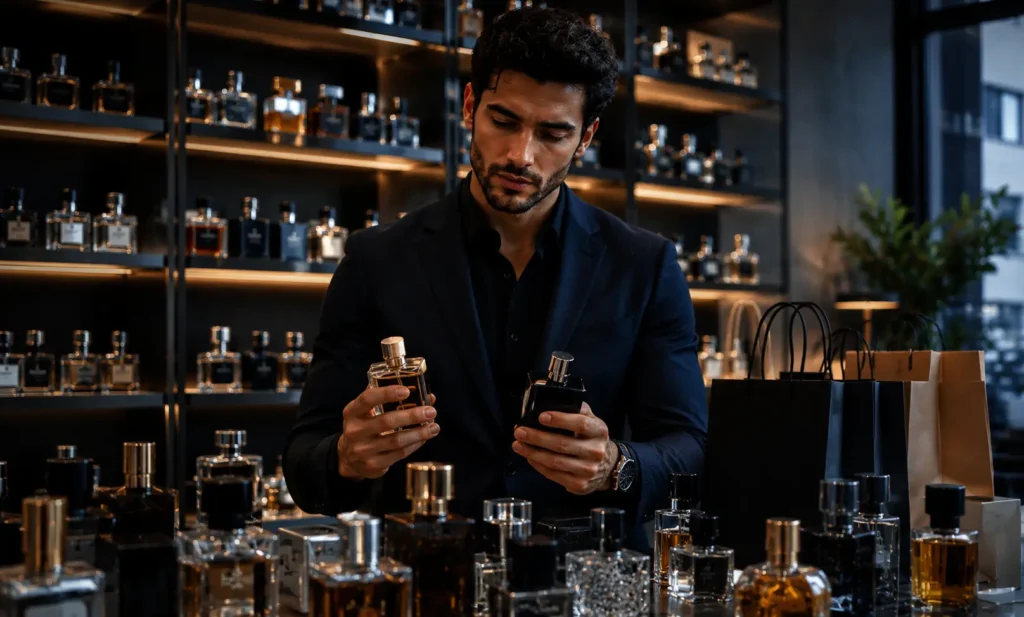
Interest and spending often move together.
As men become more involved in fragrance culture, spending tends to increase.
Consumers who once purchased a single bottle every year or two may now buy:
- Discovery sets
- Seasonal fragrances
- Backup bottles
- Limited editions
However, spending patterns remain complex.
Women often purchase fragrances more frequently, while some men are willing to spend larger amounts on premium bottles.
This broader financial behavior is explored further in Men vs Women: Who Spends More on Perfume?
Collection Building Is Becoming More Common
A growing number of male consumers no longer stop after purchasing one fragrance.
Instead, they begin building curated collections.
Many collections are organized around:
- Weather
- Mood
- Events
- Style preferences
Collection building is one of the strongest indicators that fragrance is becoming a hobby rather than merely a grooming necessity.
🔍 Discovery Culture Is Fueling Growth
One of the most powerful trends in today’s fragrance market is discovery culture.
Consumers constantly encounter new products.
Algorithms continuously recommend:
- New launches
- Trending fragrances
- Influencer favorites
- Community recommendations
This endless stream of discovery naturally encourages exploration.
In fact, many behavioral differences between men and women begin with how they discover fragrances in the first place, which is why How Men and Women Discover New Perfumes Differently provides important context for understanding these shifts.
Men Are Exploring More Than Ever Before
Access creates curiosity.
Curiosity creates experimentation.
Experimentation creates enthusiasts.
This cycle helps explain why younger generations of men appear dramatically more engaged with fragrances than previous generations.
Many consumers who begin with one designer fragrance eventually explore:
- Niche brands
- Artisanal houses
- Vintage scents
- Limited releases
This progression mirrors the development of many enthusiast-driven hobbies.
❤️ Brand Loyalty Is Also Changing
Traditionally, male fragrance buyers often showed strong brand loyalty.
Many consumers repeatedly purchased the same fragrance for years.
While loyalty still exists, modern consumers are becoming more open to exploration.
Today a man may remain loyal to a favorite brand while simultaneously testing new products from competitors.
This balance between loyalty and experimentation reflects the broader trends discussed in How Gender Influences Perfume Brand Loyalty.
The result is a market where consumers stay engaged for longer periods and continue discovering new fragrances without completely abandoning trusted favorites.
🌍 Why This Trend Will Likely Continue
Several factors suggest that male fragrance interest will keep growing.
These include:
- Continued social media influence
- Expansion of niche fragrance brands
- Growing grooming awareness
- Easier online purchasing
- Fragrance-focused content creators
- Discovery set popularity
Younger consumers are entering the market with far more fragrance exposure than previous generations.
That exposure naturally leads to higher participation.
At the same time, women still tend to rotate fragrances more frequently and for more lifestyle situations, a behavior explored in Why Women Change Perfumes More Often Than Men.
Rather than replacing existing female fragrance culture, male participation is simply expanding alongside it.
Conclusion
Men are undeniably becoming more interested in fragrances.
What was once largely a functional grooming category is increasingly evolving into a lifestyle passion, a collecting hobby, and a form of personal expression.
Social media, influencer culture, online communities, and easier access to fragrance education have dramatically lowered the barriers to entry.
Women still generally own more fragrances and experiment more frequently, but the gap is narrowing as male consumers become more engaged, informed, and enthusiastic than ever before.
The modern fragrance market is no longer divided into simple male and female buying patterns.
Instead, both groups are participating in an increasingly dynamic culture built around discovery, identity, and personal style.
FAQ
Are younger men more interested in fragrances than older generations?
Generally yes. Younger consumers are more exposed to fragrance content through social media, influencers, and online communities, which increases awareness and interest.
Do men still prefer signature scents?
Many do. However, an increasing number of men now own multiple fragrances while maintaining one favorite signature scent.
Are men buying niche fragrances more often?
Yes. Niche fragrance awareness has grown significantly thanks to online reviews, sampling services, and fragrance-focused content creators.
Why is fragrance content so popular on social media?
Fragrances connect with identity, confidence, lifestyle, and luxury. These topics perform well on visual and short-form platforms.
Will men ever own as many fragrances as women?
Some already do, but on average women still tend to maintain larger collections. However, the gap continues to narrow as male fragrance interest grows.
What do you think—are today’s men genuinely becoming fragrance enthusiasts, or are social media trends simply making perfumes more visible than ever before?
Discover more from Perfume Cultures
Subscribe to get the latest posts sent to your email.



4 Comments