🌫️ Why Do Some Perfumes Project More Than Others? The Science of Sillage
When people describe a perfume as “powerful,” “room-filling,” or “noticeable from across the room,” they are often talking about something called sillage.
Some fragrances seem to surround the wearer with a scented aura, while others stay close to the skin even when sprayed generously. But what actually determines why some perfumes project more than others?
The answer lies in the science of fragrance molecules, evaporation, and perfume composition.
In this guide, we’ll explore the science of perfume projection, explain what sillage really means, and show why certain perfumes create a stronger scent trail than others.
🌬️ What Is Sillage in Perfume?
The word sillage comes from the French word for “wake,” like the trail a boat leaves behind in water.
In perfumery, sillage describes the scented trail a fragrance leaves in the air as you move.
There are generally three projection levels:
| Projection Type | Description |
|---|---|
| Strong Sillage | The fragrance leaves a noticeable scent trail several feet away |
| Moderate Sillage | People notice the fragrance within close conversation distance |
| Soft Sillage | The scent stays mostly close to the skin |
Many perfume lovers specifically search for perfumes with strong sillage, especially for evenings, events, or cooler weather.
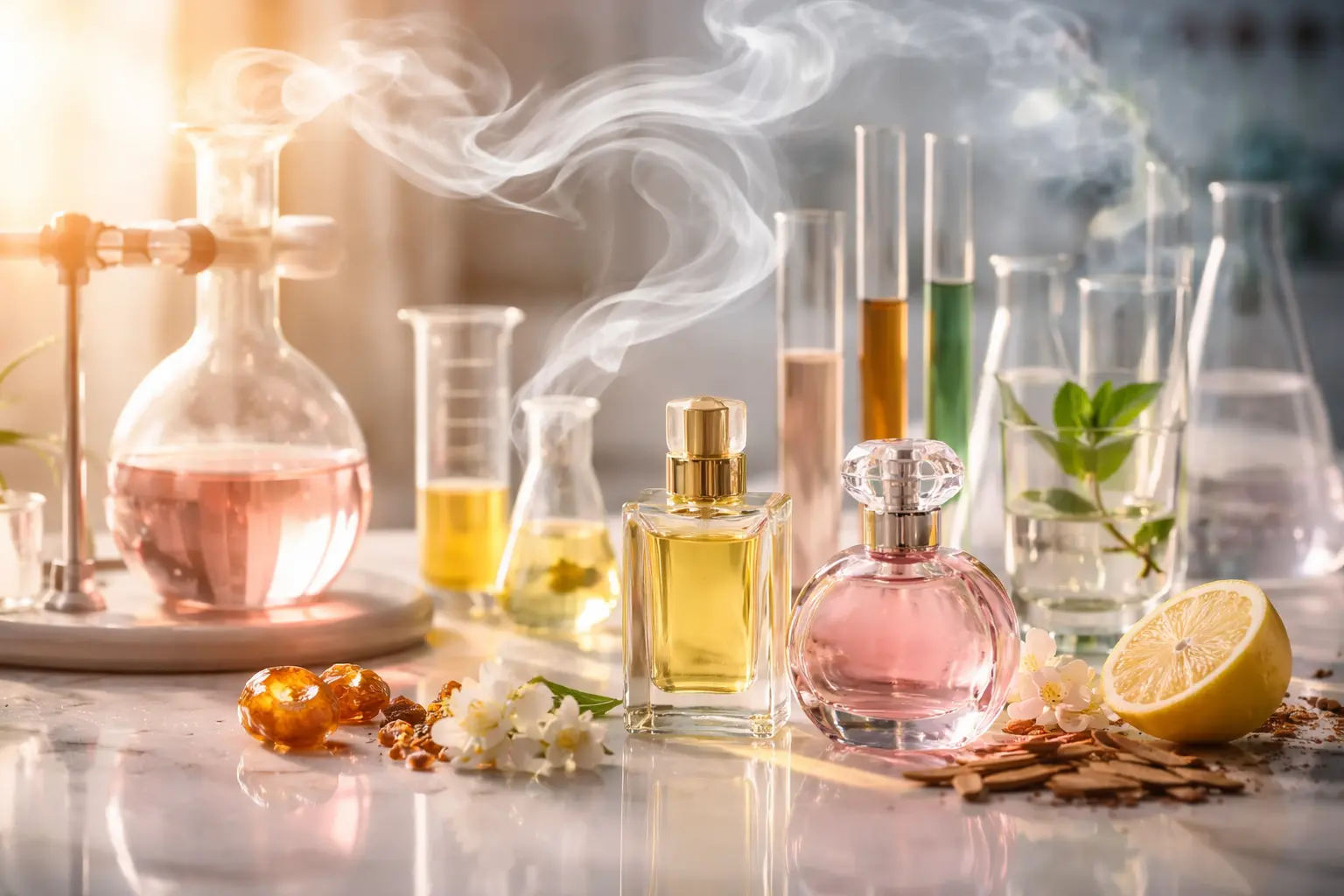
🧪 The Science Behind Perfume Projection
Perfume projection is not random. It is influenced by several scientific factors related to fragrance chemistry and evaporation.
1️⃣ Molecular Weight of Fragrance Ingredients
Fragrance molecules differ in size and volatility.
- Light molecules evaporate quickly and travel easily through the air.
- Heavy molecules evaporate slowly and remain closer to the skin.
Ingredients often associated with strong projection include:
- Citrus oils
- Aldehydes
- Certain synthetic aroma molecules
Meanwhile, heavier materials such as resins, woods, and musks tend to produce softer projection but longer longevity.
2️⃣ Concentration of Perfume Oil
Another important factor is fragrance concentration.
Different perfume types contain different amounts of aromatic compounds.
| Fragrance Type | Oil Concentration | Typical Projection |
|---|---|---|
| Eau de Cologne | 2–5% | Light |
| Eau de Toilette | 5–12% | Moderate |
| Eau de Parfum | 12–20% | Stronger |
| Parfum / Extrait | 20–30% | Rich but sometimes closer to skin |
Interestingly, higher concentration does not always mean stronger projection.
Some very concentrated perfumes emphasize depth and longevity instead of projection.
3️⃣ Volatility and Evaporation Speed
Perfume projection is heavily influenced by how quickly fragrance molecules evaporate.
Faster evaporation means:
- More scent released into the air
- Greater diffusion around the wearer
Warmer skin temperatures can accelerate evaporation, which is why perfume may project more in warm environments.
4️⃣ Skin Chemistry
Every person’s skin interacts differently with fragrance molecules.
Factors that influence projection include:
- Skin moisture
- Skin oils
- Body temperature
- Individual skin chemistry
For example, dry skin often absorbs perfume faster, reducing projection and scent diffusion.
5️⃣ Ingredients Known for Strong Sillage
Certain fragrance ingredients are famous for producing noticeable projection.
Examples include:
- Ambroxan
- Iso E Super
- White musks
- Aldehydes
- Patchouli
Many modern fragrances use these materials specifically to create a stronger scent aura around the wearer.
🌡️ Environmental Factors That Affect Projection
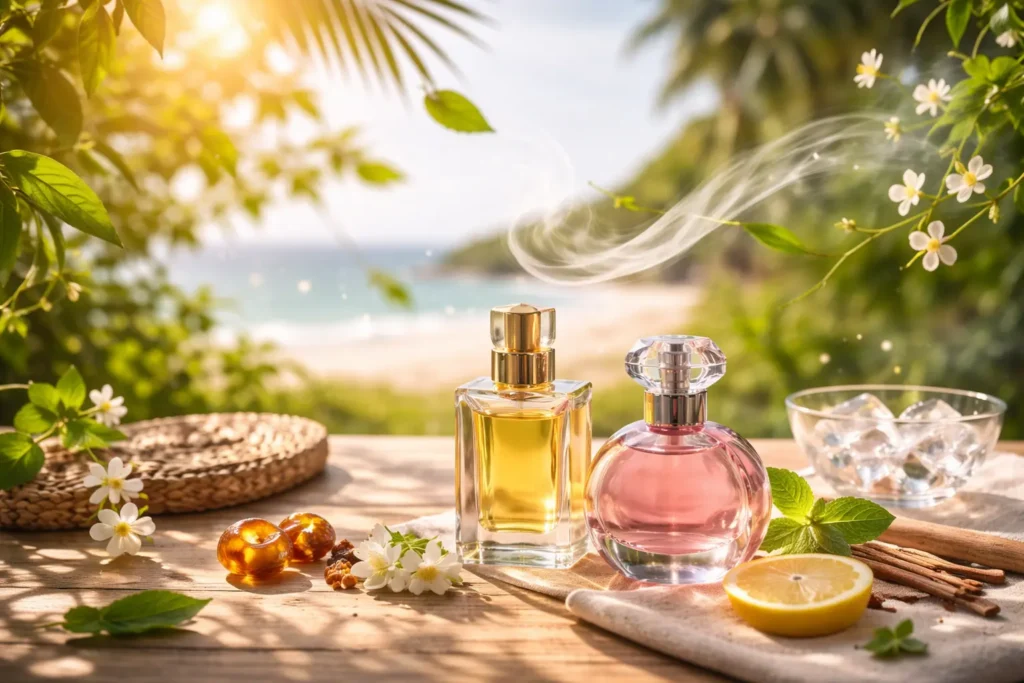
Projection also depends on the environment.
Several external conditions influence how a perfume behaves in the air.
Temperature
Warm air helps fragrance molecules spread more easily.
Humidity
Moist air can hold scent molecules longer, sometimes increasing perceived projection.
Airflow
Wind or ventilation can carry scent molecules farther away from the skin.
🌸 Why Some Luxury Perfumes Have Softer Sillage
Interestingly, some expensive perfumes intentionally have moderate or soft projection.
This design choice creates a more intimate fragrance experience.
In niche perfumery, the goal is often:
- Complexity of scent
- Long evolution on skin
- Personal scent aura rather than loud projection
This is why some high-end perfumes smell incredible up close but don’t fill a room.
🔗 Discover the Science Behind How Perfume Actually Works
If you’re curious about the deeper science behind fragrance molecules and how humans perceive scent, you might enjoy reading our detailed guide:
👉 🧪 How Perfume Works: The Science Behind Fragrance, Molecules, and Human Smell
It explores how perfume interacts with air, skin chemistry, and the human nose, helping explain why fragrances smell different from person to person.
❓ Frequently Asked Questions About Perfume Sillage
Why do some perfumes project more than others?
Perfume projection depends on several factors including fragrance concentration, ingredient volatility, skin chemistry, and environmental conditions.
What ingredient creates the strongest perfume projection?
Certain aroma molecules like Ambroxan, Iso E Super, aldehydes, and white musks are well known for producing noticeable scent projection.
Does spraying more perfume increase projection?
Spraying more perfume can increase projection temporarily, but the fragrance formula itself determines how strongly it diffuses in the air.
Why does perfume project more in warm weather?
Higher temperatures increase molecular evaporation, allowing scent molecules to disperse more easily into the surrounding air.
Do niche perfumes have stronger sillage?
Not always. Some niche fragrances focus more on depth and longevity rather than strong projection.
✨ Final Thoughts
Perfume projection is the result of a fascinating combination of chemistry, formulation, and environmental conditions.
From the molecular structure of fragrance ingredients to your skin chemistry and the surrounding air, many variables determine whether a perfume creates a powerful scent trail or remains subtle and intimate.
Understanding the science of sillage helps fragrance lovers choose perfumes that match their personal preferences—whether they want a bold signature scent or a soft skin fragrance.
💬 Now we’re curious:
Do you prefer perfumes with strong projection that fill a room, or softer scents that stay close to the skin?
Share your experience in the comments!
Discover more from Perfume Cultures
Subscribe to get the latest posts sent to your email.