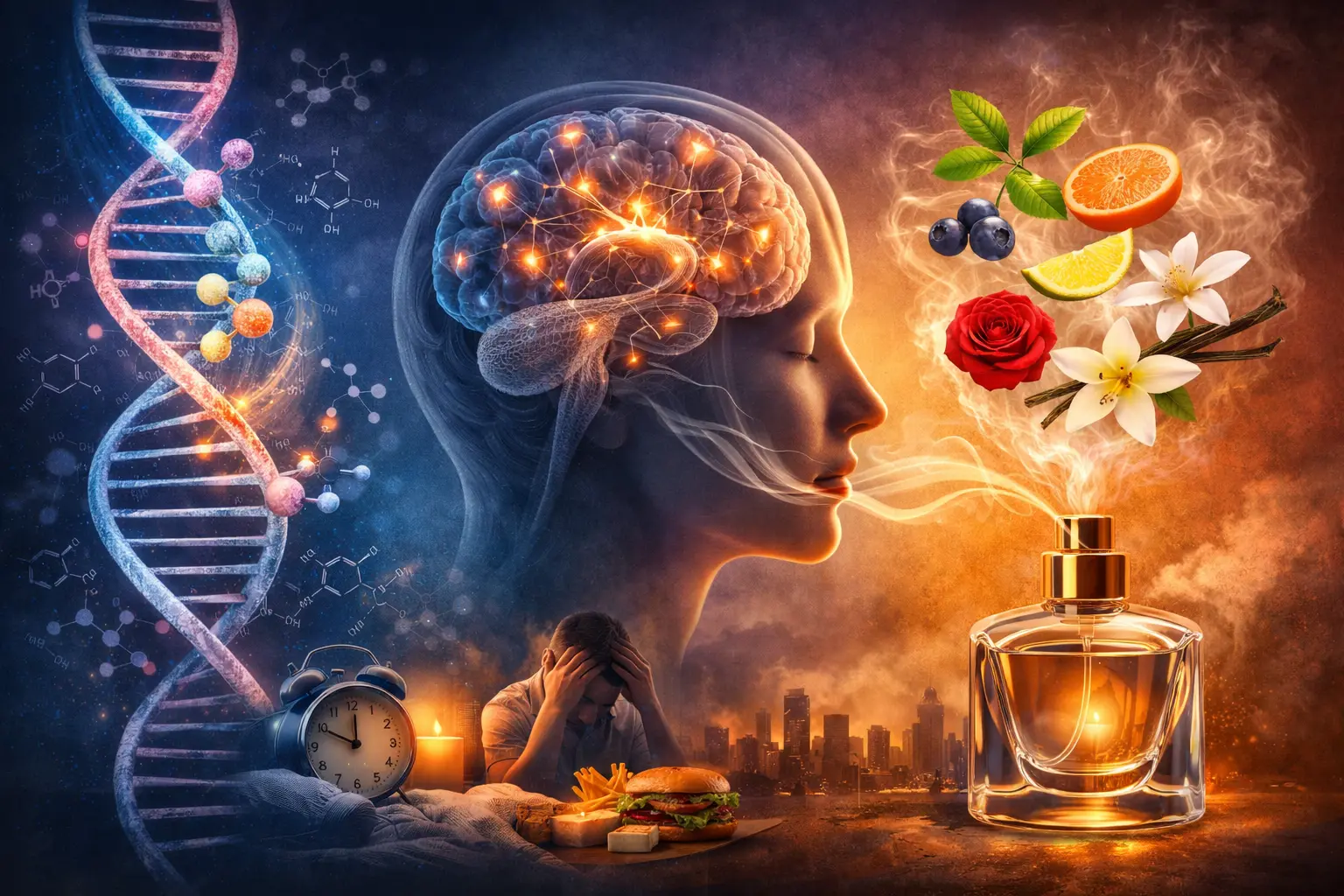
🧬 Epigenetics and Scent: Could Your Lifestyle Change How You Perceive Perfume?
Have you ever noticed that a perfume you once loved suddenly feels… different?
Not weaker. Not expired. Just different.
You’re not imagining it.
What if your lifestyle — your stress levels, diet, sleep, and environment — could actually change how you perceive scent?
Welcome to the fascinating intersection of epigenetics and fragrance perception — where biology, memory, and daily habits shape how you smell the world.
🧪 What Is Epigenetics (And Why It Matters for Smell)?
Epigenetics refers to changes in how your genes are expressed, not your DNA itself.
In simple terms:
Your body is constantly adjusting how it functions based on your lifestyle.
This includes:
- Brain activity
- Hormonal balance
- Sensory perception
And yes… even your sense of smell
👃 How Perfume Perception Actually Works
Before diving deeper, it’s important to understand the basics:
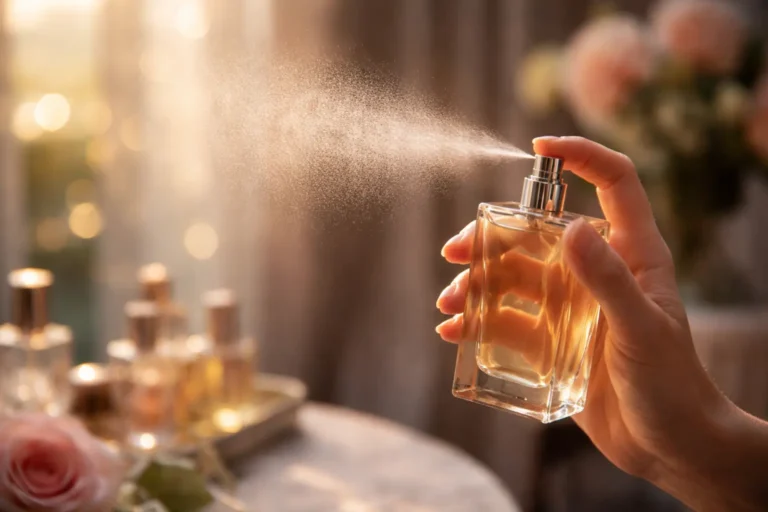
When you spray perfume:
- Molecules travel into your nose
- They bind to receptors
- Signals are sent to your brain
- Your brain interprets the scent
👉 For a deeper breakdown, check out
How Perfume Works: The Science Behind Fragrance
But here’s the twist:
👉 The interpretation stage is where epigenetics plays a role.
🧠 Your Brain Is Not Static — It Adapts
Your brain is constantly evolving based on your experiences.
The way it recognizes scent patterns can shift over time.
👉 This is explained more in
How the Brain Recognizes Different Smells
Now imagine this:
- You move to a polluted city
- You change your diet
- You experience chronic stress
Your brain may begin to:
- Filter scents differently
- Prioritize certain notes
- Suppress others
Result?
👉 The same perfume can smell subtly — or dramatically — different.
🧬 Real-Life Lifestyle Factors That May Change How You Smell Perfume
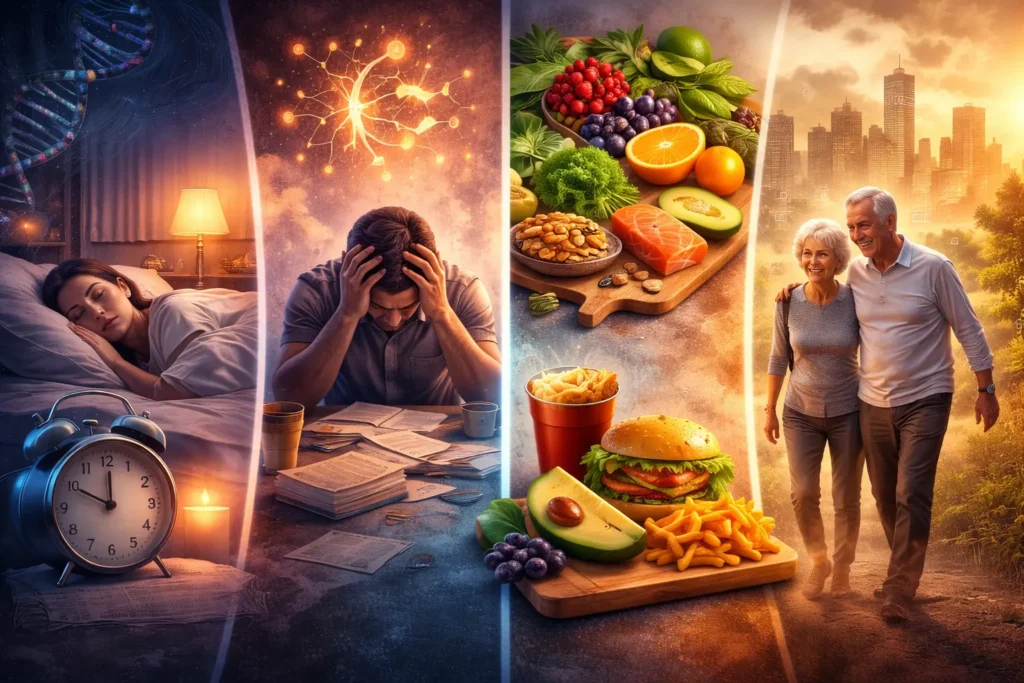
Here’s where epigenetics becomes real 👇
🌙 1. Sleep Quality
Poor sleep affects:
- Brain processing
- Sensory sensitivity
👉 You may perceive scents as dull or distorted
😰 2. Chronic Stress
Stress alters hormone levels, especially cortisol.
This can:
- Reduce scent sensitivity
- Change emotional response to fragrance
🥗 3. Diet Changes
Certain nutrients influence:
- Neural activity
- Olfactory receptors
For example:
- Zinc deficiency → reduced smell sensitivity
- High-fat diets → altered perception
🌆 4. Environmental Exposure
Pollution, chemicals, and even indoor air quality can:
- Damage receptors
- Change how scents are processed
⏳ 5. Aging & Hormonal Shifts
Over time, your body naturally changes how it processes smell.
👉 This is why perfumes you loved years ago might feel different today
🧠 Why Scents Feel Personal (And Emotional)
Smell is deeply tied to memory and emotion.
👉 As explained in
Why Scents Trigger Memories
Every scent is filtered through your personal experiences.
And even more:
👉 Why Smell Is the Most Emotional Human Sense
This means:
- A stressful period in your life
- A happy memory
- A major lifestyle change
…can all reshape how you perceive the same fragrance.
🧪 Why the Same Perfume Smells Different Over Time
Let’s connect everything together 👇
You’ve probably experienced this:
“This perfume used to smell amazing on me… now it feels off.”
It’s not just your skin.
👉 As discussed in
Why Some Perfumes Smell Better on Other People
Differences in perception come from:
- Skin chemistry
- Environment
- And now… epigenetic changes
👉 Your body + brain = constantly evolving system
🔬 Can You “Train” Your Nose Again?
Here’s the interesting part:
Yes — to some extent.
You can improve or rebalance your perception by:
- Taking breaks from strong fragrances
- Improving sleep quality
- Reducing stress
- Smelling raw ingredients (like citrus, wood, herbs)
👉 This helps your brain “reset” scent recognition patterns
🧾 Quick Comparison: Then vs Now
| Factor | Before Lifestyle Change | After Lifestyle Change |
|---|---|---|
| Stress Level | Low | High |
| Sleep | Consistent | Irregular |
| Scent Sensitivity | Balanced | Reduced or altered |
| Emotional Response | Positive | Neutral or negative |
| Perfume Experience | Familiar | “Different” |
💡 The Hidden Truth About Perfume Perception
Perfume is not just about:
- Notes
- Ingredients
- Brands
It’s about you
👉 Your biology
👉 Your experiences
👉 Your daily life
That’s why no fragrance is ever truly “fixed”
❓ Frequently Asked Questions
❓ Can stress really change how perfume smells?
Yes. Chronic stress can alter brain chemistry and reduce sensitivity, making fragrances feel weaker or different.
❓ Why does my favorite perfume suddenly smell off?
It could be due to lifestyle changes such as sleep, diet, or environment affecting your perception.
❓ Can diet affect my sense of smell?
Absolutely. Nutrient deficiencies or dietary changes can influence how your brain processes scent.
❓ Is this change permanent?
Not always. Some changes can be reversed by improving lifestyle factors.
❓ Why does perfume smell better on other people?
Because perception varies between individuals due to biology, environment, and even epigenetic differences.
🏁 Final Thought
Perfume doesn’t just sit on your skin.
It interacts with your body, your brain… and your life.
So the next time a fragrance feels different, ask yourself:
👉 Did the perfume change… or did I?
Discover more from Perfume Cultures
Subscribe to get the latest posts sent to your email.