🌍 The Environmental Cost Of Smelling Good
In a world where scent is tied to identity, confidence, and even memory, perfume has become more than a luxury—it’s a daily ritual. But behind every spray lies a question few people ask:
What does it actually cost the planet to smell good?
From rare natural ingredients to complex chemical production, the fragrance industry carries an environmental footprint that is often invisible to consumers. This article uncovers the hidden impact—and explores whether enjoying fragrance and protecting the planet can truly coexist.
🌿 The Hidden Cost of Natural Ingredients
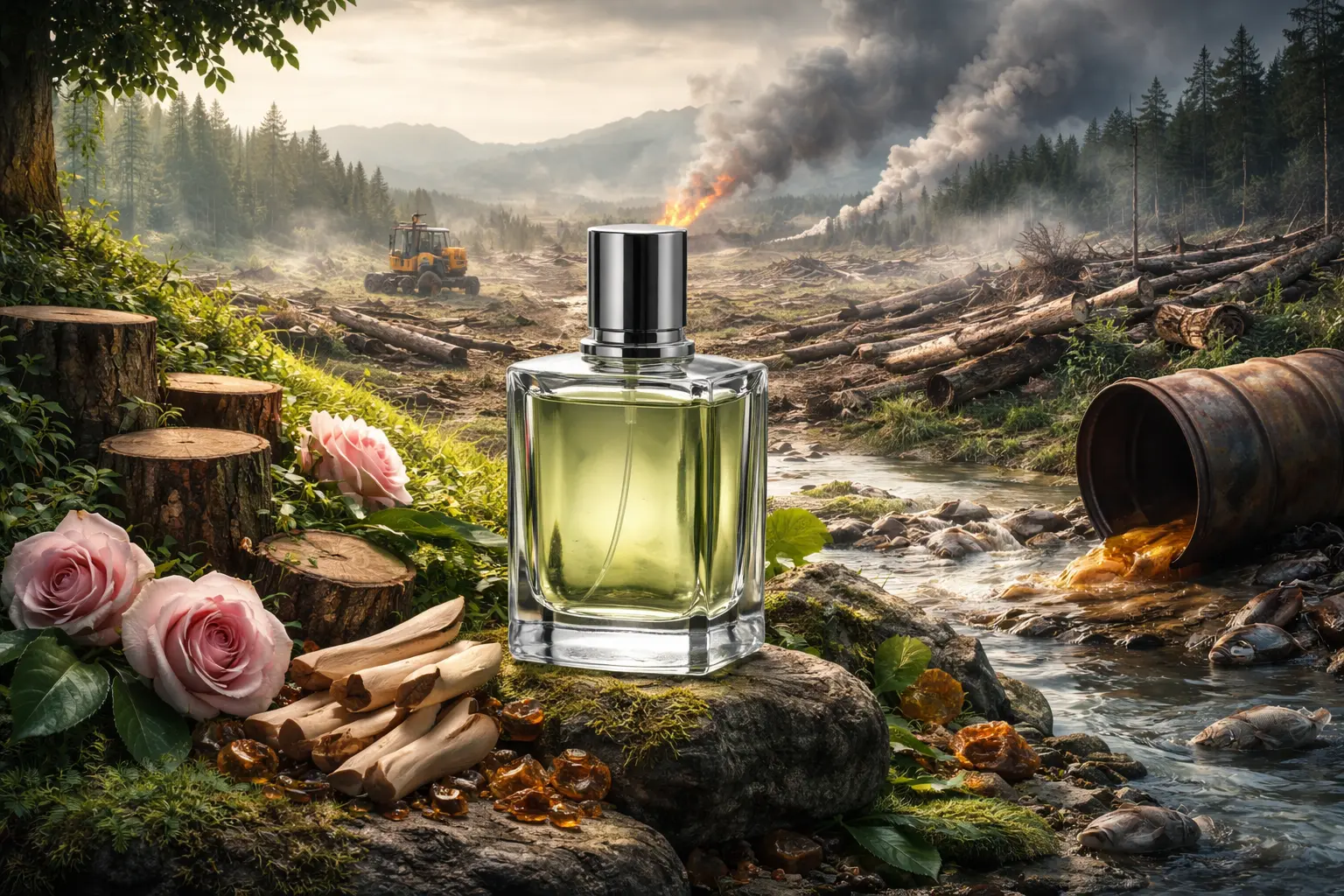
Many of the most beloved perfume ingredients come from nature—rose, sandalwood, oud, jasmine. But harvesting these materials at scale is far from harmless.
- 🌹 Thousands of roses are needed to produce a tiny amount of oil
- 🌳 Sandalwood trees take decades to mature
- 🌲 Oud (agarwood) forms only under rare conditions
This level of demand can lead to:
- Deforestation
- Overharvesting
- Loss of biodiversity
And ironically, the more “natural” a perfume sounds, the more pressure it may place on fragile ecosystems.
👉 This raises a deeper question explored in Can Perfume Ever Be Truly Sustainable?—can the industry evolve without exhausting the very resources it depends on?
🧪 The Chemical Side of Perfume Production
Not all environmental impact comes from nature. Modern perfumes rely heavily on synthetic molecules created in labs.
These compounds:
- Reduce dependence on rare natural materials
- Allow consistent scent reproduction
- Lower costs
However, they also introduce:
- Industrial waste
- Energy-intensive production
- Potential environmental toxicity
To understand how these ingredients are created and blended, it helps to explore the science behind scent in How Perfume Works: The Science Behind Fragrance.
🌡️ Heat, Storage, and Everyday Waste
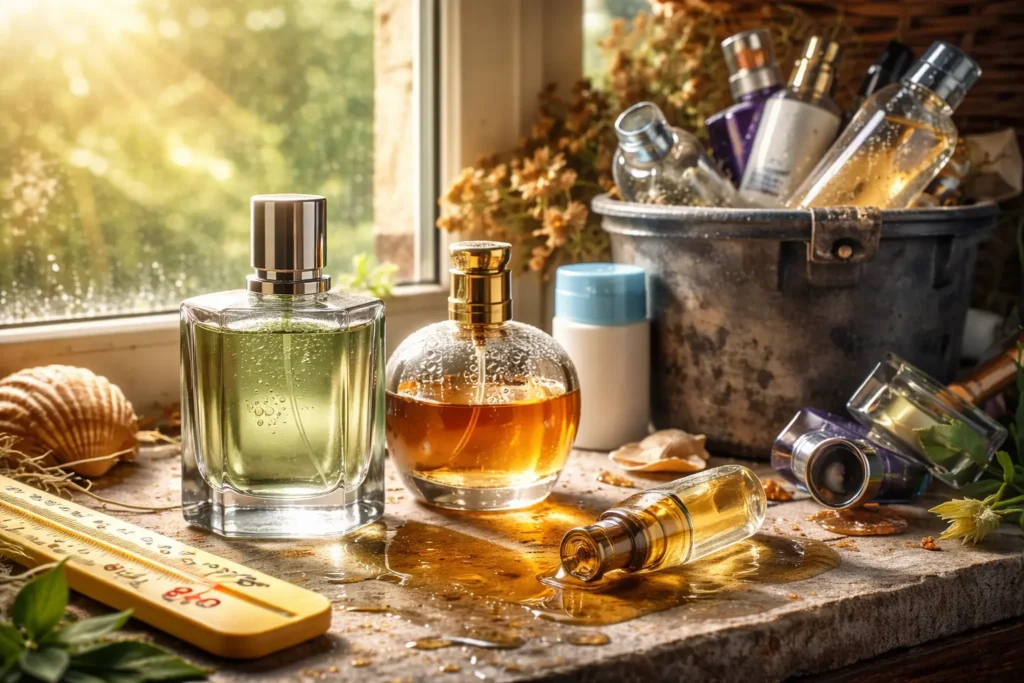
Environmental impact doesn’t stop at production—it continues in how we use perfume.
Improper storage (especially heat exposure) can:
- Break down fragrance molecules
- Shorten a perfume’s lifespan
- Lead to unnecessary waste
In hot climates or poorly stored environments, a fragrance may degrade faster than expected—meaning more frequent repurchases and more environmental strain.
👉 This everyday factor is explained in detail in How Temperature Affects Perfume: Can Heat Ruin Your Fragrance?.
🧠 Demand Isn’t Random—It’s Designed
Here’s the uncomfortable truth:
The demand for perfume isn’t purely organic—it’s engineered.
Brands invest heavily in scent marketing, emotional triggers, and identity-building campaigns to make fragrance feel essential.
- Signature scents = personal identity
- Seasonal releases = urgency
- Limited editions = fear of missing out
This creates a cycle of continuous consumption, increasing environmental impact over time.
👉 The psychology behind this is explored in How Scent Branding Influences Customers (And Why Brands Use It to Boost Sales).
🌍 A New Future: Recreating Nature Without Destroying It
What if we didn’t need to extract scents from nature at all?
Advances in fragrance technology are now making it possible to:
- Recreate natural smells using safe molecules
- Digitally map scent profiles
- Produce sustainable alternatives at scale
Instead of harvesting rare plants, perfumers can now reconstruct their scent signatures in labs.
👉 This fascinating shift is explored in Can You Recreate the Smell of a Place?, where scent meets technology and sustainability.
💡 The Real Problem: Volume, Not Just Ingredients
It’s not just what perfumes are made of—it’s how much we consume.
- Multiple bottles per person
- Trend-driven purchases
- Influencer-driven hype cycles
Even sustainable perfumes can become unsustainable if overconsumed.
The true environmental cost lies in the scale of demand.
⭐ Smart Choice: A More Sustainable Everyday Fragrance
If you’re looking for a fragrance that balances performance, versatility, and reasonable consumption habits, this is one of the smartest picks:
🧴 Versace Pour Homme Eau de Toilette
What if one smart fragrance choice could reduce both your spending… and your environmental footprint?

Versace Pour Homme Eau de Toilette
★★★★☆ 4.6/5
- ✔ Fresh citrus scent perfect for daily wear
- ✔ Lightweight and non-overpowering (ideal for controlled use)
- ✔ Works in hot climates without becoming heavy
- ✔ One versatile bottle can replace multiple fragrances
Limited availability — frequently purchased due to its clean and versatile profile.
The goal isn’t to own more fragrances—it’s to need less of them. That’s where sustainability quietly begins.
🔥 Why this fits the article:
Instead of chasing trends and buying multiple bottles, choosing one versatile, well-balanced fragrance can significantly reduce your environmental footprint over time.
❓ Frequently Asked Questions
1. Are natural perfumes better for the environment?
Not always. Natural ingredients can require large-scale harvesting, which may harm ecosystems more than lab-created alternatives.
2. Do synthetic fragrances harm the environment?
They can, especially if poorly regulated. However, many modern synthetics are designed to be safer and more sustainable than rare natural extracts.
3. How can I reduce my perfume’s environmental impact?
- Buy fewer, more versatile fragrances
- Store them properly to extend lifespan
- Avoid trend-based overconsumption
4. Is sustainable perfume actually possible?
Yes—but it requires changes in both production and consumer behavior. Sustainability isn’t just about ingredients—it’s about usage habits.
🧭 Final Thought
Perfume is invisible—but its impact isn’t.
Every bottle tells a story:
- Of nature extracted
- Of molecules engineered
- Of desire created
The question is no longer “What smells good?”
But rather:
“What does it cost to smell this good?”
💬 Let’s Talk
Do you think the future of perfume should focus more on sustainability—even if it changes how fragrances smell or perform?
👇 Share your thoughts in the comments.
Discover more from Perfume Cultures
Subscribe to get the latest posts sent to your email.