🌽 Corn In Perfume? The Surprising Role Of a Common Crop In Fragrance
When most people think about perfume ingredients, images of roses, jasmine, sandalwood, or oud usually come to mind. Corn? Almost never. Yet this everyday crop plays a quiet but surprisingly important role in modern fragrance creation. From alcohol bases to sustainable scent molecules, corn has become an invisible backbone of many perfumes sitting on American shelves today.
This article explores how corn in perfume is used, why it matters, and how a humble agricultural product became part of a luxury industry.
🌿 Why Corn Appears in Modern Perfumery
Corn is one of the most abundant crops in the United States, making it affordable, renewable, and easy to process. For the fragrance industry, this combination is extremely attractive. Corn-derived ingredients allow perfume brands to balance cost, performance, and sustainability without sacrificing quality.
Unlike floral absolutes or rare resins, corn doesn’t contribute a direct scent. Instead, it supports how fragrances are formulated, stabilized, and delivered on the skin.
🧪 Corn-Based Alcohol: The Foundation of Many Perfumes
One of the most important uses of corn in fragrance is ethanol production. Many perfumes sold in the U.S. rely on alcohol distilled from corn rather than petroleum-based or synthetic alternatives.
Why corn-based alcohol matters:
- ✔️ Clean evaporation on skin
- ✔️ Neutral scent profile
- ✔️ Widely accepted in natural and “clean beauty” perfumes
- ✔️ Renewable and bio-based
This type of alcohol allows top, middle, and base notes to unfold smoothly. Without it, the fragrance experience would feel flat or uneven.
For American consumers who value transparency and sustainability, corn-derived ethanol aligns well with modern expectations.
♻️ Sustainability and Corn-Derived Fragrance Ingredients
Sustainability has become a major talking point in the perfume industry, especially in the U.S. market. Corn fits perfectly into this narrative.
Corn can be fermented and transformed into:
- Bio-solvents
- Fixatives
- Aroma carriers
- Biodegradable fragrance bases
Compared to fossil-fuel-derived ingredients, corn-based materials often produce a lower carbon footprint when responsibly sourced.
Many niche and indie perfume brands now highlight “plant-based alcohol” on their packaging — and in many cases, that plant is corn.
📊 Corn vs Other Alcohol Sources in Perfume
| Feature | Corn-Based Alcohol | Sugarcane Alcohol | Synthetic Alcohol |
|---|---|---|---|
| Renewable source | ✅ Yes | ✅ Yes | ❌ No |
| Common in U.S. perfumes | ✅ Very common | ⚠️ Limited | ⚠️ Declining |
| Skin feel | Smooth & light | Slightly heavier | Can feel harsh |
| Sustainability appeal | High | Medium | Low |
| Cost efficiency | High | Medium | Variable |
This comparison explains why corn remains a dominant choice in American-made and American-sold fragrances.
🧴 Does Corn Add a Smell to Perfume?
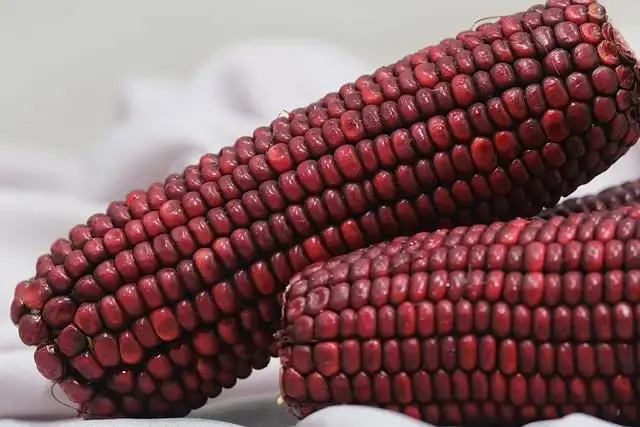
A common myth is that corn in perfume adds a sweet or grain-like scent. In reality, properly distilled corn-derived ingredients are odorless.
Any perfume that smells “corny” is likely suffering from poor formulation or low-quality alcohol — not from corn itself.
High-grade corn ethanol used in perfumery is refined multiple times, removing impurities that could interfere with the fragrance profile.
🔬 Corn and Biotechnology in Fragrance Creation
Beyond alcohol, corn is increasingly used in biotechnology-driven fragrance ingredients. Through fermentation, corn sugars can help create aroma molecules that mimic natural scents such as:
- Vanilla-like notes
- Musky undertones
- Soft woody nuances
These lab-created molecules reduce pressure on endangered natural resources while offering consistent quality year-round.
This approach is especially appealing to environmentally conscious American consumers who want ethical alternatives without compromising scent complexity.
🇺🇸 Why the U.S. Market Embraces Corn in Perfume
Corn is deeply embedded in American agriculture, which gives it a strategic advantage in domestic manufacturing. Using locally sourced corn:
- Supports U.S. farmers
- Reduces import dependency
- Lowers transportation emissions
For brands marketing themselves as “Made in the USA” or “eco-conscious,” corn-derived fragrance ingredients make both economic and branding sense.
If you’re curious about how food-inspired ingredients influence modern perfumery, you might enjoy reading our in-depth article “The Surprising Role of Matcha in Modern Fragrances.”
The piece explores how matcha moved from traditional tea culture into contemporary perfume formulas, revealing how edible ingredients can inspire innovative scent profiles beyond florals and woods.
🌟 Final Thoughts: A Crop You’ll Never Smell — But Always Use
Corn may never be listed proudly on a perfume’s note pyramid, but its presence is undeniable. From enabling smooth evaporation to supporting sustainable fragrance production, corn plays a silent yet essential role in modern perfumery.
The next time you spray your favorite scent, remember: behind that elegant bottle may be one of America’s most familiar crops, working invisibly to make the fragrance shine.
💬 What do you think?
Did you expect corn to be part of the perfume world? Would knowing this make you more interested in sustainable fragrances? Share your thoughts in the comments — your perspective might surprise other readers too.
Discover more from Perfume Cultures
Subscribe to get the latest posts sent to your email.