🧠 Why Do Some People Trust You More Based On Your Scent?
Trust Begins Before Words
Trust is rarely built through words alone.
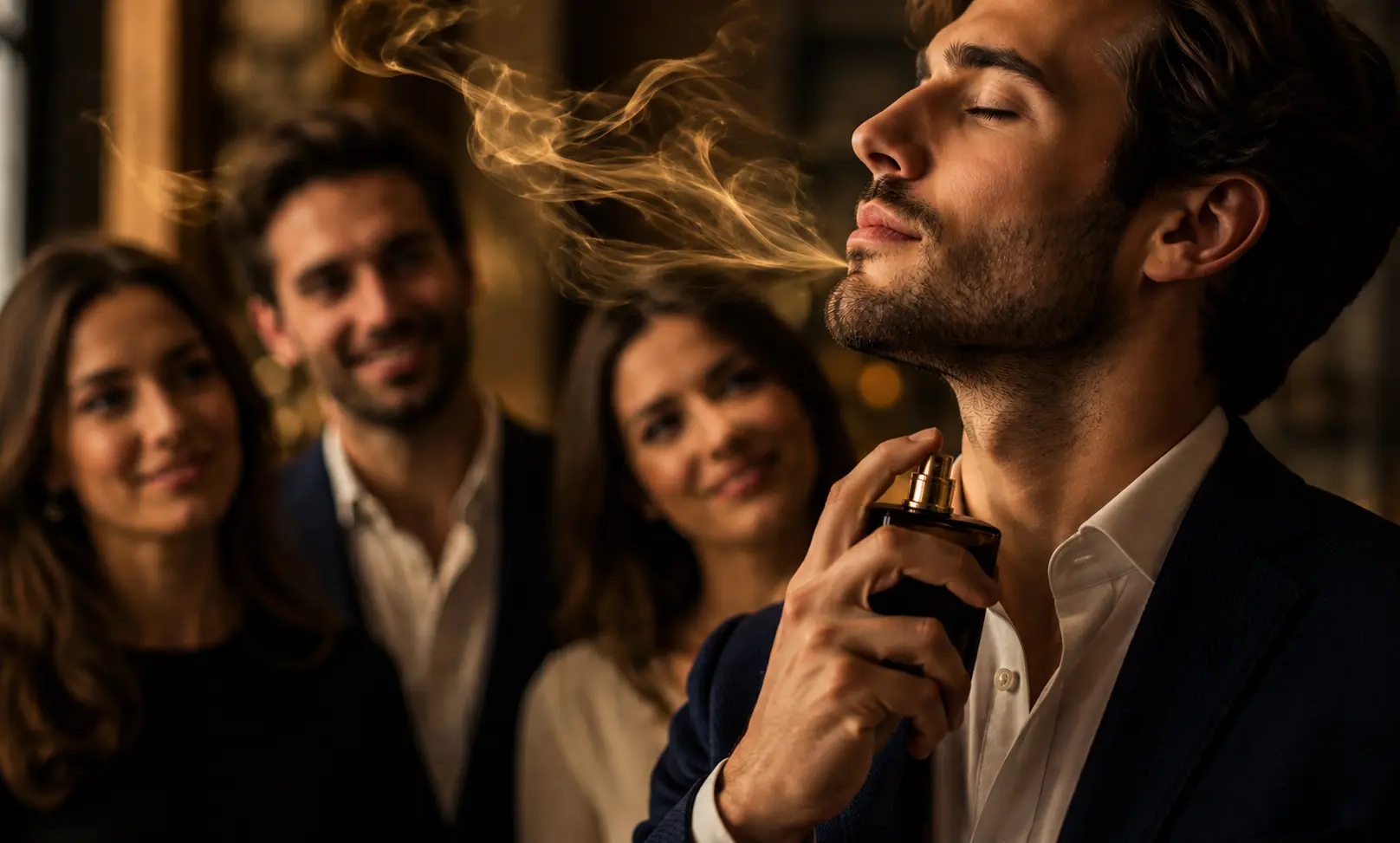
Before you speak, your brain — and the brains of others — are already making decisions. Among the most powerful and overlooked signals in this process is scent.
A fragrance can silently communicate:
- Cleanliness
- Self-awareness
- Emotional control
And these signals directly influence how trustworthy you appear.
🧠 The Neuroscience of Scent and Trust
The human sense of smell is directly connected to the limbic system — the part of the brain responsible for emotion, memory, and instinctive judgment.
This means:
- Scent bypasses rational thinking
- It triggers immediate emotional responses
- It influences decisions before logic kicks in
When someone perceives a scent as pleasant and balanced, their brain associates it with safety and familiarity — two key ingredients of trust.
Does scent affect how trustworthy you seem?
Yes. Pleasant, subtle scents can increase perceived trustworthiness because they signal cleanliness, emotional stability, and social awareness, all of which are subconsciously linked to reliability.
🌿 The Role of Subtlety: Why Less Builds More Trust
Trust is closely tied to perceived control.
A fragrance that is:
- Too strong → feels overwhelming
- Too weak → feels neglectful
- Balanced → feels intentional
Subtle scents suggest that you are aware of your environment and respectful of others’ space.
This is also why scent perception overlaps with intelligence perception — as explored in Can Your Perfume Affect How Intelligent You Seem?, where controlled scent usage signals cognitive awareness and composure.
🤝 Likeability as a Bridge to Trust

Trust does not exist in isolation — it is built on likeability.
A well-balanced fragrance:
- Makes interactions smoother
- Reduces perceived social risk
- Encourages positive emotional responses
This explains why scent can directly influence how approachable you seem, as discussed in Can a Subtle Perfume Make You More Likeable?, where subtle fragrances enhance comfort and social acceptance.
⚖️ Soft vs Loud Scents: A Trust Comparison
Not all fragrances create the same psychological effect. The difference between a soft scent and a loud one can significantly impact how others perceive you.
| Factor | Soft / Subtle Scent | Loud / Strong Scent |
|---|---|---|
| First Impression | Calm, controlled | Dominating, attention-seeking |
| Emotional Response | Comfort and ease | Tension or alertness |
| Perceived Personality | Balanced, self-aware | Overcompensating or unaware |
| Trust Level | Higher | Lower (in most close interactions) |
| Social Adaptability | High | Low |
This aligns with the deeper psychological insight explored in Does a “Soft” Perfume Create a Stronger Impression Than a Loud One?, where subtlety often leads to stronger and more positive long-term impressions.
🚫 When Scent Damages Trust
Scent can also undermine trust — often without any direct feedback.
Common mistakes include:
- Overapplication
- Choosing overly sharp or synthetic notes
- Ignoring context (office vs social setting)
A fragrance that fills the room may unintentionally signal a lack of awareness. If you’re unsure where that boundary lies, it’s important to understand How Do You Tell If Your Perfume Is Too Noticeable?, since crossing that threshold can reduce comfort and trust.
🧠 Silent Negative Reactions
One of the most critical aspects of scent perception is that people rarely verbalize discomfort.
Instead, they:
- Adjust their distance
- Limit interaction time
- Form subtle negative impressions
These reactions are explored further in Why Do Some People React Negatively to Your Perfume Without Saying Anything?, highlighting how unnoticed scent issues can gradually erode trust.
What type of scent makes you more trustworthy?
Clean, soft, and well-balanced scents — especially those with light musks, gentle woods, or fresh notes — are perceived as more trustworthy because they signal control, hygiene, and social awareness.
🧩 The Psychology of Control and Awareness
People don’t just evaluate your scent — they interpret your intention behind it.
- Controlled scent → signals discipline
- Balanced projection → signals awareness
- Consistent scent → signals reliability
These traits collectively form what others perceive as trustworthiness.
❓ FAQ Section
❓ Can fragrance really influence trust in professional settings?
Yes. In close environments like offices or meetings, scent can subtly influence how competent and reliable you appear.
❓ Is a strong perfume always a bad choice?
Not always, but in most everyday interactions, strong scents can feel intrusive and reduce perceived trust.
❓ What are the safest scent types for building trust?
Fresh, clean, and soft fragrances with musky, woody, or light citrus profiles are generally the most effective.
❓ Why don’t people tell me if my scent is unpleasant?
Because scent is a sensitive and subjective topic, most people avoid confrontation and instead adjust their behavior silently.
🧠 Final Insight
Trust is not only built through actions and words — it is also shaped by subtle sensory signals.
Your scent can quietly communicate:
- Awareness
- Respect
- Emotional balance
And in many cases, these signals are enough to influence how much people trust you — before you even say a single word.
Discover more from Perfume Cultures
Subscribe to get the latest posts sent to your email.