
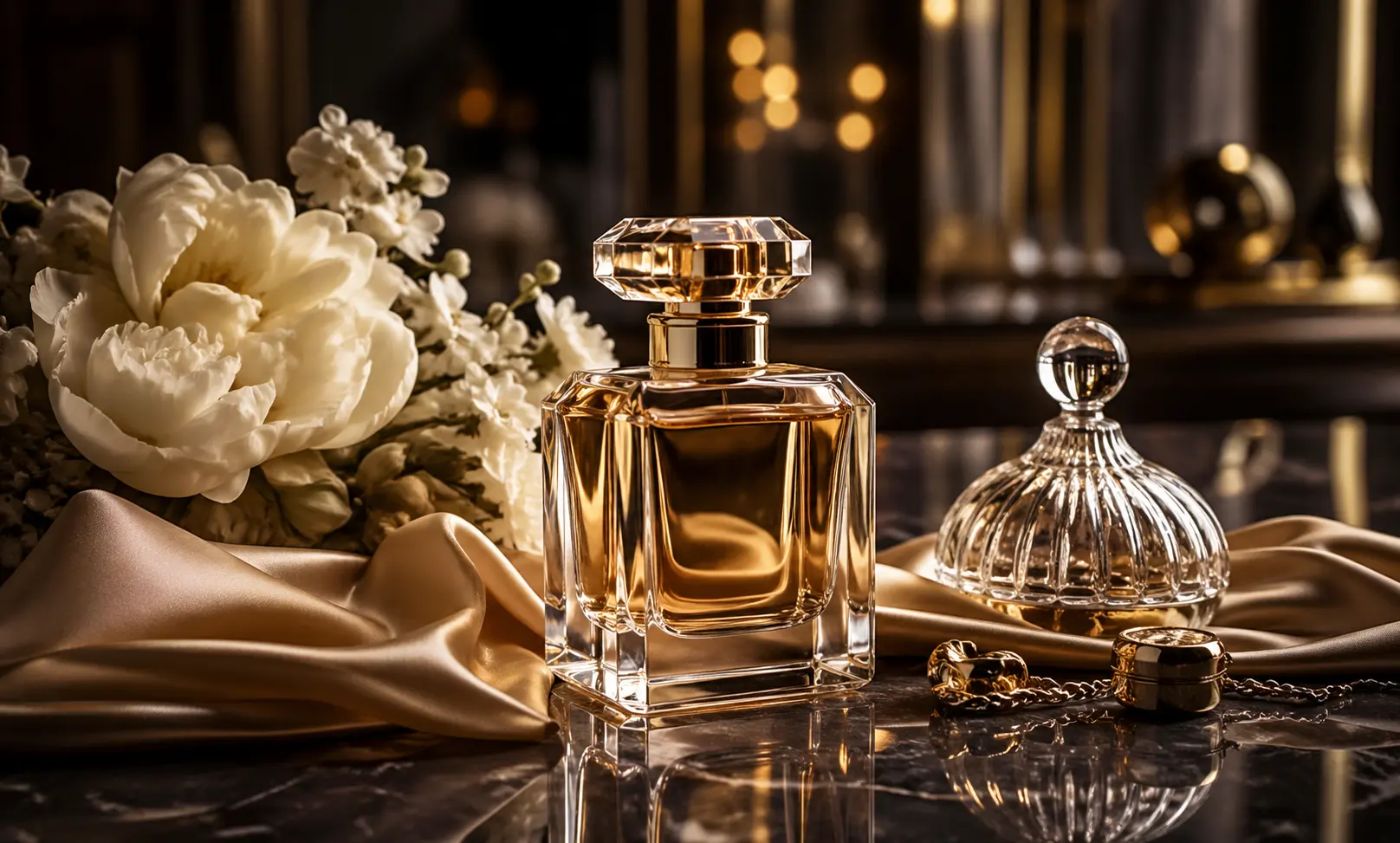
Why Do Some Perfumes Smell Expensive? The Hidden Science of Luxury Fragrance
Not all expensive perfumes feel expensive—and surprisingly, some affordable fragrances can create the same luxurious impression. The difference isn’t just price or branding. It’s a complex interaction between chemistry, perception, structure, and evolution over time.
So what exactly makes a perfume feel high-end?
Let’s break it down scientifically and psychologically.
🧪 The Foundation: How Perfume Structure Creates a “Luxury” Experience
At the most fundamental level, a perfume feels expensive because of how it is built. If you’ve explored the deeper mechanics in How Perfume Works: The Science Behind Fragrance, Molecules, and Human Smell, you already know that fragrance is not a single scent—it’s a dynamic system of volatile molecules interacting with your nose.
Luxury perfumes often use:
- Higher-quality raw materials (natural or refined synthetics)
- Balanced volatility (nothing disappears too fast or lingers too harshly)
- Precise blending techniques
This creates a scent that feels intentional rather than random.
👉 In simpler terms:
Cheap perfumes smell like “ingredients.”
Expensive perfumes smell like a composition.
🎼 Complexity vs Simplicity: The Hidden Signature of Luxury
One of the strongest indicators of an expensive-feeling perfume is complexity.
As explained in What Makes a Perfume Smell Complex vs Simple, complex fragrances evolve in layers:
- Top notes introduce the scent
- Heart notes develop the identity
- Base notes create depth and memory
But here’s the key insight:
Complexity alone isn’t enough—controlled complexity is what feels expensive.
A poorly blended complex fragrance can feel chaotic. A refined one feels seamless, almost invisible in its transitions.
This is where luxury truly begins.
✨ Smoothness: The Silent Signal of High Quality
Another defining factor is smoothness.
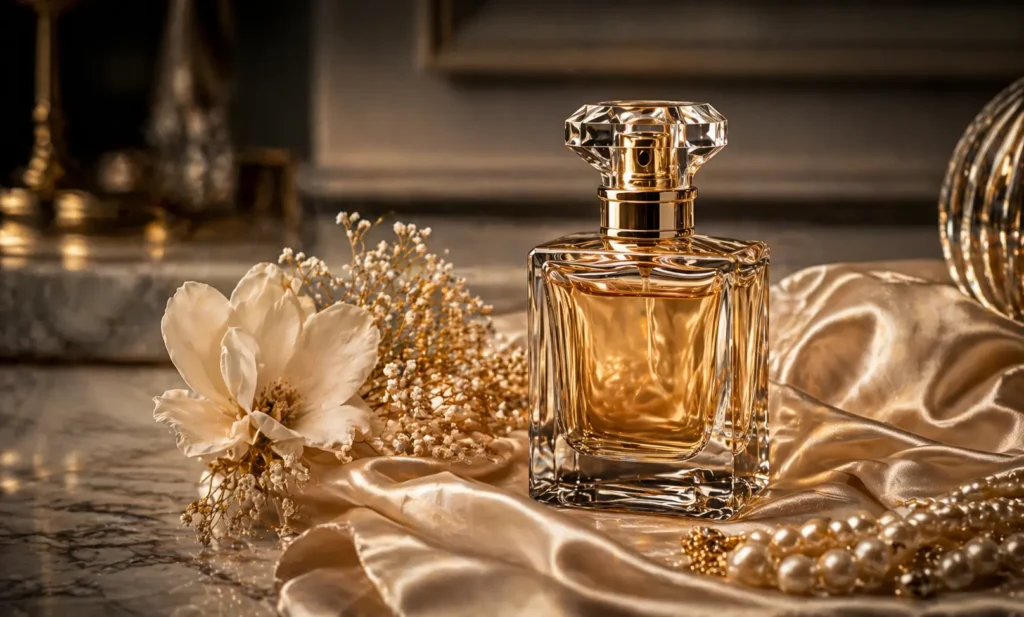
In Why Expensive Perfumes Smell Smoother, the idea is clear: expensive perfumes don’t have “sharp edges.” You don’t smell individual notes fighting for attention.
Instead:
- Transitions feel fluid
- No harsh spikes or chemical “burn”
- The scent feels soft, rounded, and polished
👉 This smoothness tricks your brain into associating the scent with quality and craftsmanship.
It’s similar to the difference between:
- Cheap fabric vs. silk
- Fast food vs. fine dining
The experience matters more than the components alone.
⏳ Evolution Over Time: Luxury Unfolds, It Doesn’t Explode
One of the biggest differences appears after you spray.
In What Happens to Each Note After You Spray a Perfume?, we learn that perfumes evolve in phases. But expensive-feeling perfumes do something special:
They unfold gradually.
- The opening is controlled—not overwhelming
- The heart emerges naturally—not abruptly
- The base lingers elegantly—not loudly
👉 The scent tells a story instead of delivering everything at once.
This slow, deliberate evolution is one of the strongest subconscious signals of luxury.
🧬 Skin Chemistry: Why the Same Perfume Feels Different
Not everyone experiences the same perfume the same way.
As discussed in Why Does Perfume Smell Different on Skin?, your skin chemistry (pH, oils, temperature) changes how molecules behave.
This means:
- A perfume that feels luxurious on one person may feel flat on another
- Certain skin types enhance depth and smoothness
- Others amplify sharpness or reduce longevity
👉 This is why true luxury perfumes often “adapt” beautifully—they interact with skin rather than sitting on top of it.
🧠 The Psychological Illusion of “Expensive”
Beyond chemistry, there’s perception.
Your brain associates certain scent patterns with luxury:
- Smooth transitions → refinement
- Balanced projection → control
- Subtle complexity → sophistication
Interestingly, once you understand How Perfume Works: The Science Behind Fragrance, Molecules, and Human Smell, you realize that “expensive” is not a fixed property—it’s a perceived experience.
This is why some niche fragrances feel luxurious even without mainstream branding.
🔍 Key Traits That Make a Perfume Feel Expensive
✔️ Smooth, seamless blending
✔️ Controlled complexity (not chaotic layering)
✔️ Gradual evolution over time
✔️ No harsh or synthetic spikes
✔️ Good interaction with skin chemistry
❓ FAQ Section
Why do some cheap perfumes still feel expensive?
Because they replicate key factors like smoothness and balanced composition. Price doesn’t always reflect sensory quality.
Is longevity a sign of an expensive perfume?
Not always. While many people associate longevity with quality, true luxury is more about how the scent evolves—not just how long it lasts.
Why do expensive perfumes feel “soft” instead of strong?
Because they are designed to be smooth and controlled. Harsh intensity often feels cheap, while subtlety feels refined.
Can skin type ruin an expensive perfume?
Not ruin—but it can change how it performs. Skin chemistry plays a major role in how a perfume develops and feels.
Do natural ingredients make perfumes feel more expensive?
Sometimes, but not always. High-quality synthetics can feel just as luxurious when used skillfully.
🔚 Final Thought
A perfume doesn’t feel expensive because of its price tag.
It feels expensive because of how effortlessly it moves—through the air, across your skin, and inside your perception.
💬 Interactive Question
Have you ever smelled a perfume that felt expensive instantly—what do you think made it feel that way?
Discover more from Perfume Cultures
Subscribe to get the latest posts sent to your email.



2 Comments