🧠 How Neuroscience Is Revolutionizing the Perfume Industry
The perfume industry is no longer driven by artistry alone—it’s entering a new era powered by neuroscience, data, and human behavior. What once relied on intuition and tradition is now being shaped by brain imaging, emotional mapping, and subconscious responses.
Today, fragrance creators are not just asking “What smells good?”
They’re asking something far more powerful:
“What does the brain feel when it smells this?”
🧠 How the Brain Actually Smells
To understand this revolution, we need to start with the basics.
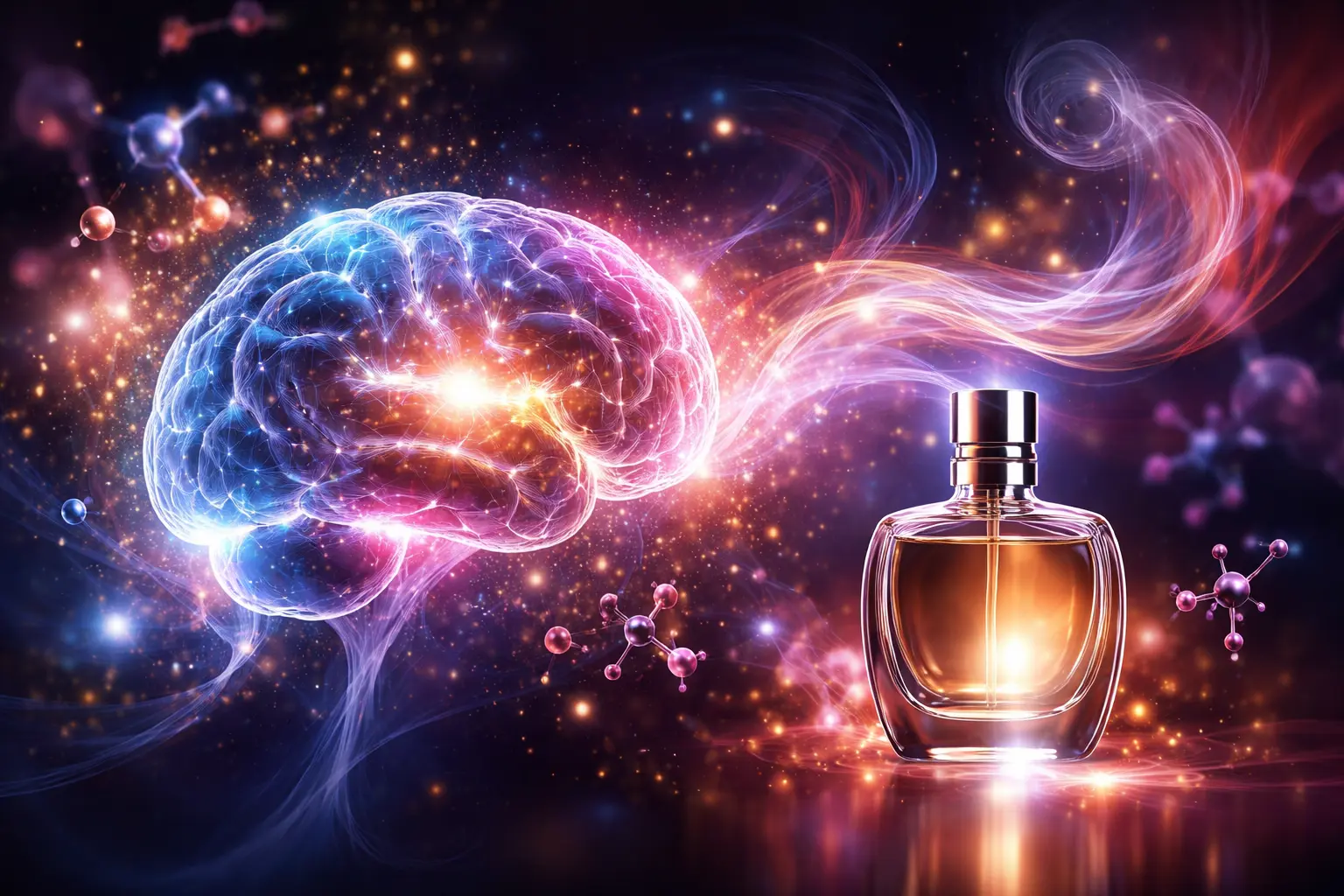
When you smell a fragrance, molecules travel into your nose and bind to olfactory receptors. These signals are sent directly to the brain—specifically to areas responsible for emotion, memory, and behavior.
If you want a deeper breakdown of this process, it connects directly to the foundation explained in
👉 How Perfume Works: The Science Behind Fragrance, Molecules, and Human Smell
But neuroscience goes further.
It studies not just how smell works…
but how the brain reacts, adapts, and forms meaning from scent.
🔬 From Chemistry to Neuroscience
Traditional perfumery focused on:
- Notes (top, middle, base)
- Ingredients (natural vs synthetic)
- Longevity and projection
Modern neuroscience adds:
- Emotional response tracking 🧠
- Brainwave activity during scent exposure 📊
- Subconscious preference patterns 👁️🗨️
This shift means perfumes are no longer designed only to smell pleasant—they are crafted to trigger specific emotional states.
❤️ Why Scent Is the Most Emotional Trigger
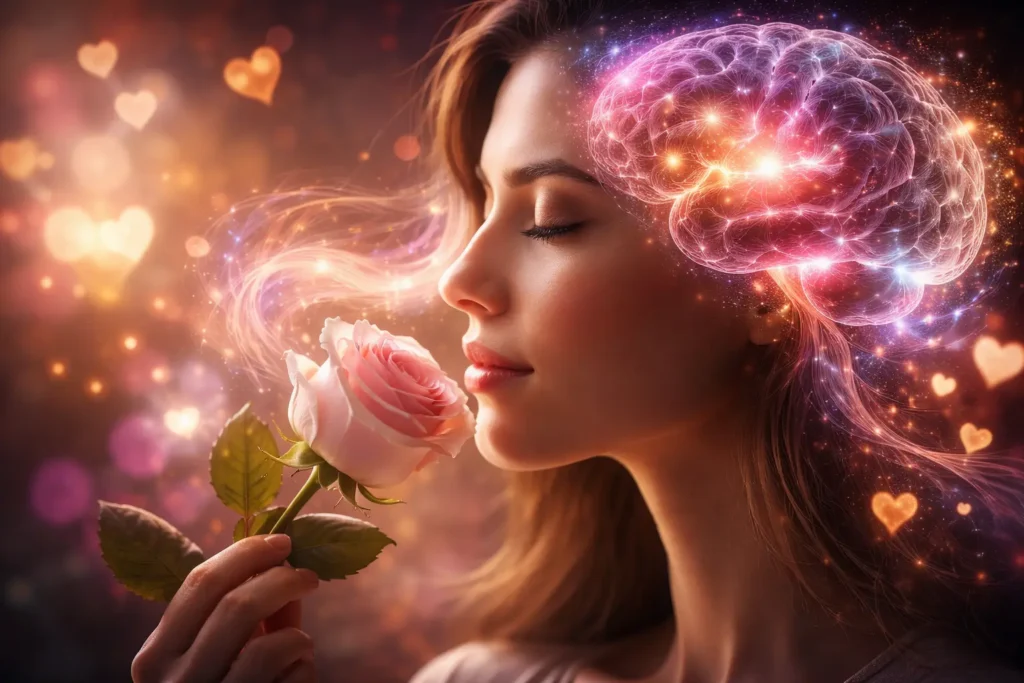
Among all human senses, smell is uniquely wired to emotion.
Unlike sight or sound, scent bypasses rational processing and goes straight to the amygdala and hippocampus—the brain’s emotional and memory centers.
This is why:
- A fragrance can instantly remind you of childhood
- A scent can create comfort or attraction without explanation
This concept aligns directly with the idea explored in
👉 Why Smell Is the Most Emotional Sense
Neuroscience is now helping perfumers design emotional reactions intentionally, not accidentally.
🧍♂️ Why the Same Perfume Smells Different on Everyone
Have you ever wondered why a perfume smells amazing on someone else… but completely different on you?
While skin chemistry plays a role, neuroscience reveals another layer:
👉 Your brain interprets scent differently based on experience, memory, and biology.
This ties directly into
👉 Why Perfume Smells Different on Skin
Modern labs now study:
- Genetic scent perception
- Cultural scent associations
- Emotional memory triggers
Meaning your “signature scent” isn’t just about your skin—
it’s about your brain’s unique wiring.
🛍️ The Rise of Neuromarketing in Perfume
Brands are now leveraging neuroscience not just in formulation—but in marketing strategy.
Using scent, companies can:
- Increase customer dwell time in stores
- Enhance brand recall
- Influence purchasing decisions subconsciously
This is the real-world application of what’s discussed in
👉 How Scent Branding Influences Customers
For example:
- Warm vanilla scents = comfort and trust
- Citrus notes = energy and alertness
- Woody accords = confidence and authority
This is no longer guesswork—
it’s data-driven emotional engineering.
🧬 Personalized Fragrance: The Future
The next frontier is personalization.
With AI and neuroscience combined, brands are moving toward:
- Brain-response-based perfume recommendations
- DNA and scent preference analysis
- Emotion-adaptive fragrances
Imagine a perfume designed not just for your taste—
but for your brain chemistry.
🧠 Perfume as Identity (Not Just a Product)
As neuroscience deepens our understanding, perfume is evolving into something more personal:
👉 It becomes an extension of identity.
The way you smell influences:
- How others perceive you
- How you feel about yourself
- The emotional atmosphere you create
This connects naturally to
👉 Perfume and Identity: The Invisible Expression
In this new era, fragrance is no longer decoration—
it’s communication at a subconscious level.
🧴 Editor’s Choice: A Neuroscience-Friendly Fragrance
If you want a fragrance that aligns with this idea of broad emotional appeal + brain-friendly composition, here’s a powerful pick:
🧴 Prada Luna Rossa Carbon Eau de Toilette
If a fragrance could be engineered to instantly feel “right” to your brain… this is one of the closest examples.
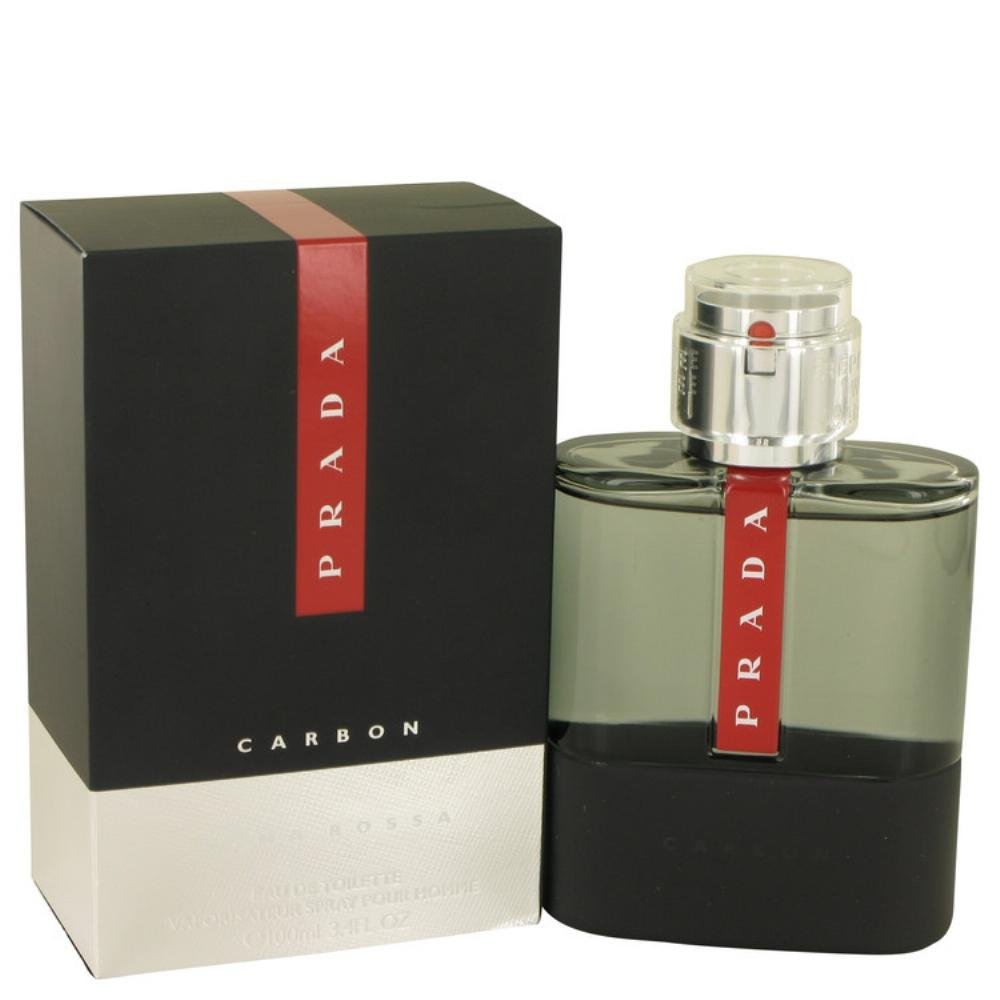
This is exactly where neuroscience meets real-world fragrance design—creating scents that your brain accepts before you even realize it.
💡 Why it fits this article:
This fragrance is designed with modern appeal in mind—clean, adaptive, and easy for the brain to process positively. It avoids extremes, making it ideal for subconscious acceptance and emotional comfort.
❓ Frequently Asked Questions
❓ How does neuroscience help create better perfumes?
Neuroscience allows perfumers to understand how scents affect the brain’s emotional and memory centers, enabling them to design fragrances that trigger specific feelings like comfort, attraction, or confidence.
❓ Can a perfume really influence behavior?
Yes. Studies show that scent can affect mood, decision-making, and even social perception—often without conscious awareness.
❓ Why do some scents feel “addictive”?
Because they activate reward pathways in the brain, similar to how music or food can trigger dopamine release.
❓ Will AI replace perfumers in the future?
Not entirely. AI and neuroscience will enhance creativity, but human artistry will still play a key role in crafting unique and emotional fragrances.
🧭 Final Insight
The perfume industry is no longer just about smelling good—
it’s about understanding the human mind.
As neuroscience continues to evolve, fragrances will become:
- More personal
- More emotional
- More powerful than ever before
💬 Now it’s your turn:
Have you ever experienced a fragrance that instantly changed your mood or reminded you of something powerful? What did it make you feel?
Discover more from Perfume Cultures
Subscribe to get the latest posts sent to your email.