How to Describe Scents Like a Professional
Describing a scent is one of the most challenging—and rewarding—skills in the world of fragrance. You can smell something instantly, but putting that experience into words? That’s where most people struggle.
Professionals don’t rely on random adjectives like “nice” or “strong.” Instead, they use structured thinking, sensory references, and precise vocabulary to turn an invisible experience into something vivid and memorable.
In this guide, you’ll learn exactly how to describe scents like a professional—step by step.
🧠 Why Is It So Hard to Describe Smell?
Before learning the technique, it’s important to understand the problem.
Smell is deeply connected to memory and emotion, not language. That’s why you might recognize a scent instantly—but struggle to explain it.
👉 A related article on this site explains this in depth:
Why We Struggle to Talk About Smell explores why scent is the most difficult sense to verbalize—and how your brain processes it differently from sight or sound.
🧩 Step 1: Break the Scent Into Layers (Top, Heart, Base)
Professionals never describe a fragrance as one thing. They analyze its evolution over time:
- Top Notes → What you smell first (fresh, citrusy, bright)
- Heart Notes → The core identity (floral, spicy, fruity)
- Base Notes → The long-lasting foundation (woody, musky, sweet)
💡 Example:
Instead of saying “It smells sweet,” say:
“It opens with bright citrus, then transitions into a creamy vanilla heart with a warm woody base.”
🌡️ Step 2: Consider Skin Chemistry
A fragrance doesn’t smell the same on everyone.
Your skin type, body temperature, and natural oils all affect how a perfume develops.
👉 This is explained in detail in:
Why Does Perfume Smell Different On Skin?—a must-read if you want to describe scents accurately across different people.
💡 Pro Tip:
Always test on skin, not just paper strips.
🌬️ Step 3: Describe Projection and Movement (Sillage)
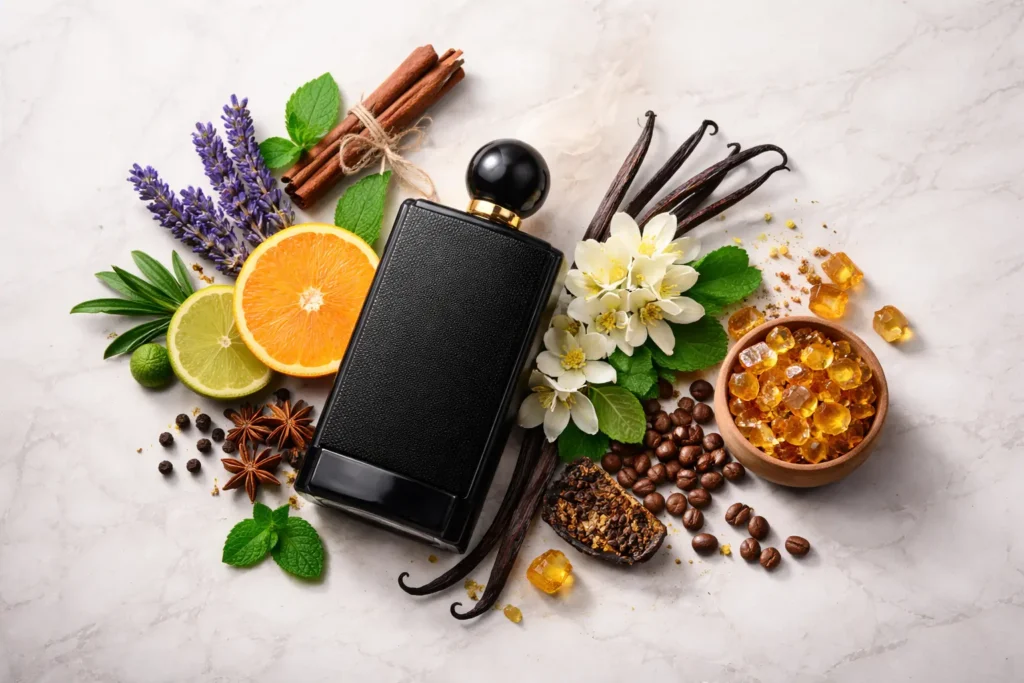
Professionals don’t just describe what a scent smells like—they describe how it behaves in the air.
- Does it stay close to the skin?
- Does it leave a noticeable trail?
- Is it soft or powerful?
👉 Learn this concept here:
What Is Sillage in Perfume? The Invisible Trail Explained
💡 Example:
“It has a soft, intimate sillage—noticeable only within close range.”
🍰 Step 4: Use Real-World References (Especially Food)
One of the easiest ways to sound like a pro is to use familiar references—especially edible ones.
Why? Because people instantly understand them.
- Vanilla → creamy, sweet
- Caramel → warm, sugary, slightly burnt
- Citrus → fresh, sharp, energetic
👉 Explore this idea further:
Why Do Some Perfumes Smell Like Food?
💡 Example:
“It smells like warm vanilla custard with a hint of toasted sugar.”
🎯 Step 5: Focus on Attractive Notes
Not all scent descriptions are equal—some are more emotionally powerful than others.
Professionals often highlight notes that people find appealing:
- Vanilla → comforting
- Amber → warm and sensual
- Musk → clean and intimate
- Woods → confident and masculine
👉 Learn more here:
Most Attractive Perfume Notes (What Actually Turns Heads?)
💡 Example:
“The scent is built around a warm amber base with subtle vanilla sweetness—highly inviting and crowd-pleasing.”
🧠 Step 6: Combine Structure + Emotion
The final step is where you become truly professional.
Don’t just describe technically—describe emotionally.
❌ Basic:
“It smells woody and sweet.”
✅ Professional:
“It opens fresh and slightly spicy, then settles into a warm, woody sweetness that feels both comforting and confident.”
💎 Practice Exercise (Use This Template)
Try this structure every time you test a fragrance:
- Opening: Fresh? Sweet? Sharp?
- Heart: Floral? Spicy? Creamy?
- Base: Woody? Musky? Warm?
- Projection: Soft or strong?
- Emotion: How does it feel?
👉 Within a week, your descriptions will sound dramatically more refined.
💣 Affiliate Pick (Perfect for Practicing Scent Description)
Want to train your nose like a professional? Start with a fragrance that clearly reveals its layers over time.
It’s one of the easiest ways to start training your nose without feeling overwhelmed.
⭐ Editor’s Choice — Versatile & Easy to Describe
Lattafa Asad Eau de Parfum
Want to train your nose like a professional? Start with a fragrance that clearly reveals its layers over time.
It’s one of the easiest ways to start training your nose without feeling overwhelmed.
⭐ Editor’s Choice — Ideal for Learning Scent Description

Lattafa Asad Eau de Parfum
- ⭐ 4.5/5 Rating (35,000+ reviews)
- 🔥 Warm spicy opening with smooth vanilla & amber dry-down
- 👃 Perfect for learning scent transitions (spice → coffee → vanilla)
- 💡 Beginner-friendly but smells like a high-end designer fragrance
Limited availability — this fragrance is often out of stock due to high demand.
The real skill isn’t just smelling a fragrance—it’s understanding what you’re smelling and putting it into words. Let’s break that down.
👉 Why it fits this article:
This fragrance has clear, easy-to-identify layers, making it perfect for training your nose and improving your scent vocabulary.
❓ Frequently Asked Questions
❓ How can I improve my ability to describe scents?
Practice regularly using structured descriptions (top, heart, base) and compare fragrances side by side. Over time, your vocabulary will naturally expand.
❓ Do professionals memorize scent notes?
Not exactly—they build experience. The more scents you smell, the easier it becomes to recognize patterns and describe them accurately.
❓ Is it okay to use food comparisons?
Yes—and it’s actually encouraged. Food-based descriptions are among the most effective and widely understood ways to describe scents.
❓ Why does the same perfume smell different each time I try it?
Factors like skin chemistry, weather, and even your mood can affect how a fragrance smells and how you perceive it.
🔥 Final Thought
Describing scents isn’t about having a “gift”—it’s a skill.
Once you understand structure, train your nose, and use relatable references, you’ll notice something surprising:
👉 You’re no longer just smelling fragrances…
You’re interpreting them like a professional.
💬 Now your turn:
What’s the last fragrance you tried—and how would you describe it using these techniques?
Discover more from Perfume Cultures
Subscribe to get the latest posts sent to your email.



One Comment