Can Bleu de Chanel Stain Clothes?
You have dressed for work, a date, or an event, reached for Bleu de Chanel, and then noticed a darker spot near your collar or chest. It is an understandable concern: can the fragrance leave a permanent mark, especially on a white shirt or a delicate fabric?
The reassuring answer is that Bleu de Chanel is unlikely to permanently stain most everyday clothes when sprayed correctly and allowed to dry. However, fresh overspray, repeated spraying in one place, residue from grooming products, and delicate materials such as silk can occasionally leave a visible mark or darkened patch.
✦ Quick Answer: Does Bleu de Chanel Stain Clothes?
Bleu de Chanel does not usually leave permanent stains on cotton, polyester, or most everyday fabrics. A fresh spray can temporarily darken fabric while the alcohol evaporates, but this normally disappears. The risk is higher on silk, satin, linen, light-colored delicate fabrics, or when the fragrance is sprayed heavily at very close range.
The safest habit is simple: apply the fragrance to skin before getting dressed, let it settle for a minute or two, and avoid soaking shirt collars, cuffs, or jacket linings.
Why Does a Fragrance Sometimes Leave a Mark?
A fragrance is not just scented alcohol. It also contains aromatic materials, small amounts of oils, and sometimes color that may behave differently on certain fabrics. Most of the time, the alcohol evaporates quickly and leaves nothing behind. Problems arise when too much liquid lands in one area.
A spot may also be caused by something other than Bleu de Chanel itself:
- Moisturizer, sunscreen, deodorant, or hair product already on the fabric
- A damp collar or warm skin transferring product to clothing
- Repeated spraying directly onto the same shirt area
- A delicate or absorbent material that holds the liquid longer
This is why a dark patch immediately after spraying is not automatically a permanent stain. Give the area time to dry before treating it.
🧵 Which Fabrics Are Most at Risk?
| Fabric type | Likelihood of a visible mark | Best approach |
|---|---|---|
| Cotton and polyester | Low | Let the spray dry completely |
| Wool and knitwear | Low to moderate | Spray skin rather than the garment |
| Linen | Moderate | Avoid close-range spraying |
| Silk and satin | Higher | Do not spray directly on the fabric |
| White or very light clothing | Moderate | Apply before dressing and use fewer sprays |
Silk, satin, and delicate blends deserve particular care because they can show water-like rings, oil residue, or uneven drying more easily than a standard cotton shirt.
✦What Should You Do If Bleu de Chanel Gets on Clothes?
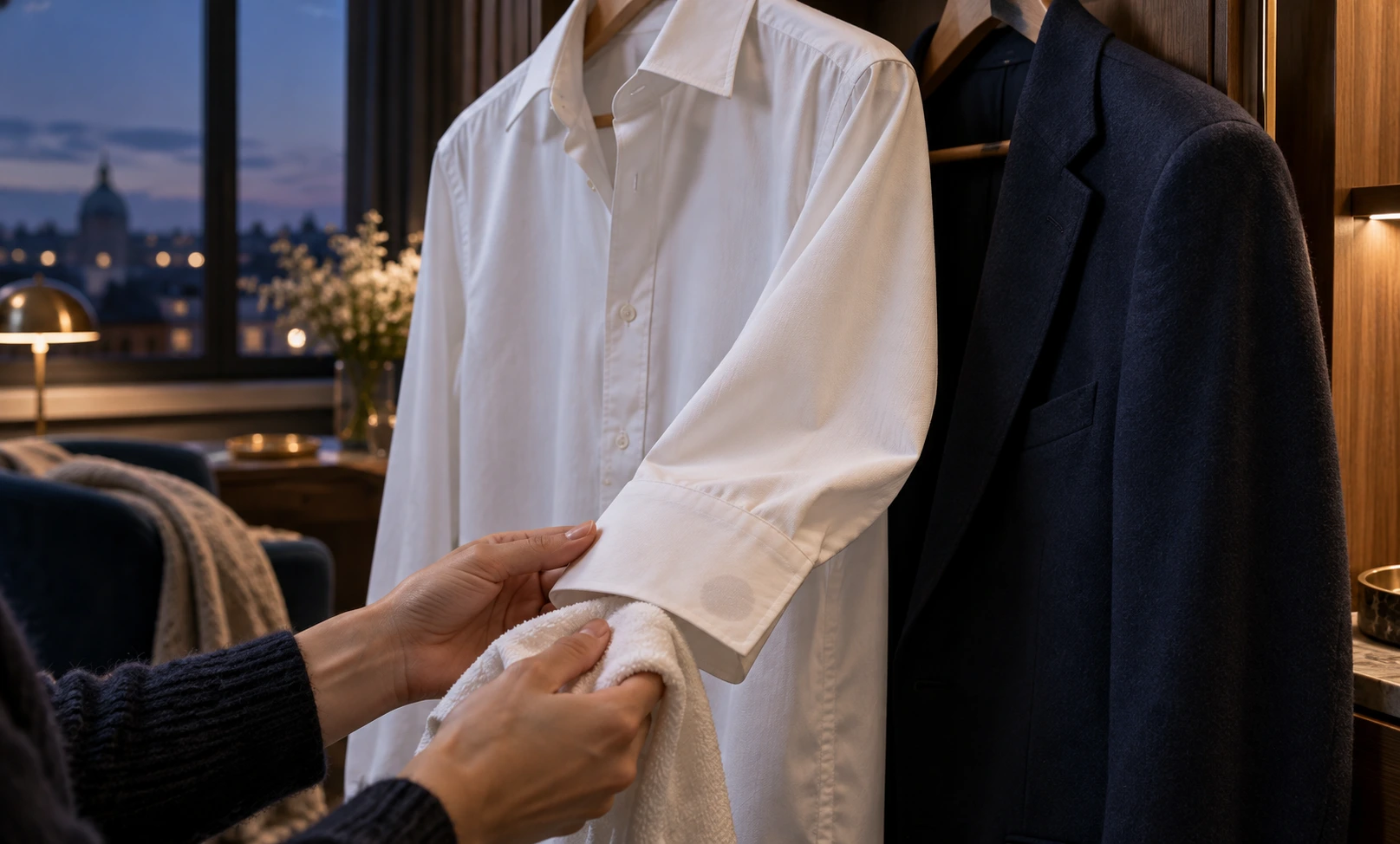
Blot the area gently with a clean dry cloth—do not rub it. Let it air-dry, then check whether the mark remains. If it does, follow the garment’s care label and test any cleaner on a hidden area first. Avoid heat, ironing, or putting the item in a dryer until the mark is gone.
Rubbing spreads fragrance oils farther into the fibers and may make a small mark harder to remove. For a full step-by-step approach for fabric and skin, see How to Remove Bleu de Chanel from Skin or Clothes.
How to Prevent Bleu de Chanel From Marking Your Clothes
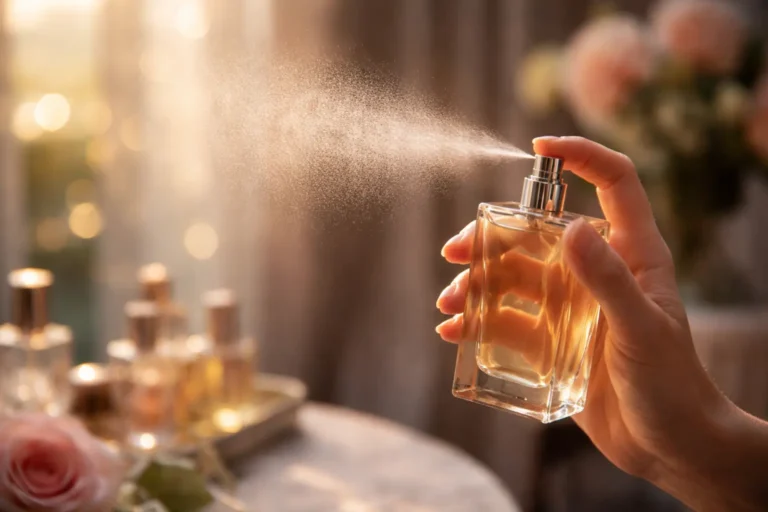
The most reliable prevention is not complicated: spray the fragrance on bare skin, wait briefly, then put on your clothes. The neck, upper chest, and sides of the neck are generally better targets than the shirt itself.
If you prefer fragrance on fabric for a longer scent trail, spray from a distance onto a less visible outer area and test first. Do not aim directly at a white collar, silk blouse, tie, scarf, or the inside lining of a jacket.
For a clearer comparison between skin application and clothing application, read Where Should You Spray Bleu de Chanel? Skin vs Clothes.
| Common mistake | Why it can create a problem | Better alternative |
|---|---|---|
| Spraying at point-blank range | Saturates one small area | Hold the bottle several inches away |
| Getting dressed immediately | Transfers wet fragrance onto fabric | Wait 60–90 seconds |
| Re-spraying the same collar area | Builds up residue | Use skin pulse points instead |
| Spraying silk or satin | Delicate fibers show marks easily | Keep fragrance off the fabric |
| Overapplying to improve performance | Creates excess liquid, not better balance | Use a controlled number of sprays |
💨 Does Using More Sprays Increase the Risk?
Yes. The more liquid that lands on fabric, the more likely you are to see a temporary dark spot or, in rare cases, a residue mark. This does not mean you need to underapply Bleu de Chanel; it means the application should be deliberate.
Rather than spraying repeatedly over your shirt, use a measured routine on skin. If you are unsure whether you are applying too much, How Many Sprays of Bleu de Chanel Should You Wear? explains how to adjust the number for the weather, setting, and version you own.
Does the Color of the Liquid Cause Clothing Stains?
Not usually. A slightly different-looking liquid in the bottle does not automatically mean it will stain clothes. Lighting, bottle age, and natural variation can make fragrance appear lighter or darker, while the actual risk depends much more on how much liquid reaches the fabric and what material it touches.
If you have noticed a change in the appearance of your bottle, Why Is My Bleu de Chanel Liquid a Different Color? separates normal color variation from changes that may deserve closer attention.
🧴 Grooming Products Can Be the Real Cause
Sometimes the fragrance is blamed when the real issue is product buildup. A rich moisturizer, deodorant, sunscreen, or styling cream can transfer to clothing and interact with fragrance sprayed over it. This is especially common around the neck, chest, and shirt collar.
If you use the Bleu de Chanel grooming line, layer lightly and let each product absorb before dressing. How to Layer Bleu de Chanel Grooming Products with the Fragrance shows how to create a cleaner, more controlled routine rather than piling products on at once.
The same rule applies to moisturizing products: use only the amount your skin needs, allow it to absorb, and keep it away from clothing edges. You can see how the product fits into a routine in the Bleu de Chanel 3-in-1 Moisturizer Review.
Can You Spray Bleu de Chanel on a Jacket or Coat?
You can, but it is not the safest choice. Outerwear may hold fragrance well, yet wool, suede, leather, silk-blend linings, and dry-clean-only materials are more difficult to treat if a mark appears. A jacket also keeps the fragrance close to the fabric for longer than a quick spray on bare skin.
For everyday wear, apply Bleu de Chanel to skin first. If you choose fabric, use one light spray from a distance on a hidden, sturdy section—not the collar, lapel, or light-colored front panel.
✦ Final Verdict
Bleu de Chanel can leave a temporary wet-looking spot if sprayed directly onto clothes, but it is not known for routinely causing permanent stains on ordinary fabrics. The greatest risk comes from heavy, close-range application, delicate materials, and residue from moisturizers or other grooming products.
Spray before dressing, give the fragrance time to dry, keep it off silk and pale delicate fabrics, and use only the number of sprays you actually need. That protects both your clothes and the refined, effortless effect Bleu de Chanel is meant to create.
❓ FAQ
Does Bleu de Chanel stain white shirts?
It usually does not permanently stain white cotton shirts when used lightly and allowed to dry. Still, avoid spraying directly onto white fabric because any temporary wet spot or residue is more visible.
How long should I wait after spraying Bleu de Chanel before dressing?
Wait around 60–90 seconds, or until the skin feels dry. This reduces transfer from your neck or chest onto the collar and shirt.
Can perfume stains be removed from clothing?
Often, yes—especially if treated early and gently. Do not rub the area or apply heat before confirming that the mark has disappeared.
Is it safer to spray Bleu de Chanel on skin or clothes?
Skin is generally safer for both the fabric and the fragrance experience. It lets the scent develop naturally while reducing the chance of marks on delicate clothing.
Discover more from Perfume Cultures
Subscribe to get the latest posts sent to your email.