🧠 Why We Struggle to Talk About Smell
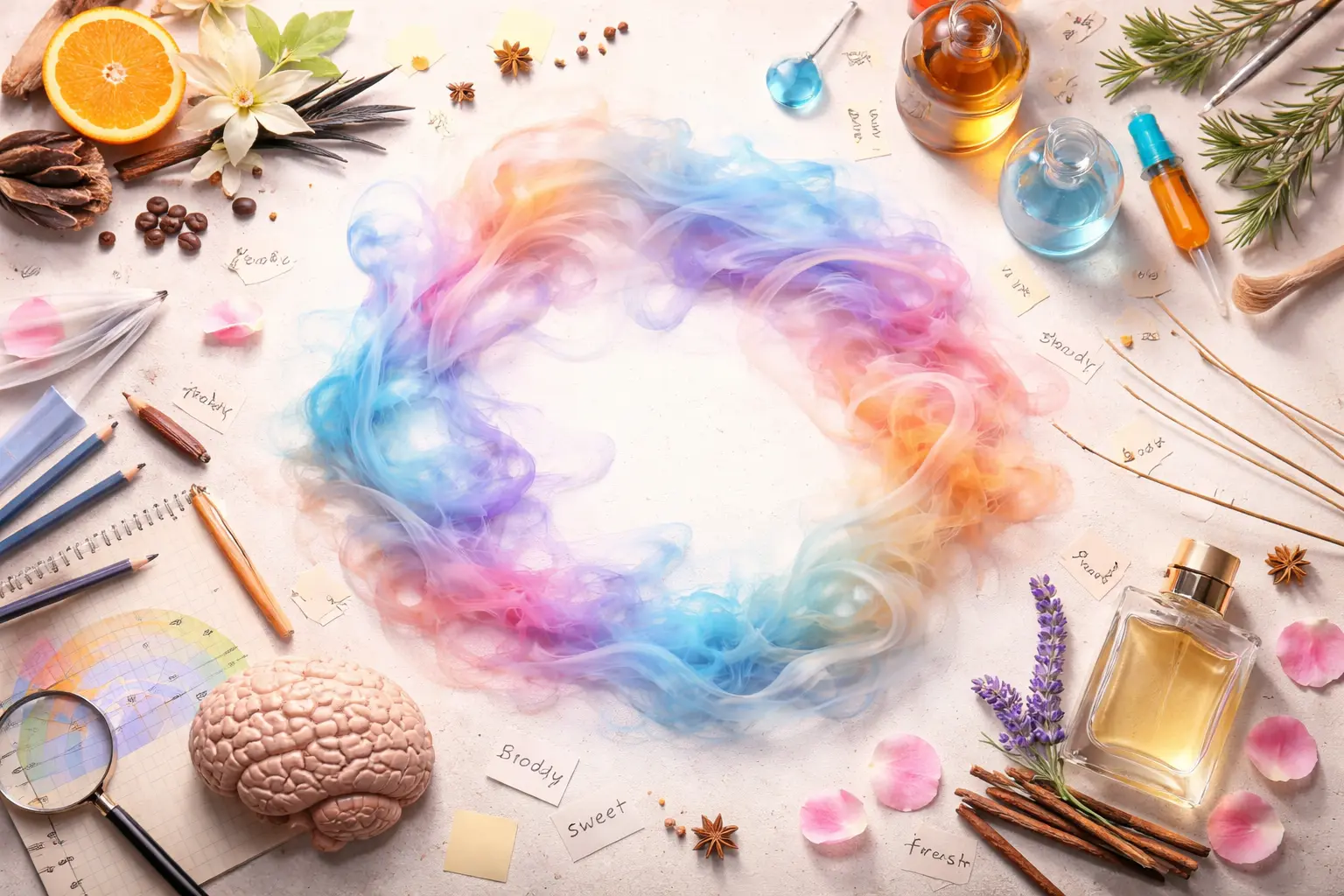
The Hidden Science Behind Why Scents Are So Hard to Describe
👃 Smell Is the Most Powerful Sense—Yet the Hardest to Explain
You’ve probably experienced this before:
You smell something familiar… something emotional… something powerful—
But when you try to describe it, you freeze.
Is it sweet? Warm? Clean?
None of these words feel quite right.
That’s because smell is fundamentally different from other senses.
While we have rich vocabularies for sight and sound, our language for scent is surprisingly limited.
And this isn’t a coincidence—it’s biology.
🧠 The Brain Processes Smell Differently
Unlike vision or hearing, smell is processed in a more primitive part of the brain—closely tied to:
- Memory
- Emotion
- Survival instincts
This is why a scent can instantly trigger a vivid memory…
but leave you struggling to put it into words.
👉 If you want to understand this deeper, check out how brands actually use this emotional shortcut in
🧠 How Brands Use Scent to Shape Consumer Behavior — where scent bypasses logic and directly influences decisions.
🧬 Everyone Smells the World Differently
Here’s where it gets even more interesting:
Two people smelling the exact same perfume might describe it completely differently.
Why?
Because your perception of scent is shaped by:
- Genetics
- Environment
- Lifestyle
- Past experiences
👉 This is explored in depth in 🧬 Epigenetics and Scent, where lifestyle and environment can actually influence how you perceive fragrance over time.
So when you struggle to describe a smell…
it might not just be about language—it might be that your experience is uniquely yours.
🌍 Smell Is Contextual—Not Absolute
A scent doesn’t exist in isolation.
The same fragrance can smell:
- Cozy in winter
- Overwhelming in summer
- Romantic in one place
- Ordinary in another
That’s because scent is deeply tied to context.
👉 This is exactly what makes recreating scents so difficult, as explored in
🌍 Can You Recreate the Smell of a Place? — where memory, environment, and emotion all blend into one “impossible-to-define” experience.
🍰 We Borrow Words From Other Senses
Since we lack a dedicated vocabulary for smell, we often “borrow” words from:
- Taste (sweet, bitter, creamy)
- Touch (warm, soft, sharp)
- Sight (bright, dark, clean)
That’s why people say perfumes smell like:
- Vanilla cake
- Fresh laundry
- Burnt sugar
👉 This crossover is explained beautifully in
🍰 Why Do Some Perfumes Smell Like Food?, where fragrance language leans heavily on familiar sensory references.
In reality, we’re not describing the smell itself—
we’re describing what it reminds us of.
🧴 Your Skin Changes the Story
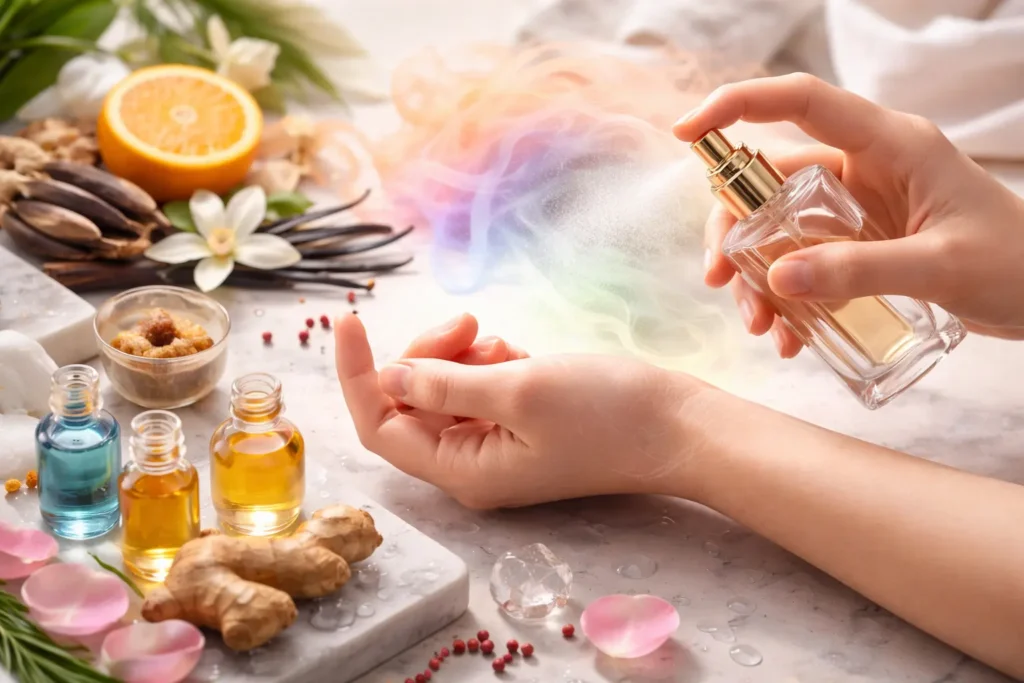
Even if two people agree on a description… it may not last.
Because once perfume touches skin:
- It reacts with body chemistry
- It evolves over time
- It reveals different notes
👉 That’s why the same scent can feel completely different from one person to another, as explained in
🧴 Why Does Perfume Smell Different On Skin?
So when you say:
“this smells woody and smooth”
Someone else might say:
“it smells sharp and spicy”
Both of you are right.
🧠 The Real Reason We Struggle
So why is smell so hard to talk about?
Here’s the truth:
| Reason | What It Means |
|---|---|
| 🧠 Emotional processing | Smell is felt before it’s understood |
| 🧬 Personal perception | Everyone smells differently |
| 🌍 Context dependency | Environment changes everything |
| 🗣️ Limited vocabulary | Language hasn’t evolved for scent |
👉 In short:
Smell is not a precise language—it’s a personal experience.
🛍️ Editor’s Pick: A Fragrance That’s Easy to Describe (And Love)
If you’re new to fragrance or struggle to describe scents, starting with a clear, well-balanced perfume can help train your nose.
💡 Recommended:
Versace Pour Homme
Versace Pour Homme – Fresh Citrus Woody Fragrance for Men

- ✔ Fresh citrus opening with clean masculine vibe
- ✔ Easy to understand scent (great for beginners)
- ✔ Perfect for daily wear and office settings
- ✔ Smooth woody dry-down that feels refined
- Fresh citrus opening 🍋
- Clean, slightly floral heart 🌿
- Smooth woody base 🌲
👉 Why it’s great:
- Easy to recognize notes
- Balanced and non-overwhelming
- Perfect for beginners learning scent language
❓ Frequently Asked Questions
Why is smell harder to describe than taste?
Because taste has a defined set of categories (sweet, sour, salty, bitter), while smell has thousands of variations with no standardized language.
Do people actually smell things differently?
Yes. Genetics, environment, and even lifestyle can change how you perceive scents.
Why do perfumes smell like food?
Because we use familiar references (like vanilla or caramel) to describe complex scent molecules.
Can you train yourself to describe smells better?
Yes. By smelling more fragrances and learning note categories, your brain builds stronger scent associations over time.
Why does the same perfume smell different later?
Because perfumes evolve (dry-down), revealing different layers over time.
🧠 Final Thought
We don’t struggle to talk about smell because we’re bad at describing things…
We struggle because smell was never meant to be explained—only experienced.
Discover more from Perfume Cultures
Subscribe to get the latest posts sent to your email.