Why Humans Can Remember Smells for Years
Smell is one of the most powerful senses humans possess. A single scent can instantly transport someone back to childhood, a special place, or a forgotten moment from years ago.
But why can humans remember smells for years—even decades—while other sensory memories fade more quickly?
The answer lies in the unique connection between the human sense of smell, memory, and emotion inside the brain.
Understanding this fascinating relationship reveals why fragrances, perfumes, and everyday scents often create some of our strongest and longest-lasting memories.
🧠 The Unique Pathway Between Smell and Memory
Unlike sight or hearing, smell follows a direct neurological pathway to the brain’s emotional centers.
When you smell something, odor molecules enter the nose and stimulate receptors in the olfactory epithelium. These signals travel to the olfactory bulb, a brain structure located very close to two key areas:
- The hippocampus – responsible for memory formation
- The amygdala – responsible for emotional processing
Because smell connects so closely with these regions, scents often create deeply emotional and long-lasting memories.
This is why a fragrance can suddenly remind someone of:
- A childhood home
- A loved one’s perfume
- A particular vacation
- A special life event
The brain essentially stores scent memories together with emotions, making them incredibly durable.
🌸 Why Smell Memories Last So Long
Researchers studying olfactory memory have discovered several reasons scent memories persist for years.
1️⃣ Emotional Encoding
Memories connected to strong emotions tend to last longer.
Because smell interacts with the amygdala, scent experiences are often stored with emotional significance. This emotional tagging helps the brain retain them for decades.
For example, the smell of:
- Vanilla cookies may recall childhood holidays
- Ocean air may remind someone of a family trip
- A specific perfume may evoke memories of a past relationship
2️⃣ The Brain Processes Smell Differently
Most senses pass through the thalamus, the brain’s sensory relay station.
Smell is unique because it bypasses this step and travels directly to emotional and memory centers.
This shortcut strengthens the connection between scent and long-term memory.
3️⃣ Rare but Powerful Exposure
People encounter visual and auditory information constantly, which can cause many memories to blur together.
Smells, however, are encountered less frequently but remembered more vividly.
Because of this rarity, when a scent appears again years later, the brain recognizes it immediately.
🧬 The “Proust Effect”: When Smells Trigger Memories
Scientists sometimes refer to scent-evoked memories as the “Proust Effect.”
The term comes from the French writer Marcel Proust, who famously described how the smell of a small cake dipped in tea instantly brought back vivid childhood memories.
Today, neuroscience research confirms this phenomenon: smells trigger more emotional and detailed memories than other sensory cues.
These memories often feel:
- More vivid
- More emotional
- Older than memories triggered by sight or sound
🌿 Why Perfumes Often Become Memory Anchors
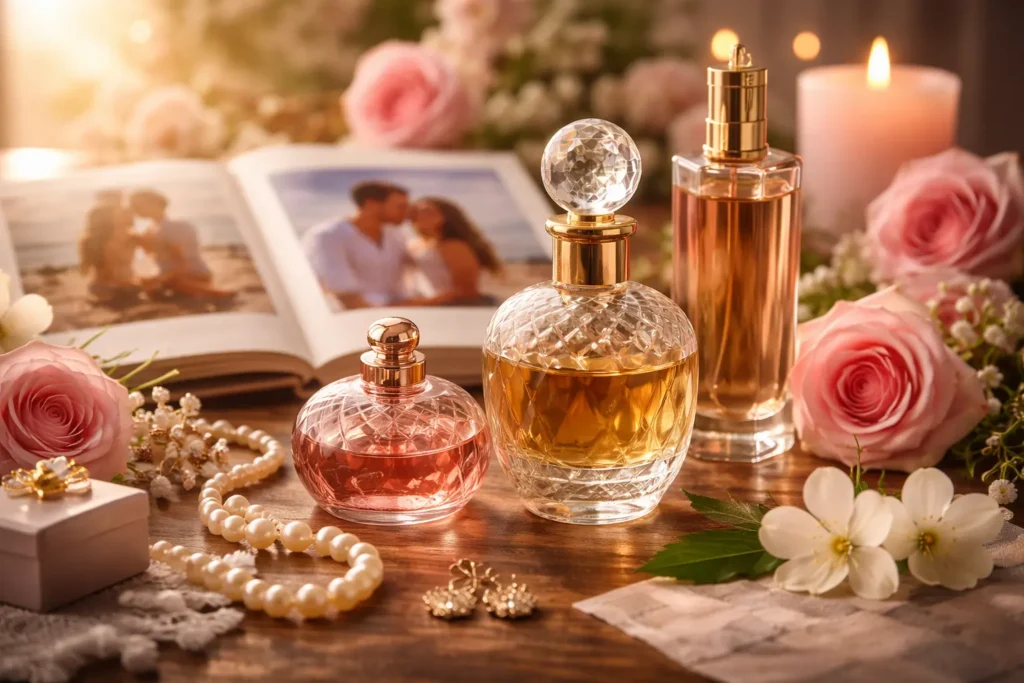
Perfumes are especially powerful memory triggers because they are designed to be distinctive and complex.
A fragrance may contain dozens of aromatic ingredients, creating a scent profile the brain easily recognizes.
That is why many people associate perfumes with specific moments in life such as:
- Weddings
- First dates
- Important celebrations
- Travel experiences
When the brain encounters that fragrance again years later, it quickly reconstructs the entire memory.
🔗 How Smell Memories Form in the First Place
Scent memories form through a simple but powerful process:
- A smell enters the nose
- Olfactory receptors detect scent molecules
- Signals travel to the olfactory bulb
- The brain links the smell with emotions and context
- The memory is stored long-term
Once stored, the scent becomes a memory trigger that can last for decades.
🔎 The Science of Why Scents Trigger Memories
If you want to explore the deeper science behind how scents activate memories and emotions in the brain, you might also enjoy reading:
👉 Why Scents Trigger Memories: The Powerful Link Between Smell and the Brain
This article explains the fascinating neurological connection between olfaction, memory formation, and emotional responses to fragrance.
❓ Frequently Asked Questions About Smell Memory
Why can humans remember smells better than other senses?
Smell connects directly to the brain’s memory and emotional centers, particularly the hippocampus and amygdala. This close connection strengthens scent-based memories and helps them last longer.
Can a smell bring back forgotten memories?
Yes. Smells can reactivate memories that have not been consciously recalled for years. Because scent memories are deeply stored, encountering the same smell again can instantly retrieve them.
Why do perfumes remind people of specific individuals?
Perfumes are often associated with a person through repeated exposure. The brain links the scent with emotional experiences involving that individual, making the fragrance a powerful reminder.
Do smell memories fade over time?
They can weaken slightly, but scent memories are known to last much longer than visual or auditory memories, sometimes remaining recognizable for decades.
Can perfumes intentionally create memories?
Yes. Many people intentionally wear certain fragrances during special events so that the scent later becomes associated with that moment.
🌍 Why Smell Is the Most Timeless Human Memory Trigger
Among all human senses, smell has one of the strongest and longest-lasting connections to memory.
Because of the brain’s unique olfactory pathways, even a brief scent experience can become a memory that lasts for years—or even a lifetime.
This is why fragrances hold such a special place in human culture. A simple scent can preserve emotions, places, and moments in ways that few other experiences can.
💬 Interactive Question for Readers
Have you ever smelled a fragrance that instantly brought back a memory from many years ago?
Share your experience in the comments—we’d love to hear your story.
Discover more from Perfume Cultures
Subscribe to get the latest posts sent to your email.