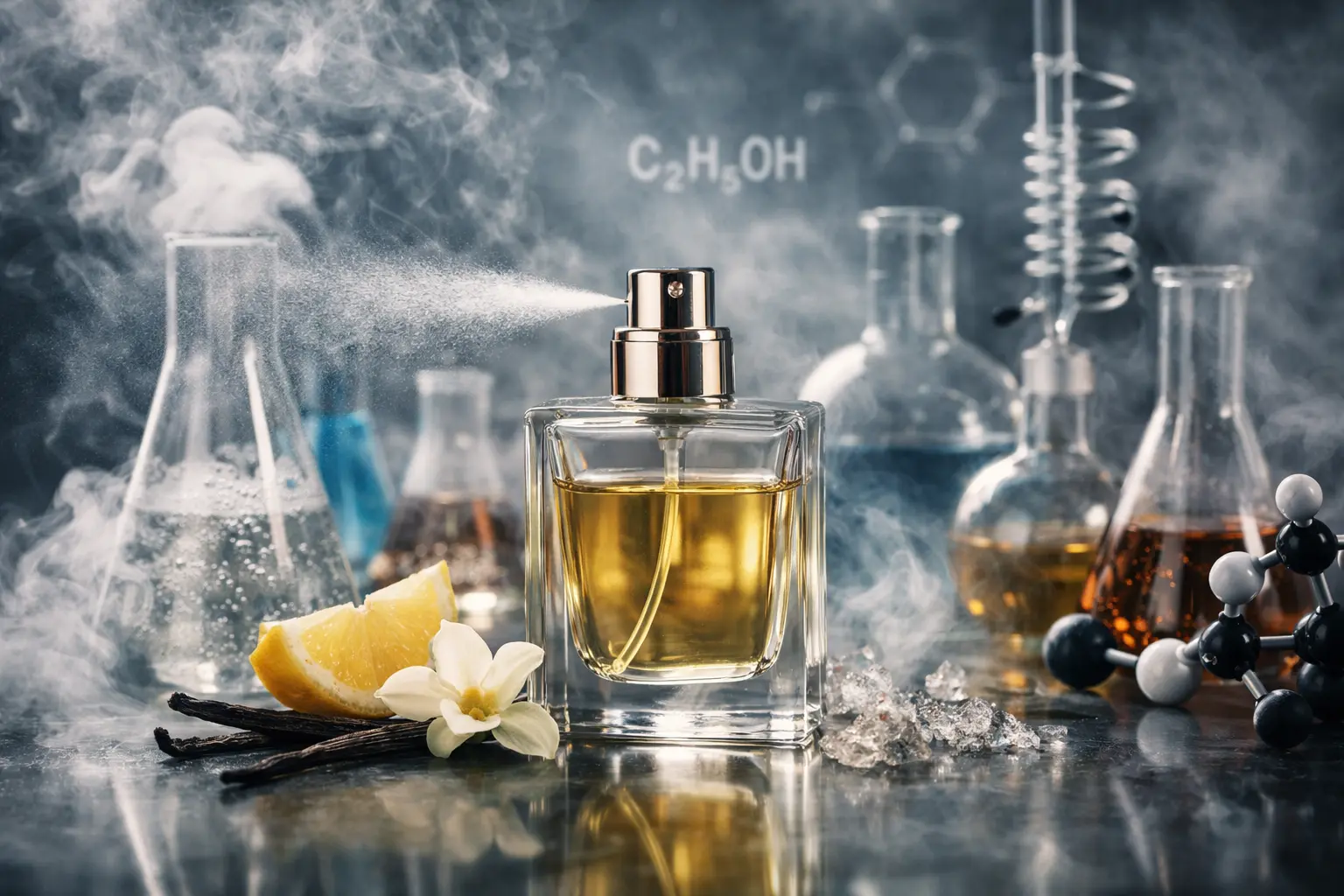
🧪 Why Does Perfume Sometimes Smell Chemical?
Many people have experienced this moment: you spray a new fragrance expecting a beautiful scent, but instead it briefly smells sharp, synthetic, or chemical-like.
This reaction can be confusing, especially when the perfume is expensive or well-reviewed. So why does perfume sometimes smell chemical?
The answer lies in fragrance chemistry, evaporation, ingredient structure, and even your own skin chemistry. Understanding these factors helps explain why certain perfumes smell amazing on one person but slightly chemical on another.
🌡️ The First Spray: Alcohol Evaporation
Most modern perfumes are composed of:
- fragrance oils
- aromatic molecules
- perfume alcohol
When you first spray perfume, alcohol evaporates very quickly. During the first few seconds, the alcohol and volatile molecules can create a sharp or chemical-like smell.
This stage usually disappears within 10–30 seconds as the alcohol evaporates and the true fragrance begins to develop.
This is why many fragrance experts recommend waiting a few moments before judging a perfume.
🧬 Synthetic Aroma Molecules
Another common reason perfume may smell chemical is the presence of synthetic aroma molecules.
Modern perfumery uses both natural ingredients and lab-created molecules. These synthetic ingredients help perfumers:
- increase longevity
- stabilize fragrances
- create scents that natural materials cannot produce
- reduce costs and environmental impact
Some famous aroma molecules include:
- Iso E Super
- Ambroxan
- Aldehydes
- Calone
When smelled alone or in high concentration, these molecules can sometimes give a slightly metallic, sharp, or chemical impression.
However, when blended correctly, they produce some of the most beloved fragrances in the world.
🧴 Skin Chemistry Differences
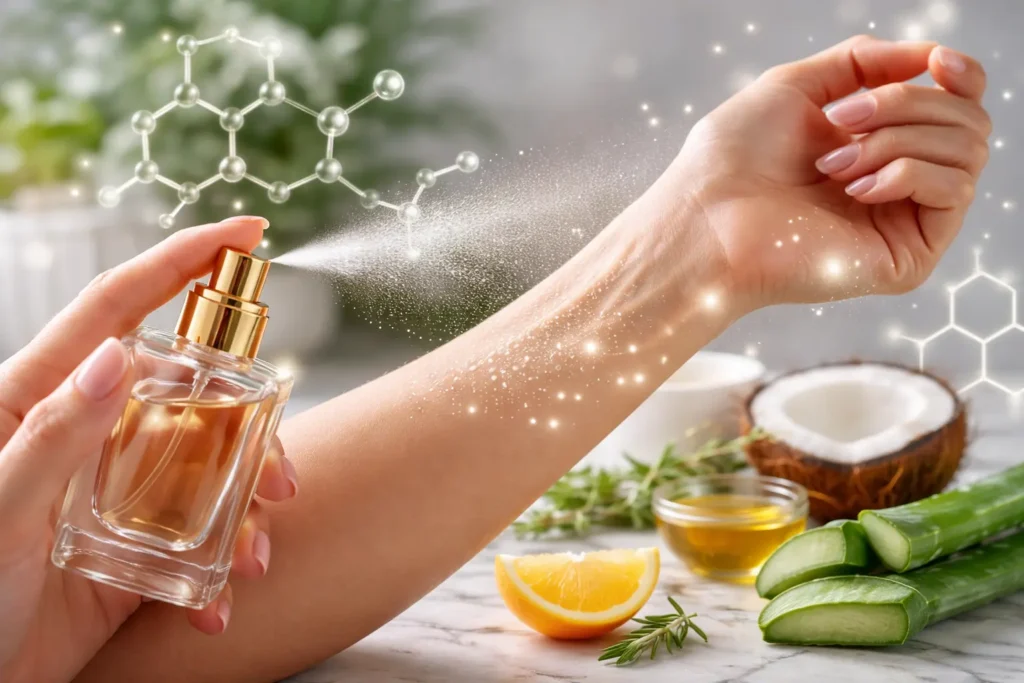
Your skin chemistry plays a huge role in how perfume smells.
Factors that influence scent perception include:
- skin pH level
- natural skin oils
- hydration level
- body temperature
On dry skin, perfume may evaporate faster, leaving behind certain aroma molecules that can smell synthetic or sharp.
On well-hydrated skin, the same perfume may smell smooth, balanced, and warm.
This is one reason why fragrance lovers often say:
“Perfume smells different on everyone.”
🌬️ Olfactory Fatigue and Nose Perception
Your brain processes smells through a complex sensory system. Sometimes the nose temporarily focuses on certain molecules more than others.
This can create the illusion that a fragrance smells chemical or artificial, even when the full composition is balanced.
Over time, your brain begins to interpret the scent more accurately as the fragrance develops.
🧪 Fragrance Development: Top, Heart, and Base Notes
Perfumes evolve in stages called fragrance notes.
| Stage | What Happens | How It May Smell |
|---|---|---|
| Top Notes | First molecules evaporate | Sometimes sharp or chemical |
| Heart Notes | Core scent emerges | Balanced fragrance |
| Base Notes | Heavy molecules remain | Warm, smooth scent |
Because top notes evaporate quickly, they sometimes create the temporary chemical impression people notice.
After a few minutes, the heart notes reveal the true personality of the fragrance.
🧭 Want to Understand the Science Behind Perfume?
If you’re curious about the deeper chemistry behind fragrances and how scent molecules interact with your nose and brain, you might also enjoy reading our detailed guide:
👉 🧪 How Perfume Works: The Science Behind Fragrance, Molecules, and Human Smell
This article explains how fragrance molecules travel through the air, interact with olfactory receptors, and create the scents we experience as perfume.
🌍 Environmental Factors Can Change How Perfume Smells
External conditions can also influence fragrance perception.
Some common factors include:
- heat – increases evaporation speed
- humidity – affects diffusion of scent molecules
- air circulation – changes how fragrance travels
For example, a perfume may smell slightly chemical indoors, but much smoother and more natural in fresh outdoor air.
🧴 Low Quality or Oxidized Perfume
Occasionally, a perfume may smell chemical because it has:
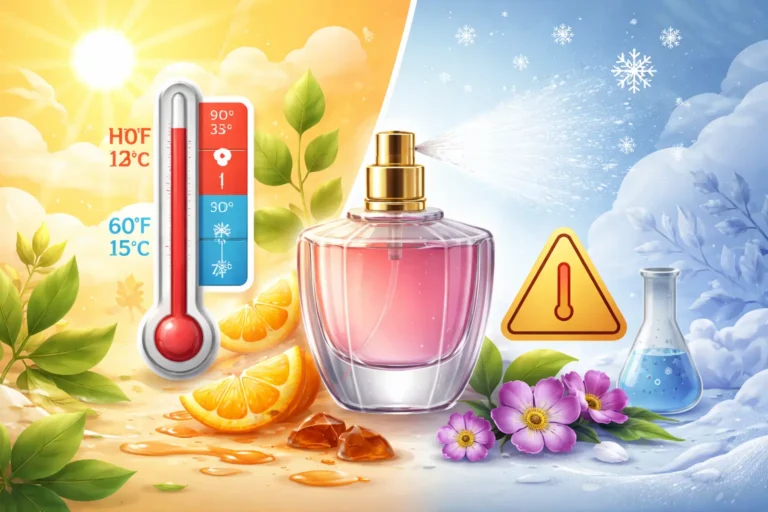
- been exposed to heat or sunlight
- oxidized over time
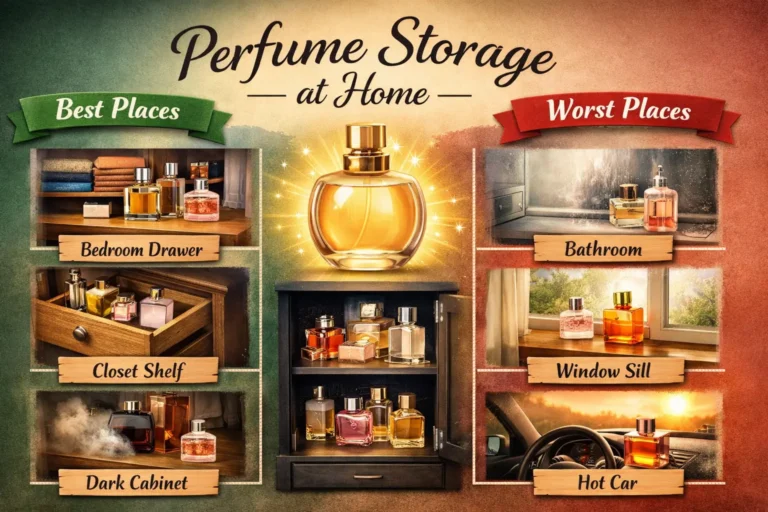
- been stored improperly
When perfume ingredients degrade, the fragrance balance changes and certain molecules become more noticeable.
This can create a harsh or synthetic smell.
❓ Frequently Asked Questions
Why does perfume smell chemical at first?
Perfume often smells chemical immediately after spraying because alcohol and volatile top notes evaporate quickly. Once the alcohol dissipates, the true fragrance usually becomes smoother and more balanced.
Do synthetic ingredients make perfume smell artificial?
Not necessarily. Many synthetic molecules are essential in modern perfumery and help create stable, long-lasting scents. A chemical smell usually occurs only when certain molecules dominate during the opening stage.
Why does perfume smell different on my skin?
Skin chemistry, hydration level, natural oils, and body temperature all affect how fragrance molecules evaporate. This can cause the same perfume to smell different on different people.
Can old perfume smell chemical?
Yes. Perfume that has been exposed to heat, air, or sunlight may oxidize. This chemical change can alter the scent and produce sharp or unpleasant notes.
How can I avoid chemical-smelling perfume?
Allow the perfume to settle for 30–60 seconds after spraying. Testing fragrance on moisturized skin and evaluating the scent after a few minutes usually gives a more accurate impression.
✨ Final Thoughts
If your perfume sometimes smells chemical, it usually isn’t a problem with the fragrance itself. Most of the time, the effect is caused by alcohol evaporation, synthetic aroma molecules, or natural skin chemistry.
Once the fragrance settles and the heart and base notes emerge, the perfume often reveals the smooth and complex scent that perfumers intended.
The fascinating science behind how perfume molecules travel through the air and interact with our senses is part of what makes fragrance such a unique experience.
💬 Have you ever tried a perfume that smelled chemical at first but later turned into a beautiful scent? Share your experience in the comments!
Discover more from Perfume Cultures
Subscribe to get the latest posts sent to your email.