
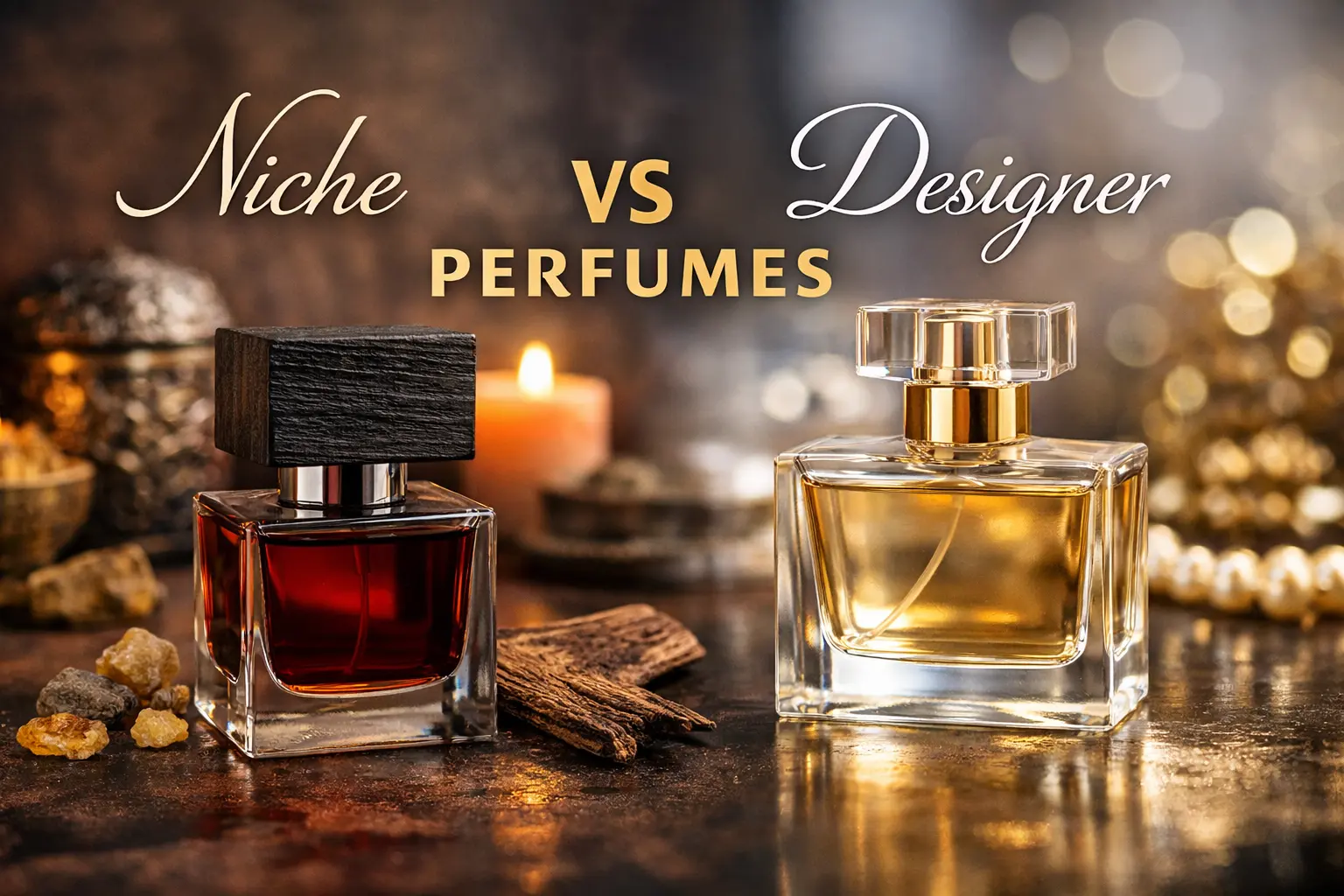
🧴 What Is the Difference Between Niche and Designer Perfumes?
The world of fragrance can be surprisingly complex. Walk into a department store or browse online perfume shops, and you will quickly notice two terms that appear again and again: designer perfumes and niche perfumes.
Many fragrance beginners ask the same question: What is the difference between niche and designer perfumes? Are niche fragrances really better? Are designer perfumes less sophisticated? And why do niche scents often cost more?
Understanding the distinction between these two categories helps fragrance lovers make smarter choices when buying a new scent. In this guide, we’ll explore the key differences between niche and designer perfumes, how they are created, and which type might be right for you.
🌟 What Are Designer Perfumes?
Designer perfumes are fragrances created by well-known fashion brands. These brands are usually famous for clothing, accessories, and luxury lifestyle products.
Examples include fragrances released by brands such as Chanel, Dior, Prada, and Gucci.
The main goal of designer perfumes is to appeal to a wide audience. Because of this, these fragrances are typically designed to be:
- Easy to like
- Balanced and versatile
- Suitable for everyday wear
- Commercially successful
Designer fragrances often undergo extensive market research before being released. Brands want to ensure that the scent will appeal to millions of consumers across different cultures and preferences.
That is why many designer perfumes follow familiar scent profiles like:
- Fresh citrus
- Clean florals
- Sweet vanilla
- Soft woody notes
These compositions are intentionally safe and crowd-pleasing.
Another characteristic of designer perfumes is large-scale distribution. You can usually find them in:
- Department stores
- Duty-free shops
- Major online retailers
This accessibility makes designer perfumes the most common type of fragrance in the global market.
🧪 What Are Niche Perfumes?
Niche perfumes, sometimes called artisanal or niche fragrances, are created by brands that focus almost entirely on perfumery rather than fashion.
Unlike designer brands, niche houses are typically built around the idea of creative freedom in fragrance creation.
Examples of well-known niche perfume houses include:
- Nasomatto
- Byredo
- Amouage
- Parfums de Marly
- Maison Francis Kurkdjian
The goal of niche perfumery is not necessarily to create a fragrance that everyone will like. Instead, niche perfumers often aim to create unique scent experiences that stand out from mainstream perfumes.
Niche fragrances are often characterized by:
- More unusual ingredients
- Bolder scent profiles
- Artistic storytelling
- Smaller production batches
Some niche perfumes explore scent themes that designer brands rarely attempt, such as:
- Dark incense and resins
- Smoky woods
- Animalic notes
- Experimental gourmand accords
Because of this creativity, niche perfumes are often favored by fragrance enthusiasts and collectors who want something different from what everyone else is wearing.
📊 Key Differences Between Niche and Designer Perfumes
Understanding the difference becomes easier when comparing the two categories side by side.
| Feature | Designer Perfumes | Niche Perfumes |
|---|---|---|
| Brand Focus | Fashion and lifestyle brands | Perfume-focused houses |
| Target Audience | Mass market | Fragrance enthusiasts |
| Availability | Widely available | Limited distribution |
| Creativity | Safer scent profiles | More experimental |
| Production Scale | Large-scale production | Smaller batches |
| Price Range | Moderate to high | Often higher |
This comparison shows that the difference is not necessarily about quality, but rather about philosophy and approach to fragrance creation.
🎨 Creative Freedom vs Mass Appeal
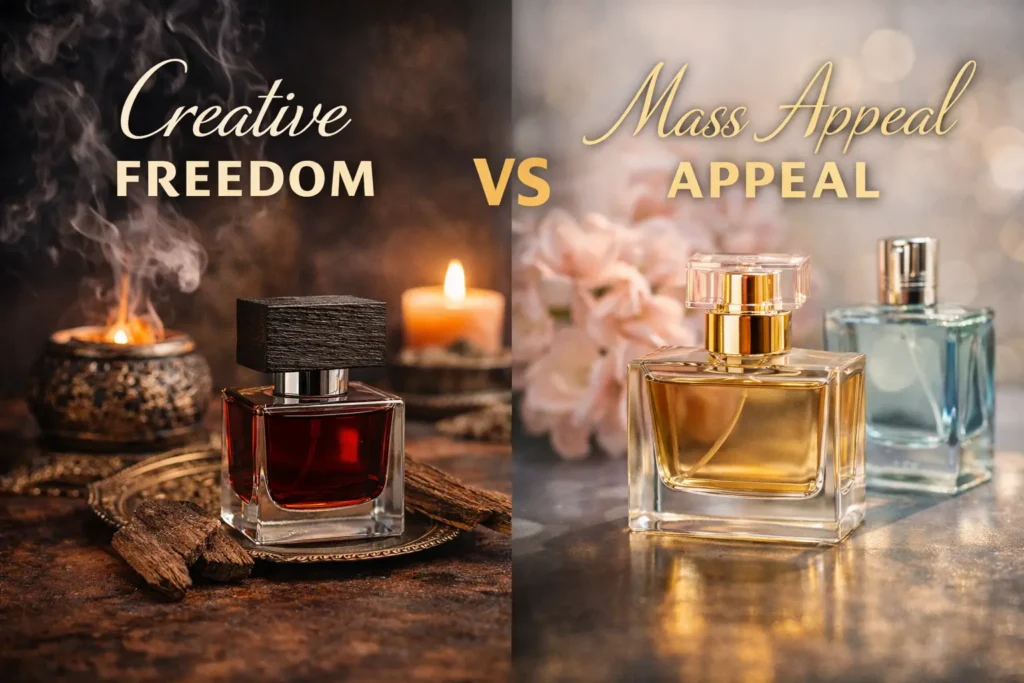
One of the biggest distinctions between niche and designer perfumes is creative freedom.
Designer perfume creators often work within commercial guidelines. The fragrance must appeal to a large number of people and perform well in stores.
Niche perfumers, on the other hand, often have more artistic freedom. They can explore unusual scent combinations or push boundaries that mainstream brands might avoid.
This difference can lead to fragrances that feel more distinctive and memorable.
For example, some niche perfumes emphasize smoky oud, leather, or resinous notes that might be considered too intense for the average department-store customer.
💰 Why Are Niche Perfumes Often More Expensive?
Another question frequently asked by fragrance shoppers is why niche perfumes often carry a higher price tag.
Several factors contribute to this difference:
Smaller Production
Niche houses typically produce perfumes in smaller quantities, which increases manufacturing costs.
Rare Ingredients
Some niche fragrances use higher concentrations of natural ingredients, rare resins, or exotic woods.
Artistic Branding
Many niche brands position themselves as luxury artistic creations, which also affects pricing.
If you are curious about this topic, you may also enjoy reading:
👉 🧴 Why Niche Perfumes Are So Expensive?
That article explores the hidden factors behind niche fragrance pricing and explains why some bottles cost several hundred dollars.
👃 Which One Should You Choose?
There is no universal answer to whether niche perfumes are better than designer perfumes. The best choice depends on your personal preferences.
Designer perfumes may be ideal if you want:
- A versatile everyday fragrance
- Something widely appreciated
- A scent suitable for work or social settings
- Easier availability and lower prices
Niche perfumes may appeal more if you want:
- A unique fragrance identity
- More unusual scent compositions
- A perfume that stands out from the crowd
- A collectible fragrance experience
Many fragrance enthusiasts actually enjoy both categories. They may wear a designer fragrance for daily use while saving niche perfumes for special occasions.
🌍 The Evolution of the Modern Fragrance Market
Over the past two decades, the fragrance industry has changed significantly.
The rise of online communities, perfume review websites, and social media has helped introduce many consumers to niche perfumery.
Fragrance lovers today are increasingly interested in:
- Unique scent compositions
- Perfume craftsmanship
- The story behind each fragrance
As a result, niche houses have gained popularity among collectors and enthusiasts worldwide.
At the same time, designer brands continue to dominate the global fragrance market because of their recognizable names and broad appeal.
Both categories now coexist, offering consumers a wider variety of fragrance experiences than ever before.
❓ Frequently Asked Questions About Niche vs Designer Perfumes
Are niche perfumes better than designer perfumes?
Not necessarily. Niche perfumes often focus on uniqueness and creativity, while designer perfumes prioritize mass appeal and versatility. Both can be high quality.
Why do niche perfumes smell stronger?
Many niche fragrances use higher perfume oil concentrations or more intense ingredients, which can lead to stronger projection and longevity.
Are designer perfumes lower quality?
No. Many designer perfumes are created by some of the world’s best perfumers and use high-quality ingredients. The difference lies mainly in creative direction and marketing strategy.
Are niche perfumes worth the price?
For fragrance enthusiasts who value originality and craftsmanship, niche perfumes can absolutely be worth the investment.
✨ Final Thoughts
Understanding the difference between niche and designer perfumes helps fragrance lovers navigate the enormous variety of scents available today.
Designer perfumes focus on accessibility, familiarity, and mass appeal, while niche perfumes emphasize artistry, uniqueness, and experimentation.
Both categories have their strengths, and exploring each can lead to discovering fragrances that perfectly match your personality and lifestyle.
Do you prefer niche perfumes or designer fragrances—and what was the scent that made you fall in love with them?
Discover more from Perfume Cultures
Subscribe to get the latest posts sent to your email.