Creed Aventus Reformulation Explained: What Really Changed?
Creed Aventus reformulation is one of the most debated subjects in modern perfumery.
Some longtime wearers believe older bottles were smokier, richer, stronger, and more complex. Others argue that modern Aventus has not been ruined at all—it has simply become smoother, cleaner, and more controlled. Many apparent differences may also come from batch variation, bottle aging, storage conditions, skin chemistry, weather, or the difficulty of comparing a fresh bottle with a fragrance remembered from years ago.
So, has Creed Aventus really been reformulated?
The most accurate answer is that Aventus appears to have evolved during its commercial life, but not every difference between two bottles proves that a major formula change occurred. Reformulation, batch variation, ingredient availability, maturation, storage, and individual perception can all affect how Aventus smells and performs.
That is why the debate cannot be reduced to “old Aventus was powerful” and “new Aventus is weak.”
To understand what may genuinely have changed, we need to separate documented formula evolution from community assumptions, compare older and modern bottles fairly, and examine whether current Aventus still delivers the fruity, smoky, woody character that created its reputation.
For a wider overview of the fragrance, its collection, clones, comparisons, batches, and alternatives, explore Creed Aventus: The Complete Guide to the Iconic Fragrance, Collection, Clones, Batches, and Alternatives.
⚡ Creed Aventus Reformulation: Quick Answer
Creed Aventus appears to have undergone formula adjustments during its commercial life, but not every difference between bottles is evidence of reformulation. Ingredient regulations, raw-material availability, manufacturing consistency, batch variation, bottle aging, storage, and individual perception can all change how Aventus smells and performs. Modern Aventus is generally experienced as smoother, cleaner, and more controlled, while certain older bottles are remembered as smokier, denser, and more forceful.
The most accurate conclusion is not that every old bottle is powerful or every new bottle is weak.
It is that Aventus has evolved, while several other variables have made that evolution much harder to measure objectively.
📊 Creed Aventus Reformulation at a Glance
| Question | Most Balanced Answer |
|---|---|
| Has Creed Aventus been reformulated? | Its formula appears to have evolved over time, as commonly happens with long-running fragrances |
| Does every batch smell the same? | No, noticeable differences can exist between production batches |
| Are batch variation and reformulation identical? | No, they are related but fundamentally different concepts |
| Was old Aventus always smokier? | Some older bottles are described that way, but the description does not apply universally |
| Is modern Aventus weaker? | It can feel more controlled, but performance varies by bottle, skin, climate, application, and perception |
| Did reformulation destroy Aventus? | That claim is too absolute and ignores the quality, versatility, and appeal modern Aventus can still offer |
| Should you buy an old bottle? | Only if you understand the price, authenticity, storage, and performance risks |
| What is the safest buying approach? | Test a recent authentic sample and judge the fragrance currently available |
🧪 What Does Reformulation Mean in Perfumery?
A reformulation occurs when a fragrance formula is adjusted after its original release.
The change can be large enough to alter the recognizable personality of a fragrance, but it can also be subtle. A company may replace one material, reduce another, change a supplier, adjust concentrations, or rebalance the composition while trying to preserve the same overall identity.
A reformulation does not necessarily mean that a brand deliberately decided to make a fragrance cheaper or weaker.
Fragrances may be adjusted because:
- Certain materials become restricted.
- A raw material becomes difficult or expensive to obtain.
- A supplier changes the characteristics of an ingredient.
- Natural materials vary from one harvest to another.
- The brand wants greater consistency across production.
- Safety or regulatory requirements change.
- Manufacturing processes evolve.
- The company wants the fragrance to meet modern market expectations.
This distinction matters because online discussions often treat reformulation as evidence that a fragrance has been “ruined.” In reality, formula adjustment is a normal part of keeping many fragrances commercially available for years or decades.
The more useful question is not simply whether Aventus changed.
It is:
How much did it change, what caused the perceived differences, and does the modern fragrance still deliver the qualities that made Aventus desirable?
🔍 Has Creed Aventus Actually Been Reformulated?
The safest answer is that Aventus has evolved over time, but identifying every specific formula change from the smell of individual bottles is extremely difficult.
Consumers normally do not have access to Creed’s complete internal formulas, exact ingredient percentages, supplier records, or detailed manufacturing decisions. Most reformulation discussions therefore rely on a mixture of:
- Packaging and label changes.
- Ingredient-list differences.
- Regulatory developments.
- Batch comparisons.
- Personal wearing experiences.
- Collector observations.
- Community reports.
- Memories of older bottles.
These sources can provide useful clues, but they do not all carry the same weight.
An updated ingredient list may suggest that something changed, but it does not reveal the full formula or explain how much the scent changed. A side-by-side comparison may reveal obvious differences, but those differences could also be influenced by aging, storage, oxidation, batch variation, or unequal application.
A detailed Creed Aventus Review should therefore evaluate the fragrance that buyers can obtain now rather than judging modern Aventus exclusively against the mythology surrounding selected older batches.
Modern Aventus deserves to be assessed as a real fragrance, not merely as an imperfect reproduction of someone’s memory.
🧩 Reformulation vs Batch Variation: What Is the Difference?
This is the most important distinction in the entire Aventus debate.
Reformulation
Reformulation means the underlying formula or production specification has been intentionally adjusted.
It may affect multiple batches produced after the change and could influence:
- Ingredient balance.
- Texture.
- Sweetness.
- Smoke.
- freshness.
- Dry-down.
- Longevity.
- Projection.
- Overall smoothness.
Batch variation
Batch variation means different production runs of the nominally same formula do not smell completely identical.
This can happen because of:
- Variation in natural materials.
- Raw-material sourcing.
- Manufacturing tolerances.
- Maceration or resting time.
- Storage before and after sale.
- Age of the bottle.
- Temperature exposure.
- Minor production inconsistencies.
Reformulation can create a broad change across an era of production.
Batch variation creates differences between individual runs, even when they belong to the same general formula period.
That is why smelling two different Aventus bottles is not enough to prove reformulation. A deeper explanation of these production differences can be found in Creed Aventus Batches Explained.
🏭 Why Would Creed Change the Aventus Formula?
Formula changes can reflect regulations, ingredient availability, consistency, and refinement.Aventus is a globally distributed luxury fragrance. Producing a fragrance at that scale while maintaining safety, legal compliance, ingredient availability, profitability, and a recognizable scent profile is more difficult than blending a single laboratory sample.
Several forces may lead to formula evolution.
1. Ingredient regulations
Fragrance houses must adapt to changing safety standards and regional requirements. When the permitted use of a material changes, perfumers may need to reduce it, replace it, or rebuild the effect through other ingredients.
The replacement does not always smell identical.
Even when the overall structure remains recognizable, a substitute may affect diffusion, texture, brightness, dryness, smoke, or longevity.
2. Raw-material availability
Natural ingredients are not manufactured with perfect uniformity.
Climate, harvest quality, geographic sourcing, processing, supplier changes, and global availability may affect how a material smells or how much it costs.
A luxury brand may still use high-quality materials while adjusting the formula to maintain consistency and production volume.
3. Manufacturing consistency
Aventus became significantly more popular than many fragrances ever become.
Greater production creates pressure to make each bottle recognizable as Aventus, even when raw materials naturally fluctuate. A smoother and more standardized result may be easier to maintain across international distribution than a highly variable composition.
4. Commercial evolution
Consumer preferences change.
A fragrance that felt modern at its launch may eventually be adjusted to remain wearable, appealing, and commercially relevant. This does not necessarily mean making it weaker. It can mean making the opening smoother, reducing harshness, controlling smoke, or creating a cleaner dry-down.
5. Cost and scalability
Cost can influence virtually every mass-produced luxury item, including fragrance. However, it would be simplistic to assume that every formula change exists only to reduce costs.
Compliance, consistency, availability, scalability, and quality control can be equally important.
🍍 What Is Believed to Have Changed in Aventus?
The reformulation debate usually focuses on four parts of the fragrance:
- The fruity opening.
- The smoky or birch-like character.
- The mossy and woody foundation.
- The strength of the scent in the air.
Older Aventus bottles are often described as having:
- A sharper or more vivid pineapple-style opening.
- Greater contrast between fruit and smoke.
- A darker birch-like character.
- More density in the dry-down.
- Stronger projection.
- Greater perceived complexity.
Modern Aventus is often described as:
- Smoother.
- Cleaner.
- More polished.
- Less harsh.
- More controlled.
- Easier to wear.
- Less aggressively smoky.
- More consistent in its luxury presentation.
These are broad patterns reported by enthusiasts, not rules that apply to every bottle.
Some older bottles are bright, fruity, and relatively clean. Some modern bottles can still feel smoky, rich, and impressively persistent. The production year alone cannot predict the exact experience with complete reliability.
🆚 Old Creed Aventus vs Modern Aventus
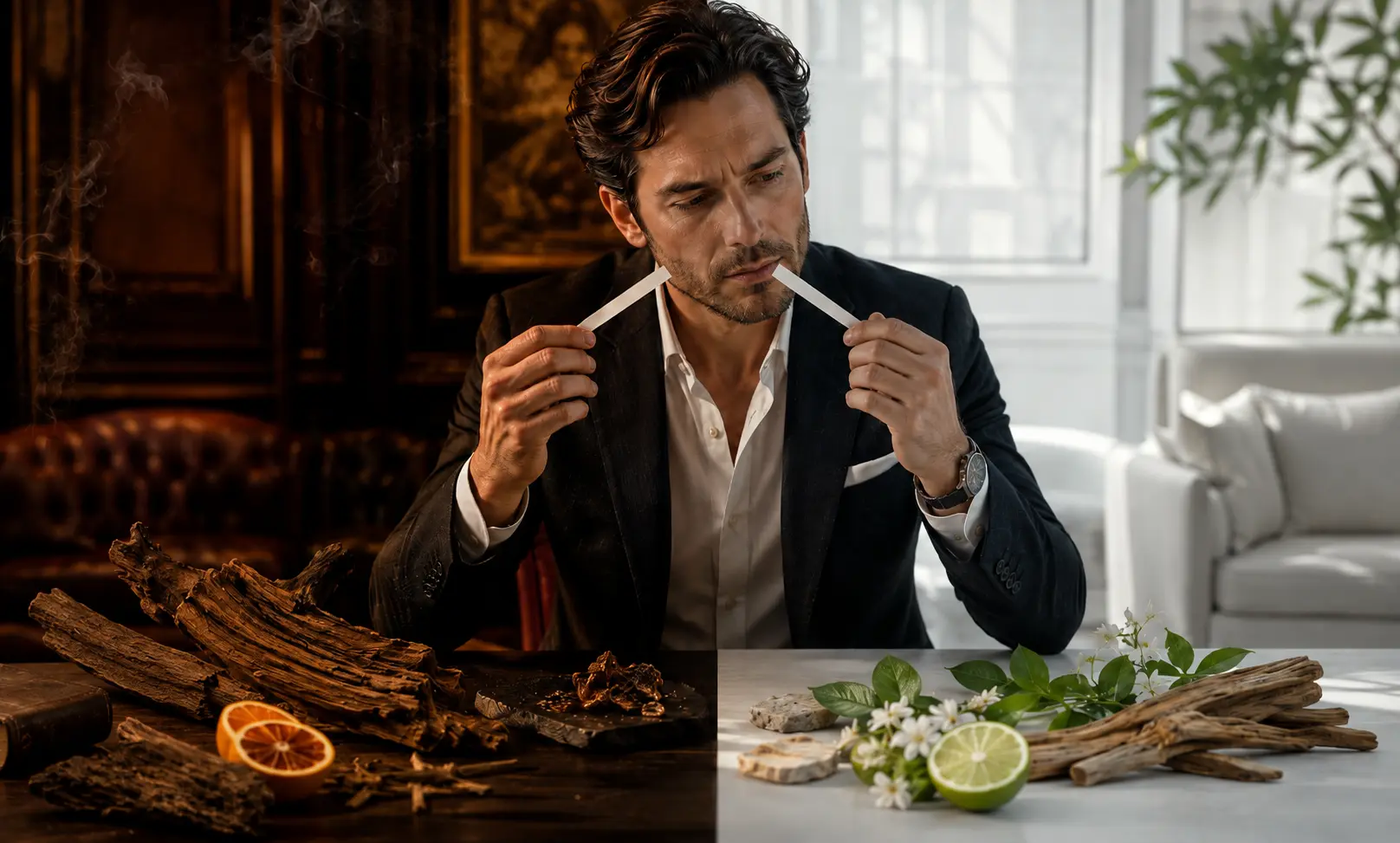
| Characteristic | Older Aventus Often Described As | Modern Aventus Often Described As | Important Qualification |
|---|---|---|---|
| Opening | Sharper, fruitier, more pineapple-like | Smoother, cleaner, more blended | Opening differences can also result from age and oxidation |
| Smoke | Darker and more noticeable | Softer and more controlled | Smokiness has always varied between batches |
| Woods | Drier and denser | Cleaner and more polished | Storage can change the balance of the base |
| Projection | Stronger and more forceful | Moderate and controlled | Application and climate strongly affect projection |
| Longevity | Frequently described as longer | Commonly described as moderate to good | Older bottles are not automatically stronger |
| Texture | Rougher but more dramatic | Smoother and more refined | Preference depends on the wearer |
| Versatility | Bold and characterful | Easier for work and daily wear | Modern smoothness can be an advantage |
| Consistency | Highly batch-dependent | Still variable, but often more standardized | No production era is perfectly uniform |
For a direct examination of how the fragrance’s personality and performance may differ across production periods, read Old Creed Aventus vs New Creed Aventus.
🕰️ How Bottle Aging Changes Aventus
Bottle aging is one of the most overlooked variables in old-versus-new comparisons.
An older bottle has had years to rest, develop, evaporate slightly, oxidize, and interact with its storage environment. A recently opened bottle has not experienced the same conditions.
Over time, a fragrance may appear:
- Darker.
- Smoother.
- Denser.
- Less bright at the opening.
- Richer in the base.
- More blended.
- Different in projection.
This does not mean every fragrance improves with age.
Excessive heat, sunlight, poor sealing, repeated temperature changes, or improper storage can damage a fragrance. Top notes may weaken, the balance may shift, and the scent can lose freshness.
Therefore, comparing a ten-year-old bottle with a newly manufactured bottle is not a pure formula comparison.
You are comparing:
- Two production periods.
- Two ingredient histories.
- Two storage histories.
- Two oxidation levels.
- Two bottle ages.
The formula may be different, but it is not the only difference.
🌡️ Storage Can Make Two Identical Batches Smell Different
Suppose two bottles came from the same batch.
One was stored in a cool, dark cabinet. The other spent months in a hot warehouse, near a sunny window, or inside a vehicle exposed to temperature extremes.
Those bottles may not smell or perform identically despite sharing the same batch code.
Heat and light can accelerate degradation. Frequent temperature changes may also affect delicate materials. Poor storage can flatten the opening, distort the balance, or reduce the freshness that makes Aventus feel vibrant.
This is especially important when buying old bottles from private sellers.
A rare batch code does not guarantee a superior fragrance. The authenticity, fill level, seal, storage history, and condition of the liquid matter more than the code alone.
👃 Memory Is Not a Reliable Laboratory Instrument
Fragrance memory is emotionally powerful but technically imperfect.
A person may remember an older bottle as stronger because:
- It was their first experience with Aventus.
- The scent felt more original at the time.
- They wore it during a memorable period.
- They were less familiar with the Aventus DNA.
- Their expectations were different.
- Their sense of smell has changed.
- They applied more sprays.
- The weather was cooler.
- They smelled it on another person.
- They had not yet experienced olfactory fatigue.
Novelty can make a fragrance feel louder and more impressive.
After years of wearing Aventus-style fragrances and clones, the same DNA may no longer feel as surprising. That change can occur in the wearer even when the fragrance remains similar.
This does not mean all reformulation reports are imaginary.
It means memory alone cannot identify their cause.
💨 Did Reformulation Make Creed Aventus Weaker?
This is the most commercially important question—and one of the hardest to answer fairly.
Some wearers believe modern Aventus projects less and becomes a skin scent more quickly. Others continue to experience clear projection, a noticeable scent trail, and all-day traces on clothing.
Aventus is generally not best understood as a permanently room-filling fragrance. Its appeal comes from the way bright fruit, dry woods, musk, and smoky nuances create a polished scent bubble.
The opening may be lively and noticeable before becoming more controlled.
That controlled development can be interpreted in two ways:
- A wearer seeking extreme power may call it weak.
- A wearer seeking versatility may call it refined.
Before concluding that formula changes destroyed the fragrance, consider whether modern Aventus is being judged against an unrealistic expectation created by exceptional older bottles, aggressive clones, online exaggeration, or unusually heavy spraying.
A balanced investigation into this question is available in Does Creed Aventus Still Perform Well?.
⏱️ Did Reformulation Reduce Aventus Longevity?
Modern Creed Aventus commonly provides moderate-to-good longevity, but no single number applies to every wearer or bottle. Skin type, clothing, temperature, humidity, spray count, storage, batch characteristics, and olfactory fatigue can all influence how long it appears to last. Formula evolution may be part of the discussion, but it should not be treated as the only possible explanation for shorter performance.
A fragrance can also remain present after the wearer stops noticing it.
Continuous exposure causes the brain to reduce its attention to familiar smells. Aventus contains diffusive materials that may remain noticeable to other people even when the wearer believes the fragrance has disappeared.
Testing longevity accurately requires more than repeatedly smelling the same wrist.
A better method is to:
- Apply a measured number of sprays.
- Avoid rubbing the fragrance.
- Test in a stable environment.
- Record when projection becomes softer.
- Ask another person whether they can detect it.
- Compare skin and clothing separately.
- Repeat the test on another day.
For realistic performance stages on both surfaces, see How Long Does Creed Aventus Last?.
🧴 Why Skin Chemistry Changes the Result

The same Aventus bottle can behave differently on two people.
Skin temperature, moisture, oil levels, dryness, body chemistry, application location, and even how clothing interacts with the sprayed area may affect development.
On dry skin, the fragrance may appear to disappear more quickly.
On moisturized skin, it may hold more consistently.
On warm skin, the opening may expand more rapidly but also move through its stages faster. On cooler skin, it may develop more slowly and remain controlled for longer.
This variability makes reformulation claims difficult to evaluate when people compare unrelated wearers under unrelated conditions.
A fragrance that feels weak on one person may perform very well on another.
☀️ Weather Can Make Modern Aventus Feel Completely Different
Aventus is highly responsive to climate.
In warm weather, its fruity freshness and musky diffusion may become more obvious, but heavy application can make the opening feel sharp. In cooler weather, the woods, smoke, and dry base may become more prominent, although projection can feel less expansive outdoors.
Humidity can increase diffusion.
Dry air can make the fragrance feel thinner.
Air conditioning, wind, indoor temperature, clothing layers, and time spent outside can all change the experience.
A wearer comparing an older bottle in cool evening weather with a modern bottle during extreme heat is not conducting a fair comparison.
The testing environment must be controlled before the formula is blamed.
🧠 Why Aventus Clones Affect Our Perception
The market now contains many fragrances inspired by the Aventus structure.
Some clones intentionally exaggerate particular features:
- Sharper citrus.
- Sweeter pineapple.
- Darker smoke.
- Heavier moss.
- Stronger projection.
- Longer-lasting synthetic woods.
- Denser musks.
After wearing these fragrances, modern Aventus may seem quieter.
But louder does not automatically mean more accurate, more complex, or more luxurious.
A clone can project more aggressively while smelling less natural or less smoothly blended. Aventus can feel softer in the air while revealing better transitions and refinement at close range.
The reformulation debate becomes distorted when the current original is judged only by whether it overpowers cheaper interpretations.
Power and quality are related only sometimes.
They are not synonyms.
⚖️ Was Old Aventus Objectively Better?
Not necessarily.
Older Aventus may be better for someone who values:
- Strong smoke.
- Greater contrast.
- A rougher birch-like character.
- Collectability.
- Batch hunting.
- Historical connection.
- More aggressive projection.
Modern Aventus may be better for someone who values:
- Smoothness.
- Versatility.
- Professional wear.
- Easier application.
- Controlled projection.
- Cleaner transitions.
- A less polarizing dry-down.
- The ability to buy a current bottle from an authorized source.
Calling one version objectively superior ignores different wearing preferences.
A dramatic older batch may feel more exciting to a collector. A smoother modern bottle may function better as a practical signature scent.
The correct winner depends on the experience the buyer actually wants.
🧾 Can Ingredient Lists Prove Reformulation?
Ingredient labels can provide evidence that regulatory declarations or formula-related details changed.
However, they cannot reveal the entire fragrance formula.
Labels generally identify substances that must be declared under applicable regulations. They do not disclose:
- Exact percentages.
- Complete proprietary formulas.
- Every aroma chemical.
- Supplier-specific materials.
- Quality grades.
- Processing methods.
- Blending techniques.
A changed label may support the conclusion that the fragrance evolved, but it cannot tell a consumer exactly how the smell changed or whether performance necessarily declined.
Similarly, an unchanged-looking label does not guarantee that every production detail remained identical.
Ingredient lists are clues—not a complete formula map.
🧪 How to Compare Two Aventus Bottles Fairly
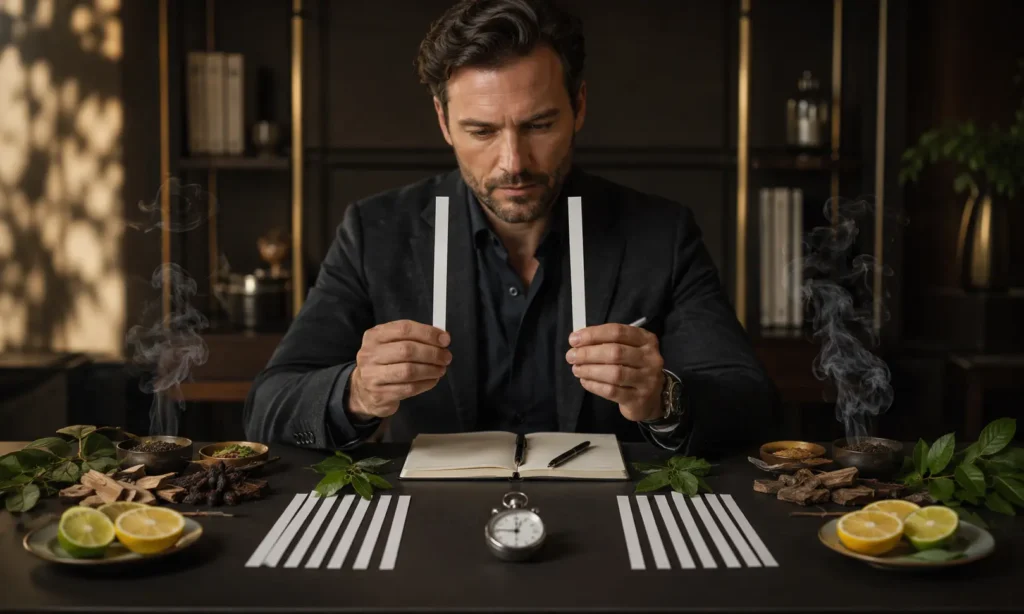
A fair test should reduce as many external variables as possible.
Use the same surface
Apply each bottle to equivalent areas of clean skin, or spray both onto identical unscented testing strips.
Do not compare one fragrance on skin and the other on clothing.
Use the same number of sprays
Different atomizers can release different amounts, so try to use complete, consistent sprays from a similar distance.
Smell at scheduled intervals
Compare them at:
- Opening.
- 15 minutes.
- One hour.
- Three hours.
- Six hours.
- Final dry-down.
Avoid immediate conclusions
The opening can exaggerate differences. Aventus may become more similar—or more different—as it dries down.
Test more than once
Skin condition, weather, fatigue, and environment can affect a single test. Repeat the comparison across several days.
Use blind testing
Ask another person to label the samples without telling you which is old or new.
This reduces the psychological effect of expecting the older or more expensive bottle to win.
🚫 Common Mistakes in Aventus Reformulation Discussions
“My bottle is weaker, so it must be reformulated”
A weaker experience may result from skin, weather, anosmia, storage, application, or batch character.
“Every old batch was a beast”
Older production was not perfectly uniform. Some bottles were stronger or smokier than others.
“Every modern bottle is weak”
Many wearers continue to experience useful longevity and noticeable projection from current bottles.
“A darker liquid means a stronger formula”
Liquid color can be influenced by aging, oxidation, ingredients, storage, and production differences. It does not provide a reliable strength measurement.
“The most expensive batch is automatically the best”
Scarcity and collector demand can raise prices independently of actual scent quality or bottle condition.
“A clone lasts longer, so the original has been ruined”
A clone may prioritize performance while sacrificing balance, transitions, or smoothness.
“If I stop smelling it, everyone else has too”
Olfactory fatigue can reduce the wearer’s perception while the scent remains detectable to others.
💰 Should You Pay More for an Older Aventus Bottle?
For most buyers, paying a large premium for an old bottle is unnecessary.
Vintage or older bottles make more sense for:
- Experienced Aventus collectors.
- Buyers who can verify authenticity.
- People seeking a specific historical batch.
- Enthusiasts who have already sampled the bottle.
- Collectors who accept storage and condition risks.
They make less sense for:
- First-time Aventus buyers.
- Blind buyers.
- People primarily seeking compliments.
- Buyers focused on value.
- Anyone expecting guaranteed extreme performance.
- Buyers unable to verify the seller or bottle history.
Older bottles can be expensive, counterfeited, poorly stored, partially evaporated, or significantly different from what the buyer imagined.
A rare batch code should never replace testing.
🛒 Is Modern Creed Aventus Still Worth Buying?
Modern Aventus can still be worth buying if you value the original fragrance identity, luxury presentation, versatility, refinement, and the confidence associated with wearing the authentic composition.
It may not be the ideal purchase if your only priority is maximum longevity or aggressive projection per dollar.
That is where the reformulation discussion should end:
Not with the question, “Is modern Aventus identical to the most celebrated old batch?”
But with:
“Does the Aventus sold today smell good enough, perform well enough, and fit my lifestyle well enough to justify its price?”
That question can only be answered by testing the current fragrance.
🎯 Who May Prefer Modern Aventus?
Modern Aventus may be the better version for someone who wants:
- A versatile luxury signature scent.
- Controlled projection.
- A polished professional fragrance.
- Bright fruit without excessive sweetness.
- Smoke without an overly harsh effect.
- A fragrance suitable for work, dates, events, and daily use.
- A recognizable scent presented with greater smoothness.
The changes that frustrate one enthusiast may make the fragrance more wearable for another.
Less aggressive does not always mean less useful.
🖤 Who May Prefer Older Aventus?
Older Aventus may appeal more to someone seeking:
- Stronger contrast between fruit and smoke.
- A darker birch-like impression.
- Greater density.
- More noticeable batch individuality.
- Historical collectability.
- A fragrance connected to Aventus’s earlier reputation.
- The excitement of comparing rare production runs.
However, enjoying that pursuit requires patience, money, knowledge, and acceptance of uncertainty.
It is a collector’s journey—not necessarily the smartest path for an ordinary buyer.
❓ Questions and Answers
Was Creed Aventus reformulated?
Creed Aventus appears to have evolved during its commercial life. However, not every difference between bottles proves that a reformulation occurred, because batch variation, age, storage, weather, and skin chemistry can also affect the result.
When was Creed Aventus reformulated?
There is no single universally accepted date that explains every change enthusiasts have noticed. Formula evolution can occur through multiple adjustments rather than one dramatic reformulation event.
Why does modern Aventus smell different?
Modern Aventus may smell different because of formula adjustments, ingredient sourcing, regulatory requirements, manufacturing consistency, batch variation, or the fact that it is being compared with aged older bottles.
Is modern Creed Aventus weaker than old Aventus?
Some older bottles are reported to feel stronger, smokier, or denser, but this is not universal. Modern Aventus can still provide noticeable projection and useful longevity, although it is often experienced as smoother and more controlled.
Did Creed remove the smoky character?
Modern Aventus can still produce a smoky, woody, or birch-like impression, but the intensity varies. Some bottles may feel cleaner and less aggressively smoky than certain older releases.
Is batch variation the same as reformulation?
No. Reformulation involves changing the formula or production specification. Batch variation refers to differences between separate production runs that are intended to represent the same fragrance.
Can a batch code tell me how Aventus will smell?
A batch code can help identify production information, but it cannot guarantee a particular level of fruitiness, smoke, longevity, projection, or quality.
Does older Aventus last longer?
Some older bottles may last longer, while others may not. Storage condition, evaporation, aging, batch character, skin, climate, and application all influence performance.
Should I buy an old Aventus batch?
Buy an older bottle only after verifying authenticity, condition, storage, and the actual scent. Do not pay a large premium based solely on community reputation or a batch code.
Is current Creed Aventus still good?
Yes. Modern Aventus can still smell refined, masculine, versatile, and luxurious. It may be smoother and less aggressive than certain older bottles, but that can make it easier to wear in everyday situations.
Should I sample modern Aventus before buying?
Yes. Sampling is the most reliable way to judge the fragrance currently available rather than relying on reviews of bottles produced many years ago.
✅ Final Verdict: What Really Happened to Creed Aventus?
Creed Aventus has evolved.
That does not mean every rumor is accurate, every old batch is superior, or every modern bottle is weak.
The fragrance has existed long enough to be affected by formula adjustments, ingredient availability, production changes, regulatory requirements, aging, storage, and shifting consumer expectations. At the same time, Aventus has always displayed enough batch individuality to make simple old-versus-new conclusions unreliable.
Certain older bottles may offer more smoke, contrast, density, or force.
Modern Aventus often offers more smoothness, control, consistency, and everyday versatility.
Neither description applies perfectly to every bottle.
The most intelligent way to judge reformulation is to separate four different questions:
- Has the formula evolved?
- Does this particular bottle differ from another batch?
- Has bottle age or storage changed the scent?
- Does the modern fragrance still satisfy the buyer?
For most people, the fourth question matters most.
Aventus should not be purchased solely because an old batch became legendary, and it should not be rejected solely because online communities claim it has been reformulated.
Test an authentic recent sample. Wear it on skin and clothing. Observe it across several hours and several days. Judge the fragrance that you can actually buy—not an idealized memory of a bottle that may no longer exist in the same condition.
Modern Creed Aventus may not reproduce every characteristic associated with its most celebrated older batches.
But it can still deliver the polished fruity, smoky, woody confidence that made Aventus one of the most influential luxury masculine fragrances of its generation.
💬 Which Aventus Would You Choose?
Would you choose a smoother modern bottle for versatility and daily wear, or pay more for an older batch with the possibility of greater smoke, density, and collectability?
Discover more from Perfume Cultures
Subscribe to get the latest posts sent to your email.