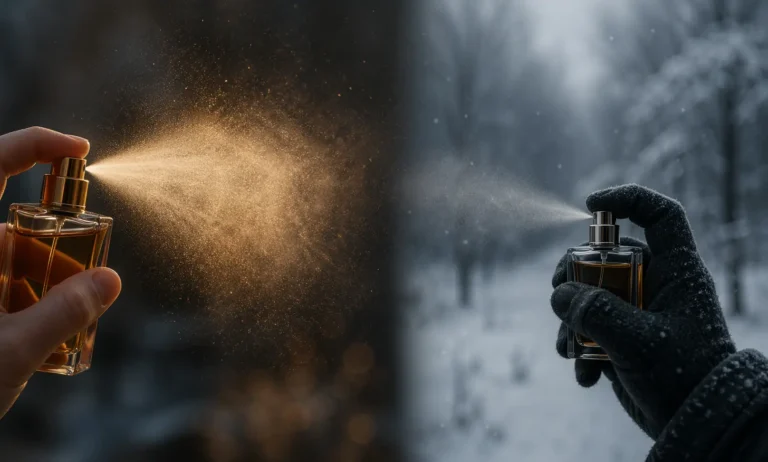

How Your Mood Changes the Way You Smell Perfume
Perfume is often described as a fixed composition—carefully blended notes that unfold in a predictable structure. Yet in real life, the same fragrance can smell brighter, heavier, softer, or even completely unfamiliar depending on how you feel. This is not imagination. Your mood actively reshapes how your brain interprets scent.
Understanding this phenomenon reveals something deeper: perfume is not just chemistry on skin—it is a dynamic interaction between molecules, memory, and emotion.
🧠 The Science Behind Mood and Scent Perception
At a biological level, smell is processed in the limbic system—the part of the brain responsible for emotions, behavior, and memory. This means scent bypasses the rational filtering of other senses and connects directly to how you feel.
A useful foundation for this mechanism is explained in How Perfume Works: The Science Behind Fragrance, Molecules, and Human Smell, where scent molecules bind to olfactory receptors and send signals straight to emotional centers of the brain.
Here’s the key insight:
- The molecules do not change
- Your interpretation of them does
Your mood influences:
- Attention (what notes you notice)
- Sensitivity (how strong a scent feels)
- Emotional labeling (pleasant vs overwhelming)
🎭 Why Mood Alters What You Notice in a Fragrance
When you’re in a positive mood, your brain tends to highlight uplifting elements like citrus, florals, or soft sweetness. The same fragrance may feel airy and balanced.
In contrast, during stress or fatigue:
- Heavy notes (oud, amber, musk) can feel more dominant
- Sharp notes may feel harsher
- Complexity may feel overwhelming instead of interesting
This shift happens because your brain prioritizes different sensory signals depending on emotional state.
❤️ The Emotional Nature of Smell
Smell is not just linked to emotion—it is the most emotionally charged sense we have. This is explored in Why Smell Is the Most Emotional Human Sense, where scent is shown to trigger emotional responses faster than sight or sound.
Because of this:
- Your mood doesn’t just influence scent perception
- It redefines the emotional meaning of the fragrance
A warm vanilla note might feel comforting one day and suffocating the next—depending entirely on your internal state.
🕰️ Memory: The Hidden Layer Behind Mood Shifts
Mood and memory are deeply connected, and scent is one of the strongest triggers of memory recall. This relationship is explored in Why Scents Trigger Memories.
Here’s what happens:
- You smell a fragrance
- It subconsciously activates a memory
- That memory influences your current mood
- Your mood reshapes how the scent feels
This creates a loop where:
Memory influences mood → mood influences scent perception → scent reinforces memory
This is why a fragrance can feel nostalgic one day and neutral the next.
🧪 Skin Chemistry vs Psychological State
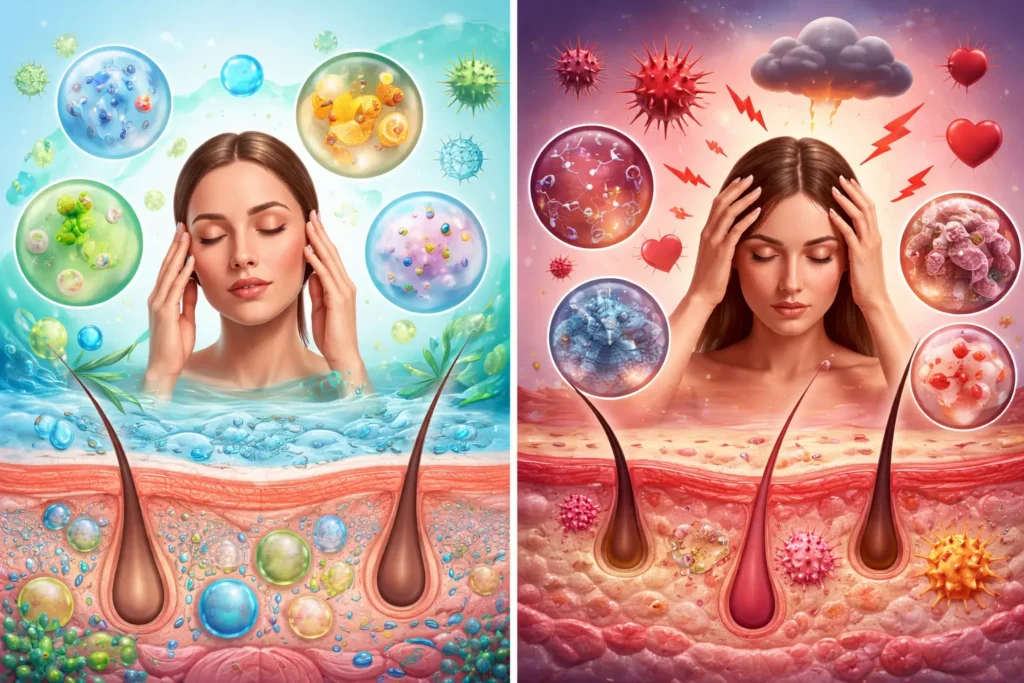
It’s well known that perfume smells different on each person due to skin chemistry—oil levels, pH balance, and temperature all play a role. This is explained in Why Does Perfume Smell Different on Skin?.
However, there’s a deeper layer:
- Skin changes how a perfume develops physically
- Mood changes how a perfume is perceived mentally
Even if the chemical output is identical:
- A relaxed mind may interpret a scent as smooth
- A stressed mind may interpret the same scent as sharp
This distinction is critical for understanding why perfume feels inconsistent.
🧩 Mood as Part of Your Identity in Scent
Fragrance is often described as an extension of identity. But identity is not static—it shifts throughout the day, influenced by mood, context, and environment.
This concept is explored further in Perfume and Identity: The Invisible Expression.
Your mood acts as a filter that:
- Selects which notes stand out
- Shapes emotional interpretation
- Defines whether a scent feels “right” or not
In this sense, perfume is not just something you wear—it’s something you experience differently every time.
⚖️ Why the Same Perfume Never Feels the Same Twice
When you combine all these factors, a clear picture emerges:
| Factor | What It Changes |
|---|---|
| Skin chemistry | Physical scent development |
| Environment | Projection and diffusion |
| Mood | Perception and emotional response |
| Memory | Associations and meaning |
This explains why:
- A fragrance you loved yesterday may feel “off” today
- A scent you disliked can suddenly become appealing
- The same perfume can feel completely different depending on your emotional state
❓ FAQ: How Mood Affects Perfume Perception
Does mood really change how perfume smells?
Yes. Mood affects how your brain processes scent signals, altering perception without changing the fragrance itself.
Can stress make perfumes smell stronger or harsher?
Absolutely. Stress can heighten sensitivity to certain notes, making them feel more intense or unbalanced.
Why does a perfume feel comforting one day and overwhelming the next?
This is often due to emotional context. Your mood changes how your brain interprets the same scent profile.
Is this effect psychological or physical?
Primarily psychological. The chemical composition remains the same, but perception shifts based on mental and emotional state.
Should you choose perfumes based on mood?
Many people naturally do. Some fragrances feel more suitable for calm moments, while others match energetic or social moods.
Discover more from Perfume Cultures
Subscribe to get the latest posts sent to your email.