
How to Store Perfume Properly: The Science-Backed Guide to Preserving Your Fragrance
Perfume is more than just a scent—it’s a delicate composition of volatile molecules that react to their environment. Yet many people unknowingly shorten the life of their fragrance simply by storing it incorrectly.
Understanding how to store perfume properly isn’t just about keeping bottles organized—it directly affects scent quality, longevity, and performance. In this guide, you’ll learn the science-backed rules that protect your fragrance investment and keep it smelling exactly as intended.
🧪 Why Proper Perfume Storage Matters
Perfumes are made of complex aromatic compounds that are sensitive to environmental factors like light, heat, and oxygen. Over time, these elements can break down the fragrance structure, altering its scent.
If you’ve ever wondered why some fragrances fade faster than others, storage plays a critical role. In fact, poor storage can significantly reduce how long a fragrance lasts both in the bottle and on your skin. (For a deeper understanding of scent lifespan, see How Long Does Perfume Last? Understanding Longevity, Skin Chemistry, and Fragrance Strength.)
🌡️ The Three Biggest Enemies of Perfume
1. Heat
High temperatures accelerate chemical reactions inside the bottle, causing fragrance notes to degrade faster. This is why leaving perfume in a hot room or near windows can ruin it over time.
Temperature fluctuations are especially harmful because they cause expansion and contraction inside the bottle, introducing air and destabilizing the formula. This aligns with what’s explained in How Temperature Affects Perfume: Can Heat Ruin Your Fragrance?—heat doesn’t just weaken scent, it can permanently alter it.
2. Light (Especially Sunlight)
Ultraviolet (UV) rays break down fragrance molecules, particularly the delicate top notes that give a perfume its initial impression.
Clear bottles may look elegant, but they offer less protection against light exposure. That’s why many high-end perfumes come in tinted or opaque packaging.
3. Air (Oxidation)
Every time you open a perfume bottle, oxygen enters and slowly reacts with the ingredients. This process—called oxidation—can dull the scent and change its character over time.
Minimizing unnecessary exposure to air is key to preserving the original composition.
📍 Where Should You Store Perfume?
The ideal storage location is:
- Cool (but not cold)
- Dark
- Dry
- Stable in temperature
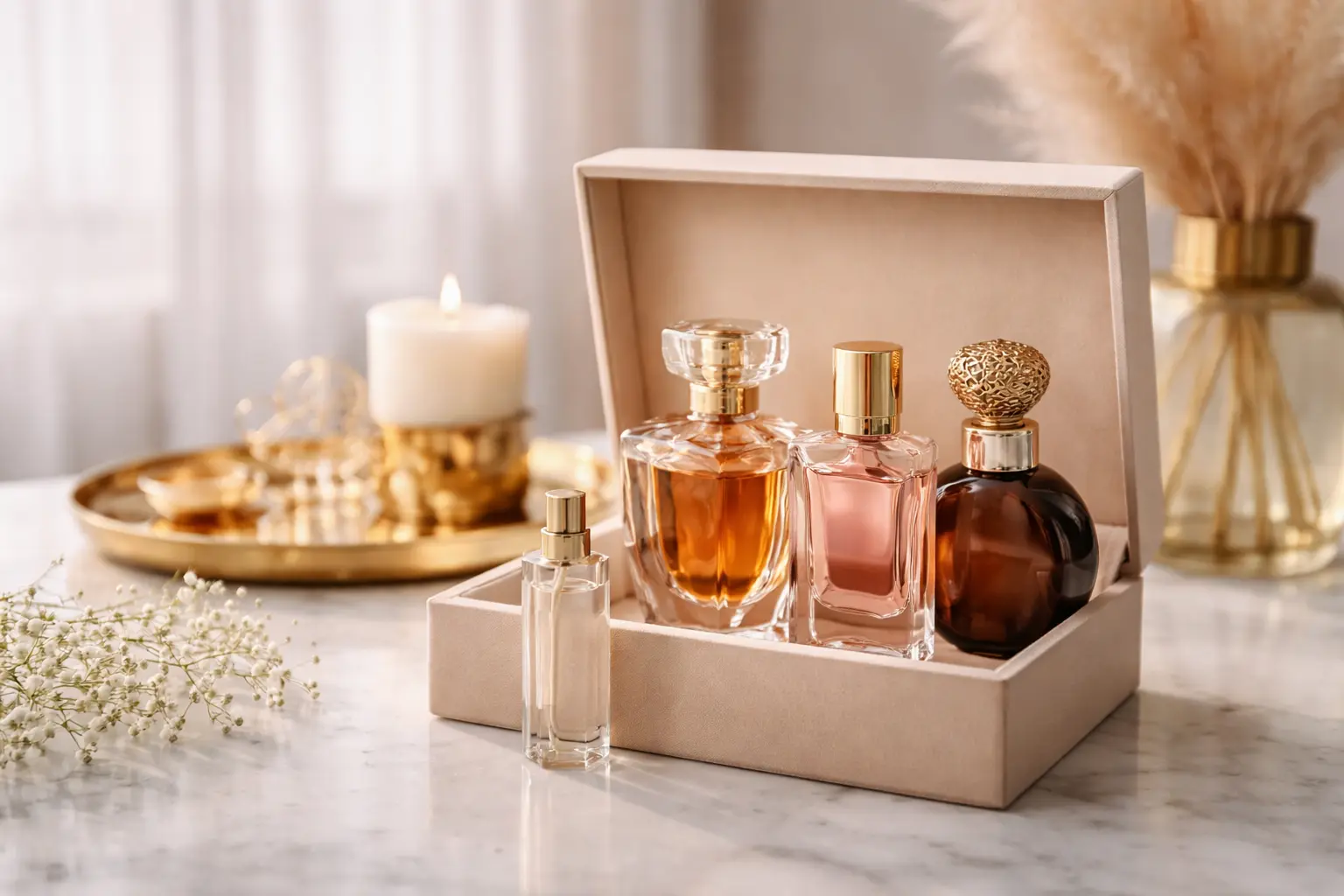
A bedroom drawer or a closed cabinet is often the best option. While it may be tempting to display perfumes on a shelf, doing so exposes them to light and temperature changes.
If you’re unsure about the best places in your home, explore Where Should You Store Perfume? The Best and Worst Places at Home for a detailed breakdown of ideal vs. risky storage spots.
🚫 Common Mistakes That Ruin Perfume
❌ Storing in the Bathroom
Humidity from showers and frequent temperature changes make bathrooms one of the worst places for perfume storage.
❌ Keeping Bottles Near Windows
Direct sunlight accelerates chemical breakdown—even indirect light over time can have an effect.
❌ Leaving the Cap Off
This increases exposure to oxygen, speeding up oxidation and weakening the fragrance.
❌ Shaking the Bottle
Unlike some liquids, shaking perfume introduces air bubbles and disrupts its chemical balance.
🧬 The Science Behind Perfume Degradation
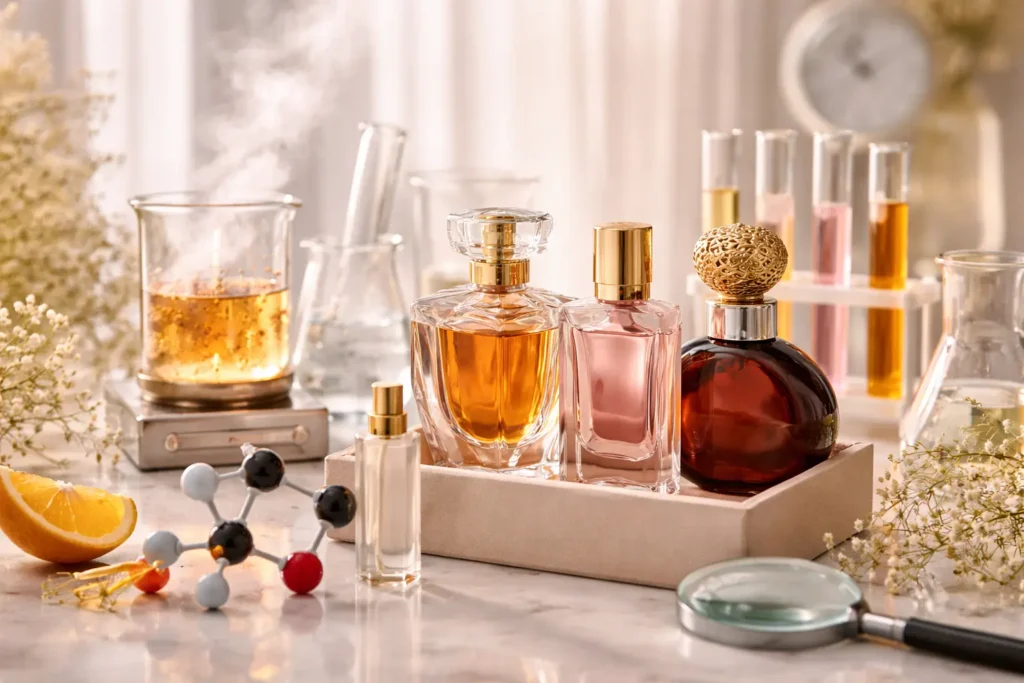
To understand why storage matters, it helps to look at how perfume works on a molecular level.
Fragrances are composed of volatile compounds that evaporate at different rates (top, middle, and base notes). Environmental stress—like heat or light—can alter these evaporation patterns and even break down the molecules themselves.
This is why improper storage can make a perfume smell “off,” sour, or weaker than before. For a deeper dive into how fragrance chemistry works, see How Perfume Works: The Science Behind Fragrance, Molecules, and Human Smell.
⏳ Does Perfume Expire?
Yes—but not in the same way food does.
A well-stored perfume can last for years, sometimes even decades. However, poor storage conditions can dramatically shorten its lifespan.
Signs that a perfume has gone bad include:
- A sour or metallic smell
- Noticeable color changes (darker liquid)
- Weaker projection or altered scent profile
If you’re unsure whether your fragrance is still usable, refer to Does Perfume Expire? Signs Your Fragrance Has Gone Bad for a detailed guide.
🧊 Should You Refrigerate Perfume?
This is a common question—and the answer is nuanced.
While cooler temperatures can slow down chemical reactions, extreme cold isn’t always beneficial. Rapid temperature changes (taking perfume in and out of the fridge) can do more harm than good.
A consistent room temperature environment is usually the safest and most practical choice.
📦 Pro Tips for Long-Term Perfume Storage
- Keep perfumes in their original boxes for added protection
- Store upright to prevent leakage and air exposure
- Avoid frequent handling or unnecessary spraying
- Use travel atomizers for daily use instead of opening the main bottle repeatedly
❓ Frequently Asked Questions (FAQ)
1. How long does perfume last if stored properly?
High-quality perfumes can last 3–5 years or more when stored in ideal conditions (cool, dark, and stable).
2. Is it okay to store perfume in the fridge?
Not recommended for daily use. Temperature fluctuations can damage the fragrance over time.
3. Why does my perfume smell different after a few months?
This is usually due to oxidation or exposure to heat and light, which alters the chemical structure of the scent.
4. Can unopened perfume go bad?
Yes, but much more slowly. Properly sealed bottles can last many years if stored correctly.
5. Does bottle design affect perfume longevity?
Yes. Dark or opaque bottles offer better protection against light compared to clear glass.
🧭 Final Thoughts
Storing perfume properly is one of the simplest yet most overlooked ways to preserve fragrance quality. By protecting your scents from heat, light, and air, you ensure that every spray delivers the experience the perfumer intended.
🧠 Think of storage as part of the fragrance itself—not an afterthought.
💬 Interactive Question
Where do you currently store your perfumes—and after reading this, will you change it?
Discover more from Perfume Cultures
Subscribe to get the latest posts sent to your email.



2 Comments