🧠 What Happens to Your Brain When You Lose Your Sense of Smell?
Losing your sense of smell—known scientifically as anosmia—is more than just a sensory inconvenience. It’s a neurological event that reshapes how your brain processes memory, emotion, and even reality itself.
While most people associate smell with simple experiences like enjoying perfume or food, the truth is far deeper: your sense of smell is directly wired into the most primitive and emotional parts of your brain.
So what actually happens inside your brain when that connection disappears?
🧠 The Direct Link Between Smell and the Brain
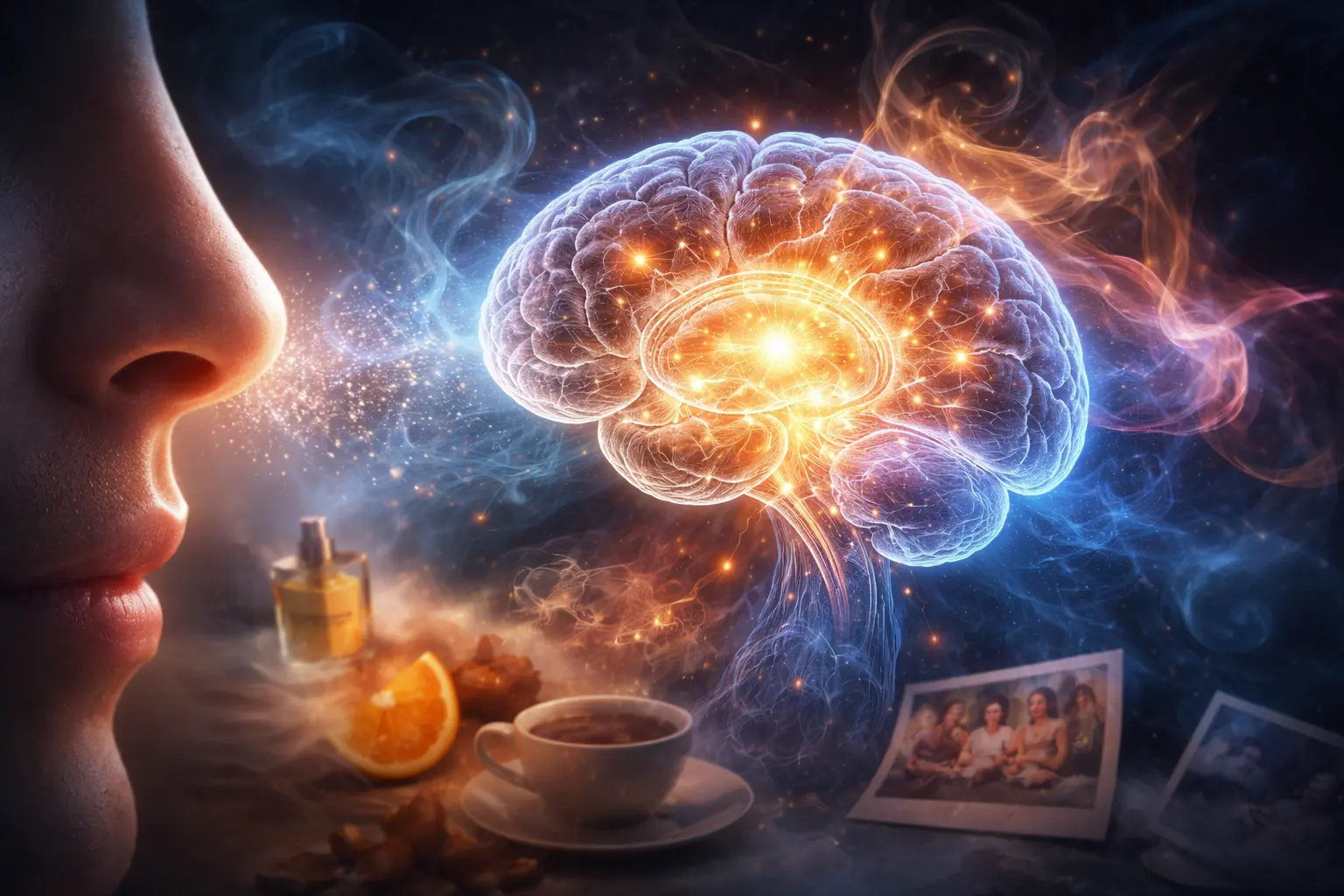
Unlike sight or hearing, smell bypasses many processing layers and goes straight to:
- The olfactory bulb
- The limbic system (emotion + memory center)
- The amygdala (emotional responses)
- The hippocampus (memory formation)
This is why scent is the most emotional sense humans have.
👉 And if you want to understand how the brain normally processes scents before loss occurs, it helps to explore how the brain recognizes different smells and builds scent perception patterns over time.
⚠️ What Changes When Smell Is Lost?
When your sense of smell disappears, your brain doesn’t just “miss a signal”—it starts to reorganize itself.
1. 🧠 Reduced Emotional Intensity
Smell enhances emotional experiences.
Without it:
- Food becomes less enjoyable
- Memories feel less vivid
- Emotional triggers weaken
👉 This directly explains why scent plays such a strong role in memory, as seen in why old scents bring back childhood memories.
2. 🧠 Memory Disconnection
Smell is one of the strongest memory anchors.
When it’s gone:
- Fewer spontaneous memories are triggered
- Nostalgia becomes less intense
- Emotional recall weakens
💡 In simple terms:
You don’t just lose smell… you lose part of your past.
3. 🧠 Brain Activity Rewiring
Studies show:
- The olfactory cortex becomes less active
- Other senses (like vision or taste) try to compensate
- Neural pathways shift to adapt
This is neuroplasticity in action—but it’s not a perfect replacement.
4. 🧠 Social & Psychological Impact
Smell plays a hidden role in:
- Attraction
- Comfort
- Human bonding
Without it:
- People report feeling “detached”
- Social interactions feel less natural
👉 This ties into a deeper issue: why we struggle to talk about smell—because we often don’t realize its importance until it’s gone.
🧠 Is Losing Smell Always Sudden?

Not always.
Sometimes, it happens gradually:
- Aging
- Environmental exposure
- Neurological decline
👉 That’s why it’s important to understand how our sense of smell changes with age, since loss is often a slow process rather than an instant event.
⚠️ The Illusion of “Loss” (Nose Blindness)
Here’s something important:
Sometimes you think you’ve lost your sense of smell—but you haven’t.
This is called:
👉 Olfactory adaptation (nose blindness)
Your brain simply:
- Filters out familiar scents
- Stops registering them consciously
💡 That’s exactly why:
👉 Perfume disappears after 1 hour – your brain adapts, not the scent.
🍽️ Why Taste Changes Too
Smell contributes up to 80% of what we perceive as taste.
So when smell is lost:
- Food tastes bland
- Flavor complexity disappears
- Appetite may drop
This is why anosmia often leads to:
- Weight changes
- Nutritional shifts
🧠 Long-Term Brain Effects
In prolonged cases, smell loss has been linked to:
- Increased risk of depression
- Cognitive decline (early marker in some neurological conditions)
- Reduced quality of life
💡 In fact, some researchers consider smell loss an early warning signal for deeper neurological changes.
🔥 Featured Fragrance (Emotional & Brain-Friendly Choice)
If you can smell, choosing the right fragrance becomes even more meaningful.
Here’s a scent that perfectly fits the theme of memory, subtlety, and brain-friendly perception:
👉 Montblanc Explorer Eau de Parfum
If you can still experience scent, choosing the right fragrance becomes more than a luxury—it becomes a way to reconnect with how your brain feels and remembers.

Montblanc Explorer Eau de Parfum
A smooth, versatile fragrance that blends fresh citrus with deep woody notes—perfect for everyday wear and subtle, confident presence.
- ✔ Fresh yet masculine scent profile
- ✔ Ideal for daily use and office settings
- ✔ Long-lasting with balanced projection
- ✔ Compliment-getting without being overpowering
Limited availability — this fragrance is often out of stock due to high demand.
But here’s what most people don’t realize—your brain doesn’t just detect a fragrance, it interprets it. The same scent can feel completely different depending on memory, emotion, and even neurological changes
💡 Why it fits this article:
- Smooth, non-overwhelming scent profile
- Designed to blend with natural body chemistry
- Ideal for creating subtle emotional impressions
- Helps train your brain to notice layered scent structures
🔥 Best for:
- Daily wear
- Subtle presence
- Rebuilding scent awareness
👉 Check the current price on Amazon and experience how a well-balanced fragrance interacts with your perception.
❓ Frequently Asked Questions (FAQ)
1. Can the brain recover after losing the sense of smell?
Yes, in some cases. If the cause is temporary (like infection), the brain can rebuild olfactory pathways over time. However, recovery varies widely.
2. Why does losing smell affect emotions so strongly?
Because smell is directly connected to the limbic system, which controls emotion and memory. No other sense has such a direct link.
3. Is losing smell dangerous?
It can be. You may not detect:
- Gas leaks
- Fire smoke
- Spoiled food
So awareness becomes critical.
4. How do I know if I lost smell or just adapted to a scent?
If you can smell other things but not your perfume, it’s likely nose blindness, not actual loss.
5. Does smell loss affect attraction or relationships?
Yes. Subconsciously, humans rely on scent cues for comfort, bonding, and attraction—losing it can subtly impact social perception.
🧠 Final Thought
Smell isn’t just a sense—it’s a silent translator between the world and your emotions.
Losing it doesn’t just change what you perceive…
It changes how you feel, how you remember, and even how you connect with others.
💬 Interactive Question
Have you ever experienced temporary loss of smell—or noticed how certain scents instantly trigger emotions or memories?
👇 Share your experience in the comments—your story might be more powerful than you think.
Discover more from Perfume Cultures
Subscribe to get the latest posts sent to your email.