How Bleu de Chanel Influenced Modern Blue Fragrances
✨The Fragrance That Changed What “Blue” Could Mean
Before Bleu de Chanel, fresh masculine fragrances were often expected to be either sporty, aquatic, sharply citrus-driven, or traditionally woody. They could smell clean and pleasant, but many struggled to feel polished enough for a formal setting, distinctive enough for a night out, and easy enough to wear every day.
Bleu de Chanel changed that balance.
It did not invent fresh masculine perfumery, but it helped define the modern “blue fragrance” as a category: versatile, clean, woody, confident, and refined without becoming old-fashioned. Its success showed that a fragrance could feel fresh at the start, dark and textured underneath, and appropriate almost anywhere.
For a complete breakdown of every concentration, performance profile, and buying decision, see the Bleu de Chanel: The Complete Guide.
How did Bleu de Chanel influence modern blue fragrances?
Bleu de Chanel influenced modern blue fragrances by proving that freshness could be paired with woods, incense, citrus, and subtle darkness without losing mass appeal. It helped establish the modern blue-fragrance formula: versatile freshness, polished masculinity, all-season wearability, and a balance between safe and sophisticated.
🔵 What Is a Modern Blue Fragrance?
A “blue fragrance” is not a strict fragrance family in the same way as citrus, amber, or leather. It is a consumer-friendly category used for scents that feel fresh, clean, masculine, versatile, and broadly appealing.
Most modern blue fragrances share several characteristics:
- A bright opening, often citrus, bergamot, grapefruit, apple, marine notes, or aromatic herbs
- A clean, airy, and shower-fresh feeling
- Woods, amber, musk, or mineral notes in the dry-down
- Enough projection to be noticed without becoming overwhelming
- Easy wearability for work, dates, travel, and casual use
However, Bleu de Chanel gave this idea more depth. Rather than relying only on aquatic freshness or sweet synthetic brightness, it brought a smoother woody structure and a darker, more luxurious mood.
| Traditional Fresh Masculine Style | Bleu de Chanel’s Modern Blue Approach |
|---|---|
| Often sporty or aquatic | Fresh but polished and versatile |
| Usually focused on the opening | Built around a fuller evolution from citrus to woods |
| May feel casual or youthful | Can work casually, professionally, or formally |
| Clean but sometimes simple | Clean, woody, aromatic, and more textured |
| Often seasonal | Designed to work across most seasons |
🕰️ Bleu de Chanel Arrived at the Right Moment
When Bleu de Chanel Eau de Toilette launched in 2010, men’s fragrance was already moving toward versatility. Many buyers wanted one scent that could handle daily life instead of maintaining separate bottles for the office, evenings, and weekends.
Bleu de Chanel met that demand with an unusually balanced personality. It smelled modern without chasing a short-lived trend, masculine without becoming aggressively heavy, and luxurious without requiring the wearer to be a serious fragrance collector.
Its development into Eau de Parfum, Parfum, and later L’Exclusif also showed how one successful idea could be expanded for different tastes and occasions. You can see how each release built on the original concept in The History of Bleu de Chanel: Complete Release Timeline.
Why is Bleu de Chanel considered influential?
Bleu de Chanel is considered influential because it made the blue-fragrance style feel more mature and luxurious. Its blend of freshness, aromatic notes, woods, and incense-like depth became a reference point for later designer and niche fragrances seeking broad appeal with a more refined character.
🌿 The Bleu de Chanel Formula: Freshness With Structure
The most important lesson Bleu de Chanel gave modern perfumery is that freshness does not need to be thin or temporary.
Many popular fragrances open brightly but become generic once the citrus fades. Bleu de Chanel instead develops from an energetic opening into a more structured woody base. That evolution makes it feel less like a simple “fresh scent” and more like a complete fragrance wardrobe solution.
The scent is often described as citrusy, woody, aromatic, slightly smoky, and clean. If you want a clearer sensory picture before comparing it with other blue fragrances, read What Does Bleu de Chanel Smell Like?.
| Bleu de Chanel Characteristic | Influence on Modern Blue Fragrances |
|---|---|
| Bright citrus opening | Encouraged energetic, attention-grabbing openings |
| Aromatic freshness | Made clean scents feel more composed and adult |
| Woody dry-down | Added sophistication beyond sporty freshness |
| Darker incense-like nuance | Showed that blue fragrances could have depth |
| Versatile performance | Set the expectation for one-bottle flexibility |
| Polished mass appeal | Influenced fragrances made for wide audiences |
🪵 Why the Notes Matter More Than the Label
Blue fragrances are often grouped together because they serve similar purposes, but they do not all smell alike. Bleu de Chanel is important because it pushed the category beyond a simple “clean and fresh” identity.
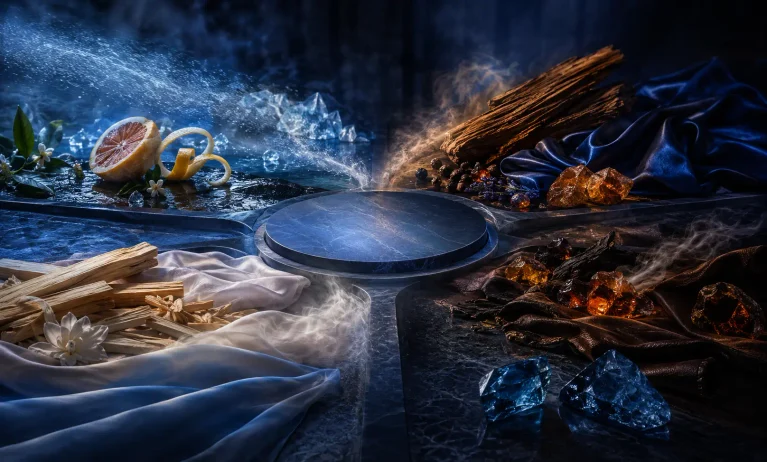
Its construction combines citrus brightness, aromatic freshness, woods, and a dry, subtly smoky depth. This gave later brands a useful template: keep the easygoing freshness people enjoy, but make the dry-down feel more expensive, mature, or memorable.
For a closer look at the ingredients and their role in the composition, see Bleu de Chanel Notes Explained.
🌫️ Bleu de Chanel Made Darkness Wearable
One reason Bleu de Chanel still feels more substantial than many blue fragrances is its use of darker tones. The woody, smoky, and incense-like facets create contrast against the citrus and freshness.
This was a powerful idea for the market. A modern masculine fragrance did not need to smell dense, sweet, or leathery to feel serious. It could remain fresh while carrying a quiet sense of depth.
That contrast is also why Bleu de Chanel appeals to people who find purely aquatic or overly sweet blue fragrances too simple. To understand this signature effect in more detail, read Why Does Bleu de Chanel Smell Woody, Smoky, or Incense-Like?.
📈 From Popular Fragrance to Category Benchmark
Bleu de Chanel became more than a successful Chanel release. It became a benchmark buyers used when judging other versatile masculine scents.
When someone asks whether a fragrance is suitable for work, mature enough for a date, fresh enough for summer, or polished enough to become a signature scent, they are often asking questions Bleu de Chanel helped make central to the blue-fragrance category.
Its popularity was not accidental. It gave mainstream buyers a dependable answer to a very common problem: “I want one fragrance that makes me smell put-together almost everywhere.” Learn more about the cultural and commercial reasons behind that success in Why Did Bleu de Chanel Become So Popular?.
⚖️ How Later Blue Fragrances Took Different Paths
Modern blue fragrances often borrow the same goal—fresh, appealing, versatile, masculine—but they interpret it differently.
Some become sweeter and more youthful. Others lean aquatic and mineral. Some make the citrus sharper, while others make the woods darker and more luxurious. This is why Bleu de Chanel remains relevant: it sits near the balanced center of the category.
| Modern Blue-Fragrance Direction | Typical Character | How It Differs From Bleu de Chanel |
|---|---|---|
| Sweet and youthful | Fruity, aromatic, louder, more energetic | Usually sweeter and more casual |
| Aquatic and marine | Salty, airy, watery, mineral | Often lighter and less woody |
| Fresh and metallic | Crisp, peppery, synthetic-clean | Can feel sharper and more aggressive |
| Niche fresh-woody | Brighter or more unusual materials | Often more distinctive but less universally safe |
| Dark blue style | Amber, woods, incense, deeper spice | May feel heavier and less flexible |
This is where Bleu de Chanel’s influence is easy to see. Even when a fragrance does not smell similar, it may still be designed around the same promise: a confident, modern scent that works in many parts of a man’s life.
🧭 What Bleu de Chanel Taught Brands About Versatility
The modern blue category is built on utility as much as scent.
A customer does not always want a fragrance that is technically artistic but difficult to wear. They want something that makes a strong first impression, feels appropriate in close spaces, lasts through a normal day, and does not demand too much thought before spraying.
Bleu de Chanel helped show brands that versatility could be premium. It made “safe” less of an insult when safety meant adaptability, polish, and reliable appeal.
That said, influence does not mean every person should choose Bleu de Chanel. Some buyers may prefer a louder scent, a sweeter scent, a fresher aquatic scent, or a more unusual niche composition. The right choice depends on whether you value balance or want a clearer personality in one direction.
🛍️ Should You Buy Bleu de Chanel or Explore a Modern Alternative?
Bleu de Chanel is still a strong choice if you want a blue fragrance that feels balanced rather than extreme. It is especially suitable for someone who wants one polished bottle for office wear, smart casual settings, dinners, travel, and everyday use.
Choose Bleu de Chanel if you want:
- Freshness without a purely sporty feeling
- Woods and depth without a heavy fragrance
- A refined signature scent with broad appeal
- A fragrance that feels more timeless than trend-driven
Consider an alternative if you specifically want a sweeter, louder, more aquatic, more youthful, or more unusual version of the blue-fragrance concept.
The key buying lesson is simple: Bleu de Chanel remains important not because every modern blue fragrance should copy it, but because it proved how well freshness and sophistication could work together.
❓ Frequently Asked Questions
Is Bleu de Chanel the first blue fragrance?
No. Fresh and aromatic masculine fragrances existed long before it. However, Bleu de Chanel became one of the most important modern examples because it combined freshness, woods, depth, and versatility in a way that strongly influenced later releases.
Why are blue fragrances so popular?
Blue fragrances are popular because they are easy to wear and broadly appealing. They usually smell clean, fresh, and confident, making them suitable for work, dates, casual settings, and everyday use.
Do all blue fragrances smell like Bleu de Chanel?
No. Some are sweeter, more aquatic, more metallic, more citrusy, or more woody. Bleu de Chanel is best viewed as a refined reference point within a wide category rather than a scent every blue fragrance copies exactly.
Is Bleu de Chanel still relevant today?
Yes. Its profile still feels polished and versatile, especially for buyers who prefer balanced freshness with more depth than a simple shower-gel or marine scent.
✅ Final Verdict
Bleu de Chanel influenced modern blue fragrances by raising the standard for what a fresh masculine scent could be. It showed that versatility did not have to mean blandness, and that a fragrance could feel clean, refined, woody, and quietly distinctive at the same time.
Many later fragrances have taken the blue concept in sweeter, fresher, louder, darker, or more niche-oriented directions. Yet Bleu de Chanel remains the reference point for buyers who want balance above all else: freshness with structure, mass appeal with sophistication, and a signature scent that fits modern life.
Discover more from Perfume Cultures
Subscribe to get the latest posts sent to your email.