
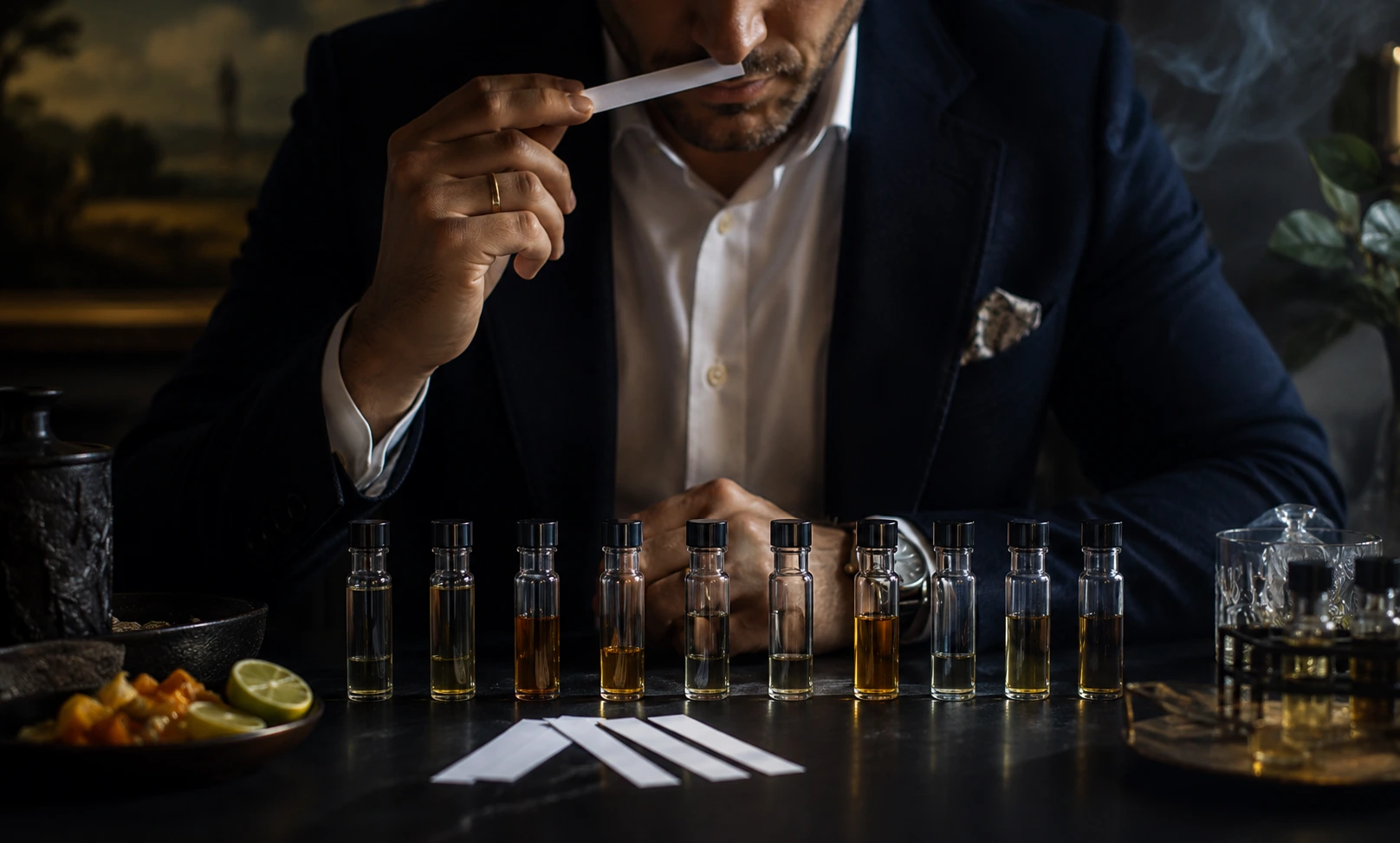
Creed Aventus Batches Explained: Do Batch Codes Really Change the Smell and Performance?
Creed Aventus is not discussed like an ordinary fragrance.
Most perfumes are judged by a simple set of questions: Does the fragrance smell good? How long does it last? Is it worth the price?
Aventus adds another question that has followed it for years:
Which batch is it?
One owner may describe Aventus as bright, juicy, smoky, powerful, and long-lasting. Another may test a different bottle and find it cleaner, drier, softer, or less smoky. That contrast has created an entire culture around Aventus batch codes, production years, reformulations, vintage bottles, and supposedly legendary releases.
Some batch differences may be noticeable. Others may be exaggerated by storage, skin chemistry, testing conditions, fragrance aging, expectations, or the way our noses adapt to familiar smells.
This guide explains what Creed Aventus batches actually are, why bottles may smell or perform differently, how to read batch discussions intelligently, and whether you should search for a specific batch before buying.
For a wider look at the original fragrance, the Aventus collection, its competitors, clones, alternatives, and buying options, begin with Creed Aventus: The Complete Guide to the Iconic Fragrance, Collection, Clones, Batches, and Alternatives.
⚡ Creed Aventus Batch Differences: Quick Comparison
| Factor | What May Change Between Bottles | What May Explain the Difference |
|---|---|---|
| Fruity opening | Brighter, sharper, sweeter, greener, or less juicy | Ingredient variation, bottle age, temperature, expectations |
| Smoky character | More noticeable, softer, drier, or cleaner | Formula changes, ingredient balance, skin chemistry |
| Woodiness | Dry, smooth, earthy, or more prominent | Dry-down development, storage, application surface |
| Longevity | Strong on one wearer and moderate on another | Skin type, weather, sprays, nose fatigue, clothing |
| Projection | Expansive opening or controlled scent bubble | Temperature, humidity, application, fragrance structure |
| Color | Clearer, darker, or more golden | Age, storage, ingredient oxidation |
| Overall quality | Richer, smoother, thinner, or more modern | Real variation combined with personal perception |
| Batch code | Identifies production information | Does not guarantee smell, strength, or quality |
🧠 What Is a Creed Aventus Batch?
A Creed Aventus batch is a group of bottles produced during a particular manufacturing period under the same production reference.
The batch code helps identify when a bottle was produced and may allow collectors to distinguish one production run from another. It can be useful for authenticity research, estimating bottle age, comparing releases, and organizing personal observations.
However, a batch code is not a quality score.
It does not automatically tell you that a bottle will be:
- Fruity
- Smoky
- Powerful
- Weak
- Long-lasting
- Vintage-smelling
- Better than a newer bottle
- Worth more money
Two people can test bottles carrying the same batch code and report different experiences. Even when the liquid is highly similar, differences in application, environment, skin, perception, and expectations can produce very different conclusions.
Creed Aventus batch codes identify production runs, but they do not guarantee a specific smell or level of performance. Some batches may show noticeable differences in fruitiness, smokiness, dryness, or strength, yet skin chemistry, storage, weather, application, and fragrance aging can also change how a bottle is perceived.
🔍 Why Do People Care So Much About Aventus Batches?
Batch variation exists as a discussion around many fragrances, but Aventus receives exceptional attention because of its reputation, price, history, and recognizable scent structure.
Aventus combines several contrasting effects:
- Bright citrus and fruit
- Pineapple-like freshness
- Blackcurrant-style sharpness
- Dry woods
- Smoky or birch-like depth
- Musk
- A clean, mineral, ambergris-style effect
Small changes in the balance between these elements can alter the personality of the fragrance.
If the fruit feels stronger, Aventus may seem brighter, sweeter, and more energetic.
If the smoky woody side feels stronger, it may seem darker, drier, more masculine, and more mature.
If the cleaner musky side becomes more prominent, the fragrance may feel smoother and more modern but less dramatic.
These shifts matter to enthusiasts because many are not simply asking whether Aventus smells good. They are comparing the bottle in front of them with memories, reviews, decants, vintage samples, older bottles, and descriptions of famous batches they may never have personally tested.
🍍 Do Different Creed Aventus Batches Really Smell Different?
Some Aventus bottles can appear different when compared directly, particularly in their fruitiness, smokiness, dryness, and overall balance.
However, not every reported difference is necessarily caused by the batch itself.
A person testing a fresh bottle in hot weather may perceive a sharper and brighter opening. The same fragrance tested months later in cooler conditions may seem deeper, smoother, and more persistent.
A sample stored in a small decant may also behave differently from a full bottle that has been kept in a stable environment. Evaporation, oxygen exposure, storage conditions, and the decanting process can influence the experience.
There is also a psychological factor.
When someone expects a famous older batch to be richer and more powerful, that expectation may influence what they notice. When someone expects a modern bottle to be weak, normal fragrance development may be interpreted as disappointing performance.
This does not mean every batch smells identical.
It means that batch variation should be separated from all the other variables that affect fragrance perception.
🌫️ Fruity, Smoky, Woody, or Clean: Common Aventus Batch Descriptions
Aventus enthusiasts often place batches into broad scent categories. These labels are useful for describing impressions, but they should not be treated as official classifications.
🍍 Fruity Batches
A fruity Aventus bottle may emphasize:
- Pineapple-like brightness
- Juicy citrus
- Apple-like freshness
- Blackcurrant nuances
- A lively, energetic opening
These bottles may feel more approachable, youthful, and compliment-friendly. They can also seem less dark if the smoky base remains restrained.
🔥 Smoky Batches
A smoky interpretation may emphasize:
- Birch-like dryness
- Charred wood
- Darker masculine depth
- Earthy or leathery nuances
- A stronger contrast against the fruit
Smoky batches are frequently associated with older Aventus discussions, although the exact character people call “smoke” may vary considerably.
One wearer may mean dry birch.
Another may mean dark woods.
A third may be describing a sharper, almost ashy contrast in the dry-down.
🌲 Woody or Dry Batches
Some bottles are described as woodier, drier, or less juicy. These may feel:
- More mature
- More restrained
- Less sweet
- Cleaner in the dry-down
- More formal
A dry Aventus bottle is not automatically weak. It may simply create less sweetness and less obvious fruit in the air.
🫧 Clean or Musky Batches
Modern bottles are sometimes described as cleaner, smoother, muskier, or more transparent.
This can make Aventus easier to wear in offices, warm weather, and close environments. However, enthusiasts searching for a dramatic fruit-and-smoke contrast may find that style less exciting.
⚖️ Aventus Batch Variation vs Reformulation
Batch variation and reformulation are related topics, but they are not the same thing.
Batch variation refers to differences that may occur between individual production runs.
Reformulation refers to a deliberate or necessary change in the fragrance formula, materials, concentrations, suppliers, or regulatory compliance.
| Question | Batch Variation | Reformulation |
|---|---|---|
| What does it describe? | Differences between production runs | A broader change to the formula |
| Is it always officially announced? | No | Not necessarily |
| Can bottles from the same era vary? | Potentially | Yes, even after a formula change |
| Does it affect every bottle equally? | Not always | Usually affects future production |
| Can storage imitate its effects? | Yes | Storage cannot prove a reformulation |
| Does a batch code confirm it? | No | A code alone is insufficient |
| Should it determine your purchase? | Rarely by itself | Only after testing the current fragrance |
A fragrance can be reformulated and still show variation between later batches. Likewise, two bottles that smell somewhat different do not prove that a major reformulation occurred between them.
For a focused examination of formula changes, ingredient restrictions, performance concerns, and the evidence behind the debate, read Creed Aventus Reformulation Explained.
🕰️ Old Aventus Batches vs Modern Aventus Batches
Older Aventus bottles have developed an almost mythical reputation.
They are often described as:
- Smokier
- Richer
- Darker
- More complex
- More powerful
- More persistent
- Better blended
Modern bottles are more commonly described as:
- Cleaner
- Brighter
- Smoother
- More controlled
- Less smoky
- Easier to wear
- More variable in performance
There may be genuine differences between bottles produced many years apart. Fragrance formulas, ingredient availability, regulatory requirements, suppliers, and manufacturing practices can evolve over time.
However, an old bottle is not automatically better.
Its condition depends heavily on how it was stored. A vintage bottle exposed to heat, sunlight, repeated temperature changes, or air leakage may perform worse than a properly stored modern bottle.
Age can also change how the fragrance develops. Some bottles may become smoother, darker, or more integrated over time, while poorly stored bottles may lose freshness or become unbalanced.
The most useful comparison is not “old always wins.”
It is:
Does the richer and potentially smokier character of an older bottle matter enough to justify its higher cost, uncertain storage history, and counterfeit risk?
A detailed side-by-side examination is available in Old Creed Aventus vs New Creed Aventus.
🧪 Why Two People Can Disagree About the Same Batch

Batch discussions often become confusing because people assume that everyone is testing under equal conditions.
They are not.
1. Skin Chemistry
Oil levels, dryness, temperature, perspiration, and skincare products can change how Aventus develops.
On one wearer, the fruit may remain lively.
On another, the dry woods and musk may become dominant quickly.
2. Weather
Warm weather increases evaporation and can make the opening feel brighter and more expansive. It may also cause the fragrance to move through its top notes more quickly.
Cool weather slows evaporation. Aventus may feel more controlled, denser, or quieter in the air.
3. Number and Location of Sprays
Two sprays under clothing will not create the same experience as six sprays across the neck, collar, and arms.
Application location affects warmth, diffusion, scent trail, and how easily the wearer can smell the fragrance.
4. Skin vs Clothing
Aventus may develop more naturally on warm skin, but fabric can preserve parts of the composition longer.
A person evaluating only the skin may report moderate longevity, while someone spraying a jacket may continue noticing the fragrance the following day.
5. Storage
Heat, sunlight, humidity, and unstable temperatures may affect the liquid over time.
A batch cannot be evaluated fairly without considering how the bottle was stored after production.
6. Nose Fatigue
Aventus contains diffusive materials that may become difficult for the wearer to detect continuously.
You may stop smelling the fragrance while people around you can still notice it.
7. Expectation Bias
A buyer who pays a premium for an older batch may look for exceptional depth and performance.
A buyer who expects modern Aventus to be weak may focus on every moment when the fragrance appears softer.
Expectations do not create the entire experience, but they can influence how the experience is interpreted.
⏳ Do Some Aventus Batches Last Longer?
Some bottles may appear to last longer than others, but longevity is one of the most difficult characteristics to attribute exclusively to batch variation.
Aventus longevity can change according to:
- Skin type
- Temperature
- Humidity
- Spray count
- Application area
- Clothing
- Activity level
- Storage
- Bottle age
- Nose fatigue
- The wearer’s definition of “lasting”
One person may consider Aventus finished when it stops projecting strongly.
Another may count every hour during which it remains detectable close to the skin.
These people can test the same bottle and report completely different longevity numbers without either one being dishonest.
For most wearers, a fair performance test should separate three stages:
- Opening impact: how strong the fragrance feels immediately after application.
- Active projection: how long it produces a noticeable scent bubble and trail.
- Total detectability: how long it can still be smelled closely on skin or clothing.
For a deeper performance analysis across different surfaces and wearing conditions, read How Long Does Creed Aventus Last?.
🌬️ Do Certain Aventus Batches Project More?
Projection is another area where batch reputation can become exaggerated.
A bottle with brighter fruit and more diffusive freshness may feel stronger during the opening even if its total longevity is average.
A darker, woodier bottle may seem less explosive initially but remain present closer to the body for longer.
This distinction is important:
Projection and longevity are not the same thing.
A fragrance can project clearly for two hours and remain detectable for eight.
Another fragrance can create a powerful first hour and then become much softer.
Aventus is generally valued for creating a polished scent trail rather than an extremely dense cloud. The opening may be noticeable, while the later stages become more controlled and personal.
Weather also changes projection dramatically. A batch tested outdoors during a cool evening cannot be compared fairly with another bottle tested in a hot room or directly under air conditioning.
To understand its scent bubble, trail, opening strength, and real-world behavior, see Does Creed Aventus Project Well?.
🧴 Does Aventus Improve After Opening?
Some owners believe a newly opened Aventus bottle becomes smoother or stronger after several weeks or months.
This process is often casually called “maceration,” although that term is not always used accurately in consumer fragrance discussions.
The fragrance has already undergone manufacturing and maturation processes before being sold. However, a newly opened bottle may seem to change as it is used, exposed to small amounts of air, and experienced under different conditions.
Several factors may create the impression of improvement:
- The wearer becomes more familiar with the scent structure.
- The fragrance is tested in a different season.
- More air enters the bottle after repeated use.
- The liquid experiences additional time in stable storage.
- Expectations become more realistic.
- The sprayer begins delivering a more consistent amount.
- The user notices deeper stages that were initially overlooked.
A bottle may appear smoother after opening, but this does not mean every weak bottle will transform into a powerful vintage-style batch.
Give a new bottle several complete wearings before judging it, but do not depend on dramatic future improvement to justify a disappointing purchase.
🧭 How to Read an Aventus Batch Code
Batch-code formats can change over time, so older and newer Creed bottles may not display production information in exactly the same way.
The code is usually found on the bottle, packaging, or both. It may contain letters and numbers associated with production identification.
When examining a bottle:
- Compare the code on the bottle with the code on the box.
- Examine the printing or engraving quality.
- Check whether the packaging details are consistent with the production era.
- Consider the seller’s reputation and proof of purchase.
- Avoid judging authenticity from one detail alone.
- Remember that copied batch codes can appear on counterfeit bottles.
A matching batch code can support an authenticity check, but it does not prove authenticity by itself.
Counterfeiters can copy real production codes. Bottle construction, atomizer quality, cap, label alignment, box details, liquid, smell development, seller history, and purchase documentation must be considered together.
🚫 What a Batch Code Cannot Tell You
A batch code cannot reliably promise:
- Exact longevity on your skin
- Exact projection in your climate
- A specific level of smokiness
- A guaranteed pineapple note
- Better ingredient quality
- Superior blending
- Authenticity by itself
- Proper storage
- The previous owner’s handling
- Whether you will enjoy the fragrance
- Whether the bottle is worth a premium
The greatest mistake in Aventus batch culture is treating a production code like a performance certificate.
A batch code provides context.
It does not replace testing.
🔬 How to Compare Two Aventus Batches Fairly
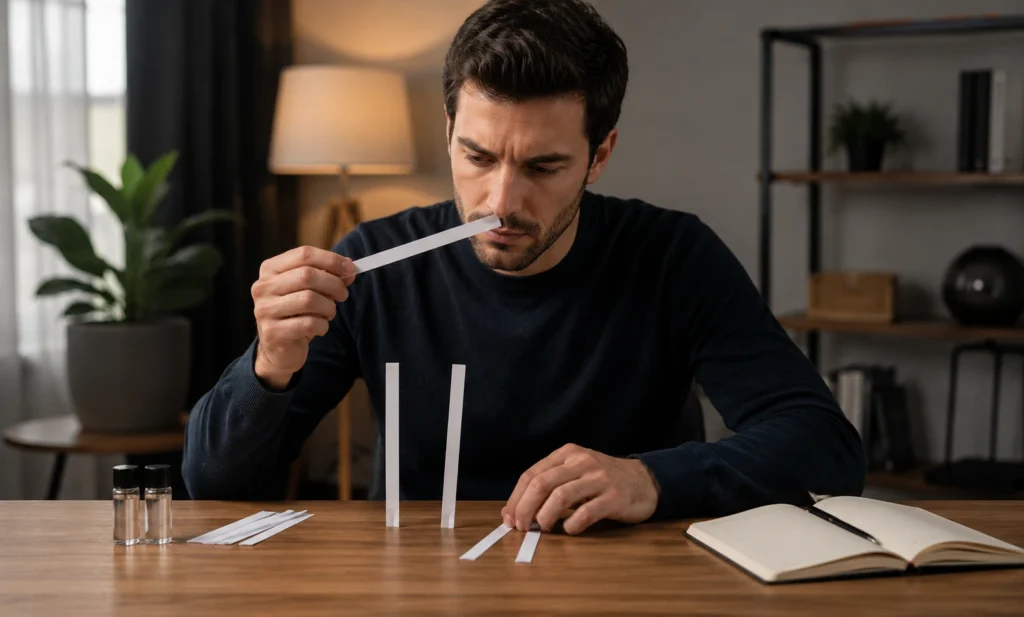
A fair Aventus batch comparison requires equal testing conditions.A proper comparison requires more discipline than spraying one bottle on Monday and another two weeks later.
Step 1: Use the Same Number of Sprays
Apply the same amount from each bottle. Sprayers can release different quantities, so pay attention to how much liquid reaches the skin.
Step 2: Test Both at the Same Time
Apply one batch to one arm and the other batch to the opposite arm.
This reduces differences caused by temperature, humidity, activity, and memory.
Step 3: Avoid Scented Products
Do not use strongly scented soap, moisturizer, deodorant, or another fragrance near the test areas.
Step 4: Record Specific Differences
Instead of writing “Batch A is better,” record observations such as:
- Batch A opens with brighter fruit.
- Batch B feels drier after 30 minutes.
- Batch A projects more during the first hour.
- Batch B remains clearer on clothing after six hours.
- Batch A has a smoother transition.
- Batch B emphasizes musk and woods.
Step 5: Repeat the Test
One wearing is not enough.
Repeat the comparison under similar conditions and, if possible, during different weather.
Step 6: Ask Another Person
A second person can help determine whether you are experiencing nose fatigue.
Step 7: Test Blindly When Possible
Label the samples without revealing which batch is older, rarer, or more expensive.
Blind testing removes some of the expectation surrounding reputation and price.
📊 Fair Testing vs Misleading Batch Testing
| Fair Testing Method | Misleading Testing Method |
|---|---|
| Same number of sprays | Different application amounts |
| Both batches tested simultaneously | Bottles tested weeks apart |
| Same body area or matching arms | One on skin and one on clothing |
| Neutral environment | Different temperatures and locations |
| Multiple full wearings | Judgment from the opening alone |
| Notes recorded over several hours | Relying on memory |
| Blind comparison when possible | Knowing which bottle is expensive |
| Properly stored samples | Unknown or damaged decants |
| Performance checked by another person | Depending only on self-detection |
| Smell and performance judged separately | Calling the loudest bottle “best” |
🧠 Are Famous Aventus Batch Lists Reliable?
Online lists often rank certain Aventus batches as legendary, fruity, smoky, nuclear, weak, balanced, or disappointing.
These lists can be useful as records of community impressions, but they should not be treated as universal facts.
Several problems affect their reliability:
Limited Sample Sizes
A strong reputation may begin with a small number of enthusiastic reviews and then spread through repeated discussion.
Unequal Storage
Two bottles from the same year may have experienced completely different storage conditions.
Confirmation Bias
Once a batch becomes famous, owners may expect greatness and interpret it more positively.
Different Testing Standards
Some reviewers measure skin longevity. Others include clothing. Some use two sprays, while others use eight.
Counterfeit or Refilled Bottles
The vintage market creates additional uncertainty. A code may be genuine while the bottle, liquid, or refill history is not.
Survivorship Bias
Exceptional older bottles receive attention. Average or poorly stored examples may disappear from the conversation.
Batch lists are therefore best used as historical discussion—not as guaranteed buying maps.
🧾 Can Two Bottles From the Same Batch Smell Different?
They should generally be closely related if they are authentic, properly stored, and produced under the same reference.
However, two bottles carrying the same code may still seem different because of:
- Different storage histories
- Different fill levels
- Different amounts of oxygen exposure
- Decanting
- Bottle age after opening
- Testing environment
- Skin chemistry
- Spray output
- Nose fatigue
- Counterfeit risk
- Expectation
If two same-batch bottles appear dramatically different, investigate bottle condition, storage, authenticity, and testing methods before concluding that the batch itself lacks consistency.
👃 Does Every Aventus Bottle Smell Like Pineapple?
Aventus is famous for a pineapple-like impression, but pineapple is not always experienced as a literal, sweet, photorealistic fruit note.
The effect may appear as:
- Tart tropical fruit
- Juicy brightness
- Citrus mixed with apple
- Blackcurrant sharpness
- Sweet-and-sour freshness
- A general sparkling fruit accord
In some bottles, the fruity impression is immediately obvious.
In others, citrus, blackcurrant, woods, musk, or dryness may dominate.
People also differ in how they interpret accords. One person may say “pineapple,” while another smells apple, citrus peel, or an abstract fruity freshness.
A bottle does not have to smell like fresh pineapple juice to be authentic Aventus.
🪵 Is a Smokier Aventus Batch Automatically Better?
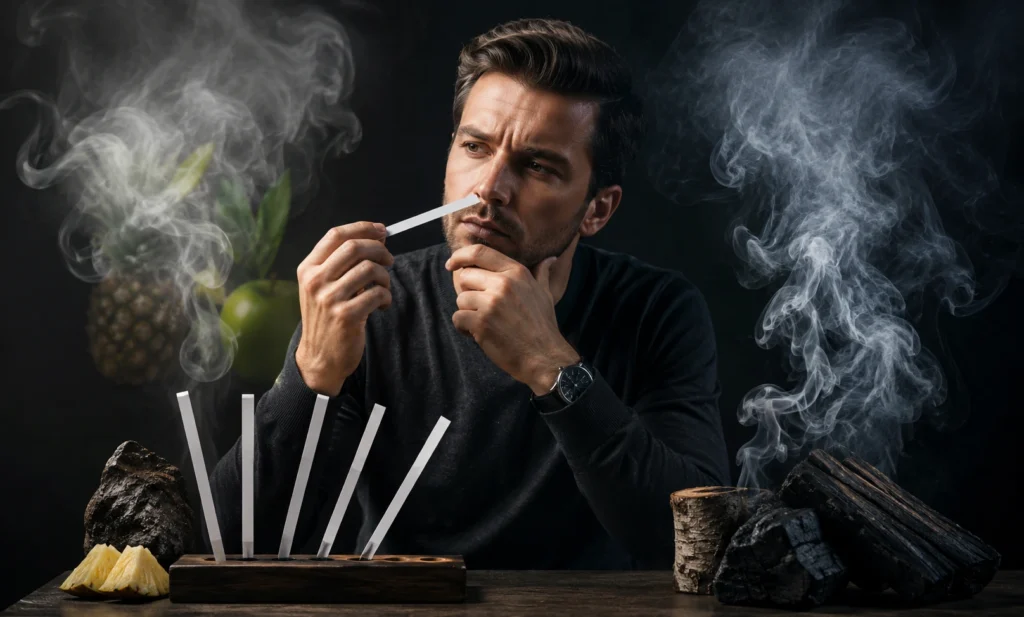
No.
Smokiness is a preference, not an objective measure of quality.
A smokier bottle may feel:
- More dramatic
- More masculine
- Darker
- More vintage
- More distinctive
- Better suited to cooler weather
A fruitier or cleaner bottle may feel:
- More versatile
- Easier in warm weather
- More compliment-friendly
- Better for work
- More modern
- Less challenging
Someone who loves the contrast between fruit and dry birch may prefer a smokier interpretation. Someone who wants a clean luxury signature scent may prefer a modern, smoother bottle.
The best Aventus batch is not necessarily the darkest or strongest one.
It is the bottle whose balance fits your taste and lifestyle.
⭐ How Should Aventus Be Judged Beyond Its Batch?
Batch discussions can distract from the fragrance itself.
A complete evaluation should include:
- Opening quality
- Transition into the heart
- Dry-down
- Balance
- Smoothness
- Versatility
- Projection
- Longevity
- Compliment potential
- Seasonal use
- Value
- Personal enjoyment
A bottle can belong to a respected batch and still be wrong for you.
A modern bottle can lack collector prestige and still smell excellent, perform sufficiently, and become a reliable signature scent.
For an evaluation of Aventus as a complete fragrance rather than a production code, read the full Creed Aventus Review.
💰 Should You Pay More for an Older Aventus Batch?
Paying a premium for an old Aventus bottle makes sense only for a specific type of buyer.
It may be reasonable if:
- You have already sampled that exact batch.
- You strongly prefer its character.
- The bottle comes from a trustworthy source.
- Its storage history is credible.
- The price is affordable within your fragrance budget.
- You understand the counterfeit risk.
- You are buying partly as a collector.
It is usually not worthwhile if:
- You have never tested the batch.
- You are relying entirely on online rankings.
- You expect guaranteed beast-mode performance.
- The storage history is unknown.
- The bottle costs far more than a current release.
- You mainly want a versatile daily fragrance.
- You would be financially disappointed by average performance.
Rare does not automatically mean better.
Old does not automatically mean stronger.
Expensive does not automatically mean ideal for your skin.
🛒 Should You Search for a Specific Batch Before Buying?
Most buyers do not need to chase a particular Aventus batch.
A better buying strategy is to prioritize:
- An authorized or highly trustworthy seller
- Authenticity
- Proper storage
- A fair return policy
- A recent sample or in-store test
- Performance on your own skin
- Whether you enjoy the current scent profile
- A price you are comfortable paying
Batch research becomes more useful when you are an experienced enthusiast who has tested multiple versions and knows exactly which balance you prefer.
For a first Aventus purchase, the seller and your personal test matter more than internet mythology.
Most buyers should not pay a large premium for a supposedly superior Aventus batch without testing it first. Buy from a trustworthy seller, sample the available bottle on your skin, and judge its fruitiness, dry-down, projection, and longevity under real conditions. The batch code should provide context—not make the decision for you.
🧴 Sample, Decant, or Full Bottle?
A sample or decant is the safest choice when:
- You are uncertain about modern Aventus.
- You want to compare two production periods.
- You are considering an expensive vintage bottle.
- You have never worn Aventus for a full day.
- Performance is a major buying concern.
- You want to test both skin and clothing.
- You live in a very hot or humid climate.
A full bottle makes more sense when:
- You already know you enjoy the fragrance.
- You have tested the current version.
- The seller is trustworthy.
- The price fits your budget.
- You intend to wear Aventus regularly.
- You are satisfied with its real performance rather than its historical reputation.
Testing first protects you from paying for an idea of Aventus that may not match the bottle available today.
❌ Common Myths About Creed Aventus Batches
Myth 1: Every Old Batch Is Better
Some older bottles may smell richer or smokier, but age, storage, authenticity, and personal taste still determine the final experience.
Myth 2: Modern Aventus Has No Performance
Modern bottles may feel more controlled than certain older examples, but performance varies with skin, application, climate, and perception.
Myth 3: Darker Liquid Always Means Stronger Aventus
Liquid color may change with age, materials, or storage. Darkness does not guarantee stronger projection or longevity.
Myth 4: A Famous Code Guarantees a Great Bottle
A code cannot guarantee proper storage, authenticity, or compatibility with your skin.
Myth 5: More Smoke Means Higher Quality
Smokiness is a scent preference. Balance, smoothness, and wearability may matter more.
Myth 6: You Can Judge a Batch in Five Minutes
The opening reveals only one part of Aventus. Its woody, musky, and smoky character develops over several hours.
Myth 7: If You Stop Smelling It, the Batch Is Weak
Nose fatigue can make the wearer lose awareness of the scent while it remains detectable to other people.
Myth 8: Batch Variation Explains Every Performance Problem
Weather, skin, sprays, clothing, storage, and expectations may explain as much as—or more than—the production code.
✅ Final Verdict: Do Creed Aventus Batches Matter?
Creed Aventus batches matter, but not as much as batch culture sometimes suggests.
Different bottles can show variations in fruitiness, smokiness, dryness, woodiness, smoothness, projection, and longevity. Changes across production eras may also influence how older and modern bottles compare.
However, the batch code is only one variable.
The way Aventus smells and performs also depends on storage, bottle age, authenticity, skin chemistry, weather, spray count, application surface, nose fatigue, and personal expectation.
Collectors and experienced Aventus enthusiasts may enjoy comparing specific production runs. For them, batch research can be part of the fragrance experience.
Most buyers need a simpler strategy:
- Buy from a trustworthy source.
- Test the available fragrance.
- Wear it several times.
- Compare it under consistent conditions.
- Judge the complete scent, not only the opening.
- Do not pay a large vintage premium without sampling.
- Treat batch codes as useful context rather than guarantees.
The best Creed Aventus batch is not necessarily the oldest, darkest, smokiest, strongest, or most expensive.
It is the one you genuinely enjoy wearing.
❓ FAQ: Creed Aventus Batches
What does a Creed Aventus batch code mean?
A Creed Aventus batch code identifies a particular production run or manufacturing period. It can help estimate when the bottle was produced, but it does not guarantee a specific scent profile, level of projection, or longevity.
Do all Creed Aventus batches smell the same?
They share the recognizable Aventus identity, but some bottles may emphasize fruit, smoke, woods, musk, or dryness differently. Storage, age, skin chemistry, and testing conditions can also create perceived differences.
Which Creed Aventus batch is the best?
There is no universally best Aventus batch. Some enthusiasts prefer older smoky batches, while others prefer brighter, fruitier, smoother, or more modern bottles. The best choice depends on personal taste and the condition of the bottle.
Are old Aventus batches stronger?
Some older bottles are reported to be stronger, smokier, or longer-lasting. However, this is not guaranteed. Storage history, bottle condition, authenticity, application, and individual perception remain important.
Are modern Aventus batches weak?
Not necessarily. Modern Aventus may project in a more controlled way than certain older bottles, but it can still produce a noticeable opening, refined scent trail, and several hours of wear.
Does a darker Aventus liquid indicate a better batch?
No. Darker liquid can result from age, ingredient variation, oxidation, or storage. Color alone cannot confirm strength, quality, authenticity, or performance.
Can two bottles from the same Aventus batch perform differently?
They may appear different because of storage, bottle age, oxygen exposure, spray output, skin chemistry, weather, or testing conditions. Dramatic differences should also raise questions about authenticity and bottle condition.
Should I buy Aventus based on the batch code?
The batch code should not be your main buying criterion. Prioritize a trustworthy seller, authenticity, correct storage, personal testing, and whether you enjoy the fragrance on your skin.
Is it worth paying extra for a vintage Aventus batch?
It may be worthwhile for a collector who has already tested that exact batch and prefers its character. For most buyers, paying a large premium without sampling creates unnecessary risk.
How should I test two Aventus batches?
Apply the same number of sprays at the same time on matching areas, avoid scented products, record changes throughout the day, repeat the test, and use blind labels when possible.
💬 Questions and Answers
Is batch variation the main reason Aventus performs differently on people?
No. Batch variation may contribute, but skin chemistry, temperature, humidity, application, clothing, storage, and nose fatigue can have an equally important effect.
Should a beginner study batch lists before trying Aventus?
A beginner should first learn how the current fragrance smells and performs. Batch lists become more useful after gaining direct experience with more than one bottle or sample.
Can I identify a fruity or smoky batch from its code alone?
Not reliably. Community descriptions may suggest a general reputation, but the code cannot guarantee how the bottle will smell to you.
Is a stronger Aventus batch always the better purchase?
No. Greater strength may reduce versatility in offices, hot weather, or close spaces. Smoothness, balance, comfort, and personal enjoyment are equally important.
What is the smartest way to buy Creed Aventus?
Test the fragrance on your skin, buy from a trustworthy source, evaluate it over several full wearings, and make the decision based on the bottle available to you rather than the reputation of a rare batch.
💬 Which Aventus Batch Would You Choose?
Would you search for an older, darker, smokier Aventus batch—or choose a modern bottle that is easier to buy, verify, and wear regularly?
Discover more from Perfume Cultures
Subscribe to get the latest posts sent to your email.





3 Comments