💧 What Happens If Perfume Gets In Your Eyes? Myths and Facts
Perfume is a daily companion for many, adding charm, personality, and confidence. But what happens when a splash of fragrance accidentally reaches your eyes? In this article, we’ll explore the myths and facts surrounding perfume exposure to your eyes, the science behind it, and what you should do to protect your vision.
🔍 Understanding Perfume Composition:
Perfumes are a mixture of essential oils, aroma compounds, solvents, and alcohol. The high alcohol content (often 70–90%) helps the fragrance disperse and evaporate quickly. While this makes perfume smell amazing, alcohol can be highly irritating to the sensitive tissues of your eyes.
Key point: Not all perfumes are created equal—some have more irritating ingredients like synthetic musks, citrus extracts, or preservatives, which can increase the risk of eye discomfort.
❌ Common Myths About Perfume in the Eyes:
Many myths surround what happens when perfume contacts your eyes. Let’s debunk the most common ones:
Myth 1: “Perfume Can Permanently Blind You”
This is largely false. Most cases of accidental perfume exposure cause temporary irritation rather than permanent damage. Serious injury is rare and usually occurs only if the perfume contains strong chemicals or if exposure is prolonged.
Myth 2: “All Perfumes Are Equally Dangerous”
Not true. Perfumes with higher alcohol content or strong essential oils (like citrus, cinnamon, or clove) can cause more severe stinging and redness compared to milder, water-based fragrances.
Myth 3: “Rubbing Your Eyes Helps”
Absolutely false. Rubbing can worsen irritation, spread the chemicals, and even scratch the cornea. Immediate rinsing is the correct approach.
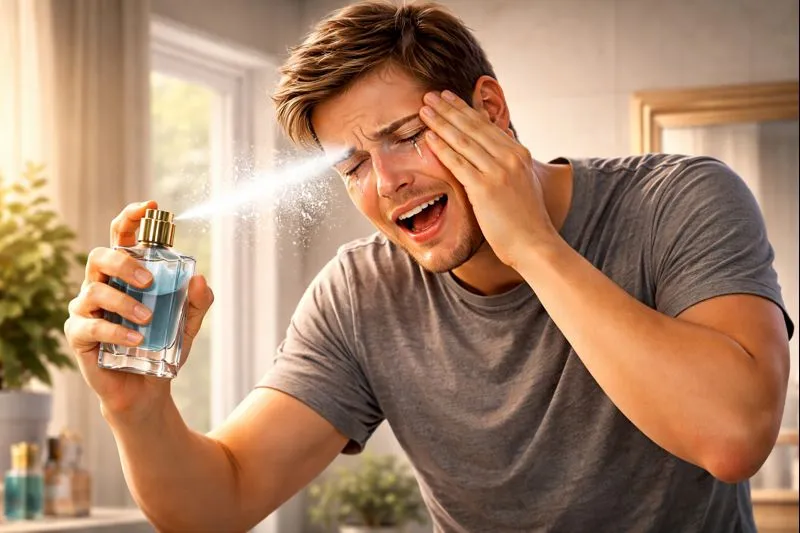
👁️ What Actually Happens:
When perfume enters your eyes, you may experience:
- Burning or stinging sensation
- Redness and watering
- Temporary blurred vision
- Sensitivity to light
These symptoms are usually short-lived and resolve within a few minutes to hours. However, if irritation persists, medical attention may be necessary.
Why it happens: The alcohol and aromatic compounds in perfume can disrupt the tear film, the natural protective layer over your eyes, causing dryness, redness, and irritation.
🚨 Immediate Steps to Take:

If perfume gets in your eyes, follow these steps:
- Rinse with lukewarm water immediately – Hold your eyelids open and flush your eyes for at least 10–15 minutes.
- Remove contact lenses if you wear them, as perfume can stick and worsen irritation.
- Avoid rubbing – This can scratch your cornea and prolong discomfort.
- Use sterile saline or artificial tears after rinsing to help restore moisture.
- Seek medical help if:
- Pain persists more than a few hours
- Vision remains blurred
- Redness or swelling increases
💡 Pro tip: Keep a small bottle of sterile saline or eye wash in your bathroom for emergencies.
🌿 Are Natural or Alcohol-Free Perfumes Safer?
Some people assume that natural or alcohol-free perfumes are completely safe for the eyes. While they are less irritating, they are not entirely risk-free. Essential oils like cinnamon, clove, or citrus oils can still cause stinging and redness.
✅ The safest approach is to avoid spraying near the eyes entirely, regardless of the perfume type.
🧪 Scientific Perspective:
Studies in ophthalmology show that alcohol and fragrance compounds can temporarily affect the corneal epithelium (the outer layer of the eye). This can lead to mild inflammation and temporary discomfort but rarely causes permanent damage.
- Ethanol (alcohol): Can strip natural oils and disrupt tear film
- Essential oils: May trigger allergic reactions or chemical irritation
- Synthetic fragrances: Generally milder but can still irritate sensitive eyes
In other words, the risk is real but manageable if you act quickly.
⚠️ Differences Between Adults and Children
Children’s eyes are more sensitive than adults’. Even a small splash of perfume can cause:
- Intense stinging
- Excessive tearing
- Temporary vision disturbance
Parents should always store perfumes out of children’s reach and supervise any application.
🧴 Preventive Measures:
To reduce the risk of eye exposure, follow these tips:
- Spray perfume away from your face – Aim for neck, wrists, or behind ears.
- Keep eyes closed while applying fragrance near your head.
- Avoid spraying in windy areas – Air currents can carry perfume to your eyes.
- Use atomizers or rollerballs for more controlled application.
For tips on safer perfume application, check our article “The Surprising Benefits Of Applying Perfume Before Sleep” to learn safe techniques that also enhance fragrance longevity. 🧭
💡 When to See an Eye Doctor:
Seek professional help if you experience:
- Persistent redness or swelling
- Severe pain
- Vision changes lasting more than a day
- Signs of infection (pus, excessive discharge)
Ophthalmologists may prescribe lubricating drops, anti-inflammatory eye drops, or other treatments depending on the severity.
🔑 Key Takeaways
- Perfume in the eyes usually causes temporary discomfort, not permanent damage.
- High alcohol content and essential oils increase irritation.
- Immediate rinsing is the most effective first aid.
- Avoid rubbing your eyes and keep perfumes away from children.
- Seek medical attention if symptoms persist or worsen.
Have you ever accidentally sprayed perfume in your eyes? How did you handle it? Share your experience in the comments below—we’d love to hear your story!
Discover more from Perfume Cultures
Subscribe to get the latest posts sent to your email.