
Why Women Buy Perfumes as Emotional Products
Why do many women buy perfumes for emotional reasons?
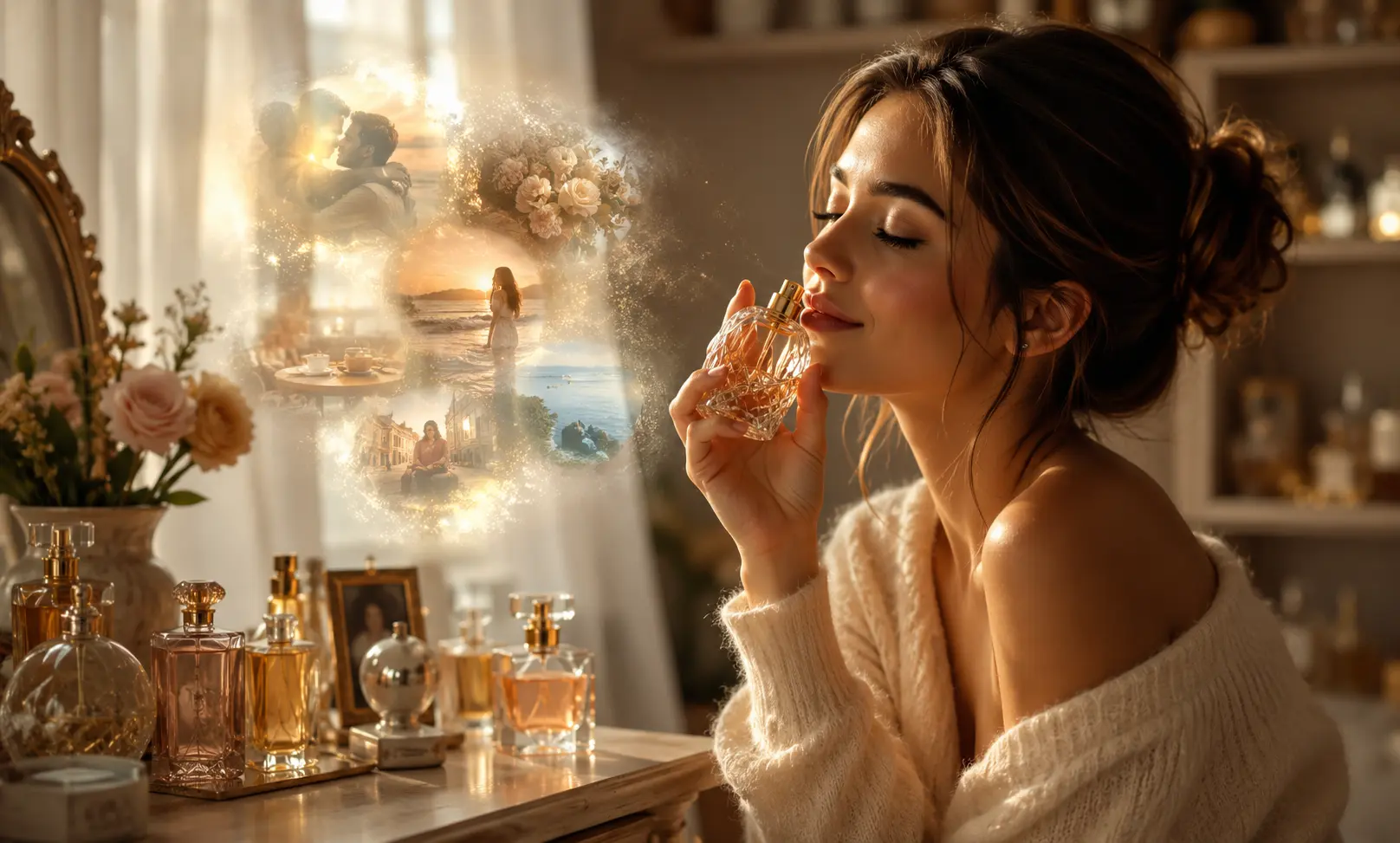
Many women view perfume as more than a beauty product. Fragrance can become connected to memories, emotions, personal identity, confidence, relationships, and life experiences. As a result, perfume purchases are often influenced by emotional value rather than scent alone.
Are perfumes linked to emotions and memories?
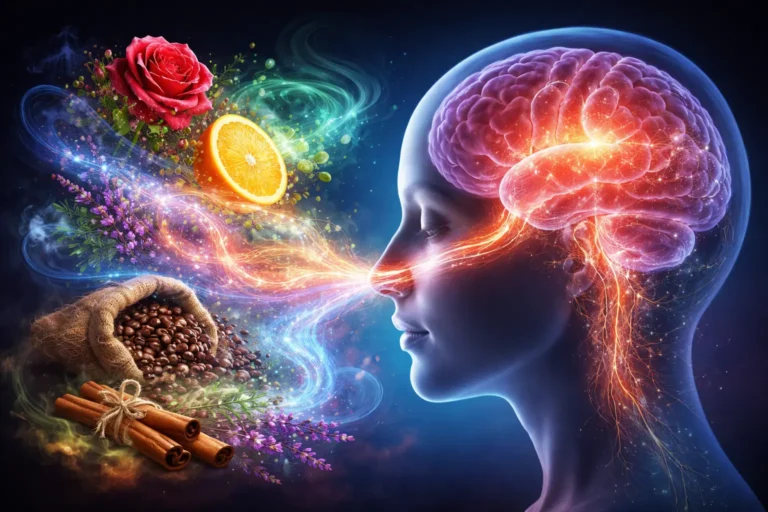
Yes. Smell is closely connected to the parts of the brain involved in emotion and memory. A specific fragrance can instantly remind someone of a person, place, season, relationship, or important life event, making perfume a highly emotional consumer product.
❤️ The Bottle Is Rarely the Real Product
Imagine walking through a department store and smelling a fragrance that instantly reminds you of a summer vacation, a first date, or a meaningful moment from years ago.
For many consumers, that smell is pleasant.
For many women, that smell is personal.
This difference helps explain why perfume is often purchased differently from other beauty products. While performance, longevity, and price certainly matter, emotional value frequently plays an equally important role.
A fragrance can represent confidence before an important meeting, comfort during stressful periods, excitement before a special occasion, or nostalgia for a meaningful chapter of life.
That is why many women do not simply buy perfumes because they smell good.
They buy them because they make them feel something.
❤️ Why Fragrance Is One of the Most Emotional Consumer Products
Most products appeal primarily to logic.
A smartphone solves problems.
A vacuum cleaner performs a task.
A pair of shoes serves a practical purpose.
Perfume is different.
Its value often comes from how it makes someone feel rather than what it does.
Unlike many products, fragrance directly interacts with memory and emotion. The moment a scent reaches the brain, emotional associations begin forming.
Because of this, perfumes often become linked to:
✔️ Important life milestones
✔️ Romantic relationships
✔️ Family memories
✔️ Personal achievements
✔️ Comfort and security
✔️ Self-confidence
Over time, these associations become stronger than the fragrance itself.
The perfume stops being a product and becomes an emotional symbol.
🧠 The Science Behind Emotional Fragrance Buying
Scientists have long observed the unique relationship between smell, memory, and emotion.
Unlike some sensory experiences that require extensive processing, scent has a direct pathway to brain regions associated with emotional responses.
This helps explain why a fragrance can trigger feelings almost instantly.
A person may forget:
- A song
- A conversation
- A photograph
Yet remember a specific perfume decades later.
For many women, fragrance becomes a personal emotional archive.
Every bottle can represent a chapter, mood, or experience.
That emotional connection often creates stronger purchase motivation than traditional advertising messages.
👩 Perfume as a Form of Self-Expression
Fashion communicates visually.
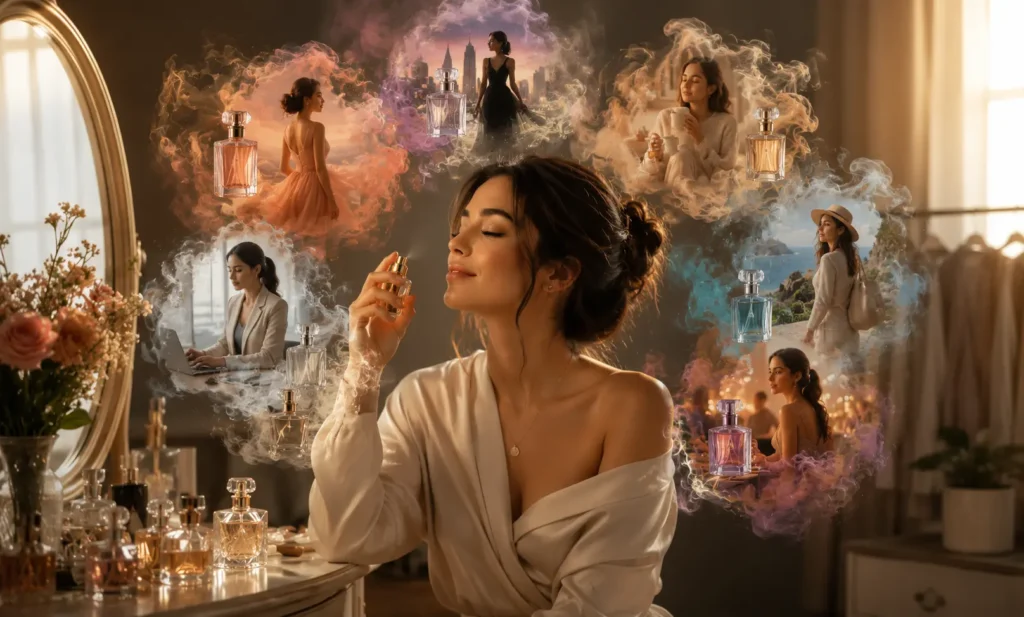
Perfume communicates invisibly.
Many women use fragrance to express parts of their personality that cannot be seen.
Some scents communicate:
- Confidence
- Sophistication
- Warmth
- Creativity
- Elegance
- Independence
Rather than asking:
“What smells best?”
The question often becomes:
“What feels most like me?”
This emotional self-expression partly explains why many women build fragrance collections instead of relying on a single scent.
As discussed in Why Women Own More Fragrances Than Men, different perfumes often represent different moods, identities, and situations rather than simple scent preferences.
🌸 Different Emotions Often Require Different Fragrances
One perfume rarely satisfies every emotional need.
A bright citrus fragrance may feel perfect for an energetic morning.
A soft floral scent may fit a romantic evening.
A comforting vanilla fragrance may feel ideal during colder months.
Because emotions constantly change, fragrance choices often change as well.
This is one reason many women rotate perfumes throughout the year.
The behavior is closely connected to the patterns explored in Why Women Change Perfumes More Often Than Men, where emotional variety often drives fragrance switching more than dissatisfaction.
Women frequently seek emotional experiences rather than merely replacing products.
📊 Emotional Buying vs Functional Buying
| Emotional Buying Factors | Functional Buying Factors |
|---|---|
| Personal memories | Longevity |
| Mood enhancement | Performance |
| Confidence boost | Projection |
| Self-expression | Price |
| Lifestyle identity | Ingredients |
| Emotional comfort | Value for money |
| Seasonal feelings | Technical quality |
| Sentimental attachment | Brand specifications |
Most perfume purchases involve both categories.
However, emotional factors often play a larger role than consumers initially realize.
🧠 Why Emotional Products Create Stronger Purchase Motivation
People rarely buy products solely because they need them.
They buy products because they expect a certain feeling.
Perfume is particularly powerful because the emotional reward begins immediately.
The moment the fragrance is sprayed, the experience starts.
Women may buy a fragrance because it makes them feel:
✔️ More attractive
✔️ More confident
✔️ More sophisticated
✔️ More relaxed
✔️ More feminine
✔️ More connected to a desired identity
These emotional benefits often justify purchases even when multiple perfumes are already owned.
This helps explain why collection growth is common among fragrance enthusiasts.
❤️ The Relationship Between Perfume and Personal Identity
Identity plays a major role in emotional consumption.
Many consumers naturally gravitate toward fragrances that match how they see themselves—or how they want to be seen.
For example:
- Fresh fragrances may reflect an energetic personality.
- Floral fragrances may express elegance.
- Gourmand fragrances may create feelings of comfort and warmth.
- Niche fragrances may reinforce individuality.
Over time, fragrance becomes part of personal identity.
This identity connection often strengthens emotional attachment to certain brands.
The same mechanism contributes to the patterns discussed in How Gender Influences Perfume Brand Loyalty, where emotional resonance can become a major driver of repeat purchases.
When a brand consistently delivers the desired emotional experience, loyalty naturally increases.
👩 Why Women Often Research Fragrances Before Buying
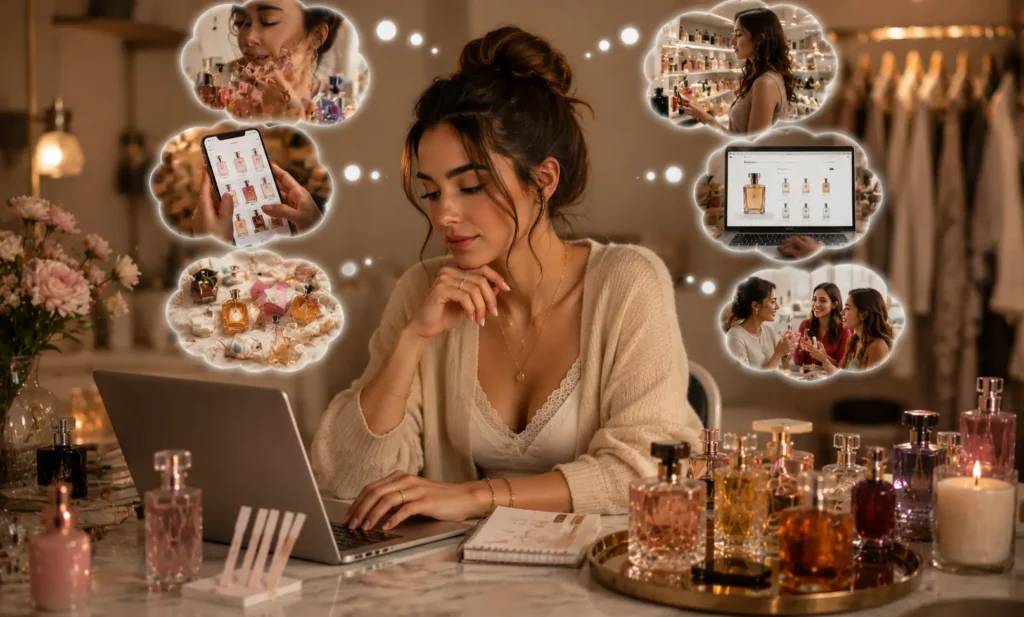
Because perfume purchases can be emotional, many consumers want reassurance before making a decision.
Buying a fragrance is not always about evaluating notes or ingredients.
It is often about evaluating a future emotional experience.
Questions may include:
- Will this fit my personality?
- Will this make me feel confident?
- Will I enjoy wearing this every day?
- Does this match my lifestyle?
This is one reason fragrance reviews have become increasingly influential.
As explored in Do Women Trust Fragrance Reviews More Than Men?, many women seek experiences, stories, and emotional descriptions from other consumers before purchasing.
The emotional context often matters as much as the scent description itself.
🌍 Social Media Made Emotional Perfume Buying Even Stronger
Modern fragrance marketing rarely focuses only on smell.
Instead, it focuses on emotions.
Advertisements emphasize:
- Confidence
- Romance
- Freedom
- Luxury
- Adventure
- Self-discovery
Social media amplifies these emotional messages.
Short videos often show:
- A lifestyle
- A feeling
- A mood
- A personal transformation
rather than discussing fragrance notes.
As a result, many consumers discover perfumes through emotional storytelling rather than technical information.
This trend aligns with the behavioral differences discussed in How Men and Women Discover New Perfumes Differently, where emotional narratives increasingly influence fragrance discovery.
🌸 Perfume as a Mood Management Tool
Many women intentionally use fragrance to influence their mood.
Certain scents may help create feelings of:
✔️ Calmness
✔️ Motivation
✔️ Happiness
✔️ Comfort
✔️ Energy
✔️ Confidence
In this sense, perfume functions almost like a daily emotional ritual.
The fragrance becomes part of preparing mentally for the day ahead.
This emotional role makes perfume fundamentally different from many other beauty purchases.
❤️ Why Emotional Value Often Outlasts Functional Value
Performance eventually becomes expected.
A fragrance that lasts eight hours may no longer feel impressive after repeated use.
Emotional meaning, however, often grows stronger over time.
A perfume connected to meaningful memories can remain valuable for years.
Some bottles are kept long after they stop being worn regularly.
Not because they perform better.
But because they represent something important.
This is one of the strongest signs that perfume operates as an emotional product rather than merely a functional one.
Final Thoughts
While performance, longevity, and price remain important, they rarely tell the entire story behind perfume purchases.
For many women, fragrance serves as a bridge between memory, identity, emotion, and self-expression.
A perfume can represent confidence, comfort, nostalgia, aspiration, or personal transformation.
That emotional power helps explain why fragrances often occupy a unique place in consumer behavior.
People may buy a perfume because it smells beautiful.
But they often keep buying it because of how it makes them feel.
FAQ
Why are perfumes considered emotional products?
Because fragrances are closely connected to memory, mood, identity, and personal experiences, making their value highly emotional rather than purely functional.
Do women buy perfumes differently than men?
Research and consumer behavior patterns suggest that emotional associations, self-expression, and mood-related motivations often play a stronger role in women’s fragrance purchasing decisions.
Why do perfumes trigger memories?
The sense of smell is strongly connected to brain regions involved in emotion and memory, allowing fragrances to evoke past experiences quickly.
Can perfume improve confidence?
Many people report feeling more confident when wearing fragrances that align with their identity, preferences, or desired image.
Why do some women own multiple perfumes?
Different fragrances can represent different moods, occasions, seasons, and emotional experiences, encouraging collection-building behavior.
💬 Interactive Question
Do you think your favorite perfume is special because of how it smells—or because of the memories and emotions attached to it? Share your experience in the comments below.
Discover more from Perfume Cultures
Subscribe to get the latest posts sent to your email.




2 Comments