
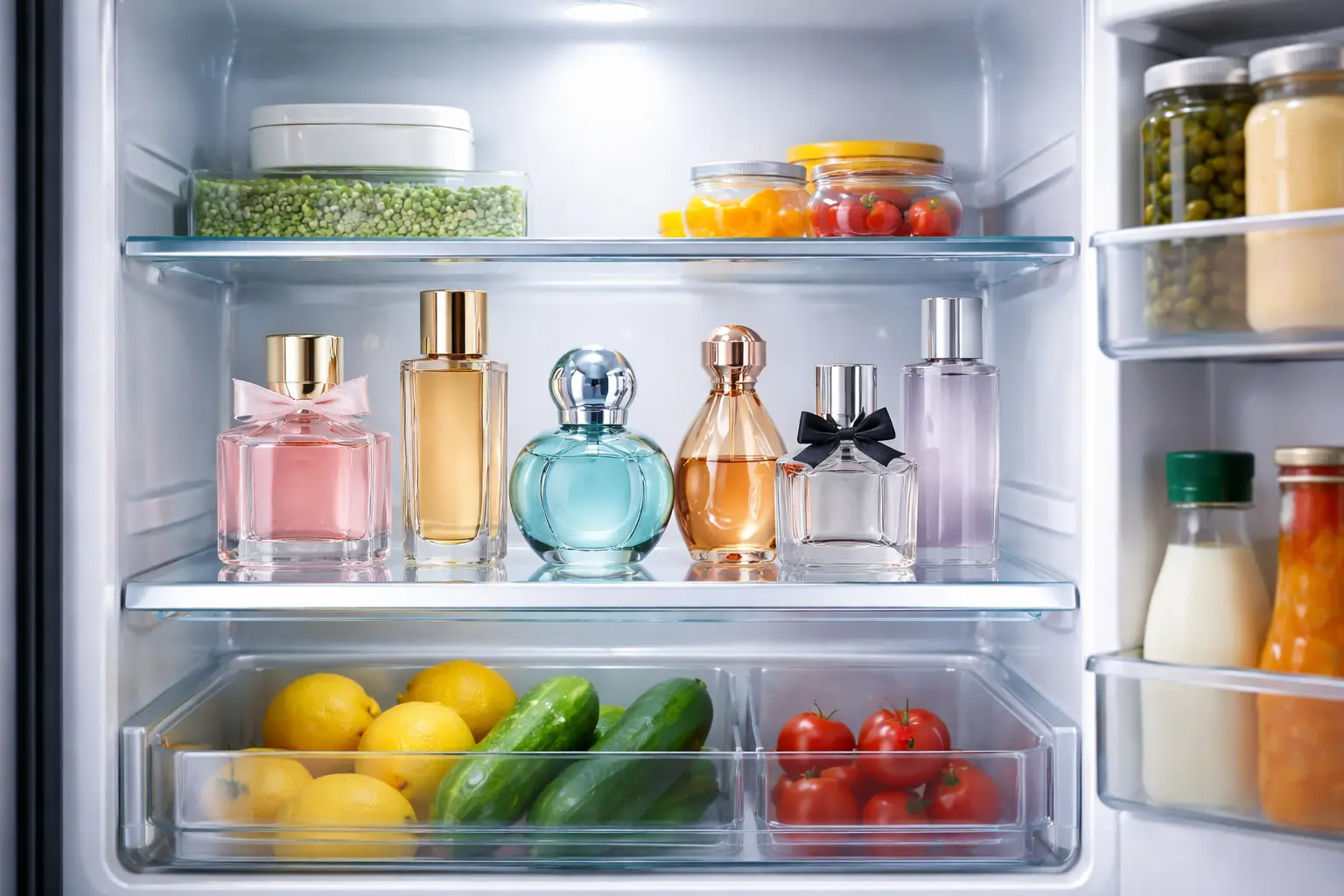
❄️ Should You Store Perfume in the Fridge? The Truth About Cold Storage
Perfume lovers often wonder whether storing fragrance in the refrigerator can extend its lifespan. Some collectors swear by it, while others warn that cold storage might damage delicate fragrance compositions.
So what’s the truth?
Should you store perfume in the fridge, or is this just a myth circulating among fragrance enthusiasts?
In this guide, we’ll explore how temperature affects perfume, whether refrigerating perfume is safe, and the best ways to store fragrances so they last longer.
🌡️ Why Temperature Matters for Perfume Storage
Perfumes are complex chemical mixtures made of aromatic oils, alcohol, and stabilizing ingredients. These components react to environmental conditions such as heat, light, and air exposure.
When perfumes are exposed to high temperatures, several things can happen:
- Fragrance molecules may break down faster
- The scent can change or become weaker
- Oxidation may occur inside the bottle
This is why experts often recommend cool and dark perfume storage to preserve fragrance quality.
However, the key word here is cool — not necessarily cold.
❄️ Can You Store Perfume in the Fridge?
Technically, yes—you can store perfume in the fridge, but it’s usually unnecessary for most fragrances.
A refrigerator provides a stable and low temperature, which can slow down chemical reactions that cause perfume to degrade.
But there are also potential downsides.
Pros of storing perfume in the fridge
Some fragrance collectors refrigerate perfumes for specific reasons:
- Helps slow oxidation
- Keeps volatile notes more stable
- Useful in extremely hot climates
- May slightly extend fragrance shelf life
For people living in very warm regions, refrigeration may help maintain perfume longevity and stability.
Cons of storing perfume in the fridge
Despite the benefits, there are also drawbacks:
- Condensation can form on the bottle
- Temperature fluctuations when opening the fridge
- Food odors might contaminate the fragrance
- Some ingredients may react poorly to cold environments
Because of these risks, many perfumers believe room-temperature perfume storage is usually safer.
🧪 How Cold Temperatures Affect Fragrance Ingredients
Perfumes contain delicate aromatic compounds such as:
- Citrus oils
- Floral absolutes
- Synthetic aroma molecules
Extremely cold conditions can sometimes affect how these ingredients behave.
For example:
- Certain oils may thicken in cold temperatures
- Some aroma molecules release scent differently when chilled
- Alcohol-based solutions can react to rapid temperature shifts
While refrigeration won’t necessarily ruin a perfume, dramatic temperature changes are what truly harm fragrances.
Consistency matters more than extreme cold.
🏡 The Ideal Temperature for Perfume Storage
Most fragrance experts recommend storing perfumes at stable room temperature, typically between:
55°F and 72°F (13°C–22°C)
This range protects fragrance compositions from both heat damage and excessive cold exposure.
Here’s a quick comparison:
| Storage Location | Temperature Stability | Risk Level |
|---|---|---|
| Bedroom drawer | Very stable | Low |
| Closet shelf | Stable | Low |
| Bathroom cabinet | Humidity fluctuations | Medium |
| Refrigerator | Very cold but fluctuating | Medium |
| Window sill | Heat + sunlight | High |
In many cases, a dark drawer or closet shelf is safer than the refrigerator.
🌍 When Storing Perfume in the Fridge Might Make Sense
Although refrigeration isn’t necessary for most perfumes, there are a few situations where it can be helpful.
Extremely hot climates
If indoor temperatures regularly exceed 80–90°F (27–32°C), cold storage may help protect fragrances from heat damage.
Rare or expensive perfume collections
Collectors who own vintage perfumes or rare niche fragrances sometimes refrigerate bottles to slow degradation.
Long-term fragrance storage
If you plan to store perfume for many years without using it, cooler environments can help preserve scent integrity.
However, perfumes should ideally be stored in a sealed container or dedicated mini fridge to avoid contamination.
⚠️ Common Mistakes When Refrigerating Perfume
If someone decides to store fragrance in the fridge, these mistakes should be avoided:
1️⃣ Storing perfume near food
Strong food odors can potentially affect the scent if the bottle isn’t sealed properly.
2️⃣ Frequent temperature changes
Moving perfume in and out of cold environments repeatedly can stress the fragrance composition.
3️⃣ Storing partially empty bottles
More air inside the bottle accelerates oxidation.
4️⃣ Using the fridge door
The fridge door experiences the most temperature fluctuation.
🧴 The Best Alternative to Refrigerating Perfume
Instead of using the fridge, most fragrance experts recommend a simple solution:
Store perfumes in a cool, dark, and dry location.
Good options include:
- Bedroom drawers
- Closet shelves
- Dedicated fragrance cabinets
- Storage boxes away from sunlight
These environments provide stable perfume storage conditions without extreme cold exposure.
🔗 A Smarter Way to Store Your Perfume Collection
If you’re interested in learning more about proper perfume storage techniques, we’ve covered this topic in detail in another guide.
👉 🧴 Where Should You Store Perfume? The Best and Worst Places at Home
This article explains the safest locations in your home to store fragrances—and the places that can damage them faster than you might expect.
🧠 Final Thoughts
So, should you store perfume in the fridge?
For most people, the answer is no.
While cold storage can slow chemical reactions, refrigerators introduce humidity, odors, and temperature fluctuations that may harm fragrances over time.
In most cases, the best way to protect your perfume is simple:
✔ Store it in a cool, dark place
✔ Avoid heat and sunlight
✔ Keep bottles tightly closed
With proper perfume storage, many fragrances can remain stable and enjoyable for years.
💬 Interactive Question for Readers
Have you ever tried storing perfume in the fridge, or do you prefer keeping fragrances at room temperature? Share your experience in the comments—we’d love to hear how you store your perfume collection.
Discover more from Perfume Cultures
Subscribe to get the latest posts sent to your email.


One Comment