
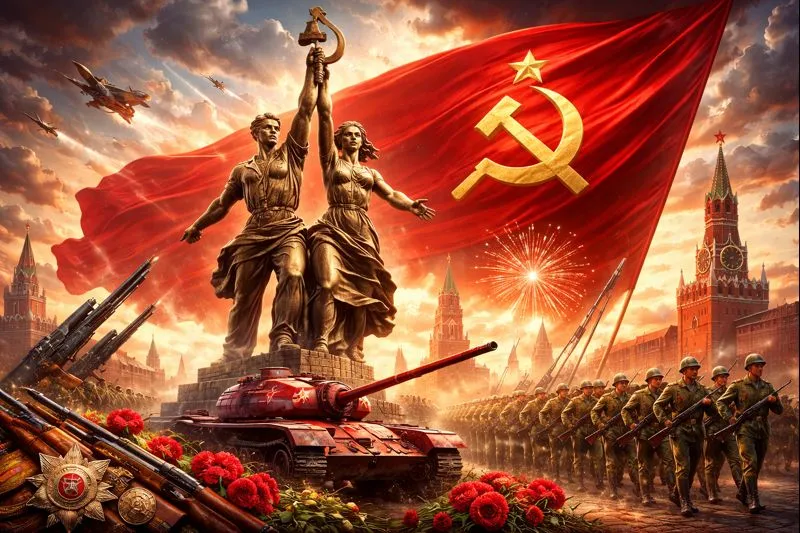
🧊 Inside Soviet Perfume Factories: A Journey Through Cold War Scents
🌍 Introduction: When Ideology Met Aroma
During the Cold War, the world was divided not only by politics and military power, but also by culture, aesthetics, and even scent. While Western perfume houses in Paris and New York marketed luxury, glamour, and individual expression, Soviet perfume factories operated under an entirely different philosophy. Fragrance in the USSR was not about indulgence—it was about function, accessibility, and ideology. Yet, behind concrete walls and state-controlled formulas, an unexpectedly rich olfactory world was taking shape. This article takes you inside Soviet perfume factories, exploring how Cold War pressures shaped scents that were austere, emotional, and deeply symbolic.
🏭 The Birth of Soviet Perfumery Under State Control
After the 1917 Russian Revolution, private luxury industries—including perfumery—were nationalized. Iconic pre-revolutionary perfume houses were absorbed into state-run factories. The most famous among them was Novaya Zarya (New Dawn), originally founded in the 19th century but transformed into a Soviet institution.
In the Soviet system, perfume production was planned like steel or grain. Budgets, ingredients, and quantities were determined by central authorities. Unlike capitalist markets driven by trends and consumer desire, Soviet perfume factories focused on producing standardized fragrances that could be distributed widely across the population. Perfume was considered a cultural good, not a luxury product.
🧪 Inside the Factory: Limited Resources, Creative Chemistry
Walking into a Soviet perfume factory during the Cold War would have felt more like entering a laboratory than a glamorous atelier. Perfumers worked with severely limited raw materials due to trade restrictions, sanctions, and isolation from Western suppliers.
Natural ingredients like jasmine absolute or sandalwood were rare and expensive. As a result, Soviet perfumers became experts in synthetic aroma chemicals, often relying on aldehydes, musks, and powdery accords. This limitation unintentionally created a distinct olfactory signature—bold, long-lasting, and unmistakably “Soviet.”
Despite constraints, many perfumers were highly trained chemists. Innovation existed, but it was quiet and internal, driven by necessity rather than competition.
🌸 Red Moscow: The Scent That Defined an Era
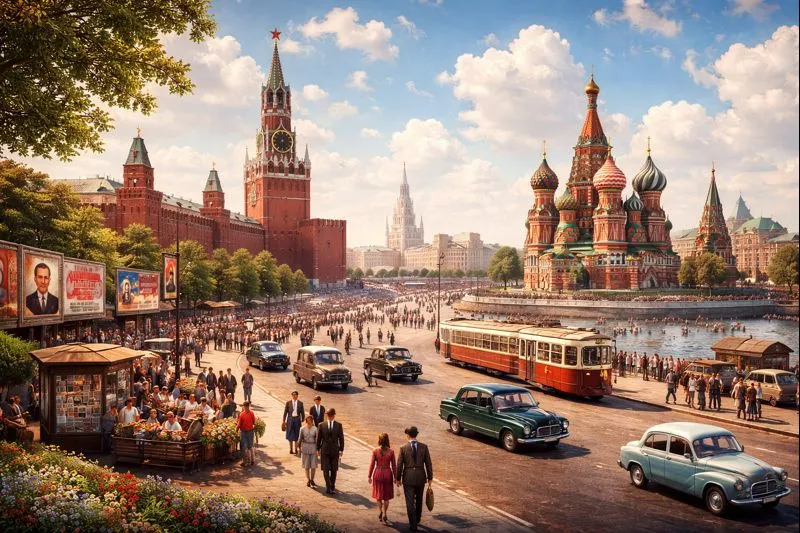
No discussion of Soviet perfume factories is complete without Red Moscow (Krasnaya Moskva). Created in the early 20th century and later embraced by the Soviet state, this fragrance became the olfactory symbol of Soviet womanhood.
With its heavy floral heart, powdery aldehydes, and vintage structure, Red Moscow stood in stark contrast to the lighter, fresher Western perfumes of the same era. It was intense, persistent, and unapologetic—much like the ideology it represented.
For millions of women, this perfume was associated with milestones: weddings, theater nights, official celebrations. It wasn’t just a fragrance; it was a shared sensory memory across generations.
🧠 Perfume as Ideological Expression
In the USSR, perfume advertising avoided themes of seduction or excess. Instead, marketing emphasized cleanliness, discipline, and cultural refinement. Bottles were often simple, sometimes austere, reflecting socialist values rather than luxury branding.
Scents were designed to be “appropriate”—not provocative. Gender distinctions existed, but they were subtle. Women’s perfumes leaned floral and powdery, while men’s colognes focused on herbal, woody, or citrus notes, often inspired by hygiene products.
This approach shaped how Soviet citizens perceived fragrance: as a personal finishing touch, not a statement of wealth or individuality.
🧊 Cold War Isolation and Its Olfactory Impact
While Western perfume houses thrived on international collaboration, Soviet factories worked in near isolation. New aroma molecules developed in the West often reached Soviet perfumers years later—or not at all.
This delay froze Soviet perfumery in a distinct time capsule. While Western fragrances evolved toward transparency and minimalism in the late 20th century, Soviet perfumes retained a dense, classical structure.
Ironically, this isolation is what makes Soviet-era fragrances fascinating today. Modern niche perfume lovers often describe them as “retro,” “dramatic,” or “unexpectedly emotional.”
📊 Soviet vs. Western Perfume During the Cold War
| Aspect | Soviet Perfume Factories | Western Perfume Houses |
|---|---|---|
| Production | State-controlled | Privately owned |
| Ingredients | Limited, synthetic-heavy | Global natural sourcing |
| Marketing | Ideology-focused | Desire & luxury-driven |
| Bottle Design | Simple, utilitarian | Artistic & brand-focused |
| Scent Style | Bold, powdery, long-lasting | Evolving, trend-driven |
👩🔬 The Unsung Perfumers of the USSR
Unlike famous Western perfumers whose names became brands, Soviet perfumers remained largely anonymous. Their work belonged to the state, not to personal legacy. Yet many were deeply passionate about their craft.
Some perfumers secretly studied Western perfume literature or experimented after hours. Others focused on perfecting formulas within strict guidelines. Their creativity was subtle but resilient—a reminder that artistry can survive even under rigid systems.
🌍 Post-Soviet Revival and Global Curiosity
After the fall of the Soviet Union, many factories collapsed or privatized. However, interest in Soviet perfumes has grown internationally. Vintage bottles are now collected, reformulated versions are sold online, and niche brands draw inspiration from Cold War aesthetics.
For American audiences, these scents offer more than novelty. They provide a sensory portal into history, revealing how politics, scarcity, and ideology can shape something as intimate as perfume.
If you enjoy exploring how unexpected regions and historical moments influence fragrance, you may also like reading our related article on why Russian perfumes are the dark horses of the fragrance world, which dives deeper into post-Soviet olfactory identity.
🔮 Final Thoughts: What Do Cold War Scents Tell Us Today?
Inside Soviet perfume factories, fragrance was never just about smelling good. It was about resilience, shared identity, and quiet creativity under pressure. These Cold War scents remind us that perfume is not only a luxury—it is a reflection of the world that creates it.
Today, as niche perfumery celebrates bold stories and unconventional inspirations, Soviet-era fragrances feel surprisingly relevant again.
❓ Would you wear a perfume shaped by history and ideology, or do you prefer modern scents designed purely for pleasure?Share your thoughts in the comments—we’d love to hear your perspective.
Discover more from Perfume Cultures
Subscribe to get the latest posts sent to your email.





One Comment