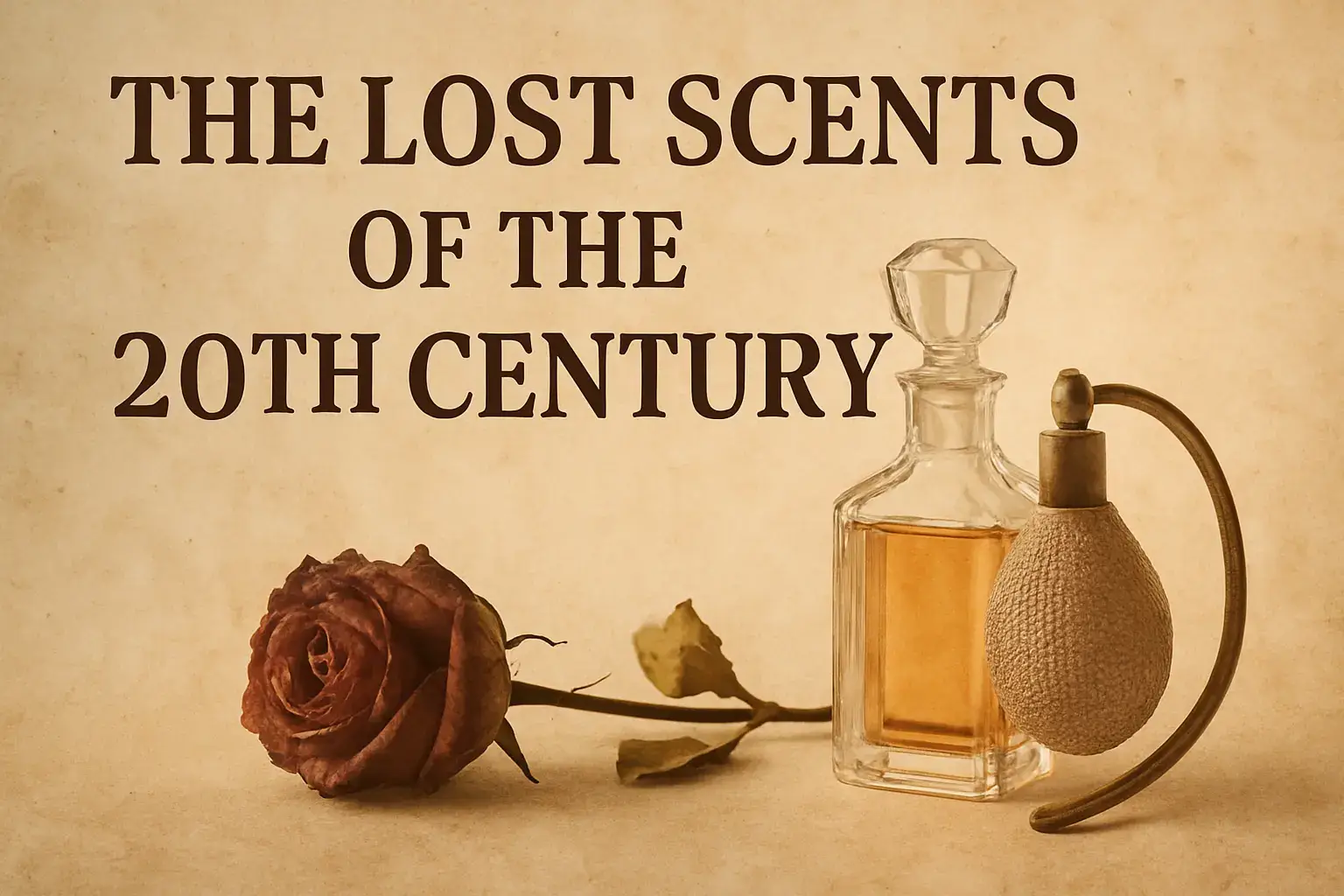
The Lost Scents of the 20th Century
Throughout the 20th century, perfumery experienced a revolution of creativity, science, and style. Yet, behind this golden age of fragrance lies a forgotten story — one of lost scents, discontinued masterpieces, and formulas erased by time, regulation, or changing taste. These perfumes once defined decades, dressed icons, and captured cultural shifts, only to fade into history.
Let’s rediscover the lost scents of the 20th century — and understand why they disappeared, what made them unforgettable, and how their spirit lingers in modern perfumery.
🌹 The Golden Age of Perfumery: Innovation and Identity:
The early 1900s to mid-century was a time when fragrance became personal art. Houses like Guerlain, Coty, Chanel, and Caron crafted masterpieces that transcended mere aroma. These perfumes reflected emotions, eras, and elegance.
During this golden period, perfumers experimented with aldehydes, musks, and synthetic molecules that could mimic nature’s most delicate notes. Fragrances like Chanel No. 5 or Shalimar became icons — but many others vanished into obscurity.
Why? Because perfumery was in constant evolution. Each decade sought newness: modern women of the 1960s wanted freshness, while the 1980s demanded boldness. In this rush toward the future, countless beautiful scents were left behind.
💨 Why Iconic Perfumes Disappeared:
Several reasons explain the disappearance of once-beloved 20th-century fragrances:
- Ingredient Restrictions – As safety and environmental regulations evolved, natural ingredients like oakmoss, nitro musks, and civet were banned or limited. Reformulating often changed the scent’s soul beyond recognition.
- Changing Trends – The powdery florals of the 1920s fell out of favor by the 1970s, replaced by green chypres, then by clean aquatic notes in the 1990s.
- Corporate Mergers – When perfume houses were acquired by large companies, older or “less profitable” scents were discontinued to make way for new launches.
- Rarity and Cost – Some natural materials became too expensive or hard to source — like Mysore sandalwood or natural ambergris.
The result? Entire olfactory families slowly vanished from store shelves, leaving only memories and dusty bottles in collectors’ drawers.
🕯️ Forgotten Masterpieces Worth Remembering:
Here are a few legendary perfumes that marked their era — and then disappeared:
| Perfume | House | Launch Year | Character |
|---|---|---|---|
| Ivoire de Balmain (Original) | Balmain | 1979 | Elegant floral chypre with green notes and soap-like sophistication. |
| Coty Chypre | Coty | 1917 | The mother of all chypres, blending bergamot, oakmoss, and labdanum. |
| Diorling | Christian Dior | 1963 | A daring leather fragrance symbolizing feminine rebellion. |
| Crepe de Chine | F. Millot | 1925 | A silk-smooth floral aldehyde that defined Jazz Age glamour. |
| Gucci No. 1 | Gucci | 1974 | Woody-floral sophistication, now a collector’s treasure. |
These perfumes shaped the DNA of modern perfumery, even if their bottles have long vanished from department store counters.
🧪 The Science Behind Lost Formulas:
Many vintage perfumes were created using raw materials that today’s regulations restrict. For example, nitro musks once gave fragrances a rich, sensual warmth but are now banned due to safety concerns. Similarly, oakmoss, essential for chypre structures, has been limited because of allergen regulations.
When brands tried to reformulate, they faced a dilemma: keep the name but change the scent, or retire it altogether. Most chose the latter. Enthusiasts often describe reformulations as “ghost versions” — similar but hollow, missing the depth that made the original unforgettable.
In some cases, even the aging process added to the mystique. Vintage bottles, stored for decades, often smell different today due to oxidation and natural maceration. This means that even if you find a bottle, you’re not smelling the same scent that first hit the market.
🕰️ Nostalgia and the Power of Memory:
Fragrance is deeply tied to emotion. A single whiff of an old perfume can transport someone back to a moment, a person, or a place long gone. This emotional pull explains why vintage perfume collecting has become a passionate niche in the U.S. and Europe.
Collectors hunt eBay listings, estate sales, and perfume auctions for lost scents like Lanvin’s My Sin, Caron’s En Avion, or Yves Saint Laurent’s Yvresse (original Champagne). For them, it’s not just about owning a rare bottle — it’s about preserving a piece of history.
As one collector put it: “Each vintage perfume is a time capsule. You’re not just smelling flowers — you’re smelling a century.”
🌍 The Cultural Shifts Behind the Disappearance:
Perfumes don’t vanish by accident; they reflect cultural changes.
- The 1920s–30s celebrated glamour and romance, leading to rich, powdery florals.
- The 1950s symbolized femininity and order, favoring aldehydic elegance.
- The 1970s brought individualism, making green and leathery scents fashionable.
- The 1990s pursued clean, “just-showered” freshness, pushing aside anything heavy or musky.
As Western society changed — from industrial growth to digital modernity — so did our olfactory desires. Many classic perfumes felt “too heavy” for the new minimalist lifestyle. Ironically, what was once considered luxurious became outdated.
🔮 Modern Revivals and the Return of Retro Scents:
In recent years, niche brands and heritage houses have begun reviving lost olfactory styles. Companies like Maison Francis Kurkdjian, Frederic Malle, and Le Labo embrace the artistry of the past while reformulating responsibly for today’s market.
Even mainstream houses occasionally release “Les Exclusifs,” “Heritage,” or “Archive” collections, reimagining forgotten classics for modern noses.
For example:
- Chanel Les Exclusifs 1932 echoes vintage sparkle with a modern twist.
- Guerlain’s L’Heure Bleue continues to enchant new generations.
- YSL’s Reissues pay tribute to the 1970s through limited releases.
The revival trend shows that while scents may disappear, their stories never truly die.
If you enjoyed uncovering the forgotten perfumes of the 20th century, you’ll love exploring how global fragrance traditions evolved through different cultures.
👉 Read next: “Ottoman Perfumers: The Hidden Masters Behind Fragrance Traditions.”
✨ Final Thoughts:
The lost scents of the 20th century remind us that fragrance is both art and memory — fleeting yet eternal. Each vanished perfume tells a story of creativity, culture, and chemistry. And while we may never again smell them as they once were, their influence lingers in every bottle that graces a modern vanity today.
So the next time you spray your favorite fragrance, remember: it might carry whispers of a scent the world has already forgotten.
💬 Interactive Closing Sentence:
If you could bring back one perfume from the past, which lost scent would you choose — and why? Share your thoughts in the comments below!
Discover more from Perfume Cultures
Subscribe to get the latest posts sent to your email.